Sponsoring an orphan in Gaza: how it works with LIFE
At a glance
- Sponsoring an orphan in Gaza with LIFE costs €78 a month, or around €26.52 in real terms after 66% French tax relief.
- The support isn't handed over as cash. It comes as coded vouchers issued in the child's name, which can be spent with local shopkeepers under contract.
- On the ground, the programme is run by Al-Amal Training Society, LIFE's partner, which has worked in Gaza since 1997. Al-Amal selects the children and checks how the vouchers are used.
- You follow your sponsored child through a members' area: news of their group every three months, and individual news at least once a year.
- There's no minimum commitment, and you can stop sponsoring at any time. If you do, the programme keeps supporting the child.
In 2026, sponsoring an orphan in Gaza is one of the most direct ways to help a specific child in a territory where the war that began in October 2023 has left more than 58,000 children without a father, a mother, or both (UNICEF estimate reported by the Palestinian Central Bureau of Statistics, April 2026). Many families in France want to help, but they all run into the same question: how can support sent from France actually reach a named child in one of the places in the world where humanitarian access is most restricted?
Sponsorship answers that question differently from a one-off donation. Rather than giving to a general fund, you support a named child and follow what your support achieves. Here's how LIFE's programme works in practice.
What exactly is orphan sponsorship?
Sponsoring isn't adopting. You don't become the child's legal guardian, and they don't leave Gaza. Sponsorship is a regular financial commitment that covers the basic needs of a named orphan: food, clothing, healthcare and schooling.
What sets it apart from an ordinary donation comes down to one word: connection. A one-off gift is lost among all the other contributions. Sponsorship is personal: one sponsor, one child. You know who you're helping, and you hear how they're getting on.
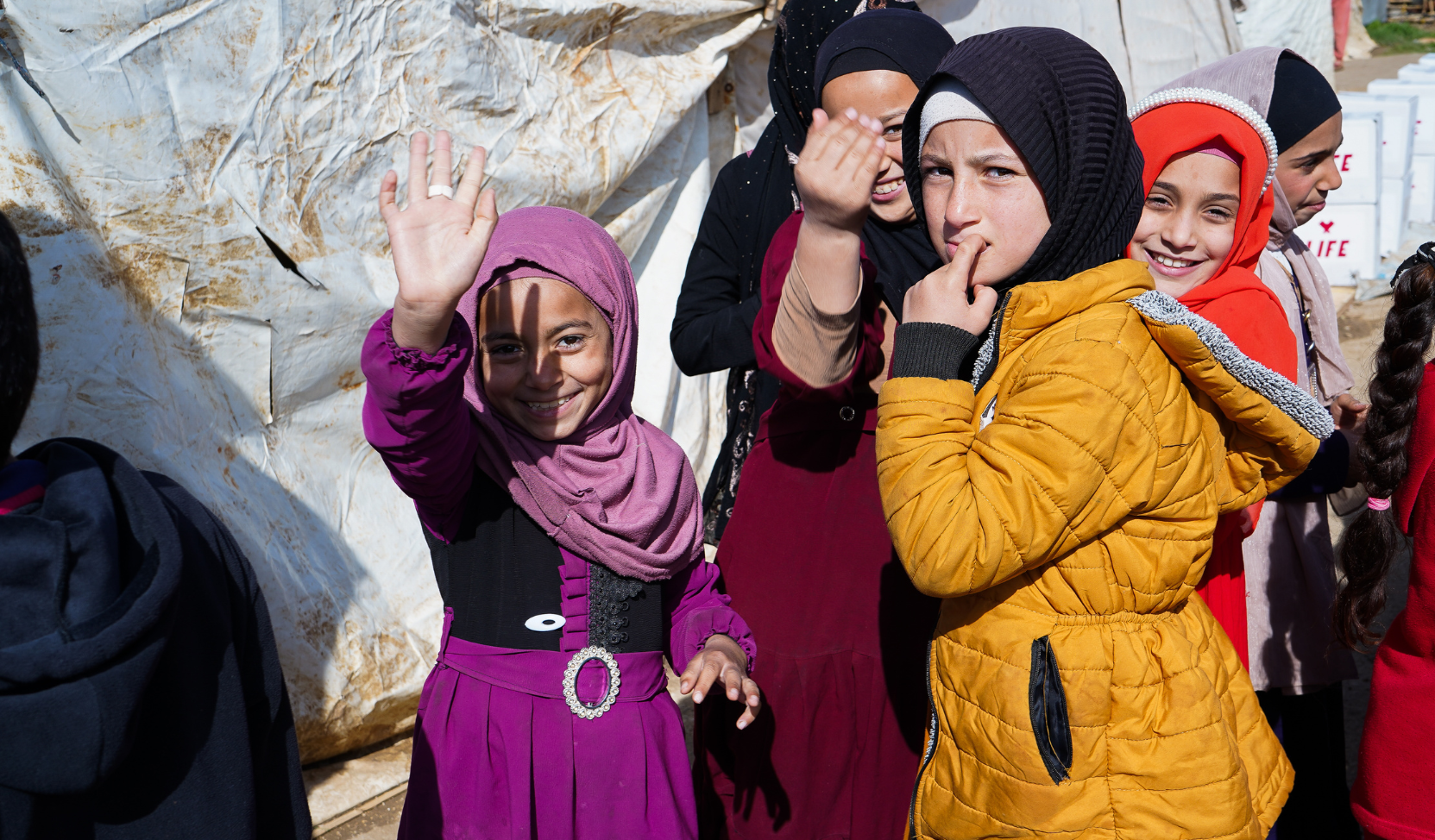
In Gaza, this model takes on a particular meaning. The extended families who traditionally took in orphaned children are now displaced and destitute themselves. Sponsorship supports these struggling foster households, or the child directly when they have no one left.
Key point
sponsorship doesn't take the child out of their surroundings. It helps them survive and grow up where they are, within what remains of their community. It's long-term help, not one-off relief.
What is life like for a sponsored orphan in Gaza?
To make this concrete, here's a typical journey, based on the programme's actual criteria and the documented situation on the ground.
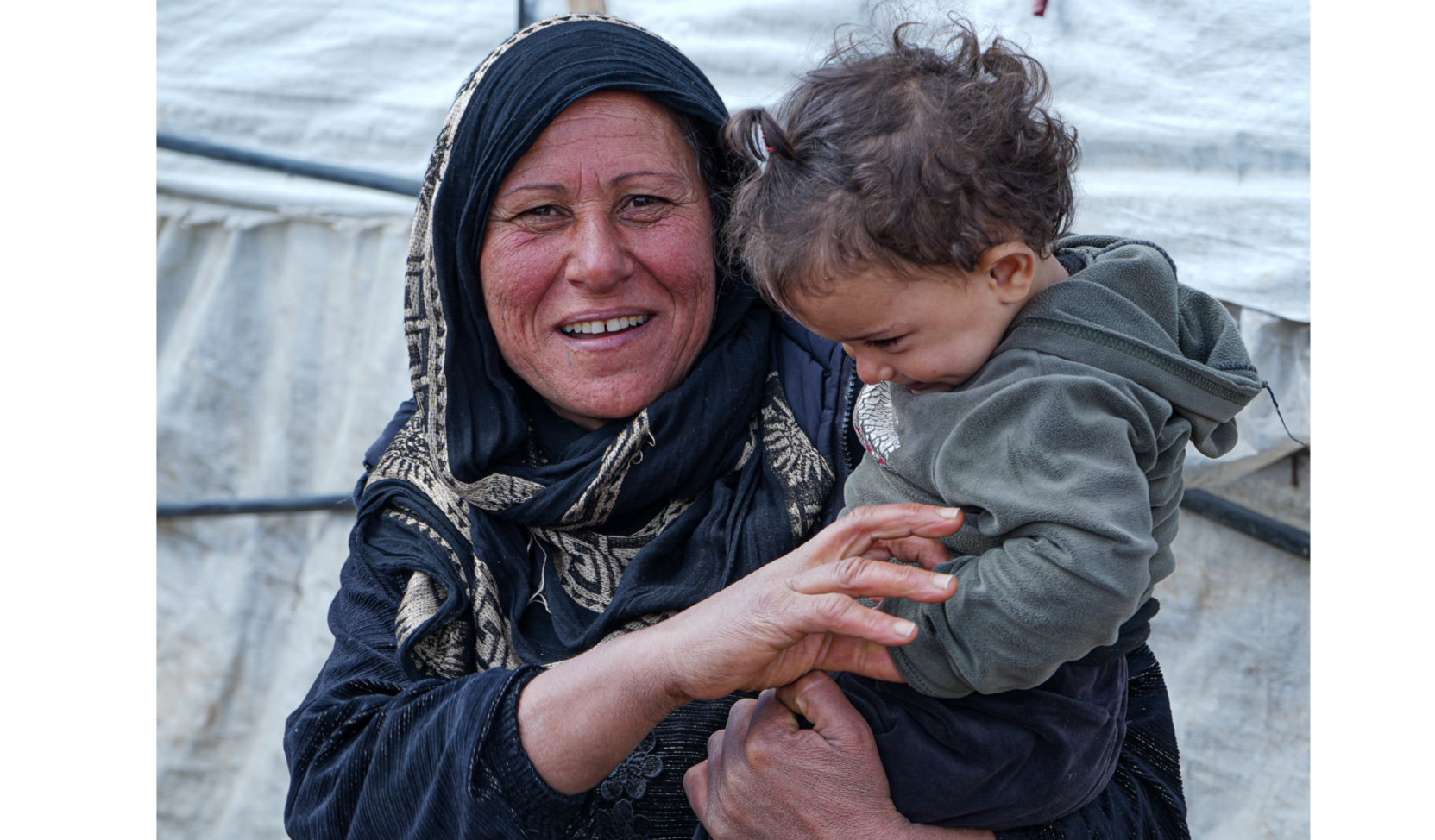
An eight-year-old boy lost his father in a bombing and lives with his displaced mother in a tent camp. The household has no income left. Before sponsorship, the daily question is whether there will be enough to eat. Once the child joins the programme, his mother receives vouchers in his name every month: enough to buy flour, hygiene products, clothes when winter comes, and to cover school costs when classes reopen. The sponsor, meanwhile, receives news of the group of children every three months, and individual news once a year.
How much does sponsorship cost, and where does the money go?
Sponsoring an orphan in Gaza with LIFE costs €78 a month. After the 66% French tax relief on donations to public-interest organisations, the real cost to the sponsor is around €26.52 a month.
LIFE shows openly how this sum is split:
ItemMonthly amountDirect support for the child (food, schooling, hygiene, clothing, health)€65Programme delivery, logistics and monitoring€13Total€78
In other words, 83% of your sponsorship goes straight to supporting the child. The remaining €13 isn't some abstract "admin cost": it pays for the fieldwork that makes the programme traceable, meaning selecting the children, distributing the vouchers and checking them.
To understand what this transparency involves and how to check it at any NGO, our article NGO transparency: how to check how your donations are used explains the method.
How does the child receive support? The traceable voucher system
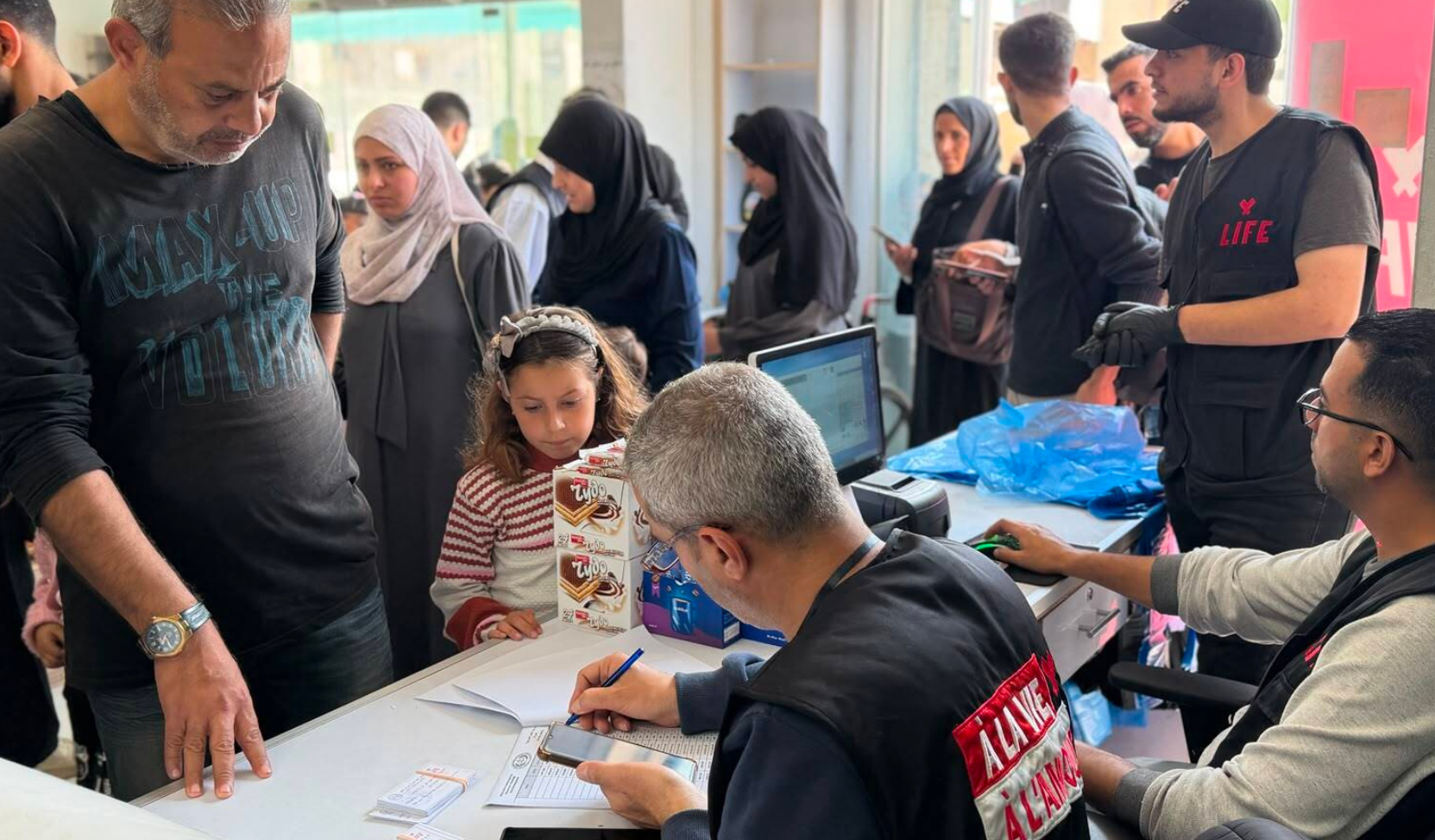
This is what most sets this programme apart from conventional sponsorship. Support is never handed over in cash. It comes as coded vouchers in the child's name, which can only be used with local shopkeepers who have signed a contract with our partner on the ground.
This system solves a real problem. In wartime, cash is unstable, prone to runaway inflation and hard to trace. A named voucher, by contrast, is linked to one child and one specific type of spending: food, hygiene, healthcare, clothing or school supplies. Every voucher used is checked on the ground.
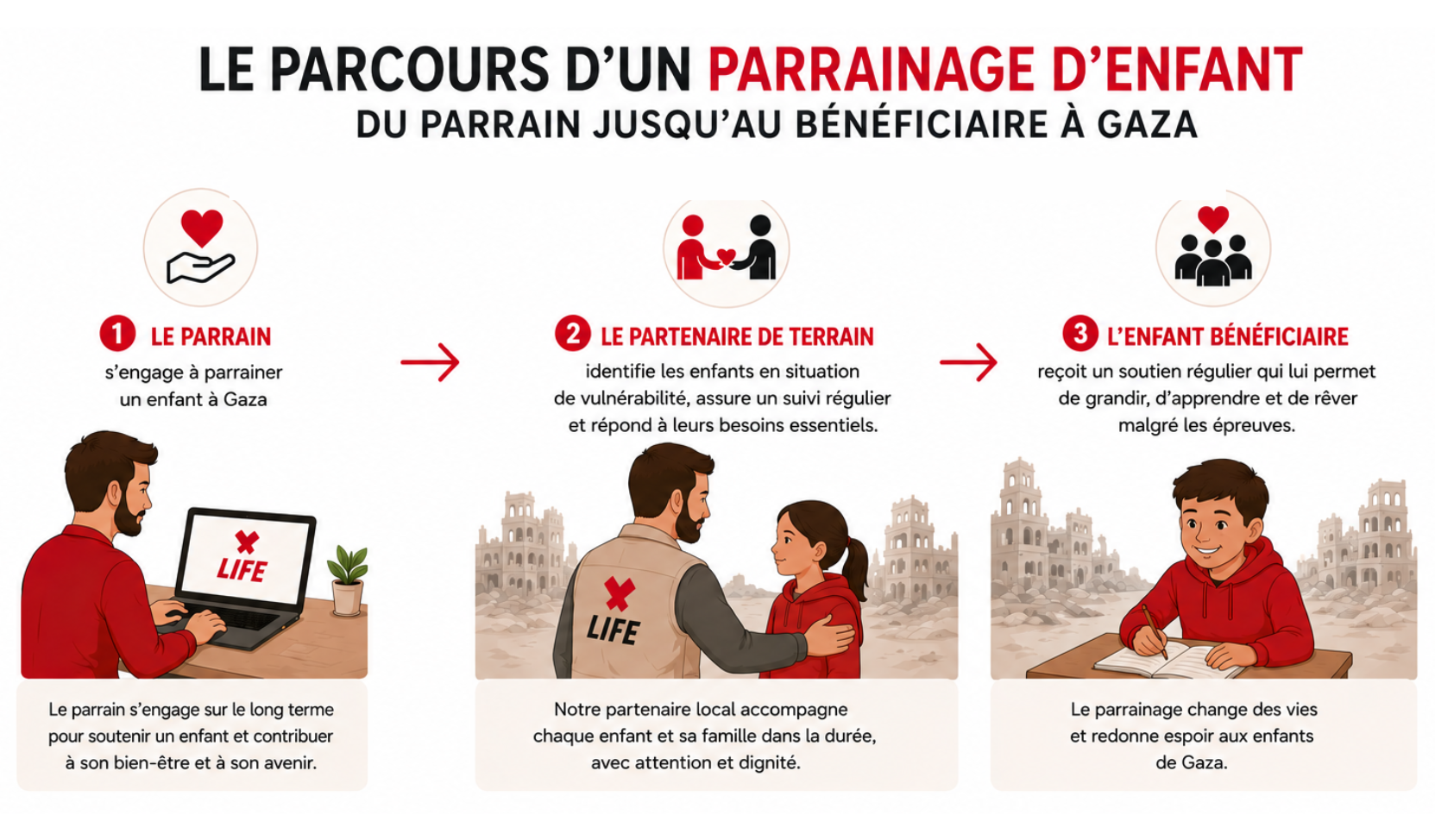
In practice, your support reaches the child in three steps:
- You sponsor a named orphan for €78 a month. A specific child is assigned to you.
- The child receives vouchers every month in their name, to spend with local vendors under contract. The vouchers are coded, distributed and checked by our partner on the ground.
- You hear how they're doing: every three months for the group of children your sponsored child belongs to, and individually at least once a year.
Who selects and supports the children on the ground?
No French NGO can identify and follow children in Gaza from Paris. That's why the local partner matters so much: they do the real work on the spot.
LIFE runs this programme with Al-Amal Training Society, a Palestinian organisation working in Gaza since 1997. That long track record matters: Al-Amal knew the ground well before the current war, giving it a capacity to act that newly arrived organisations simply don't have.
Our partner on the ground has four roles:
- Selecting the children according to priority criteria (see below)
- Distributing the vouchers assigned to each child
- Checking how vouchers are used with the shopkeepers
- Health and psychosocial follow-up for sponsored children
How are the orphans chosen?
Children aren't picked at random. Our partner prioritises the most vulnerable:
- Families displaced by the conflict
- Households living below the poverty line
- Households headed by a woman on her own
- Children with disabilities
Sponsored children are aged 0 to 17. So far, LIFE has identified 230 orphans in Gaza, with a stated goal of supporting 500 children.
What news will I get about my sponsored child?
It's often sponsors' first question, and a fair one: sponsorship with no news is just a donation in disguise. LIFE's programme offers updates on two levels, available in your personal members' area.
Every three months, you receive news of the group of children your sponsored child belongs to: how the programme is going, what the vouchers have made possible, and the overall situation.
At least once a year, you receive individual news of your sponsored child.
This distinction deserves an honest explanation. Why not individual news every month? Because in Gaza, producing reliable, verified and secure updates on named children is extremely difficult. Promising a monthly report on every child would be either unrealistic or a sign of sloppy monitoring. The schedule LIFE offers reflects what can genuinely be guaranteed in this context, rather than a marketing promise that can't be kept.
Is sponsorship tax-deductible?
Yes. LIFE is a recognised public-interest organisation, so donations qualify for French tax relief of 66% of the amount given, up to 20% of taxable income.
In practice, on sponsorship of €78 a month, or €936 a year, you get 66% back as tax relief, bringing the real cost down to around €318 a year, or €26.52 a month. The tax receipt is sent once a year.
To understand how this receipt works and how to declare it, our article Tax receipts for donations: how they work and how to get one answers all the practical questions.
The rate to remember
Sponsorship in Gaza, like every donation to LIFE, qualifies for 66% French tax relief (public-interest organisation), up to 20% of your taxable income.
Can I stop sponsoring? And what happens to the child?
LIFE sponsorship has no minimum commitment. You can change the amount, pause or stop your support at any time from your members' area, without giving a reason.
One important point says a lot about how the programme works: if you stop sponsoring, the child isn't suddenly left without support. The programme keeps caring for them until a new sponsor takes over. So support for the children doesn't depend on the loyalty of a single sponsor, but on the strength of the programme as a whole.
That's a fundamental difference from how sponsorship is sometimes imagined. You don't hold a child's survival in your hands so completely that stopping would be a disaster: you're joining a collective effort that protects the child whatever happens to any one individual.
Sponsorship or a general donation: which should I choose?
Monthly sponsorship isn't the only way to help. If a regular commitment of €78 a month doesn't suit your circumstances, LIFE also welcomes general donations of any amount, one-off or regular.
The two approaches complement each other. Sponsorship offers a personal connection and updates; a general donation offers flexibility. For a closer look at why regular support has more impact than one-off help, our article Child sponsorship in Gaza: why it's more effective than a one-off donation compares the two in detail.
To better understand the scale of the orphan crisis in Gaza and who these children really are, our article Gaza: 58,000 orphaned children, the biggest crisis in modern history gives the full picture. And if you're still unsure which organisation to trust with your sponsorship, our guide How to choose a reliable humanitarian sponsorship organisation sets out every criterion to check.
How do I start sponsoring with LIFE?
It takes just a few minutes online, on LIFE's dedicated page. You choose monthly sponsorship, confirm your secure donation, and a named child from the programme is assigned to you. You can then log in to your members' area to follow their progress. No complicated paperwork, no minimum commitment: if your circumstances change, you can adjust or stop whenever you like.
Would you like to sponsor an orphan in Gaza?
For €78 a month, your real cost is only around €26.52 after 66% French tax relief, and you receive a tax receipt every year. Our team is here to answer any questions you may have.
Sponsor an orphan →Frequently asked questions
What's the difference between sponsoring and adopting an orphan in Gaza?
Sponsorship is regular financial support that covers the basic needs of a named child, who stays in their own surroundings in Gaza. You don't become their legal guardian, and they don't leave the territory. Adoption, which involves transferring parental responsibility and moving home, is entirely different from sponsorship and isn't what this programme offers.
How can I be sure the help really reaches the child in Gaza?
Support is given as coded vouchers in the child's name, not as cash. Each voucher can be used with local shopkeepers under contract, and its use is checked on the ground by Al-Amal, LIFE's partner, which has worked in Gaza since 1997. You also receive regular news in your members' area.
What happens if I need to stop sponsoring?
You can stop at any time, without giving a reason, from your members' area. The child you sponsored won't be left without support: the programme keeps caring for them until a new sponsor takes over. There's no minimum commitment.
Will I really hear how my sponsored child is doing?
Yes. Every three months you'll receive news of the group of children your sponsored child belongs to, and individual news at least once a year, all through your member area. Individual updates come once a year because producing verified, named follow-up in Gaza is genuinely difficult.
What does a sponsorship really cost after French tax relief?
Sponsorship costs €78 a month. As LIFE is a public-interest organisation, you are entitled to 66% French tax relief, which brings the real cost down to around €26.52 a month: about €318 over the year instead of €936. You'll be sent a tax receipt every year.
Ready to help?
I start a fundraiser
Support the causes close to your heart by starting an online fundraiser with LIFE.
Raising funds for a charity has never been easier!