Giving to an NGO: 5 criteria for choosing a trustworthy charity
In short
- Not all NGOs are equal: a few simple criteria let you tell the difference in under 10 minutes.
- LIFE meets all 5 criteria set out in this guide: legal status, financial transparency, label, recognised networks and presence on the ground.
- The ratio of charitable programmes to total budget is the most telling figure for quickly assessing an NGO.
- A Cerfa tax receipt after every donation is the first sign that an organisation is genuine and officially registered.
- Choosing LIFE means choosing an NGO that is monitored, audited and present in 25+ countries, with full traceability.
You'd like to make a donation, but you're not sure how to choose between all the NGOs out there? That's a fair question. If you're not yet sure exactly what an NGO is and how it works, our article What is an NGO? covers the basics before you go further. In France, there are more than 1.5 million registered associations. It's hard to know where to start.
The good news: a handful of concrete criteria are enough to tell a trustworthy NGO from an opaque one. This guide walks you through them, using LIFE as a running example for each point.
Criterion 1: Is the NGO properly registered and recognised?
This is the starting point. Before committing anything, check that the organisation legally exists.
In France, a reputable humanitarian association is registered under the 1901 law and has an RNA number (Répertoire National des Associations, the national register of associations). Some also hold public-utility recognition, a status granted by decree that reflects a greater level of longevity and rigour.
LIFE is a 1901-law association recognised as being of general interest, authorised to receive donations that qualify for French tax relief. You can verify this in seconds on the official register data.gouv.fr.
How to check in 30 seconds
Two quick ways:
- Search for the NGO's name on data.gouv.fr: its RNA number should appear.
- Make a small test donation and check that you receive a Cerfa tax receipt. If this document doesn't arrive, that's a warning sign.
Good to know
An association that doesn't issue tax receipts either isn't authorised to, or refuses to. Either way, your donation won't be tax-deductible and the organisation lacks transparency.
Criterion 2: Does the NGO publish its accounts?
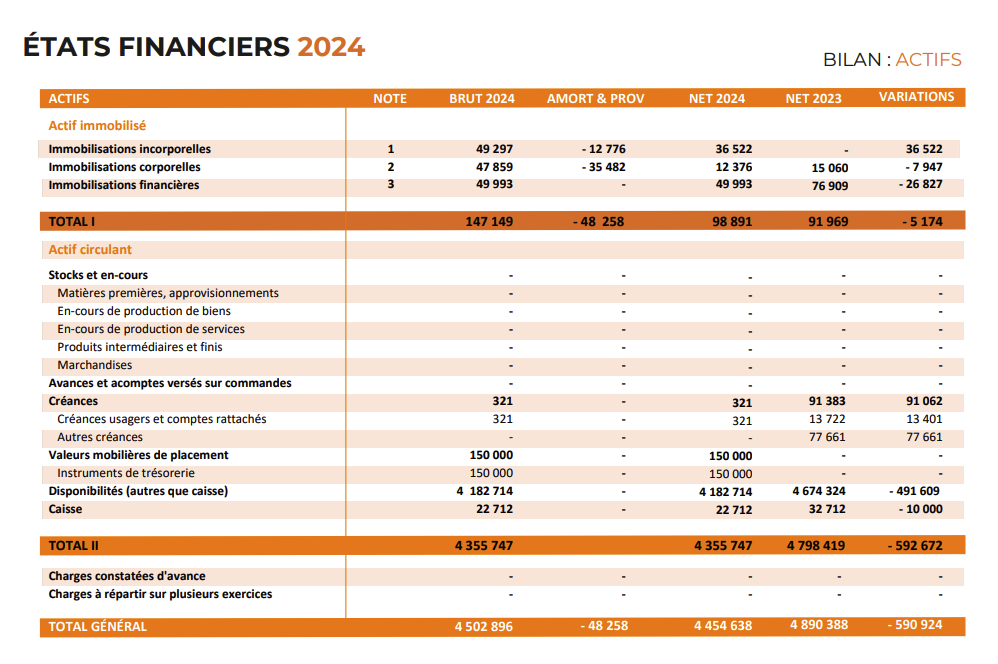
A trustworthy NGO doesn't hide how it spends its donors' money. It publishes its annual accounts, has them checked by an independent auditor, and makes them available to everyone.
In fact, this is a legal requirement for any association receiving more than €153,000 in donations a year. The accounts are published in the Journal Officiel des Associations et Fondations d'Entreprise (JOAFE).
The ratio to look at first
A single figure is enough for a quick read: the share of the budget spent on charitable programmes. A rigorous NGO devotes at least 70% of its resources to them.
| Share spent on programmes | What it means |
|---|---|
| Over 80% | Excellent: most of the money goes to the field |
| Between 70% and 80% | Fair, within sector norms |
| Under 70% | Worth looking into: overheads are high |
At LIFE, more than 85% of the funds raised go directly to field programmes. Our annual accounts are freely available at life-ong.org/a-propos/rapports.
Criterion 3: Does the NGO hold a trust label?
Labels don't guarantee effectiveness on the ground, but they certify that internal practices have been audited by independent experts. They're a useful filter, especially when you don't have time to dig through financial statements.
Two labels are the benchmark in France:
| Label | What it checks | Number of labelled organisations |
|---|---|---|
| Don en Confiance | Governance, transparency, respect for donors | ~100 in 2025 |
| IDEAS | Governance, strategy, impact measurement | Larger organisations |
To earn the Don en Confiance label, an association goes through a year-long review carried out by independent volunteers. The label is renewable every 3 years and can be withdrawn at any time. To learn more about what these labels involve in practice, see our guide on how to check that a humanitarian donation reaches its destination.
Criterion 4: Is the NGO recognised by its peers?
An NGO that works within networks, coordinates its work with other organisations and abides by shared charters is an NGO that's willing to be scrutinised from outside.
Two networks are the benchmark in France:
- Coordination SUD: the main platform for international solidarity NGOs, which requires its members to follow a code of ethics.
- Coordination Humanitaire et Développement (CHD): a network for faith-based or community-based NGOs.
LIFE joined both networks in 2023. Membership amounts to peer validation from within the sector, every bit as meaningful as an external label.
Why it matters to you
An NGO that belongs to Coordination SUD signs up to shared rules on governance, communication and the use of funds. It's an extra guarantee that the organisation doesn't operate behind closed doors.
Quick tip
Go to the Coordination SUD website and type the NGO's name into their directory. If it's listed, that's already a good sign.
Criterion 5: Can you see what the NGO actually does?
The final criterion is perhaps the most human: does the organisation show its work? Not just with figures, but with concrete evidence of what's happening on the ground?
Impact reports: evidence or claims?
A good annual report doesn't just list "X people helped". It sets out projects country by country, the local partners involved, measurable results and any setbacks. An NGO that owns up to what didn't work is an NGO showing maturity.
Presence on the ground and accessibility
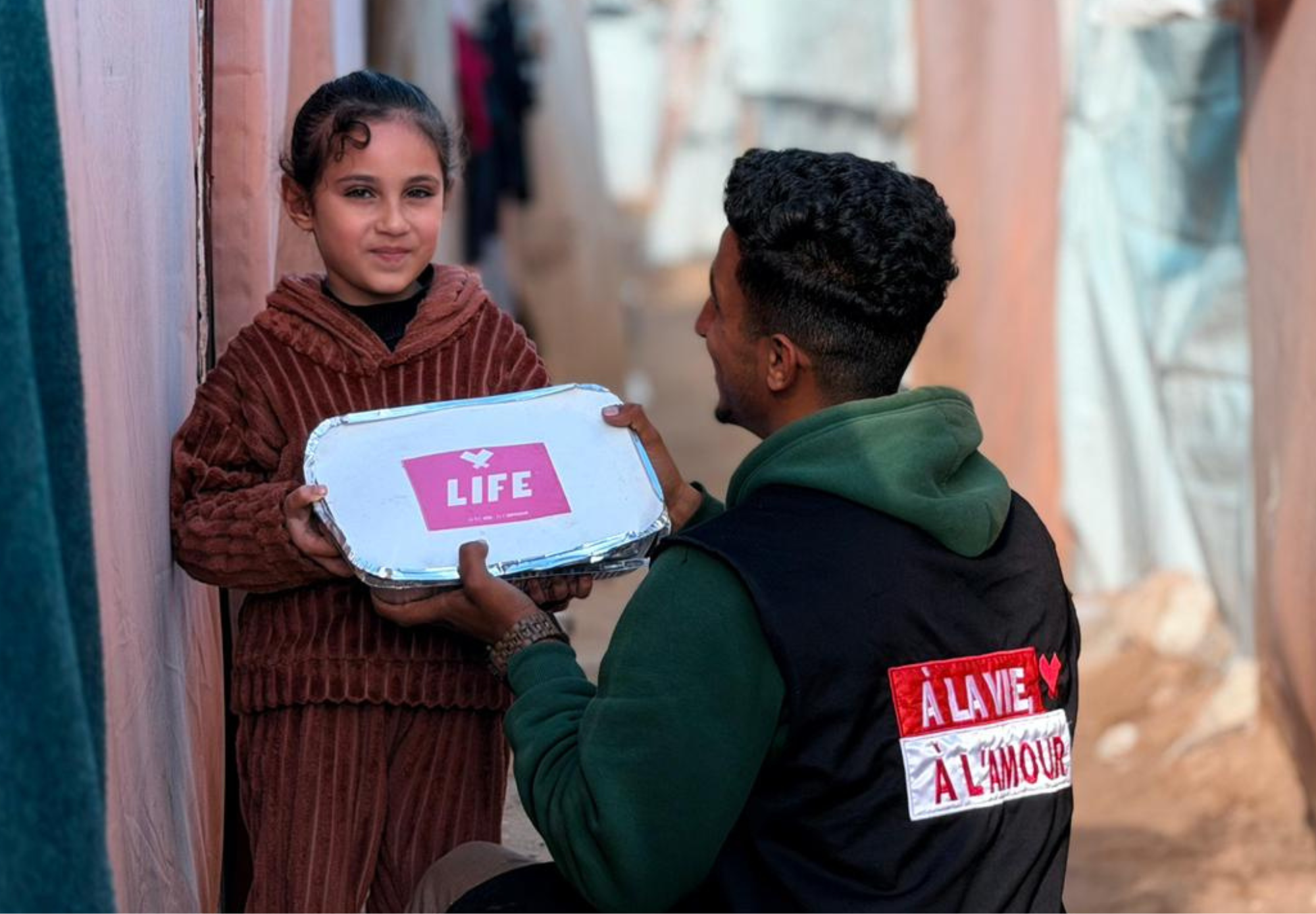
A trustworthy NGO answers your questions. It can be reached by phone and email, and responds within a reasonable time. LIFE regularly invites volunteers and donors to join its field missions, particularly during Ramadan, so they can see the distributions for themselves.
This level of openness is rare. It's the strongest sign that an organisation has nothing to hide. LIFE also has a dedicated donor relations team to answer all your questions before or after you give. To go further into how LIFE guarantees transparency for your donations, see our guide NGO transparency: how to check how your donations are used.
Summary: LIFE against the 5 criteria
| Criterion | LIFE |
|---|---|
| Legal status and tax receipt | 1901-law association, automatic Cerfa receipt |
| Financial transparency | 85%+ spent on programmes, accounts published |
| Trust label | Member of Coordination SUD and CHD since 2023 |
| Peer recognition | Coordination SUD and CHD networks |
| Presence on the ground and accessibility | Missions in 25+ countries, volunteers invited into the field |
Giving to an NGO without checking these criteria is giving blind. With these pointers, you give knowing exactly what you're supporting. And if you'd like to know more about the tax side, our complete guide to tax relief on donations in 2026 explains how much your donation to LIFE really costs you after French tax relief.
Ready to give to an NGO that ticks every box?
Automatic tax receipt. Public accounts. Documented missions in 25+ countries.
Donate →Frequently asked questions
How can I tell whether an NGO is trustworthy before donating?
Check that it's listed on the national register of associations (data.gouv.fr), that it publishes its annual accounts, that it issues Cerfa tax receipts, and that it belongs to a recognised network such as Coordination SUD. These four checks take under ten minutes and are enough in the vast majority of cases.
What is an NGO's charitable programmes ratio?
It's the share of the total budget actually spent on work in the field (food aid, building wells, healthcare, housing...), as opposed to administrative and fundraising costs. A trustworthy NGO generally spends more than 70% of its resources on its programmes. At LIFE, this ratio exceeds 85%.
Is there a difference between an NGO and an association?
In France, the vast majority of NGOs are legally 1901-law associations. The term "NGO" refers to a non-profit organisation working internationally in at least two countries. Not all NGOs are associations, and not all associations are NGOs, but in the French humanitarian sector the two terms often overlap.
Are small NGOs less reliable than large ones?
No. Size isn't a measure of reliability. A small organisation can be highly rigorous, and a large one can lack transparency. The criteria to check are the same whatever the size: legal status, published accounts, label, presence on the ground. LIFE started out small and today applies the same standards as a major international NGO.
Can you trust an NGO that works abroad without an office in France?
This calls for extra caution. An NGO without a registered head office in France cannot issue a French tax receipt. If you want to benefit from French tax relief, the organisation must be recognised as being of general interest in France or in an EU country that has signed a tax treaty with France. LIFE is based in France and works internationally: you get the best of both worlds.
Ready to help?
I start a fundraiser
Support the causes close to your heart by starting an online fundraiser with LIFE.
Raising funds for a charity has never been easier!