Earthquakes, floods, cyclones: how to give effectively after a disaster
At a glance
- When a natural disaster strikes, people rush to help. But giving quickly doesn't necessarily mean giving effectively.
- According to the IDMC (Internal Displacement Monitoring Centre), 2024 saw an unprecedented peak of 46 million new disaster-related displacements, double the annual average of the previous decade.
- A financial donation to an NGO already on the ground is always more effective than sending goods from France.
- It's important to tell legitimate organisations apart from the opportunistic appeals that spring up after every high-profile disaster.
- LIFE is pre-positioned in more than 25 countries and can launch an emergency response within hours. Our donor relations team is on hand to answer all your questions.
A magnitude 7.8 earthquake. A category 5 cyclone. A flood that swallows an entire city. The images reach our phones before rescuers even reach the survivors. And with them comes the immediate urge to do something, to give. That impulse is precious, but it deserves to be well directed. This guide explains how to give truly effectively after a natural disaster, and how LIFE responds in these situations.
Why do natural disasters cause mass displacement?
A natural disaster doesn't just destroy buildings. It destroys everything that allowed people to live where they were: homes, access to clean water, health services, food markets, roads. According to the IDMC (Internal Displacement Monitoring Centre), 2024 saw an unprecedented peak of 46 million new displacements linked to natural disasters, double the annual average of the previous decade. The hardest-hit populations are those living in high-risk areas with the fewest resources to rebuild.
Earthquakes, floods, cyclones: different needs
Each type of disaster creates its own specific needs, and a trustworthy NGO adapts its response accordingly:
| Type of disaster | Priority immediate needs |
|---|---|
| Earthquake | Search for survivors, emergency surgical care, temporary shelter |
| Flood | Clean water, sanitation, hygiene kits, shelter, food aid |
| Cyclone | Emergency shelter, reopening access to cut-off areas, water, food, medical care |
| Drought / famine | Emergency food aid, water, nutritional support |
Peak generosity vs how long needs last
After a high-profile disaster, donations pour in during the first 48 to 72 hours. But the needs last for months. Rebuilding a water point, a health facility or a home takes a year, sometimes longer. The most vulnerable people need long-term support, not just an immediate reaction.
4 mistakes to avoid when giving after a disaster
Mistake 1: sending clothes or food from France
Sending goods from France is often counterproductive. Sorted and packed clothing takes time to arrive, is expensive to transport and can clog the supply routes that rescue teams need. Food sent from abroad may not suit local nutritional needs or may arrive past its date. An NGO on the ground buys locally, which is faster and cheaper, and at the same time supports a local economy hit by the disaster.
Mistake 2: giving to the first organisation that comes along
Every high-profile disaster attracts fraudulent appeals or unscrupulous organisations that collect money without any real capacity to respond. A few minutes of checking is enough to avoid these traps.
Mistake 3: only giving in the first few hours
Media attention peaks for 48 to 72 hours. The needs last for months. Donations that arrive three weeks after a disaster are often more useful than those in the first hours: they fund the stabilisation phase once attention has moved on.
Mistake 4: forgetting to check whether the NGO is already there
An NGO with no presence in the affected country cannot respond effectively, however good its intentions. It first has to set up teams, build local partnerships and learn how things work on the ground. An NGO that is already established, with local partners, can act within hours.
What LIFE actually does
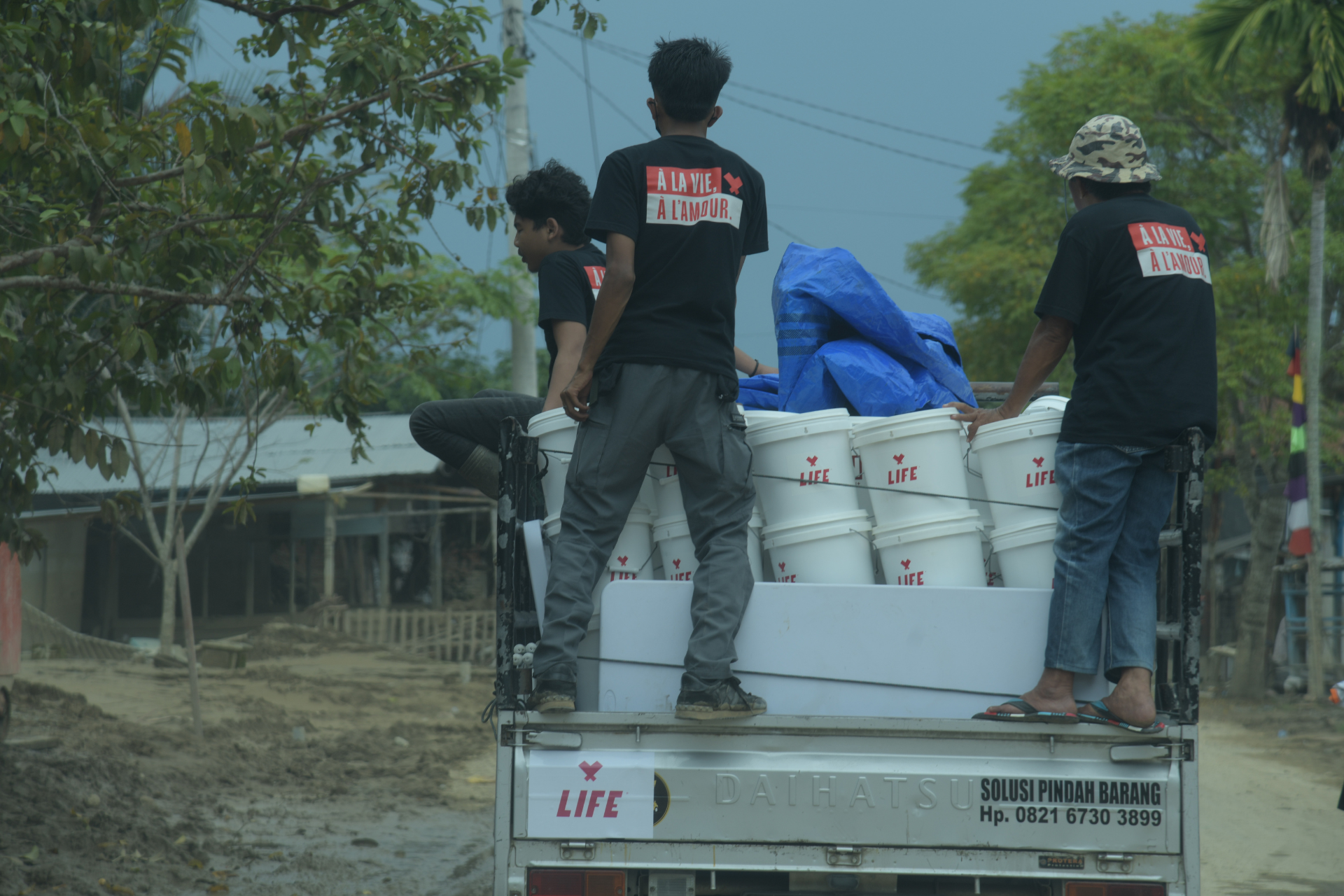
LIFE maintains a permanent presence in more than 25 countries through its teams and local partners. When disaster strikes in one of these areas, LIFE can launch an immediate emergency response, without waiting to set up teams on the ground.
How do you choose a trustworthy NGO after a disaster?
Five quick criteria to check before you give:
| Criterion | What it means in practice |
|---|---|
| Existing presence on the ground | The NGO had teams or partners in the country before the disaster |
| Financial transparency | Published accounts, more than 70 % spent on charitable programmes |
| Legal status | Registered association, recognised as being of public interest |
| Tax receipt | The NGO can issue a Cerfa receipt: a sign of legitimacy and a tax benefit |
| No artificial urgency | Trustworthy NGOs don't pressure you with 24-hour deadlines |
For a complete method, our guide Giving to an NGO: 5 criteria for choosing a trustworthy charity takes you through it step by step. To find out how to check an NGO's transparency, our article NGO transparency: how to check how your donations are used gives you all the tools. And to understand tax relief on your donation, our complete guide to tax relief on donations explains how to recover 66 % of your donation's value from your tax bill.
How LIFE responds after a natural disaster
LIFE has a rapid emergency response system in place. Here is how an intervention unfolds in practice:
In the first few hours
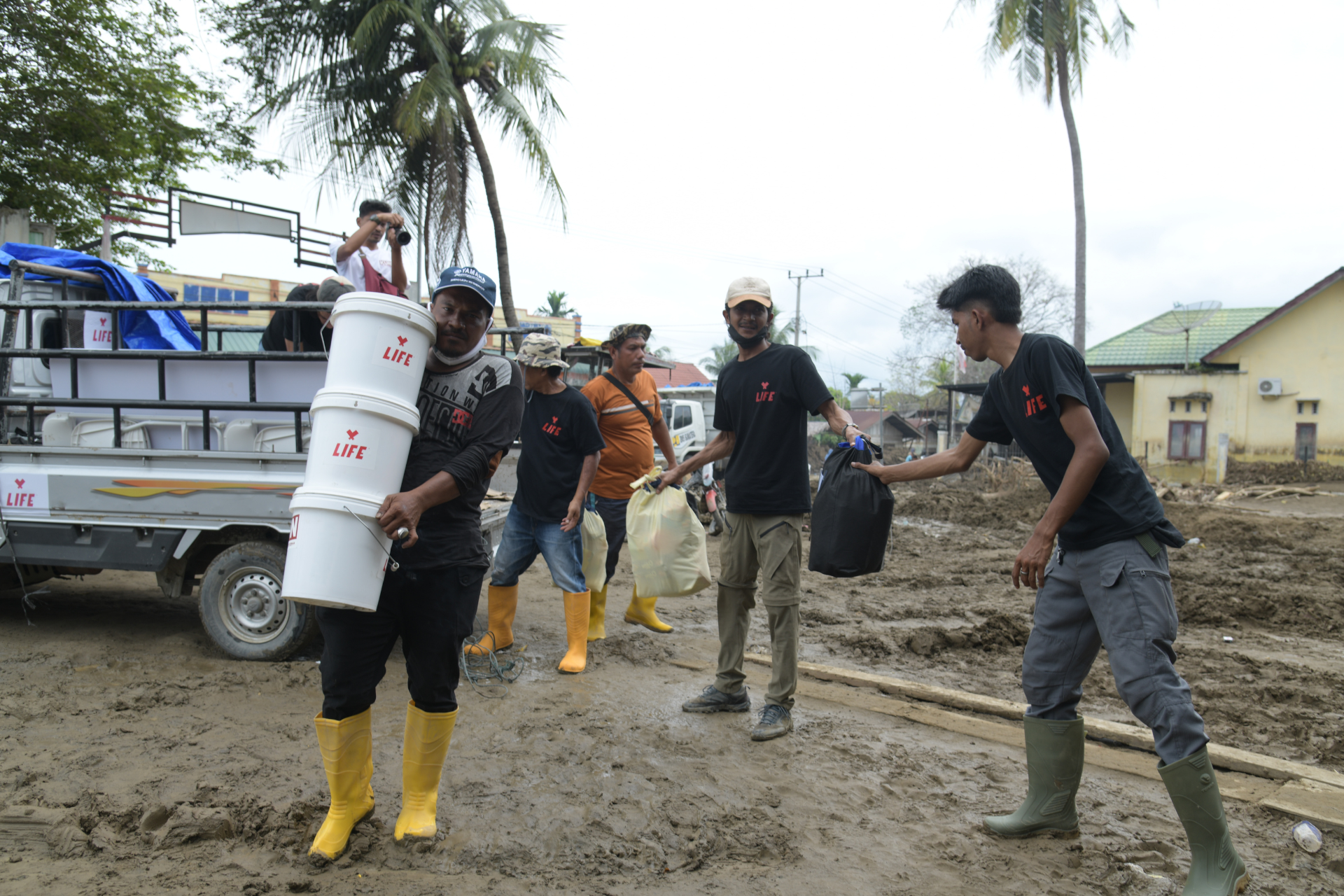
LIFE activates its network of local partners in the affected area. They assess immediate needs, identify the most vulnerable people and begin the first distributions. LIFE's pre-positioned emergency funds mean we can act without waiting for new fundraising.
In the first few days
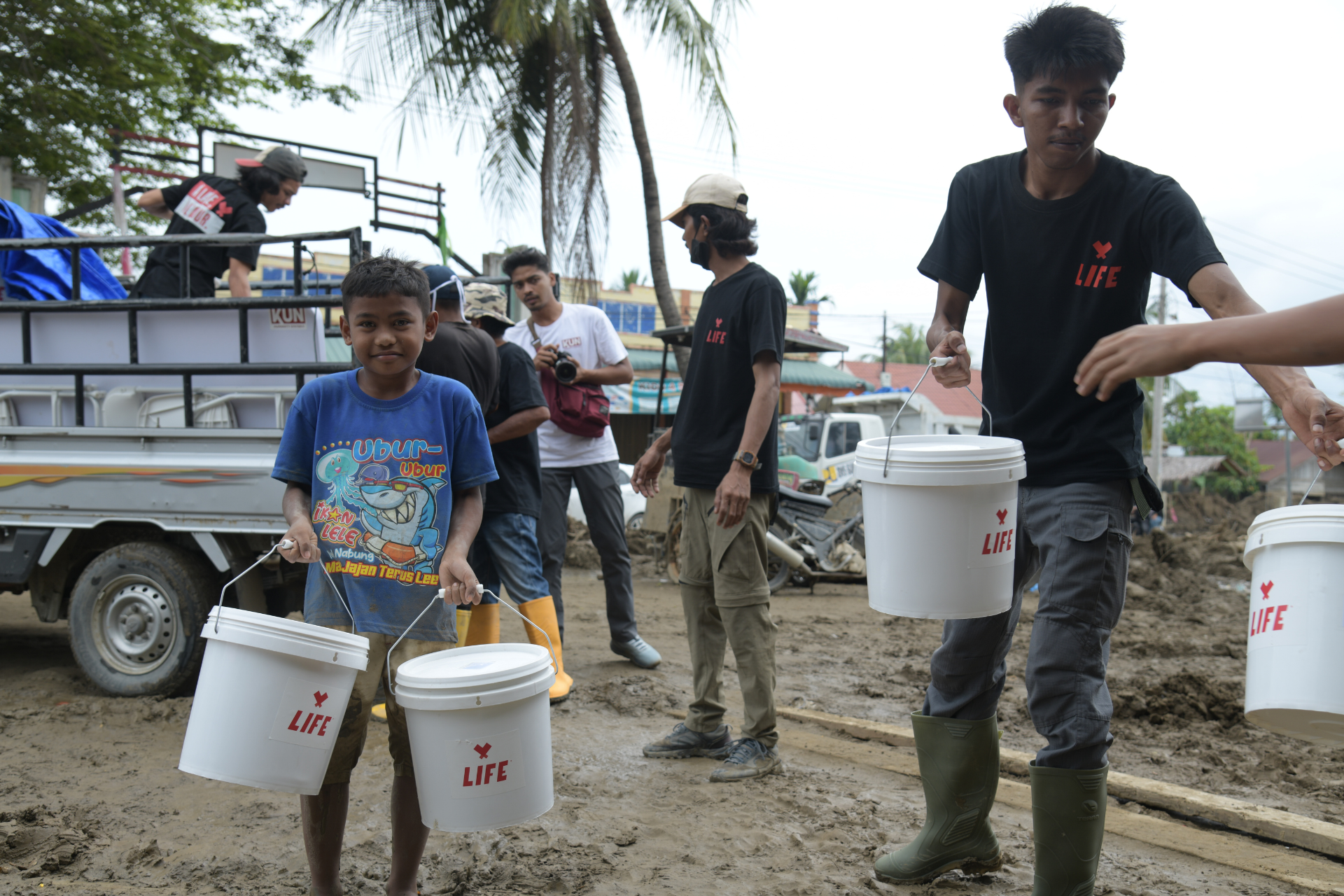
LIFE distributes clean water, food kits and hygiene kits to displaced people. In areas hit by earthquakes or cyclones, emergency shelter (tents, tarpaulins) is handed out to families who have lost their homes.
In the following weeks and months
LIFE turns to stabilisation: repairing water points, supporting local health facilities, and providing cash assistance so families can replace what they need. To understand how NGOs manage each phase of a humanitarian emergency, our article Humanitarian emergencies: how NGOs respond on the ground explains the whole process in detail.
Giving to LIFE for a natural disaster: how does it work?
When you give to LIFE for a specific disaster, your donation is allocated to the corresponding emergency programme. If you don't specify, it goes to the general emergency fund, which finances the most critical interventions at the time. You automatically receive a Cerfa tax receipt by email. The applicable French tax relief is 66 %, up to a limit of 20 % of your taxable income. If you have any questions about how your donation is allocated or about ongoing operations, LIFE's donor relations team will answer you directly.
Would you like to support victims of a natural disaster?
66% of your donation is deductible from your French taxes, and you'll receive an annual tax receipt. Our team is here to help with any questions, so get in touch!
Donate now →Frequently asked questions
Should I give straight after a disaster or wait?
Both are valuable. Immediate donations fund the emergency response in the first few hours. Donations that arrive a few weeks later fund the stabilisation phase, which gets less media coverage but is just as essential. A monthly donation to LIFE funds both phases on an ongoing basis.
Is it useful to send clothes or food after an earthquake or cyclone?
In the vast majority of cases, no. Sending goods from France is slow, expensive and often unsuited to local needs. NGOs on the ground buy what people need locally. It's faster, cheaper and supports the local economy. A financial donation is almost always more effective.
How can I tell whether an NGO is really present in the affected area?
Look at the NGO's website: it should have pages or news showing it was already present in the region. You can also contact LIFE's donor relations team for precise information about our presence and operations in the area concerned.
Will my donation be used only for the disaster I chose?
If you direct your donation to a specific disaster on LIFE's website, it will be allocated to that programme. If you don't specify, it will go to the general emergency fund. Our donor relations team can confirm how your donation has been allocated and keep you informed about ongoing operations.
Is my donation after a natural disaster eligible for tax relief?
Yes. LIFE is recognised as being of public interest and is authorised to issue tax receipts. The French tax relief rate is 66 %, up to a limit of 20 % of your taxable income. You'll automatically receive your Cerfa receipt by email after you donate.
Ready to help?
I start a fundraiser
Support the causes close to your heart by starting an online fundraiser with LIFE.
Raising funds for a charity has never been easier!