Humanitarian emergencies: how NGOs respond on the ground
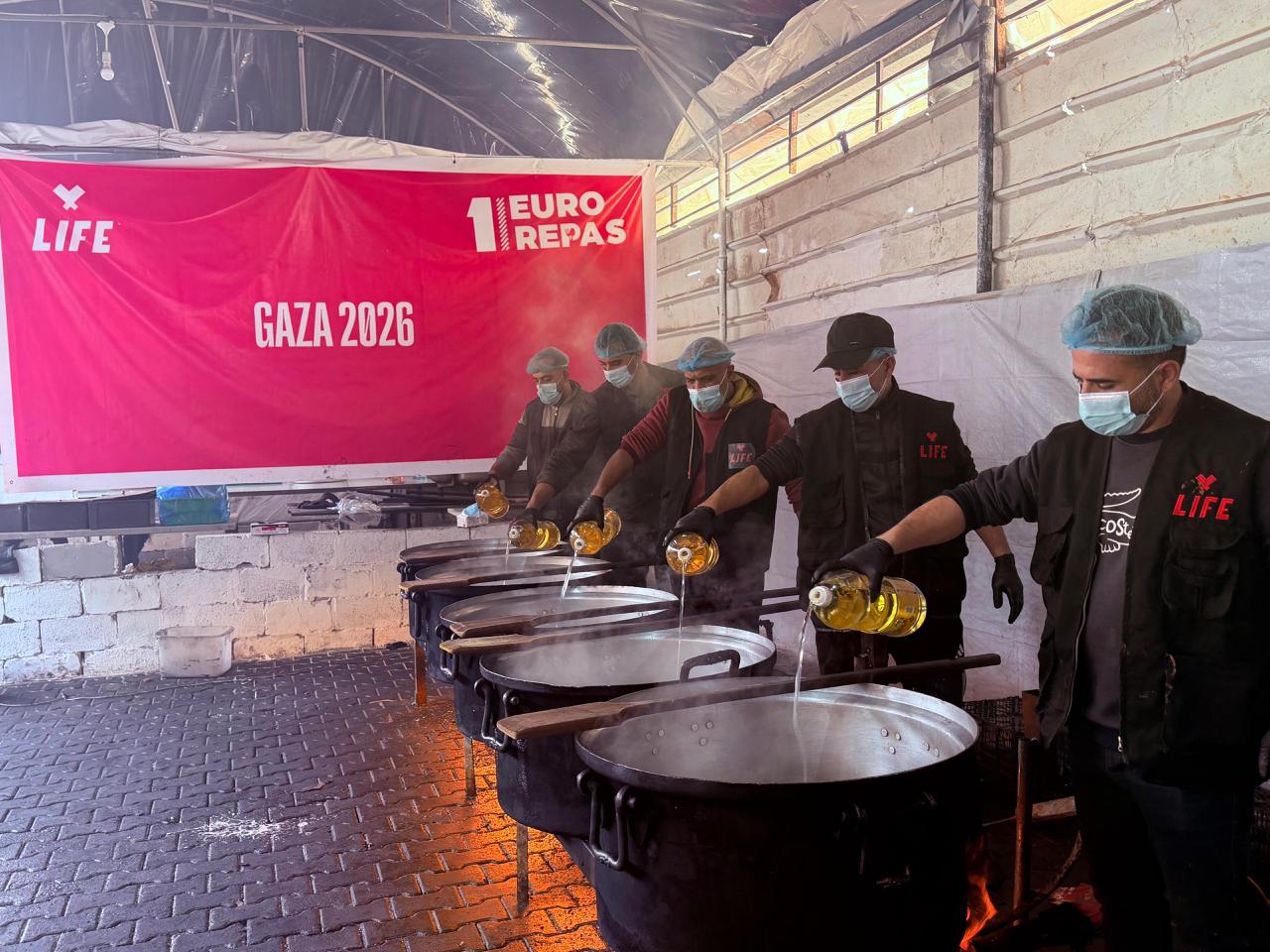
At a glance
- A humanitarian emergency occurs when a disaster overwhelms a country's ability to meet its people's basic survival needs.
- According to the United Nations, more than 305 million people worldwide needed emergency humanitarian aid in 2025. For 2026, UNICEF estimates that more than 200 million children in 133 countries will need help.
- NGOs play a central role: they work where states cannot go, and move with a speed government bodies simply don't have.
- A humanitarian response unfolds in several phases, from needs assessment through to reconstruction.
- LIFE is present in more than 25 countries and can respond within hours thanks to its network of local partners. Our donor relations team is on hand to answer all your questions.
When we talk about humanitarian emergencies, we tend to picture what we see on television: refugee camps, food distributions, medical teams in protective gear. But how does it really work, on the other side of the screen? Who decides to step in? How does an NGO like LIFE get on the ground within days?
This guide explains, in practical terms, how humanitarian responses work, so you can better understand what your donation helps to fund.
What is a humanitarian emergency?
A humanitarian emergency is a situation in which a population's basic needs (food, water, shelter, medical care, safety) can no longer be met by the local or national resources available, because of a sudden or protracted crisis.
These crises fall into two types:
- Sudden-onset crises: earthquakes, floods, cyclones, explosions. The emergency is immediate and needs are massive from the very first hours.
- Protracted crises: long-running armed conflicts, chronic famines, displacement crises. Needs last for months, sometimes years.
According to the United Nations, more than 305 million people worldwide needed emergency humanitarian aid in 2025, against a backdrop of ever more numerous and intense crises. For 2026, UNICEF estimates that more than 200 million children in 133 countries and territories will need humanitarian aid.
Important
The funding challenge: in 2025, the United Nations needed $47.4 billion to support its humanitarian operations worldwide. That same year, budget cuts by several donor countries triggered what the sector called an unprecedented funding crisis, forcing NGOs to scale back or suspend life-saving programmes.
Who's who in humanitarian aid?
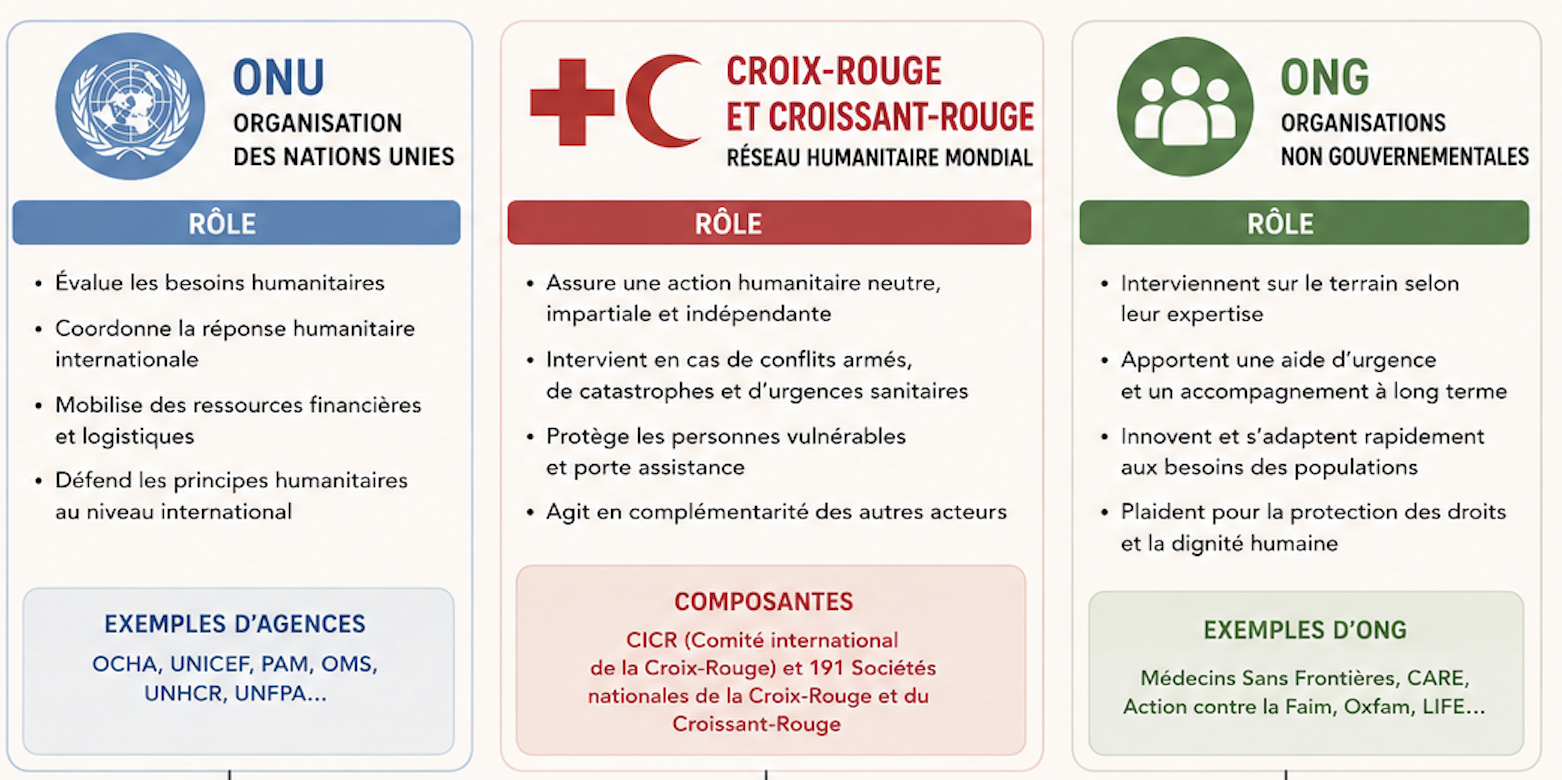
The international humanitarian response is structured. It rests on three main groups of actors working in coordination.
United Nations agencies
OCHA (the Office for the Coordination of Humanitarian Affairs) coordinates the entire international response. It assesses needs, mobilises resources and orchestrates the work of the various actors. Around it are WFP (the World Food Programme), UNICEF (children), UNHCR (refugees), WHO (health) and IOM (migration).
The Red Cross movement
The ICRC (International Committee of the Red Cross) and the national Red Cross societies work primarily in armed conflicts, with access negotiated with the warring parties.
Humanitarian NGOs
This is where organisations like LIFE come in. NGOs play an irreplaceable role: they are often on the scene before UN agencies, they have local networks that know the terrain, and they can work in areas where institutional access is denied.
In practice
A little-known fact: in many crises, it is NGOs' local partners who carry out most aid distributions, long before the large UN agencies reach full capacity. LIFE relies on networks like these to respond quickly and effectively across the 25 countries where it works.
How does an NGO respond to an emergency? The 5 phases
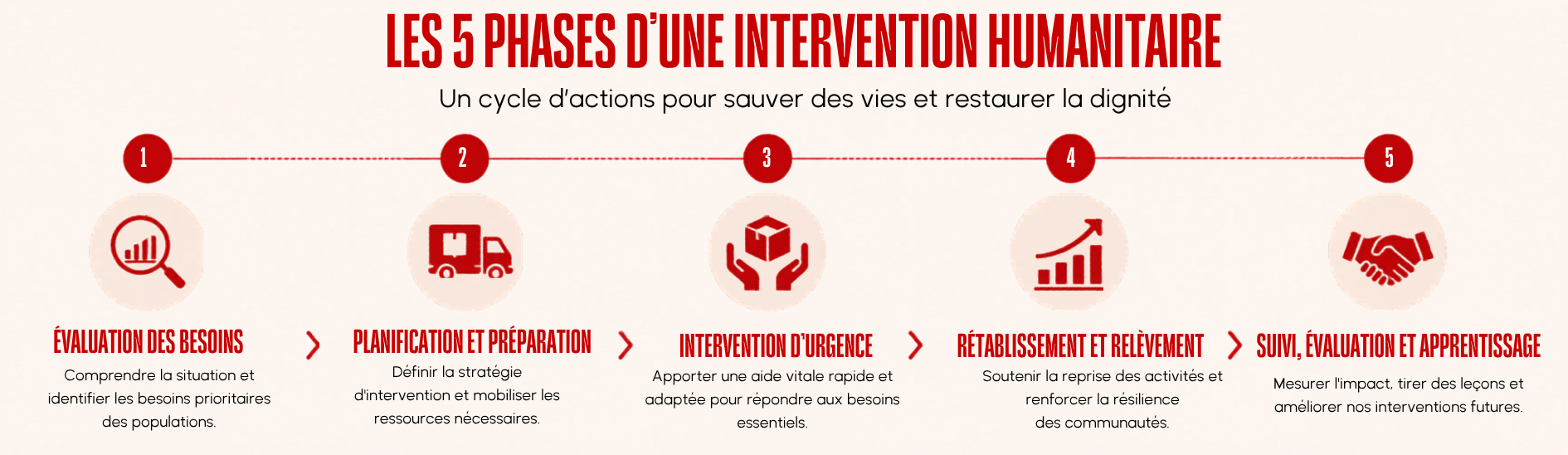
From the moment a crisis strikes to the day teams withdraw, a humanitarian response follows several distinct phases. Each comes with its own constraints and its own funding needs.
Phase 1: monitoring and early warning
Serious NGOs don't learn about crises from the newspapers. They run permanent monitoring systems, linked with OCHA, governments and their local networks. As soon as a situation deteriorates, an internal alert is raised.
LIFE maintains a permanent presence in more than 25 countries, which allows it to spot the early warning signs of a crisis and prepare to act before the situation becomes unmanageable.
Phase 2: needs assessment
Before sending aid, a serious NGO assesses. How many people are affected? What are the priority needs (water, food, shelter, care)? Which areas can be reached? Who is already on the ground?
This step is essential to avoid duplication, focus resources where they are most lacking, and choose the most suitable way to respond.
Phase 3: immediate emergency response (0–3 months)
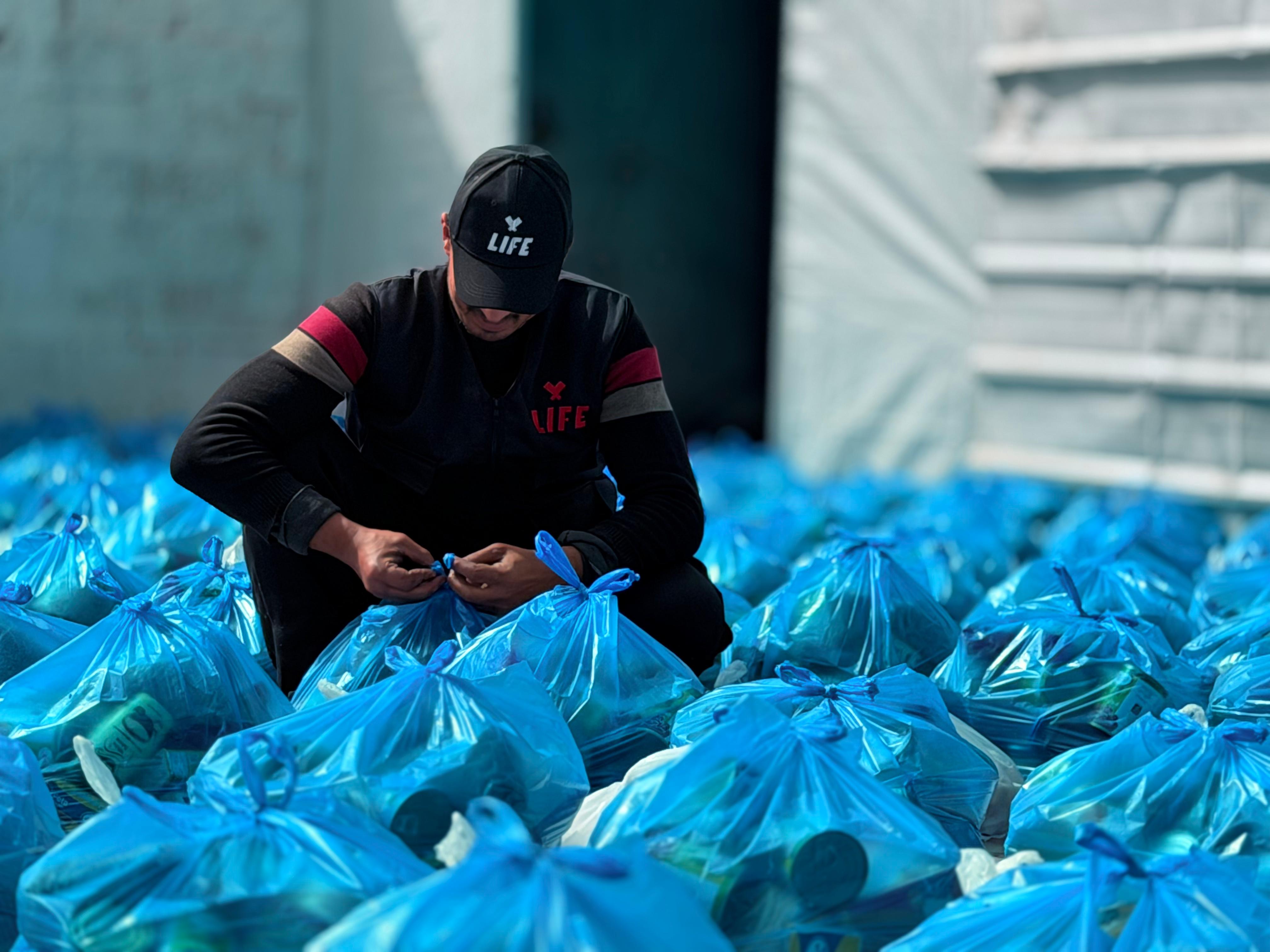
This is the visible phase: food distributions, hygiene kits, tents, medical care. Its aim is to save lives in the first weeks.
It is also the phase that depends most on donations from the public: institutional funding takes time to mobilise, and it is often private donations that enable NGOs to act in the first hours.
Phase 4: stabilisation (3–12 months)
Once immediate survival is secured, the NGO sets about stabilising the situation: repairing water points, getting health facilities running again, providing psychosocial support, and giving cash assistance so families can buy what they need themselves.
Phase 5: reconstruction and development
In protracted crises, NGOs stay long after the immediate emergency to support the rebuilding of livelihoods, infrastructure and basic services.
Which sectors does a humanitarian response cover?
A humanitarian emergency is about much more than handing out food. Aid covers several vital sectors at once:
| Sector | What it covers in practice |
|---|---|
| Food security | Food distributions, cash assistance, emergency agricultural support |
| Water, sanitation and hygiene (WASH) | Access to safe drinking water, latrines, hygiene kits |
| Health | Emergency care, medicines, support for hospitals and clinics |
| Shelter | Tents, building materials, home repairs |
| Protection | Child protection, tackling sexual violence, documentation |
| Education | Temporary learning spaces, school supplies |
| Mental health | Psychosocial support for trauma survivors |
LIFE covers several of these sectors depending on the needs identified in each country where it works, with a priority on food security, access to safe drinking water and emergency medical aid.
Why are private donations essential?
Humanitarian NGOs are funded from several sources: public grants, funding from UN agencies and private donations. Each source has its advantages and its constraints.
Donations from individuals are the only ones that offer complete flexibility: the NGO can use them where needs are most urgent, with no geographical or thematic restrictions imposed by a funder. They are also the quickest to mobilise: when disaster strikes, the first private donations arrive within hours, long before institutional funding is released.
That's why a donation to LIFE, however modest, can have an immediate impact when a crisis breaks out.
To find out how to make your donation go further, our article on regular vs one-off giving explains how the two complement each other. And to understand what an NGO is and how it differs from other humanitarian actors, our guide What is an NGO? covers all the basics.
How does LIFE manage its emergency responses?
LIFE has several strengths that help it respond effectively in an emergency:
- A permanent presence in more than 25 countries through its teams and local partners, so it can act from the very first hours
- Pre-positioned emergency funds, so there's no waiting for fundraising before acting
- A network of local partners who know which areas can be reached, the specific needs and the supply routes
- Full transparency on operations: country reports, published accounts and GPS tracking on some missions
If you have a question about a specific response or how your donation is used in an emergency, LIFE's donor relations team is available to answer you directly.
Would you like to support LIFE's emergency responses?
Your donation qualifies for 66% French tax relief, and you'll receive an annual tax receipt. Our team is here to help with any question, so get in touch!
Donate now →Frequently asked questions
What is the difference between humanitarian aid and development aid?
Humanitarian aid meets immediate survival needs: it is triggered by a crisis and aims to save lives in the short term. Development aid takes a long-term view: lastingly improving a population's living conditions. In practice, the two complement each other. An NGO like LIFE first responds to the emergency, then sometimes supports reconstruction over several years.
How do NGOs coordinate their work to avoid duplication?
Coordination is led by OCHA at international level, through a system of thematic clusters (food, water, health, shelter...) in which each NGO declares its areas and activities. Locally, regular coordination meetings help prevent several organisations doing the same thing in the same place while other areas are left without help.
Why do some crises receive lots of aid and others almost none?
Humanitarian aid is heavily influenced by media coverage. Visible crises attract far more donations than "forgotten" ones. This is known as the "CNN effect". Major crises such as the one in Sudan remain chronically underfunded despite the scale of need, precisely because they lack the media exposure of other conflicts.
How long does an NGO stay after an emergency?
It depends on the nature of the crisis and the needs. For a natural disaster in a stable country, the presence may last from a few weeks to a few months. In a protracted armed conflict such as in the DRC or Sudan, NGOs like LIFE have been present for years. The goal is always to make communities less dependent on outside aid.
Is my donation to LIFE used for emergencies or for other projects?
You can direct your donation to LIFE's emergency fund, which guarantees it is used for crisis responses. Without a specific choice, your donation goes to the general fund, which covers the most urgent needs of the moment. LIFE's donor relations team can explain how to direct your donation according to your preferences.
Ready to help?
I start a fundraiser
Support the causes close to your heart by starting an online fundraiser with LIFE.
Raising funds for a charity has never been easier!