Climate refugees: who are they and how can we help?
At a glance
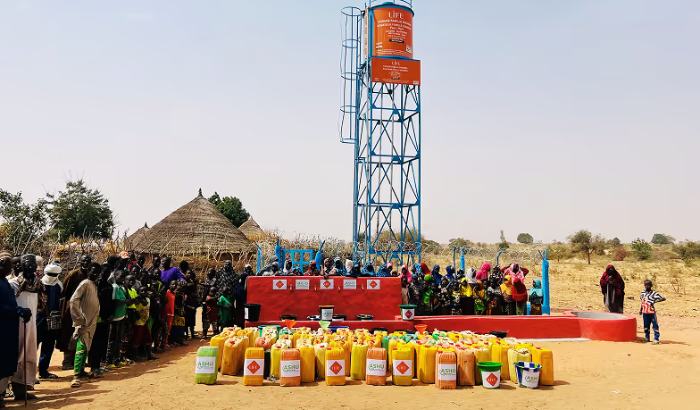
- A climate refugee is someone forced to flee their home because of disasters linked to climate change: floods, droughts, cyclones, rising seas and desertification.
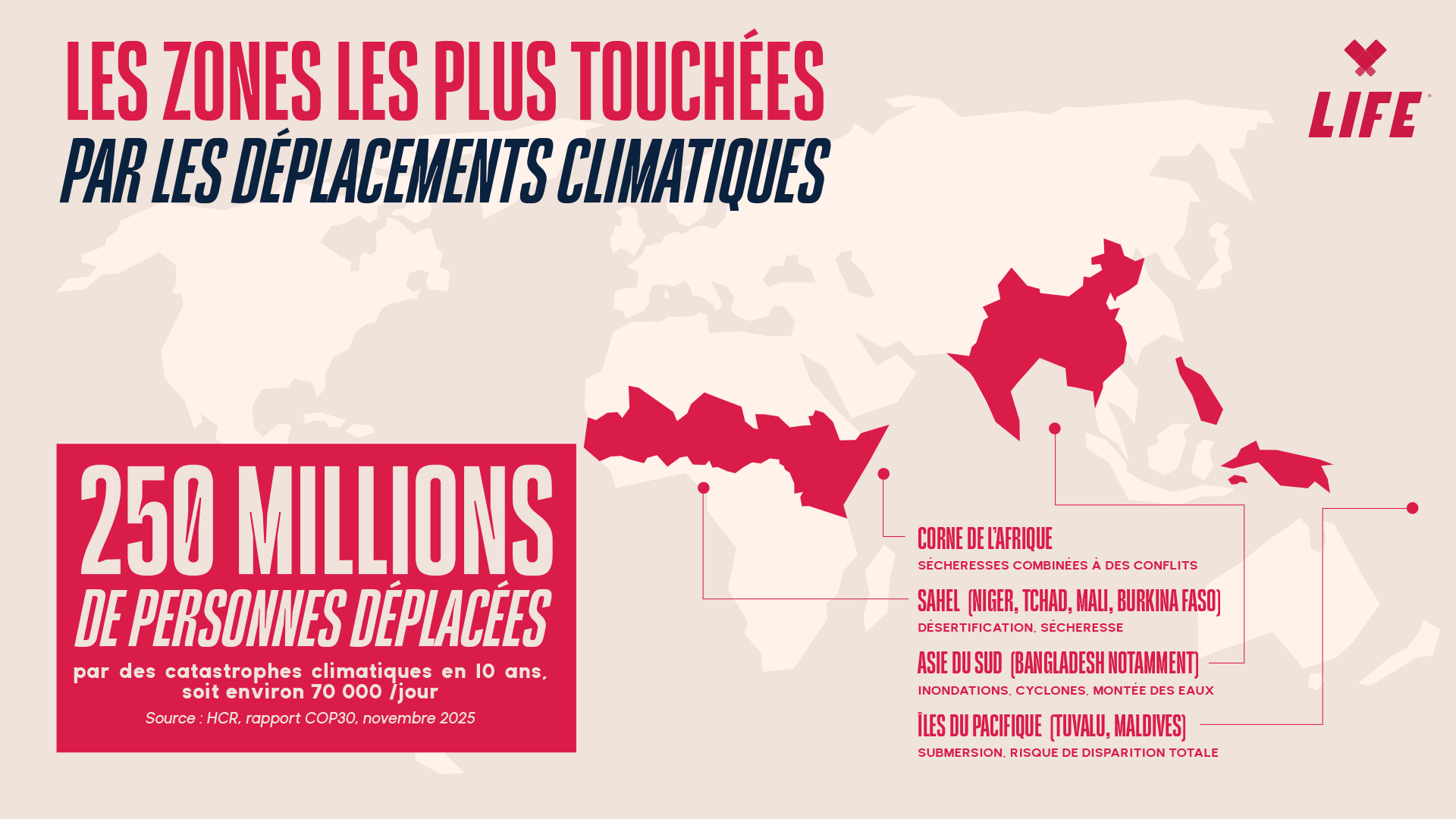
- According to UNHCR (report published in November 2025 for COP30), weather-related disasters have displaced 250 million people in ten years – that's 70,000 a day.
- Climate refugees have no recognised legal status under international law: the 1951 Geneva Convention does not apply to them.
- The people hit hardest are those who have contributed least to greenhouse gas emissions: in the Sahel, South Asia, the Horn of Africa and the Pacific islands.
- LIFE works in several of the areas worst affected by combined climate and humanitarian crises. Our donor relations team is happy to answer any questions you may have.
They are called "climate refugees", "environmentally displaced people" or "climate migrants". The term varies from one organisation to another, but the reality is the same: millions of people are leaving their homes not because of war or persecution, but because their land can no longer feed them, because water has swallowed everything, or because the heat has made survival impossible. This is already happening. It is speeding up. And it affects people who have had almost nothing to do with the carbon emissions driving these upheavals.
What exactly is a climate refugee?
A climate refugee, or climate-displaced person, is someone forced to leave their usual place of residence, temporarily or permanently, because of environmental changes linked to climate change. There are many causes of this displacement:
- Sudden disasters: floods, cyclones, landslides, tsunamis
- Slow-onset degradation: rising sea levels, desertification, prolonged drought, salinisation of farmland
- Combined shocks: areas where armed conflict and climate change feed off each other, making any kind of stable life impossible
The vast majority of this displacement happens within the same country: people flee their village for a city or another region, without crossing an international border.
A major legal gap
climate refugees have no formal recognition under international law. The 1951 Geneva Convention, which protects people fleeing political, ethnic or religious persecution, does not apply to those displaced by climate disasters. So they have no right to automatic international protection, no status and no asylum procedure.
The figures: an unprecedented scale
The scale of the problem is already huge, and it is growing fast. According to the report UNHCR published in November 2025 for COP30, weather-related disasters have displaced 250 million people over the past ten years – around 70,000 a day. In 2024, the IDMC (Internal Displacement Monitoring Centre) recorded a peak of 46 million new disaster-related displacements, double the annual average of the previous decade.
| Key figure | Source |
|---|---|
| 250 million people displaced by climate in 10 years | UNHCR, COP30 report, November 2025 |
| 70,000 people newly displaced by climate every day | UNHCR, November 2025 |
| 46 million new displacements in 2024 | IDMC / UN News, 2025 |
| An estimated 216 million internally displaced people by 2050 | World Bank, Groundswell report |
| 3/4 of forcibly displaced people live in countries at high climate risk | UNHCR, COP29 report, November 2024 |
Injustice at the heart of the problem
according to UNHCR, the countries most exposed to climate risks receive just 2 dollars per person in annual adaptation funding, compared with 161 dollars in non-fragile countries. The people suffering most from climate change are those who did least to cause it.
Who is hit hardest?
Climate displacement does not affect the world evenly. It hits hardest those living in the most exposed areas, with the fewest resources to adapt.
The Sahel and the Horn of Africa
The creeping desertification of the Sahel is driving millions of herders and farmers off their land. In Niger, Chad, Mali and Burkina Faso, a combination of drought, armed conflict and vanishing natural resources creates a vicious circle of repeated displacement.
South Asia
Bangladesh is one of the worst-affected countries: flooding from rising waters, ever more intense cyclones and erosion of coastal land. According to UNHCR, more than 870,000 Rohingya refugees who fled Myanmar are now exposed to increasingly frequent cyclones and floods in Bangladesh's camps.
The Pacific and Indian Ocean islands
Some island states, such as Tuvalu and the Maldives, are at risk of disappearing beneath rising seas. Their people could become the first "stateless" displaced people in the history of climate change.
Conflict zones
According to the UNHCR report published at COP29 (November 2024), half of the world's forcibly displaced people are in places facing both conflict and severe climate risks. Ethiopia, Haiti, Myanmar, Somalia, Sudan and Syria are explicitly named.
How LIFE helps people affected by climate crises
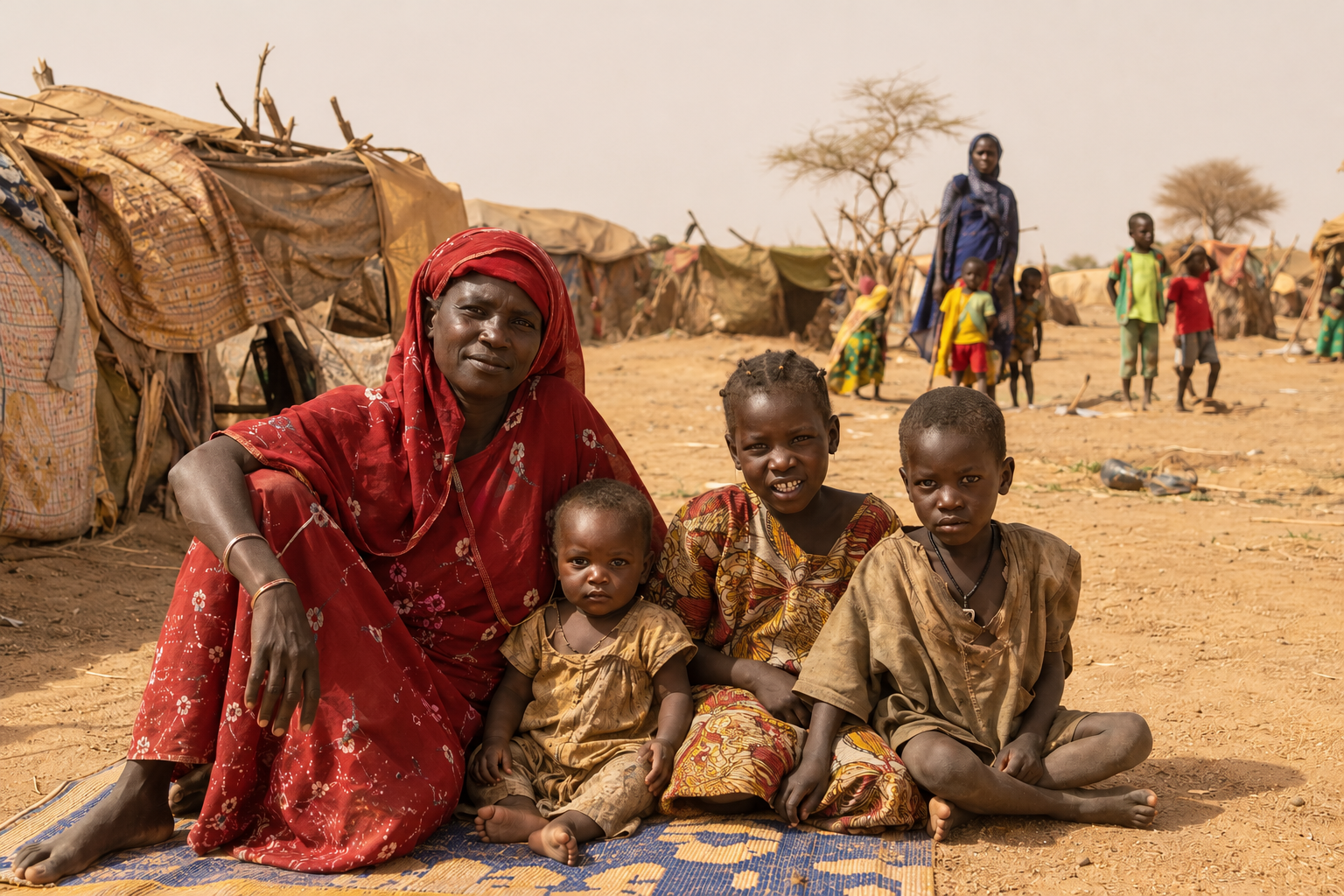
LIFE works in several of the areas hit hardest by combined climate and humanitarian crises, including the Sahel, the Horn of Africa and South Asia. Our programmes are tailored to the specific needs of each crisis:
- Emergency food aid for families whose harvests have been wiped out by drought or flooding
- Access to clean water in areas hit by desertification or contaminated groundwater
- Rebuilding shelters after cyclones or floods
- Livelihood support to stop temporary displacement becoming permanent
Climate crises often strike areas where LIFE is already running programmes. Being there already means we can act straight away, without the logistical delays of setting up from scratch. To learn more about how LIFE handles humanitarian emergencies, our article Humanitarian emergencies: how NGOs respond on the ground explains the response process step by step. And to understand the difference between refugees and internally displaced people, our article Internally displaced people vs refugees: understanding the difference and taking action covers the essentials.
How can you help climate refugees from France?
Giving money: the most effective way to help
As with every international humanitarian crisis, a financial donation to an NGO working on the ground remains the most effective way to help. It means what people need can be bought locally, without the logistical hurdles of shipping goods from France. A donation to LIFE for its programmes in climate-vulnerable areas qualifies for 66% French tax relief. A €100 donation really costs you just €34. Our complete guide to tax relief on donations explains everything.
Advocacy and raising awareness
Climate refugees have no international legal status. Supporting organisations that campaign for their recognition, sharing reliable information about their situation, and backing ambitious climate adaptation policies are all ways to make a difference from France.
Would you like to support people affected by climate and humanitarian crises?
Your donation qualifies for 66% French tax relief, and you'll receive an annual tax receipt. Our team is here to help with any questions – get in touch!
Donate now →Frequently asked questions
What is the difference between a climate refugee and a conventional refugee?
A "conventional" refugee flees political, ethnic or religious persecution and is protected by the 1951 Geneva Convention. A climate refugee flees environmental disasters or degradation linked to climate change. There is no international legal status for climate refugees, which leaves them without formal protection.
How many climate refugees are there in the world?
According to UNHCR (COP30 report, November 2025), weather-related disasters have displaced 250 million people in ten years. In 2024, the IDMC recorded a peak of 46 million new disaster-related displacements. The World Bank estimates that without climate action, 216 million people could be displaced within their own countries by 2050.
Why are climate refugees more vulnerable than other displaced people?
They face several vulnerabilities at once: no protective legal status, limited resources to adapt, and the risk of being displaced again and again. According to UNHCR, three quarters of forcibly displaced people live in countries at high climate risk, meaning that a first displacement caused by conflict may be followed by a second caused by a climate disaster.
Which parts of the world are worst affected by climate displacement?
The worst-affected areas are the Sahel and the Horn of Africa (droughts, desertification), South Asia (floods, cyclones), the Pacific islands (rising seas), and conflict zones where climate change heightens instability, such as Somalia, Ethiopia, Sudan and Syria.
Does my donation to LIFE help climate refugees?
Yes. LIFE works in several of the areas worst affected by combined climate and humanitarian crises: the Sahel, the Horn of Africa and South Asia. Our food aid, water access and shelter reconstruction programmes directly benefit people displaced by climate disasters. LIFE's donor relations team can give you detailed information about current programmes.
Ready to help?
I start a fundraiser
Support the causes close to your heart by starting an online fundraiser with LIFE.
Raising funds for a charity has never been easier!