Children in armed conflict: the figures and how we can protect them
At a glance
- In 2024, the United Nations verified 41,370 grave violations against children in armed conflict. That is a 25% rise on 2023 and a "devastating new record", according to the UN Security Council (June 2025).
- According to UNICEF (January 2025), more than 473 million children around the world live in conflict zones. That is more than one child in six.
- The six grave violations recognised by the UN are: killing and maiming, forced recruitment, sexual violence, abduction, attacks on schools and hospitals, and denial of humanitarian access.
- LIFE works in several conflict zones to protect children, providing food aid, access to water, psychosocial support and learning spaces.
- LIFE's donor relations team is happy to answer any questions about our current children's programmes.
Children don't choose the wars they are born into or grow up in. Yet they are often the most vulnerable victims. Wounded, displaced, forcibly recruited, cut off from school and healthcare: every year, armed conflict robs millions of children of their childhood. This guide explains how big the problem is, the violations children suffer in war zones, and the practical steps you can take from France.
How big is the problem?
The figures are devastating. According to the report presented to the UN Security Council in June 2025, the United Nations verified 41,370 grave violations against children in 2024. That is a 25% rise on 2023 and a "devastating new record" since the monitoring mechanism was set up in 2005. And these figures are only a fraction of the violations actually committed: limited access, fear and shame mean that many cases are never reported or documented. According to UNICEF (January 2025), more than 473 million children were living in conflict zones, more than one child in six worldwide. One direct consequence: more than 52 million children in conflict-affected countries are estimated to be out of school.
What UNICEF says
at the Security Council open debate on 25 June 2025, UNICEF's Director of Child Protection stated that "the world is failing to protect children from the horrors of war". In the DRC, in the first two months of 2025 alone, protection partners reported almost 10,000 cases of rape and sexual violence, more than 40% of which involved children.
The 6 grave violations recognised by the UN
The UN monitoring system on children and armed conflict identifies six categories of grave violations. Each one is documented and verified in the Secretary-General's annual report.
1. Killing and maiming
This is the most widely documented violation. It is caused by direct attacks on civilians, but also by landmines, improvised explosive devices, cluster munitions and crossfire. According to UNICEF, explosive weapons in populated areas are the leading cause of child deaths in conflict.
2. Recruitment and use of children
Armed groups, and sometimes government forces, enlist children as soldiers, porters, spies or in other roles. Girls are especially at risk, and are less likely to be formally identified as child soldiers. According to the UN, more than 16,000 children left armed forces or groups in 2024 and received reintegration support.
3. Sexual violence
Conflict-related sexual violence affects girls disproportionately, but boys too. It often goes unreported because of shame and fear of reprisals. In Haiti, reports of sexual violence against children rose by 1,000% in 2024, according to UNICEF.
4. Abduction
Children are abducted to be forcibly recruited, forced into marriage or used as bargaining chips. Abduction often goes hand in hand with other violations, sexual violence in particular.
5. Attacks on schools and hospitals
Schools and hospitals are protected under international humanitarian law. Even so, thousands of attacks are documented every year. In Mali alone, 2,300 schools have closed because of insecurity, according to OCHA.
6. Denial of humanitarian access
Parties to conflict deliberately block humanitarian aid from reaching civilians, leaving children without food, water, medical care and protection.
A unique international mechanism
since 2005, the UN has monitored and documented these six grave violations in every conflict situation. Through direct negotiations with warring parties, this monitoring has led to the release of more than 200,000 children in 25 years and prevented countless further violations.
The long-term effects on children
Grave violations are only the visible part of how conflict affects children. The long-term effects are just as devastating.
Education
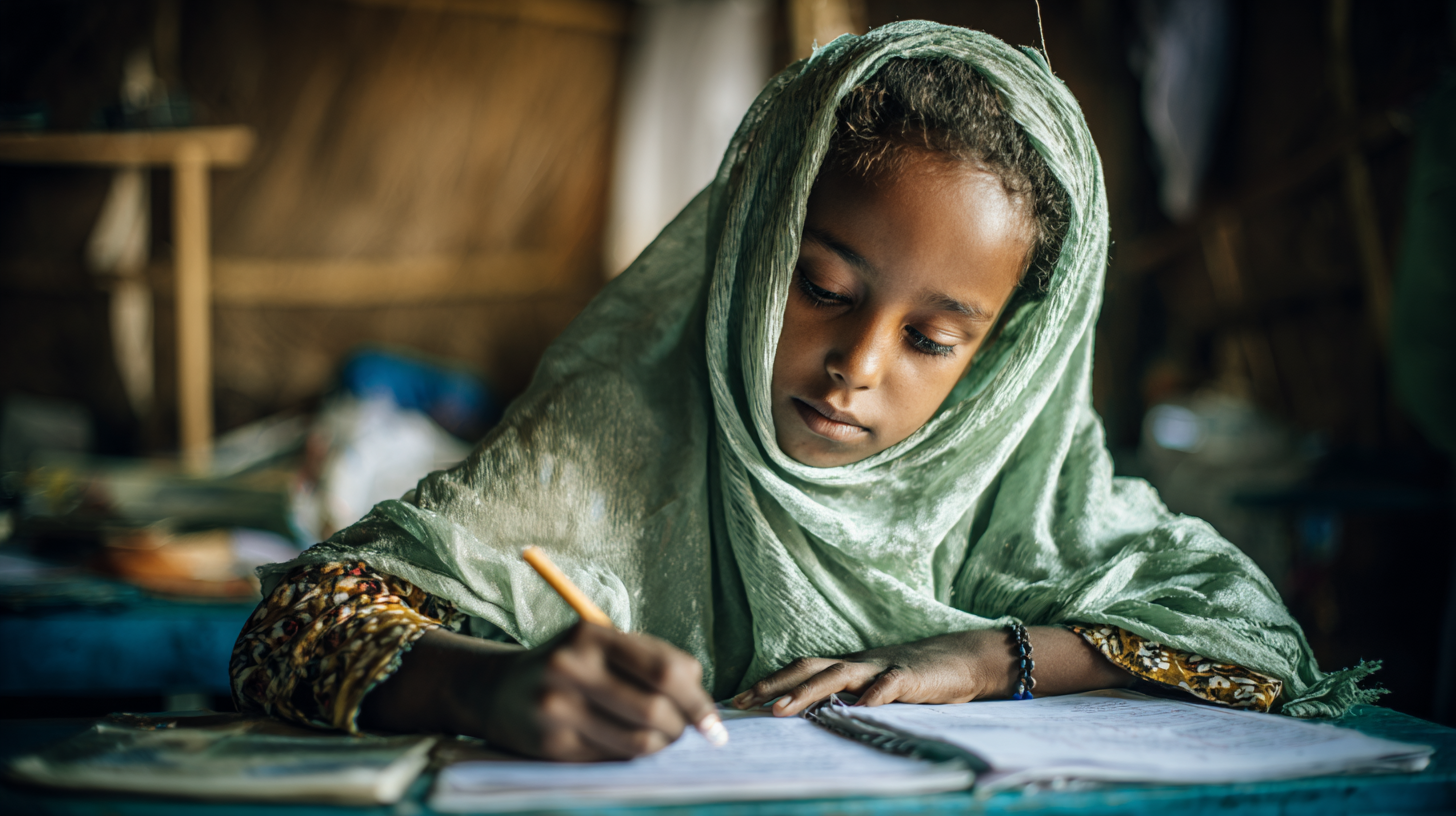
According to UNICEF, more than 52 million children in conflict-affected countries are estimated to be out of school. Destroyed schools, insecurity around them and families forced to flee are depriving entire generations of an education. Children in Gaza and Sudan have missed more than a full school year.
Mental health
The trauma of war leaves deep scars. According to UNICEF, 96% of children in Gaza feel that death is imminent. Very high rates of depression, anxiety and post-traumatic stress disorder are documented in every protracted conflict zone.
Malnutrition
In many areas, war is the main cause of hunger among children. Conflict destroys harvests, cuts off food markets and stops nutrition aid getting through. Children are the first to suffer.
How LIFE protects children in conflict
LIFE works in several conflict zones, with programmes that make child protection a priority across everything we do:
- Targeted food aid: children suffering from acute malnutrition are identified first during distributions
- Access to clean water: vital for preventing diseases that hit children hardest
- Temporary learning spaces: where schools have been destroyed or closed, LIFE helps set up safe spaces for children
- Psychosocial support: support sessions are offered to children traumatised by war
If you have any questions about LIFE's child protection programmes, our donor relations team will be glad to answer them directly. To understand the legal framework that should protect these children, our article International humanitarian law: the rules that protect civilians in war zones explains the Geneva Conventions and their limits. To find out more about displaced children and the difference between refugees and internally displaced people, our article Internally displaced people vs refugees: understanding the difference and taking action offers further insight. The crisis in the DRC is one of the settings where these violations are most systematic: our article DRC: the forgotten crisis affecting millions of displaced people explains its causes.
Would you like to protect children affected by armed conflict?
Your donation qualifies for 66% French tax relief, and you'll receive an annual tax receipt. Our team is here to help with any questions, so do get in touch!
Donate now →Frequently asked questions
How many children around the world are affected by armed conflict?
According to UNICEF (January 2025), more than 473 million children live in conflict zones, more than one child in six worldwide. In 2024, the United Nations verified 41,370 grave violations against children, a 25% rise on 2023, according to the report presented to the UN Security Council in June 2025.
What is a "grave violation" against a child in wartime?
The UN recognises six categories of grave violations: killing and maiming, recruitment and use of children by armed forces, sexual violence, abduction, attacks on schools and hospitals, and denial of humanitarian access. These violations are documented and verified in the UN Secretary-General's annual report.
Is the recruitment of child soldiers still common?
Yes. Recruitment of children by armed forces and groups remains a common violation in many conflicts: in the DRC, Sudan, Mali, Syria and Haiti. According to the UN, more than 16,000 children left armed forces or groups in 2024 and received reintegration support. That figure is both alarming and a sign that release programmes work.
How does LIFE help children in conflict zones?
LIFE makes child protection a priority in its emergency programmes: food aid targeted at malnourished children, access to clean water, temporary learning spaces and psychosocial support. Our donor relations team can give you detailed information on current programmes in each area where we work.
Does my donation to LIFE directly benefit children?
Yes. LIFE's programmes in conflict zones prioritise the most vulnerable people, and children make up a very large share of them. LIFE's annual accounts are published and certified by an independent auditor. Our donor relations team can tell you exactly how your donation is used.
Ready to help?
I start a fundraiser
Support the causes close to your heart by starting an online fundraiser with LIFE.
Raising funds for a charity has never been easier!