International humanitarian law: the rules that protect civilians in war zones
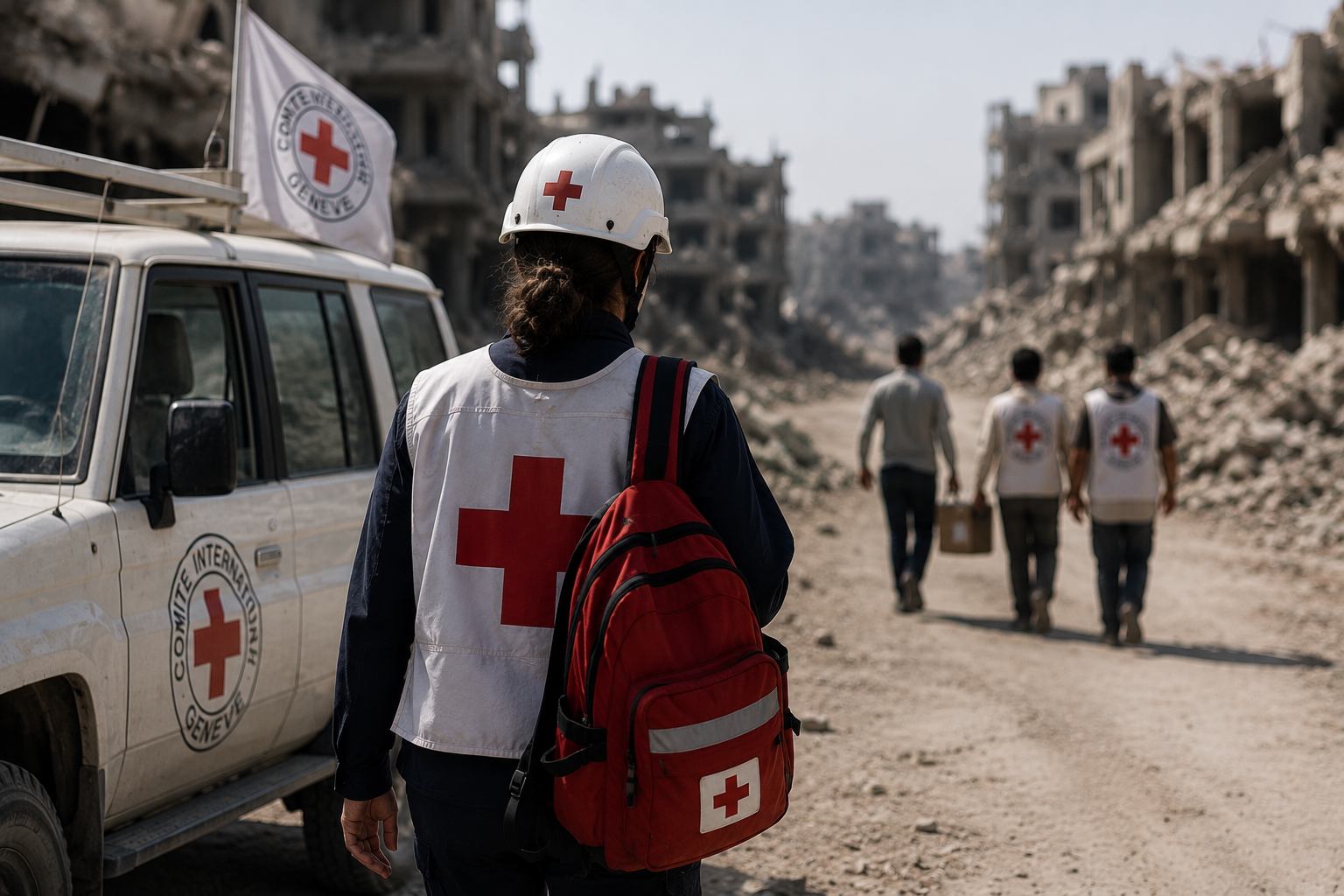
At a glance
- International humanitarian law (IHL) is the body of rules that limits the effects of armed conflict on people who are not, or are no longer, taking part in it.
- It rests mainly on the four Geneva Conventions of 1949, ratified by every state in the world, and their Additional Protocols of 1977 and 2005.
- In September 2025, 89 states joined a Global Initiative to strengthen respect for IHL, as violations become ever more widespread in today's conflicts.
- Humanitarian NGOs such as LIFE work in line with these rules: they stand up for access to aid, the protection of civilians and respect for humanitarian staff.
- LIFE's donor relations team is on hand to answer any questions you have about our missions in conflict zones.
Every day, in dozens of conflicts around the world, civilians are killed, hospitals are bombed and aid workers are targeted. These acts are not just morally unacceptable: they are illegal. International humanitarian law exists precisely to prohibit them. This guide explains what IHL is, how it works, why it is so hard to enforce, and the role NGOs such as LIFE play in all of this.
What is international humanitarian law?
International humanitarian law (IHL), also known as the "law of war" or the "law of armed conflict", is the body of international legal rules that aims to limit the effects of armed conflict on people and property. It rests on one fundamental principle: even in wartime, there are limits. Not everything is permitted in the name of military victory. IHL protects two broad groups of people:
- Those who are not taking part in hostilities: civilians, medical staff, humanitarian workers and journalists
- Those who are no longer taking part in the fighting: wounded or sick soldiers, prisoners of war and the shipwrecked
A crucial distinction
IHL does not say who has the right to wage war. It says how war must be waged in order to limit human suffering. It applies to every party to a conflict, whether or not they are in the right.
The Geneva Conventions: the cornerstone of IHL
The four Geneva Conventions, signed on 12 August 1949, form the foundation of modern international humanitarian law. They were supplemented by two Additional Protocols in 1977 and a third in 2005.
What each Convention covers
| Convention | Who it protects |
|---|---|
| 1st Convention | Wounded or sick soldiers on land |
| 2nd Convention | Wounded, sick or shipwrecked military personnel at sea |
| 3rd Convention | Prisoners of war |
| 4th Convention | Civilians in occupied or enemy territory |
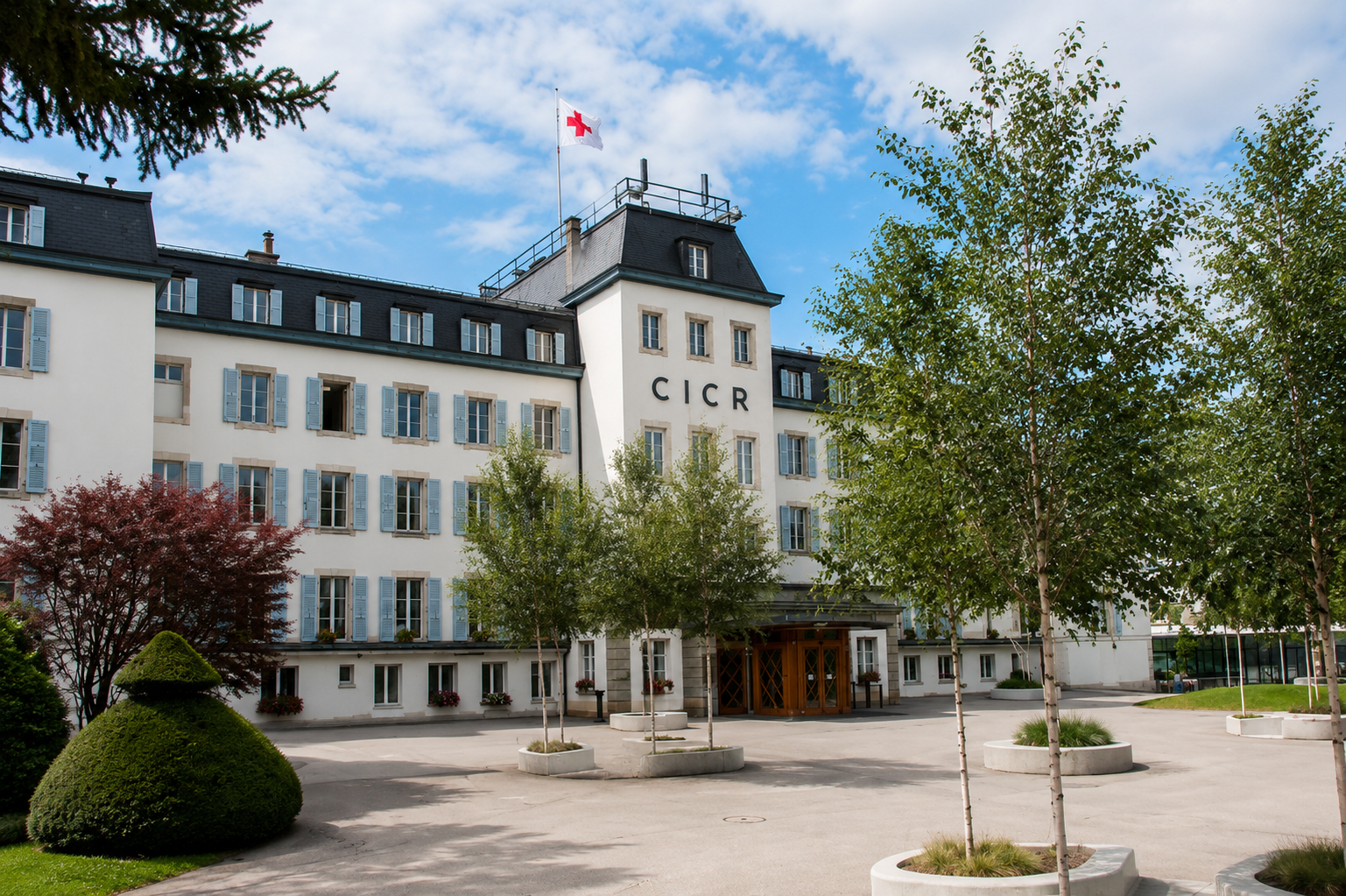
The 4th Convention, which deals directly with protecting civilians, was the subject of an updated Commentary published by the ICRC in October 2025. This document adapts how the rules are interpreted to today's realities: new technologies, social media and new forms of conflict. The four Geneva Conventions have been ratified by every UN member state, making them one of the few texts of international law to enjoy universal adherence. What is missing is not the law: it is its enforcement.
The 4 fundamental principles of IHL
Beyond the text of the Conventions, IHL rests on four fundamental principles that the ICRC and humanitarian organisations regard as the heart of the law of war.
The principle of distinction
Parties to a conflict must at all times distinguish between combatants and civilians, and between military objectives and civilian property. Deliberately targeting civilians or civilian infrastructure such as hospitals, schools or water systems is prohibited.
The principle of proportionality
An attack may be directed at a military objective, but the harm caused to civilians must not be excessive in relation to the expected military advantage.
The principle of precaution
Parties must take every feasible precaution to avoid or minimise civilian casualties, even when carrying out legitimate operations against military objectives.
The principle of humanity
Inflicting unnecessary suffering on anyone, combatant or not, is prohibited. People who are hors de combat must be treated humanely.
The picture in 2026
in September 2025, 89 states joined a Global Initiative launched by France, Brazil, China, Jordan, Kazakhstan, South Africa and the ICRC to strengthen respect for IHL. The initiative acknowledges what evidence on the ground confirms: violations of IHL are widespread, deliberate and often go unpunished. A high-level global conference is planned for 2026 to address this.
What exactly does IHL prohibit?
These are the acts IHL classes as "grave breaches" or war crimes:
- Deliberately targeting civilians or civilian buildings
- Bombing hospitals, ambulances or medical staff
- Attacking aid workers or aid convoys
- Using civilians as human shields
- Torturing or executing prisoners of war
- Using chemical or biological weapons against populations
- Deliberately using starvation as a method of warfare
This last point is especially topical: the UN Fact-Finding Mission concluded that the Rapid Support Forces in Sudan are deliberately using starvation as a method of warfare, which amounts to a war crime under IHL.
Who enforces IHL?
This is where the system shows its limits. IHL has no international police force. Whether it is respected depends mainly on the willingness of states and parties to a conflict to meet their obligations.
The role of the ICRC
The International Committee of the Red Cross (ICRC) is the "guardian" of IHL. Its role is to visit prisoners of war, remind warring parties of their obligations, facilitate humanitarian aid and document violations. The ICRC works on the basis of strict neutrality: it takes no sides, which allows it to reach both sides of a conflict.
The International Criminal Court (ICC)
The ICC can try individuals responsible for war crimes, crimes against humanity and genocide. But its reach is limited: it can only try nationals of states that have ratified it, or cases referred by the UN Security Council.
The role of NGOs
Specialist organisations work directly with non-state armed groups to promote respect for IHL. In March 2026, a memorandum of understanding was signed between Geneva Call and the AFC/M23 in the DRC to strengthen the protection of civilians in the areas under their control.
How does IHL relate to humanitarian NGOs such as LIFE?
LIFE works in conflict zones drawing on the principles of IHL and on the protected status that international law grants to humanitarian staff. In practice, this means that:
- LIFE and its partners have the right to reach civilian populations in conflict zones, subject to the consent of the warring parties
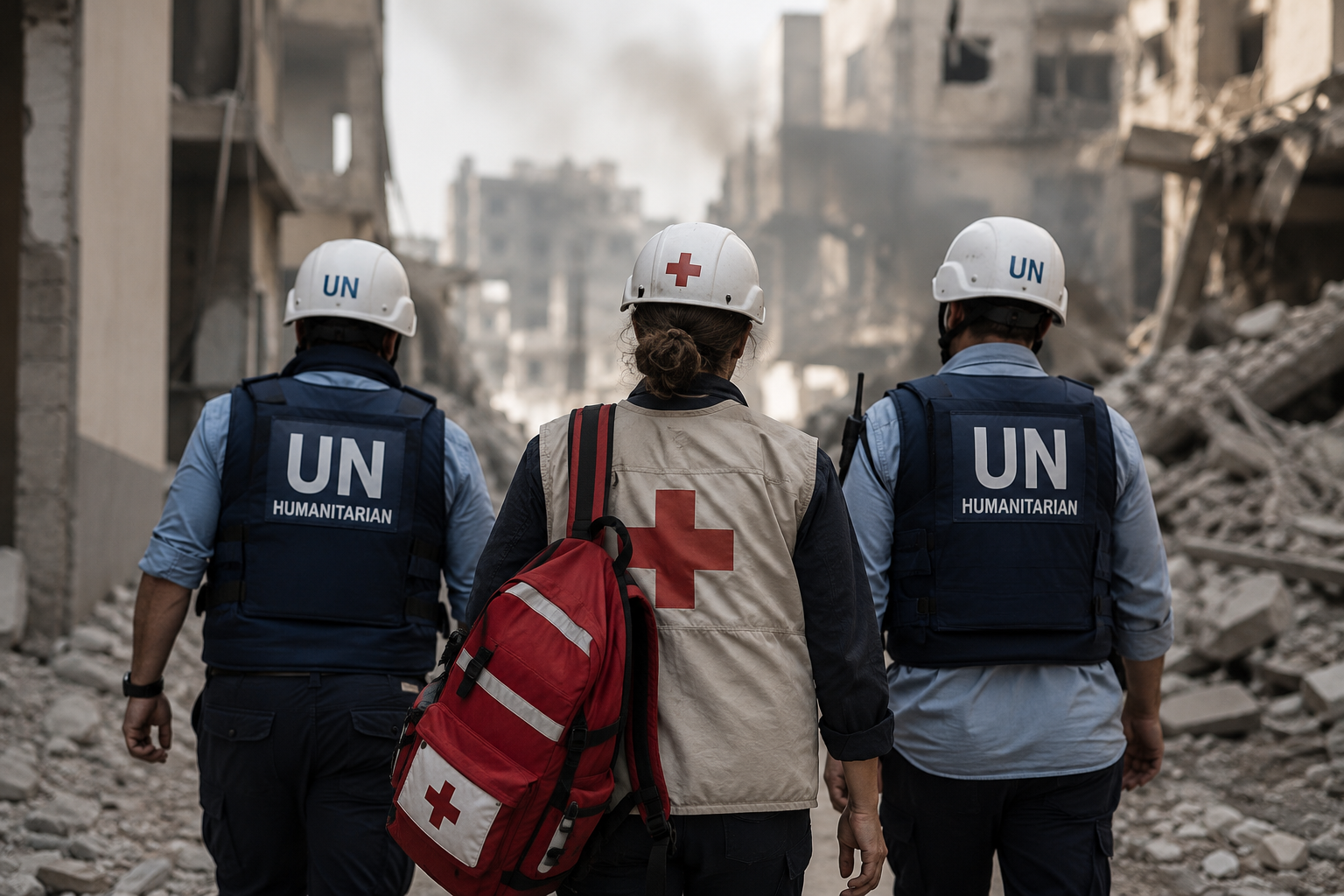
- LIFE's humanitarian staff enjoy specific protections: neither they, nor their convoys, nor their warehouses may be targeted
- LIFE documents the needs of civilian populations, which indirectly helps bring violations of IHL to light
If you have any questions about LIFE's missions in conflict zones or how we protect our teams, our donor relations team is here to help. To understand how humanitarian response works and how your donation is put to use, our article Humanitarian emergencies: how NGOs respond on the ground explains the whole process. And to find out more about the particular situation of children in armed conflict, our article Children in armed conflict: the figures and the action to protect them sets out the violations that affect them most.
Would you like to support civilians affected by conflict?
LIFE works in conflict zones in line with the principles of international humanitarian law. Our donor relations team is here to help.
Donate now →Frequently asked questions
What is the difference between IHL and human rights?
Human rights apply at all times, in peace and in war. IHL applies specifically during armed conflict. The two complement each other: in wartime, IHL sets out how the fundamental rights of civilians and of combatants who are hors de combat must be respected. Some rights can never be suspended, even in war: the prohibition of torture, for example.
Do all countries respect the Geneva Conventions?
Every UN member state has ratified the four Geneva Conventions. But formal adherence does not guarantee they are actually applied. Violations of IHL are widespread in today's conflicts: in Sudan, Gaza, the DRC and Ukraine. That is precisely why, in 2025, 89 states joined a Global Initiative to strengthen respect for IHL.
What is a war crime?
A war crime is a serious violation of IHL committed intentionally. This includes targeting civilians, attacking hospitals, torturing prisoners, using human shields or using starvation as a weapon of war. Those responsible can be prosecuted before the International Criminal Court or national courts.
Are humanitarian staff protected by IHL?
Yes. IHL specifically protects humanitarian staff, medical workers and journalists in conflict zones. They must not be targeted. Yet hundreds of aid workers are killed every year in armed conflicts, and each of these deaths is a violation of IHL.
How do NGOs help uphold IHL on the ground?
Humanitarian NGOs do not enforce IHL in the legal sense: that role belongs to states and international courts. But they contribute by documenting violations, advocating for humanitarian access, training their teams in IHL and working to reduce the risks faced by civilians. If you have any questions about LIFE's missions in conflict zones, our donor relations team can help.
Ready to help?
I start a fundraiser
Support the causes close to your heart by starting an online fundraiser with LIFE.
Raising funds for a charity has never been easier!