How much does a well cost in Africa? The real price and the impact on the ground
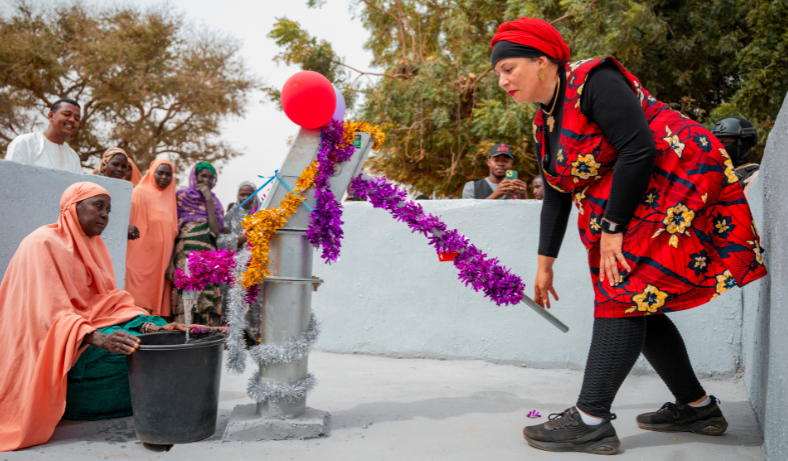
At a glance
- The price of a well in Africa comes down mainly to 4 factors: how deep the water table is, the type of ground, the kind of pump and how easy the village is to reach. There is no single price.
- At LIFE, funding a well costs €2,650 in Africa (compared with €2,300 in Asia). We charge one fair, shared price so that cheaper areas never get priority.
- This budget covers 7 stages: survey, drilling, casing, pump, concrete apron, water testing and a village management committee.
- A single well serves hundreds of people and qualifies for 66% French tax relief, which brings the real cost of a €2,650 gift down to around €901.
- LIFE's donor care team follows every project and sends you photos, GPS coordinates and a keepsake booklet for the well you funded.
"How much does a well cost?" It's often the first thing people ask when they want to help bring water to a community. The honest answer is that it depends. A well isn't an off-the-shelf product, and its price reflects very real conditions on the ground. Here's what makes the budget go up or down, what a well actually includes, and what it costs with LIFE.
The 4 factors that change the price of a well
A well dug in a sandy plain next to an easy-to-reach village doesn't cost the same as a deep borehole drilled through rock, several hours down a dirt track. Four factors explain most of the difference in price.
1. The depth of the water table. This is the biggest factor. Depending on the region, groundwater can lie a few dozen metres down, or more than 100 metres below the surface. The deeper you have to drill, the more equipment, time and fuel the work takes.
2. The type of ground. Soft soil is quick to drill. Rocky ground needs heavier machinery and more days of work. At the same depth, hard ground pushes the bill up.
3. The type of pump. A hand pump is the simplest option and the cheapest to maintain. An electric or solar pump costs more, but it serves more people and takes the physical effort out of fetching water.
4. Access to the village. Getting a drilling rig to a remote village costs money. The more isolated the area, the more expensive it is to transport and set up the equipment.
Key takeaway
When an organisation quotes a price, that figure matches a specific set of specifications. Two "wells" at the same price can differ greatly in depth, quality and lifespan. The real question isn't just how much it costs, but what that money actually pays for.
The 7 stages covered by the price of a well
The "price of a well" is about much more than digging a hole. A well built to last depends on a full chain of stages, each with its own cost.
- The site survey: a geologist locates the water table and tests the ground to choose the best place to drill.
- Drilling: the team drills down to the water table, using equipment suited to the type of ground.
- Casing: pipes are fitted to protect the shaft and filter the water.
- The pump: the pumping system is installed (hand, electric or solar).
- The apron: a concrete base is built around the well to prevent contamination.
- Water testing: a laboratory checks that the water is safe to drink.
- Local management: a committee of villagers is trained to look after the well for the long term.
This last stage is often overlooked, yet it matters most. Without a management committee, a well eventually breaks down for lack of maintenance. It's the difference between providing water for a few months and providing it for years.
How much does a well cost with LIFE?
LIFE has made a clear choice: one fair, shared price, whatever the country. Funding a well costs €2,650 in Africa and €2,300 in Asia.
This choice deserves an explanation, as it may seem surprising. Real costs vary from country to country depending on depth, materials and logistics. By applying a single average price, LIFE holds itself to a simple rule: never choose an area because it's cheaper, but go where the need is most urgent. A hard-to-reach village in Africa doesn't get pushed down the list behind a village in Asia that costs less to equip.
This amount covers all 7 stages described above, from the survey to the management committee. When the project is complete, the donor receives the well's GPS coordinates, photos and a keepsake booklet. The well can be named, including in memory or honour of a loved one.
What does a well really cost after tax relief?
Many donors don't realise this: thanks to tax relief, the real cost of giving a well is much lower than the listed amount.
Because LIFE is recognised as a public-interest organisation in France, a gift qualifies for French tax relief of 66% of the amount given, up to 20% of taxable income. In practice:
| Gift amount | Tax relief (66%) | Real cost |
|---|---|---|
| Well in Africa: €2,650 | €1,749 | €901 |
| Well in Asia: €2,300 | €1,518 | €782 |
In other words, funding an entire well in Africa really costs around €901 after tax relief. And you don't have to fund a well on your own: with LIFE you can give from €15 a month, or team up with others on the same project. To understand exactly how this relief works, our complete guide to tax relief on donations explains everything.
Estimate your gift
A €2,650 well in Africa really costs you just €901 after tax relief. Calculate your tax relief and the impact of your gift →
Why a well is the gift with the greatest lasting impact
Beyond the price, a well is one of the gifts that achieves the most for every euro. A single well serves hundreds of people, sometimes an entire village, and does so for years.
Having water close by transforms a community's life in several ways at once. It reduces diseases caused by dirty water, the leading cause of child deaths in many areas. It frees women and children from walking for hours every day to fetch water, so children can go back to school. And it makes farming and livestock possible, giving the village economic independence.
It's because its impact multiplies like this that giving a well is often described as one of the most effective forms of solidarity. To find out why giving water offers such good value for the impact it achieves, our article Giving clean water: the humanitarian action with the best cost-to-impact ratio explores the question in depth.
And if you're wondering how a project actually unfolds, from survey to opening day, our article Building a well in Africa: stages, costs and testimonies walks through each phase. To understand why a deep borehole copes with drought better than a traditional well, our article Funding a borehole: how is it different from a well? compares the two techniques.
Would you like to fund a well in Africa?
Discover LIFE's water programme. €2,650 for a well in Africa, or €901 after tax relief. GPS tracking, photos and a keepsake booklet. Our donor care team is here to help.
Fund a well →Frequently asked questions
How much does a well cost in Africa in 2026?
The cost depends on the depth of the water table, the type of ground, the kind of pump and access to the village. At LIFE, funding a well in Africa costs €2,650, as part of one fair, shared price applied whatever the country. This amount covers the survey, drilling, the pump, the concrete apron and training a village management committee.
Why does the price of a well vary so much?
There are four main factors: the depth of the water table (from a few dozen metres to more than 100 m), the type of ground (soft or rocky), the kind of pump (hand, electric or solar) and access to the village. A deep borehole through rock in a remote area costs considerably more than a shallow well in an accessible plain.
What does a well really cost after tax relief?
Because LIFE is recognised as a public-interest organisation in France, a gift qualifies for 66% French tax relief. A €2,650 well in Africa therefore really costs around €901 after tax relief. You can also give from €15 a month or fund a well together with others.
What does the price of a LIFE well include?
The amount covers 7 stages: the site survey, drilling, casing, the pump, the concrete apron, testing that the water is safe to drink, and training a village management committee to maintain the well. The donor then receives the GPS coordinates, photos and a keepsake booklet.
How many people benefit from a single well?
A well usually benefits several hundred people, sometimes an entire village. As well as clean water, it reduces waterborne diseases, frees up time for children to go to school, and makes farming and livestock possible. That's what makes it one of the gifts with the best long-term cost-to-impact ratio.
Ready to help?
I start a fundraiser
Support the causes close to your heart by starting an online fundraiser with LIFE.
Raising funds for a charity has never been easier!