Trees for greater resilience in Madagascar
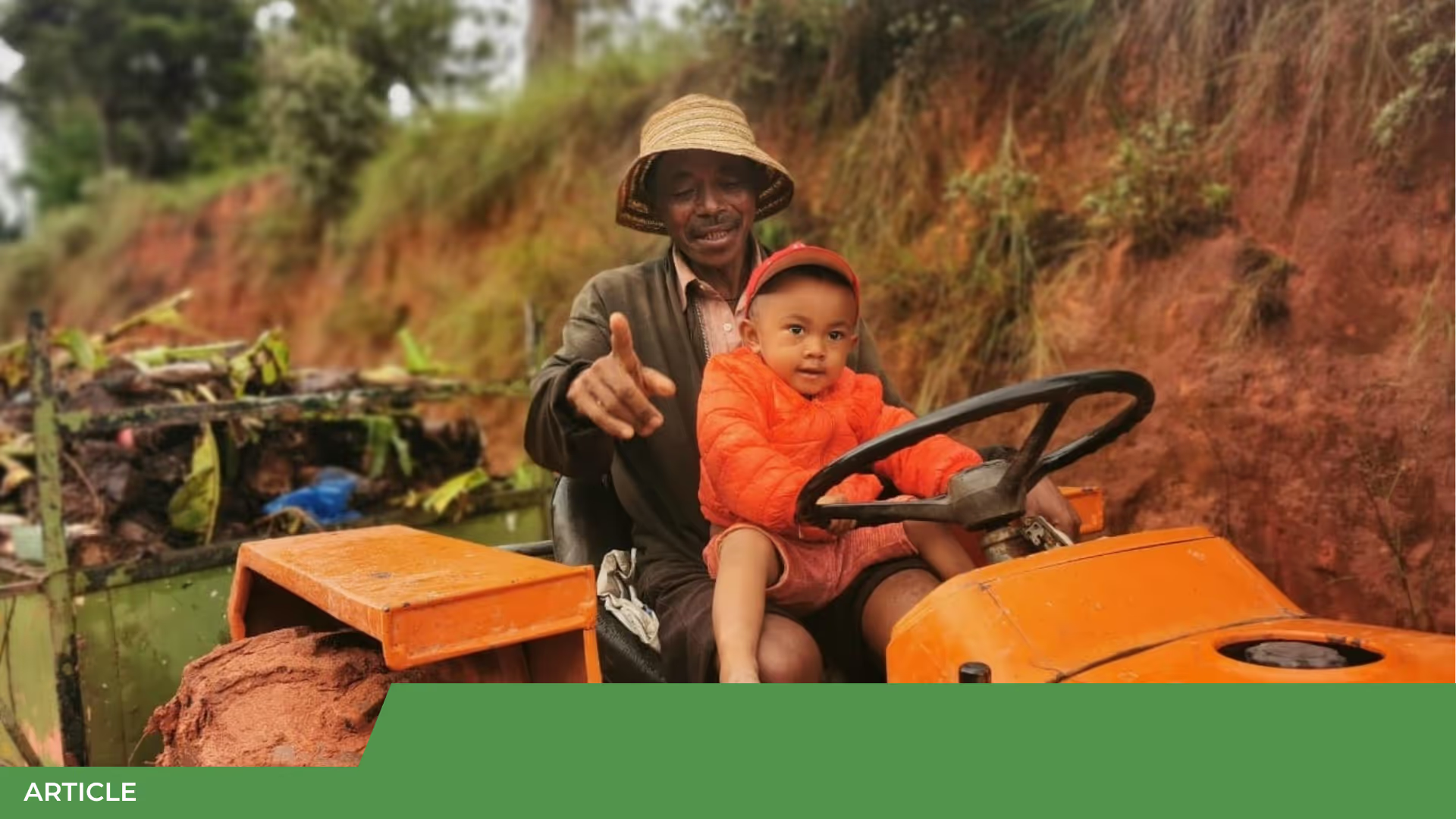
In Madagascar, people depend heavily on farming. The sector employs around 80% of the working population and accounts for 29.1% of the country's GDP. Yet the island faces increasingly unpredictable weather and rapid deforestation, which threaten communities' food and economic security. Against this urgent backdrop, the Malagasy government is working to restore degraded ecosystems, and NGOs are also actively setting up reforestation projects. LIFE is one of them. Together, we offer a glimmer of hope and a path towards a more sustainable, resilient future for Madagascar.
How Madagascar's people depend on farming
Madagascar's population relies heavily on farming for both its livelihood and its economy.
More than 70% of people living in rural areas earn their income mainly from agriculture. The problem: 75% of the food grown by rural households is eaten by the households themselves. And farm productivity is often held back by traditional methods, a lack of water and unpredictable weather made worse by climate change.
Extreme weather is indeed becoming more frequent, with long droughts followed by spells of intense rain. In 2021, Madagascar endured its worst drought in four decades, bringing sandstorms that buried farmland. Many people were forced to move to the towns, while others encroached on forest areas. In early 2022, the island was hit by a record six storms and cyclones in just three months. These events devastated farming, destroying crops, damaging infrastructure and shrinking the water available.
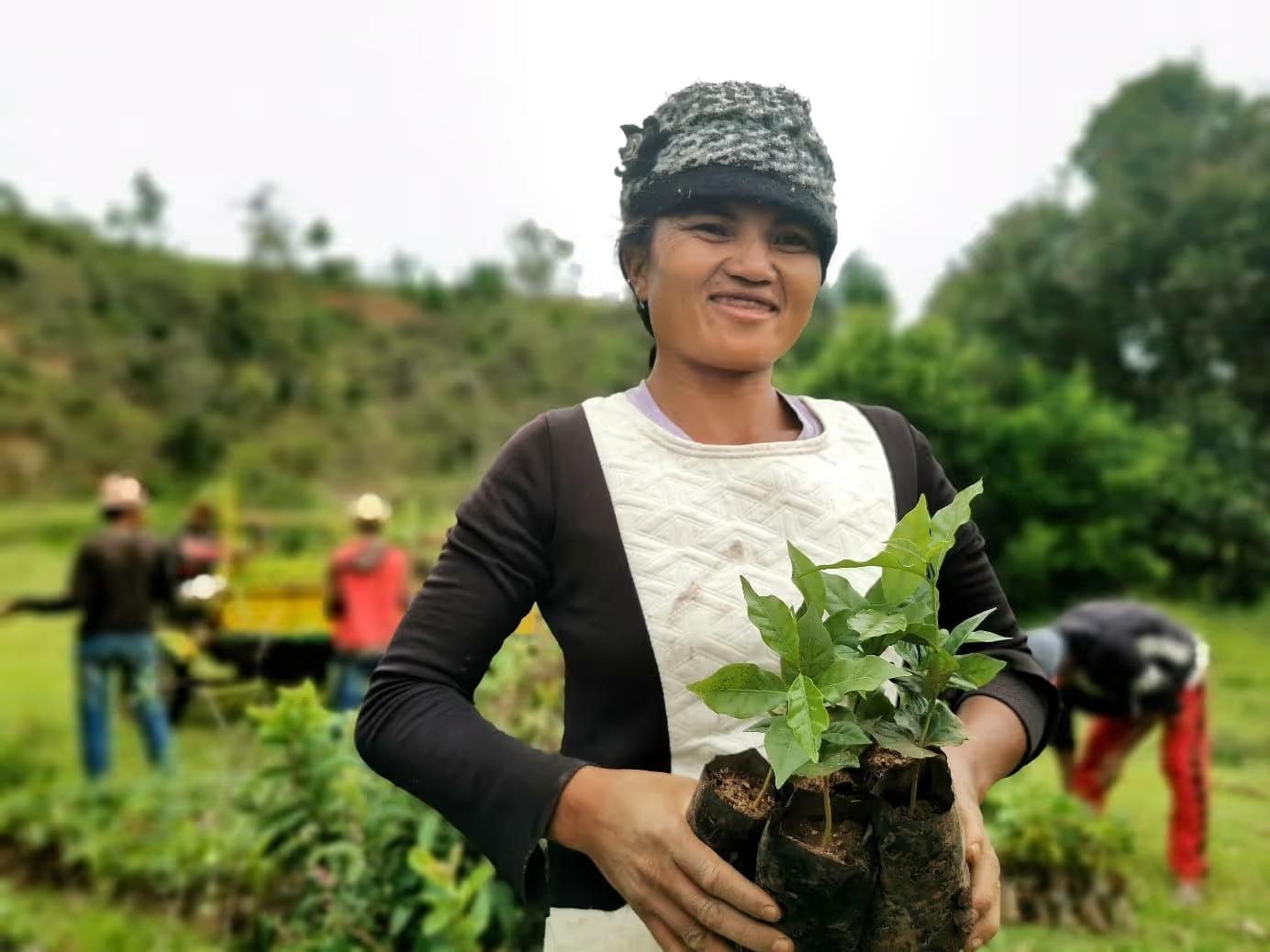
Ongoing deforestation makes these problems worse, causing soil erosion and loss of fertility, and so limiting the scope for farming in the long term.
Did you know? According to a WWF study, between 2004 and 2017 Madagascar lost 700,000 hectares of forest, mainly in the country's eastern and western regions. The country lost 44% of its natural forests between 1953 and 2014!
The main causes of deforestation are clearing forest for farmland, slash-and-burn cultivation, and cutting trees for charcoal and firewood. Wildfires and bushfires are also a real threat to Madagascar's forests.
Reforestation as an all-round solution
To tackle these challenges, in 2020 the Malagasy government launched an ambitious reforestation project, planting 60 million trees of native species across a total area of 40,000 hectares.
Its aim is to regulate water cycles, prevent soil erosion and create economic opportunities through ecotourism and sustainable forest management. So these efforts are not only about restoring the island's unique biodiversity, but also about strengthening local communities' climate resilience, helping them diversify their livelihoods and adapt to environmental change.
The project is backed by national funding as well as partnerships with international organisations and local NGOs, such as WWF. These agreements are vital for bringing together the financial, technical and human resources needed for it to succeed.
Did you know? Madagascar's forests are home to exceptional biodiversity, with around 5% of the world's species, including 95% of reptiles, 89% of plants and 92% of mammals found nowhere else but the island.
Our project in Madagascar
LIFE is also present in Madagascar, where we run 360-degree projects. This means they complement each other and meet a village's various needs, rather than just one. We are committed to providing comprehensive, lasting solutions that touch every part of community life, from education and health to farming and infrastructure. In this way, our work can have a deep and lasting impact on people's wellbeing and on protecting their environment.
In the Analamanga, Itasy and Vakinakaratra regions, our work aims to protect the environment while improving living standards in several villages. How? By planting "economic" trees. Why "economic"? Read on to find out.
Trees for the environment and for community empowerment
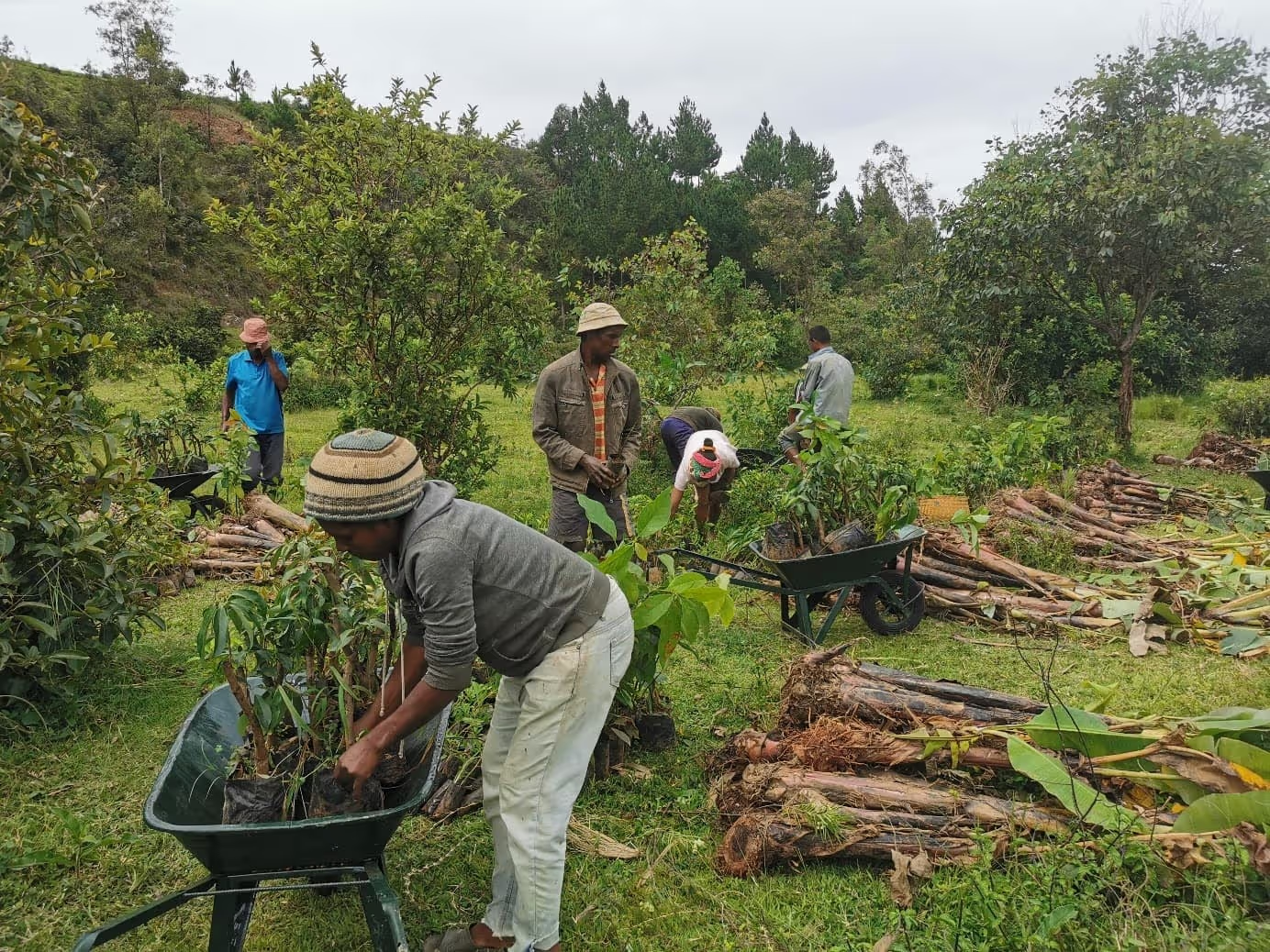
We are supporting 200 families in planting fruit trees, cash-crop trees, essential-oil trees and forest trees. Many species are used: cinchona (Kininne), banana, pink pepper, ravintsara, lychee, orange, lemon, mango, coffee, avocado, persimmon, papaya, Tephrosia and more. The families become the owners and managers of these trees, planted on their unused land. In all, 41 hectares have been planted – the equivalent of 38 large football pitches!
These are not just ordinary tree plantations. They bring many benefits. Not only do they restore the ecosystem by boosting biodiversity and improving soil quality, they also give people valuable resources such as fruit, nuts and long-lasting materials. They provide a regular income, which ensures families stay interested and committed to looking after them. They also help prevent bushfires, which are often devastating.
Raising awareness and training local people
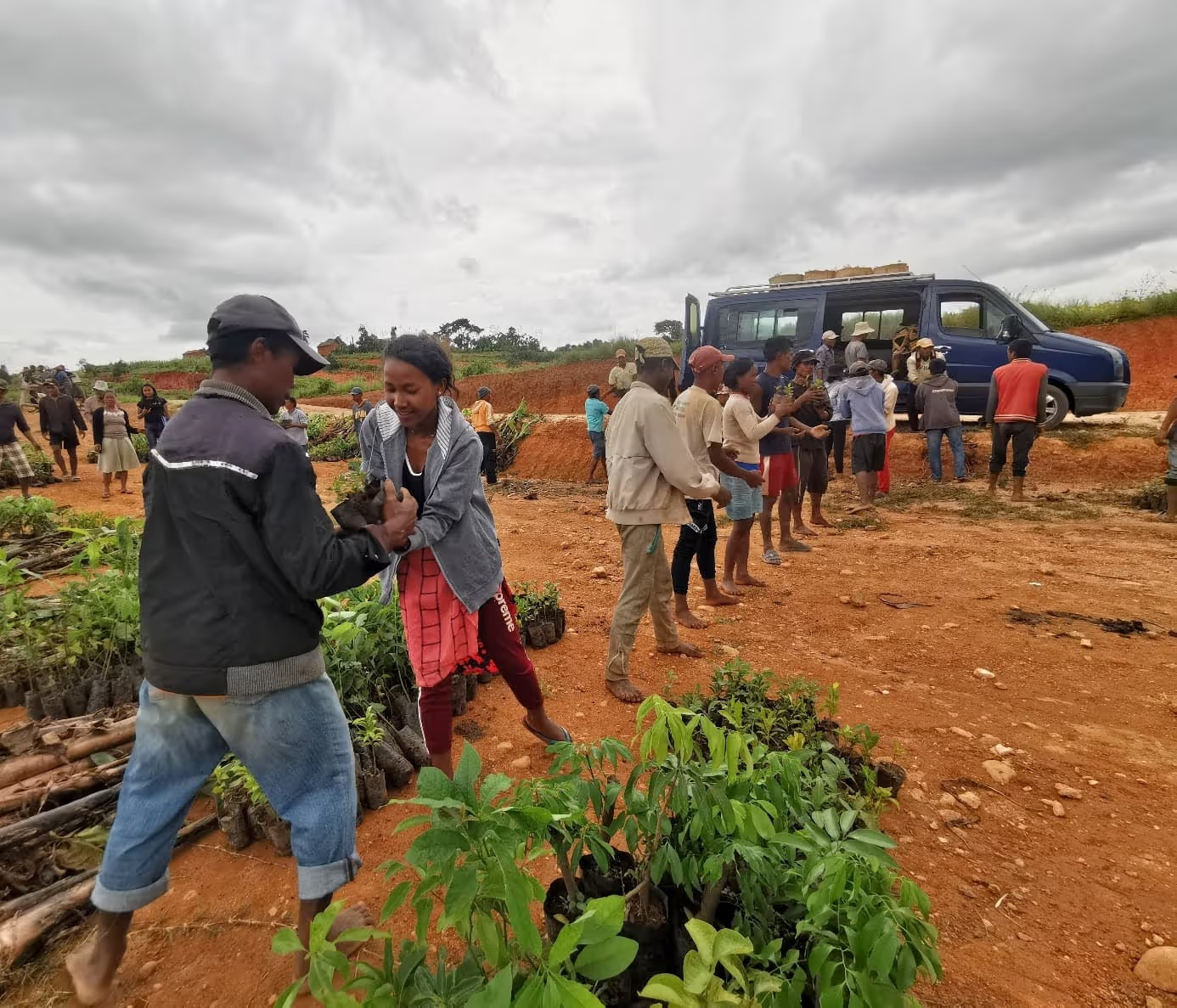
Working with our local partners, and to make the project last, we raise communities' awareness of how important it is to protect their environment. We run information meetings and training sessions on planting techniques and nursery management. These help people better understand the economic and ecological benefits of fruit trees, strengthening their commitment to the project. Families will gain real know-how, enabling them to replace weak trees, expand their plantations and keep this activity going by passing it on to their children.
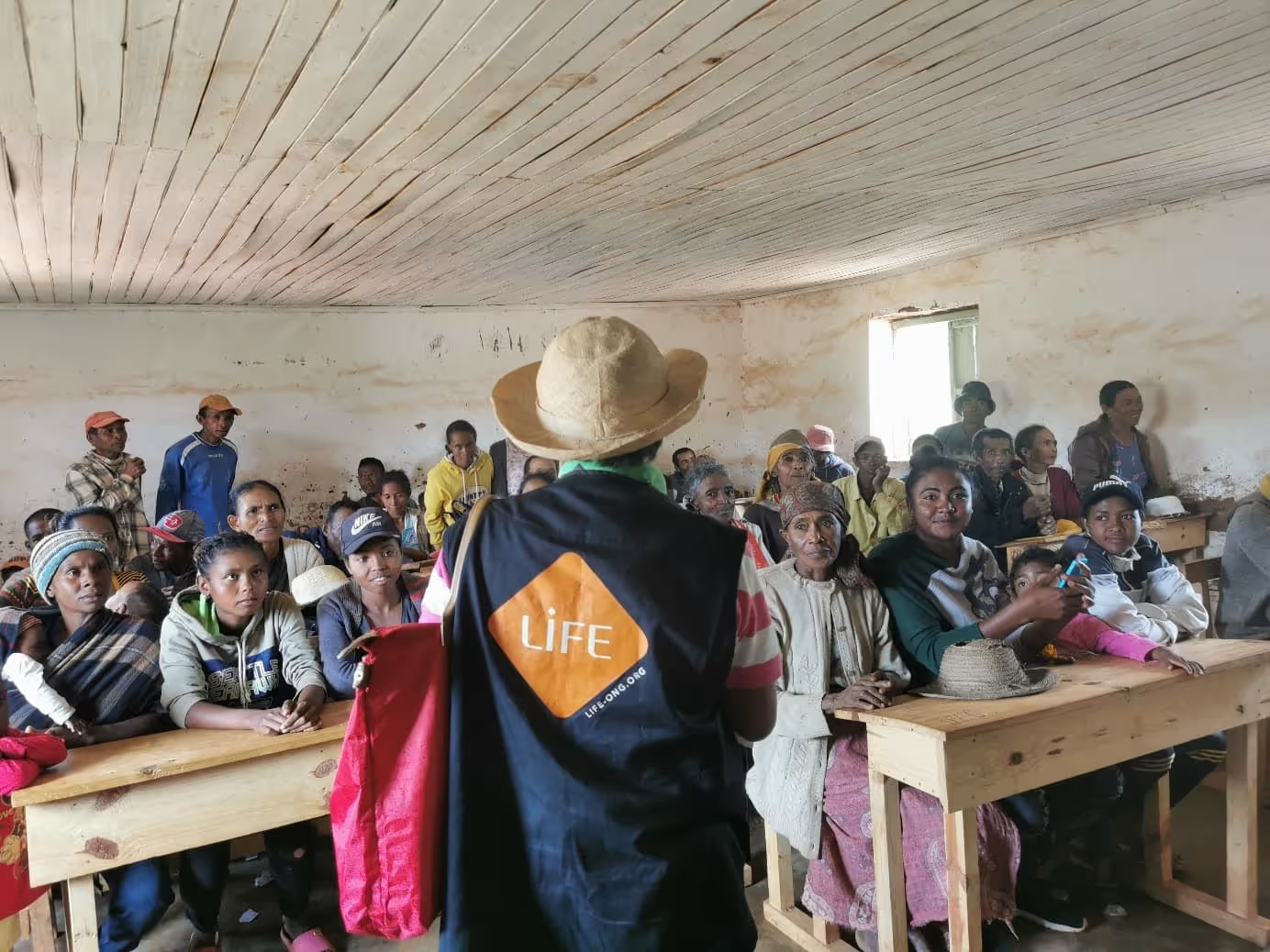
Local teams and our partners work closely with communities to make the project a success. Regular follow-up visits assess the state of the plantations and offer advice where needed. Families play an active part at every stage, from planting to managing the trees, ensuring the project lasts.
Diversifying families' sources of income
While waiting for the trees to bear fruit, we encourage families to diversify their economic activities, particularly by raising poultry. This gives them an alternative source of income to meet their immediate needs while they wait for the long-term rewards of fruit production. Poultry farming not only brings in extra income but also improves their food security by providing essential protein.
The project has also created new income-generating activities for people in the surrounding area. Some have started selling organic fertiliser and delivering it by cart to the families taking part in the project.
The positive impact of LIFE's project
Our project goes beyond improving the beneficiaries' finances. It is also part of a wider movement raising awareness of environmental conservation in the Analamanga, Itasy and Vakinakaratra regions. The initiative's early success has sparked growing interest in neighbouring villages, with many families saying they want to join. This potential expansion shows the positive impact and appeal of this innovative project, paving the way for wider uptake and even greater benefits for Madagascar's rural communities.
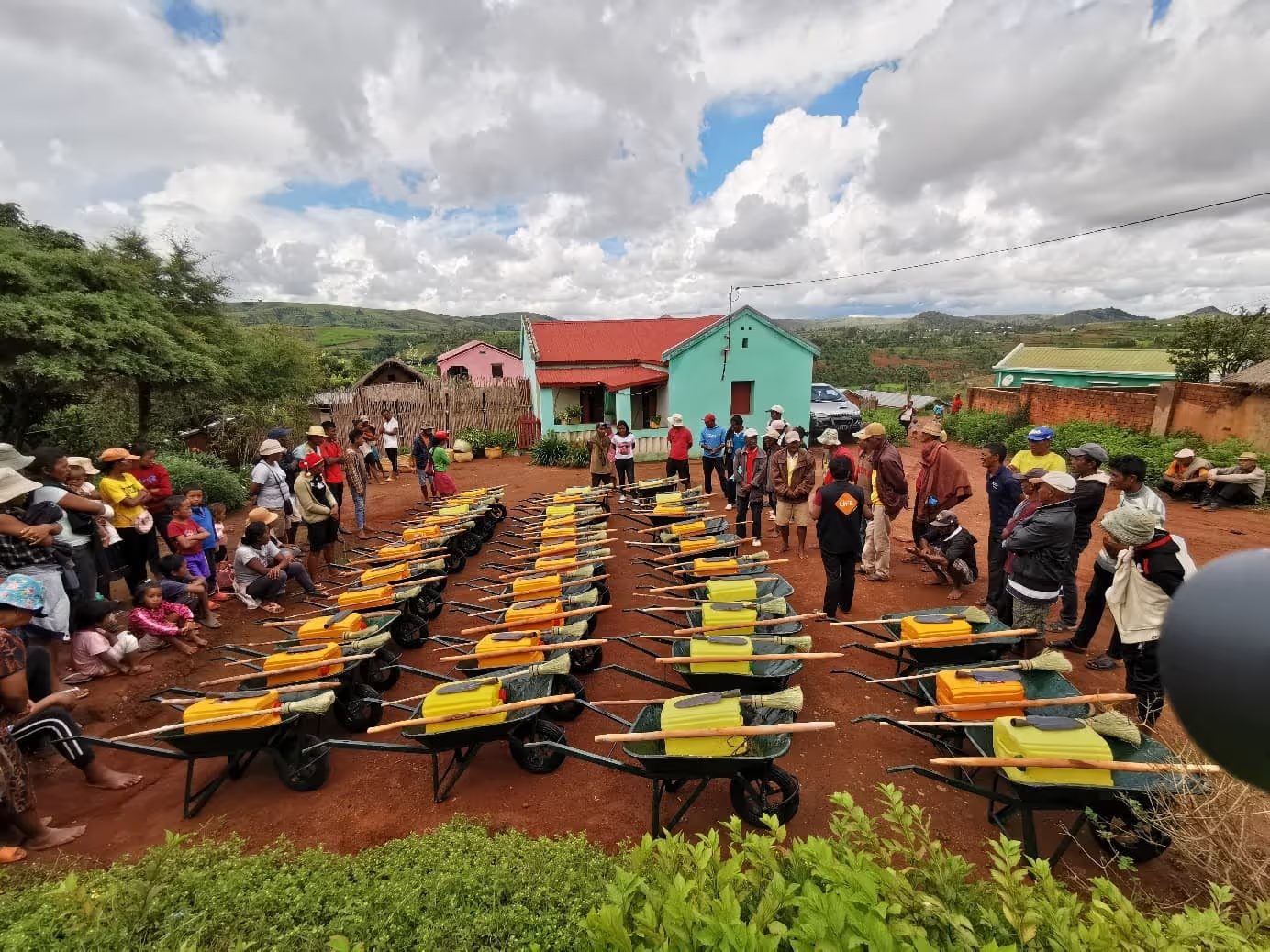
LIFE's local partner in Madagascar
The Ankizy association is a Malagasy national and international solidarity organisation dedicated to designing and delivering sustainable human development projects. It stands out for its work in both urban and rural areas, with a particular focus on educating young people to build a better future. As well as supporting our reforestation projects, it is our main partner on other initiatives in the country, such as our food aid programme 1 euro = 1 meal.
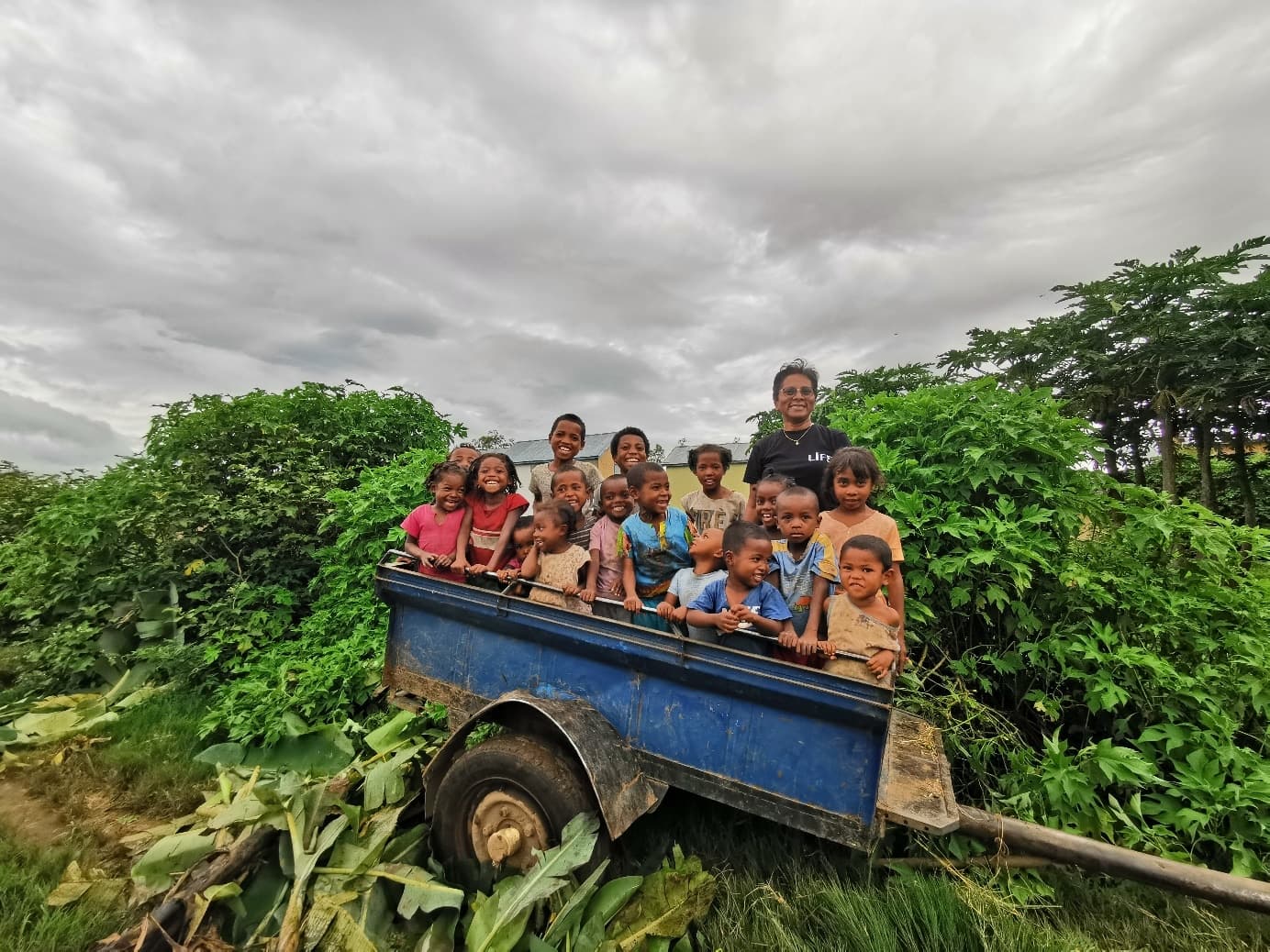
Despite the complex challenges, it is possible to ease the effects of global warming in Madagascar, support farmers and fight food and nutrition insecurity. With continued action at local and global level, together we can build a more sustainable and fairer future for all.
Let's join forces to build a greener, more sustainable future!
Ready to help?
I start a fundraiser
Support the causes close to your heart by starting an online fundraiser with LIFE.
Raising funds for a charity has never been easier!