Madagascar: crises, challenges and humanitarian aid
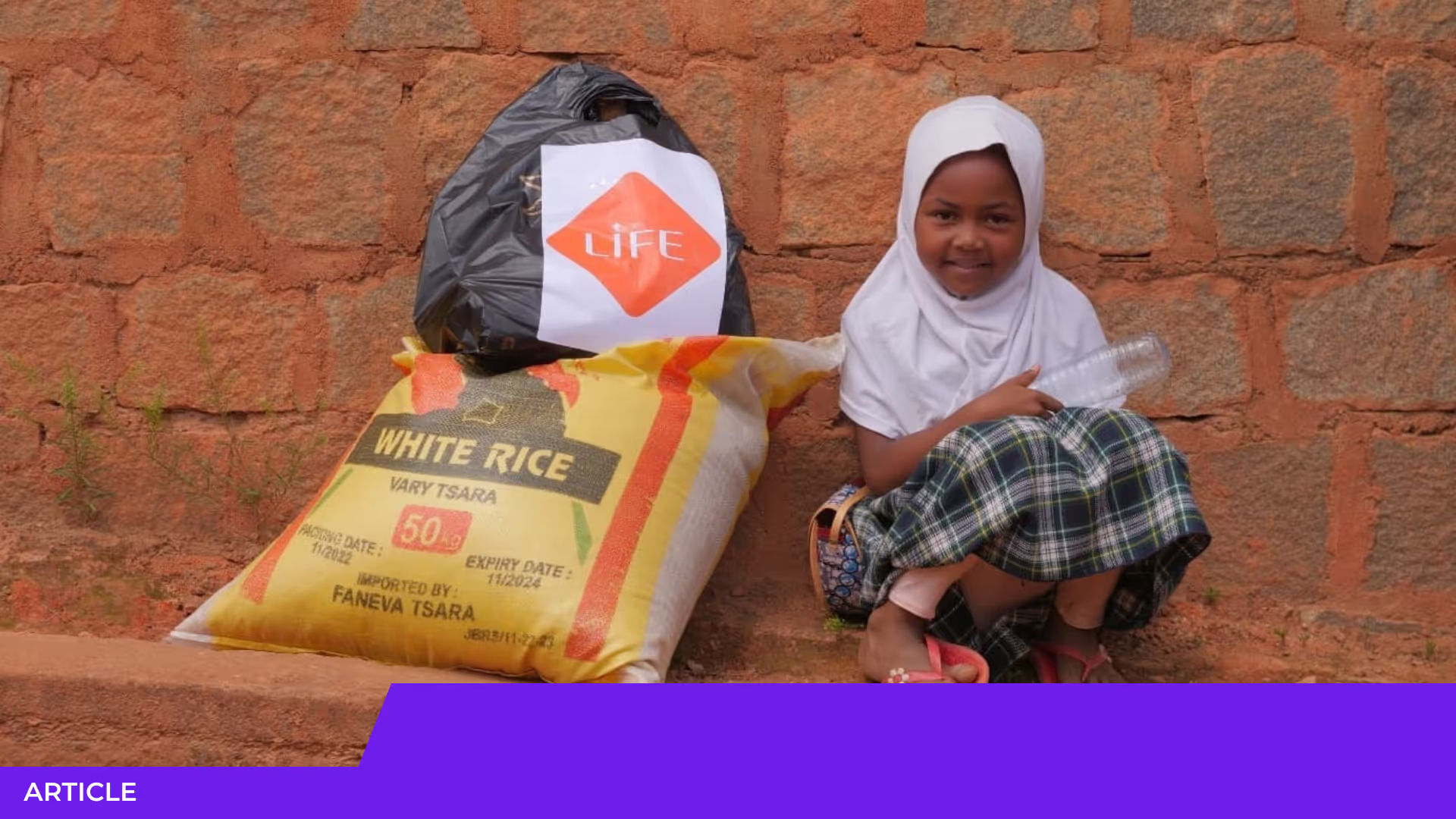
Lying in the Indian Ocean off the coast of southern Africa, Madagascar, the fourth-largest island in the world, faces a host of crises that seriously hold back its social and economic development. Political instability, deep-rooted poverty, an environmental emergency and natural disasters: the country is struggling with complex challenges that touch every part of daily life for its people. Yet each of these challenges is also an opportunity for action and progress.
A little history and politics
Since gaining independence in 1960, Madagascar has been shaken by periods of political instability and coups. Democratic transitions have often been turbulent, with elections marked by opposition and suspicions of fraud. The 2009 political crisis, for example, which led to the overthrow of President Marc Ravalomanana, deepened social and economic tensions in the country. The effects of these unstable periods are still felt today, in the island's governance, its economy and its social cohesion.
Poverty and social inequality in Madagascar
According to a World Bank study, around three quarters of Madagascar's population live below the poverty line. The national poverty rate stands at over 75% of the population: 79.9% in rural areas and 55.5% in urban areas. Rural poverty has fallen slightly, but urban poverty (especially in secondary towns) has risen sharply.
The main causes are shrinking economic opportunities and too little investment in education, health and urban infrastructure. The COVID-19 pandemic and a series of cyclones striking the country have deepened this poverty, costing jobs and cutting the incomes of urban households. Migration from rural to urban areas is also making the problem worse.
These figures show how urgently action is needed to change this trend and improve the living conditions of people in need across Madagascar.
The challenges facing education in Madagascar
In Madagascar, the road to a good education is full of obstacles, especially for people in rural areas.
According to a UNICEF report, very few children aged 3 to 5 attend nursery school, particularly in the south, where only one in five does.
Pupils in these regions and from poor families have higher rates of non-completion, repeating years and dropping out. The reasons are many: poverty forces them to choose between education and survival, early marriage robs girls of their right to education, and child labour keeps thousands of children out of the classroom.
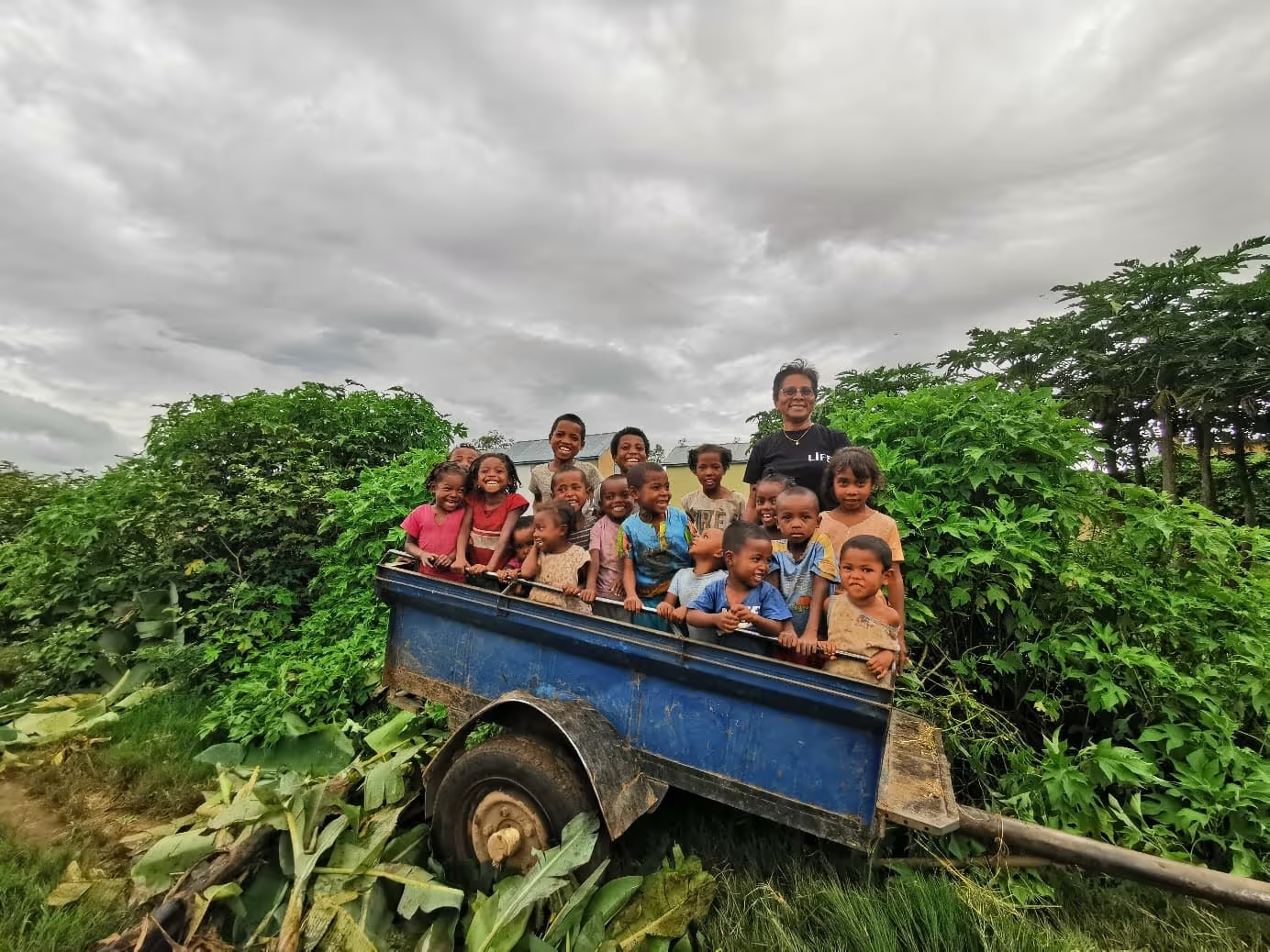
And when the door to secondary school does open, it is only for a minority. With a net enrolment rate of around 23%, Madagascar faces a major challenge in giving its young people an education beyond primary level. The obstacles are many: school fees that many families cannot afford, a glaring lack of school buildings in remote areas, and distances between home and school that are often impossible to cover.
But education is not just about access; it is also about quality. A shortage of qualified teachers, pitiful salaries that struggle to keep talented staff, limited teaching resources and often poor learning conditions all stand in the way of a good education for all.
Behind these figures also lies the shadow of illiteracy, which affects almost a third of the adult population, according to World Bank data. It is a scourge that keeps people trapped in poverty and social exclusion, denying many the opportunities a solid basic education brings.
Madagascar's exceptional biodiversity under threat
Unrivalled biodiversity
Madagascar is one of the largest islands in the world. Its geographical isolation and varied climate have given rise to exceptional biodiversity. Its natural treasures include 294 bird species, 107 of them endemic, and 247 amphibian species, 245 of them endemic. The country is also famous for its rainforests, its majestic baobabs (7 species grow here, compared with just 1 in Africa) and its fascinating lemurs.
Deforestation and climate change
Today, only 10% of Madagascar's original forests remain. Most of the rich rainforests in the east and north-west of the island have disappeared, sharply shrinking the forest areas that depend on these ecosystems. The mangroves are under threat too. This massive deforestation, driven mainly by illegal logging, the clearing of land for farming, slash-and-burn agriculture and industrial activity (mining, oil and gas), is having disastrous consequences for the island's ecosystems. It is causing loss of biodiversity, soil degradation and dwindling water resources, threatening the livelihoods of local people.
Did you know? A large part of Madagascar's coastline along the Mozambique Channel, home to protected areas, mangrove forests and coral reefs, has been leased for oil exploration.
What's more, in Madagascar and across Africa, climate change is making these problems worse. It is increasing the frequency and intensity of extreme weather, such as tropical cyclones, floods and droughts.
For example, in 2021 Madagascar suffered its worst drought in 40 years, with sandstorms burying farmland. This drove people to seek refuge in the towns, while others moved into forest areas, encroaching on nature reserves and burning forests. In early 2022, Madagascar was also hit, for the first time, by six storms and cyclones in the space of three months.
These climate events have devastating consequences for farming: they destroy crops, damage agricultural infrastructure and reduce the water available.
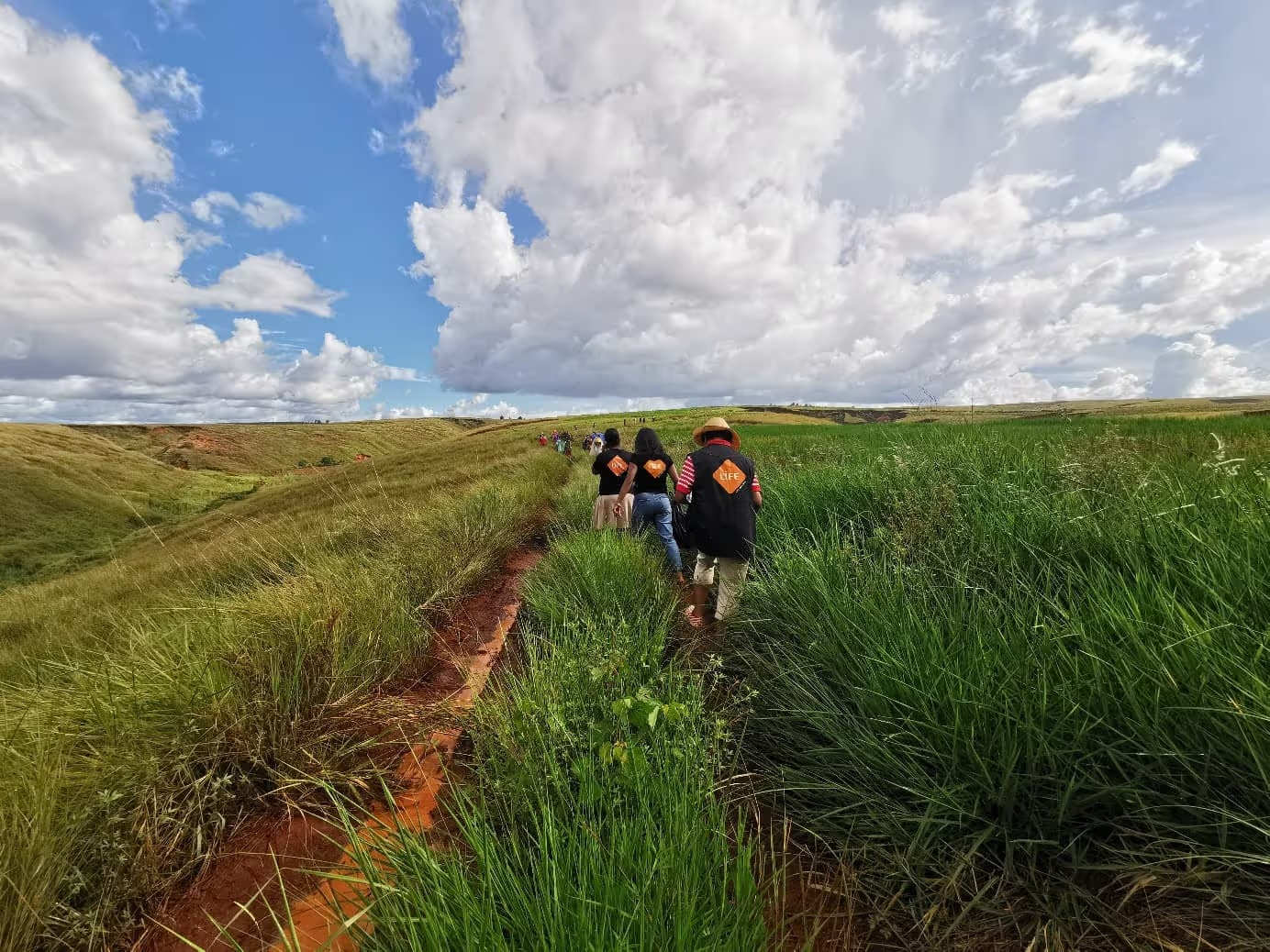
At LIFE, we run integrated projects that help village communities find hope again. In the Analamanga, Itasy and Vakinakaratra regions, we are supporting 200 families to plant fruit trees that they will own and manage themselves. The land used belongs to them but was lying unused. These trees will help raise their standard of living, restore the ecosystem and prevent bush fires in the village. Together with our local partners, our teams raise awareness of how important it is to protect the environment. Information sessions and training on tree planting and running a nursery are offered. And while the newly planted trees grow to bear fruit, families are encouraged to diversify their income by raising poultry.
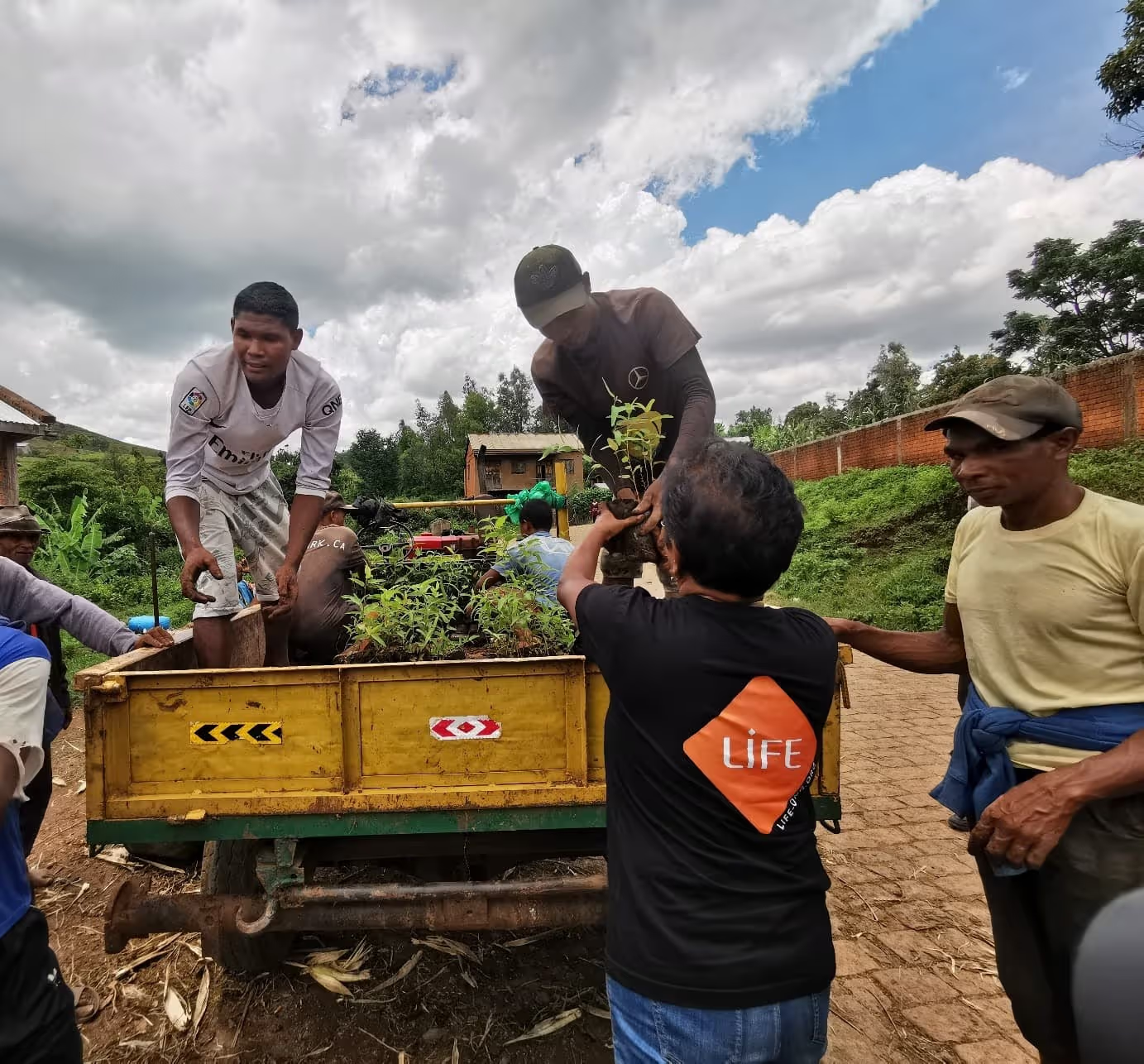
Launched in 2023, the project is already making waves in surrounding villages, and more and more families want to join.
Food security in Madagascar
Together, deforestation, climate change and natural disasters are putting the food security of Madagascar's people at risk. Farmers see their harvests destroyed by bad weather, their soil worn out by erosion and their water growing ever scarcer. As a result, many rural communities live with chronic food insecurity and limited access to enough nutritious food. Children are especially vulnerable, suffering from malnutrition and stunting that harm their physical and cognitive development.
Did you know? The World Food Programme has warned that Madagascar could become the first country to suffer a famine caused by climate change.
Access to safe drinking water is also a struggle. According to UNICEF, 1 child in 2 has no access to it, and half of all children under 5 are stunted because of a water-related illness.
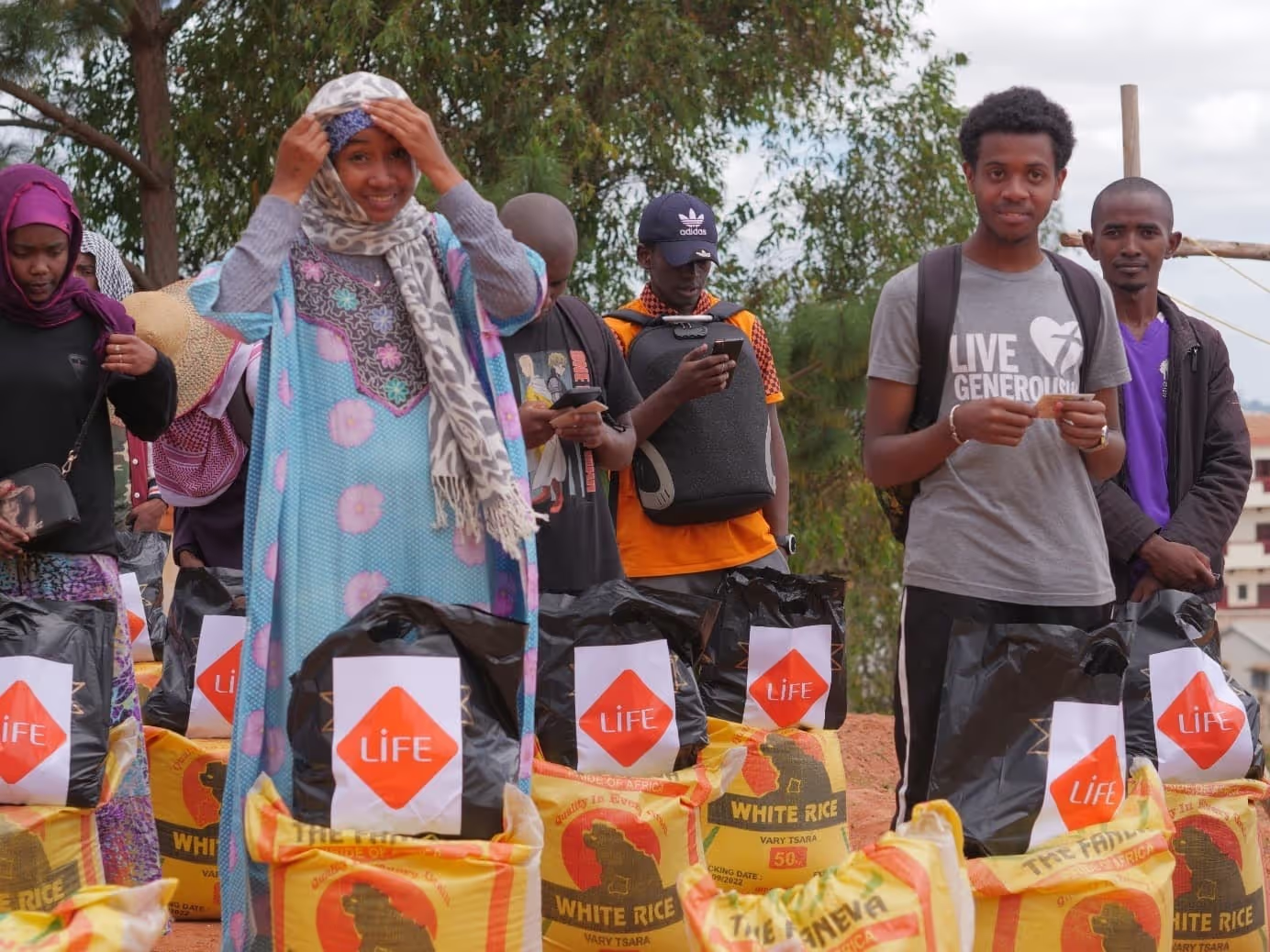
LIFE works regularly in Madagascar to distribute food parcels, particularly in the drought-stricken south of the country. Distributions take place in emergencies and throughout the year.
How humanitarian aid is responding to Madagascar's challenges
In the face of these challenges, humanitarian aid plays a vital role in bringing emergency help to people in need in Madagascar. International organisations, government agencies and NGOs work together to provide food relief, emergency medical care, temporary shelter and other support for those affected by the crises. However, getting aid to where it is needed in Madagascar comes with a number of logistical and operational challenges. Being an island, with limited infrastructure, often makes affected areas hard to reach. On top of that, coordination between humanitarian organisations and local authorities can be held up by political and bureaucratic obstacles.
The outlook for Madagascar
Despite these challenges, Madagascar has considerable potential for development. The country has rich natural resources, exceptional biodiversity and a varied farming sector. Sustainable development initiatives, such as promoting agroecology, protecting forests and developing sustainable tourism, offer real opportunities for a more stable and prosperous future. To fulfil this potential, however, Madagascar needs ongoing support from the international community. Investment in education, health, infrastructure and governance is essential to change the trend and help the country withstand current and future crises.
Madagascar faces major challenges that call for a collective, coordinated response. Humanitarian aid is vital, but long-term efforts are also needed to change the future of the Malagasy people and build a sustainable, inclusive future for all. The international community has an important part to play in supporting Madagascar's development, helping the country overcome its challenges and fulfil its potential.
Ready to help?
I start a fundraiser
Support the causes close to your heart by starting an online fundraiser with LIFE.
Raising funds for a charity has never been easier!