Reforestation, with Thierry Gauquelin
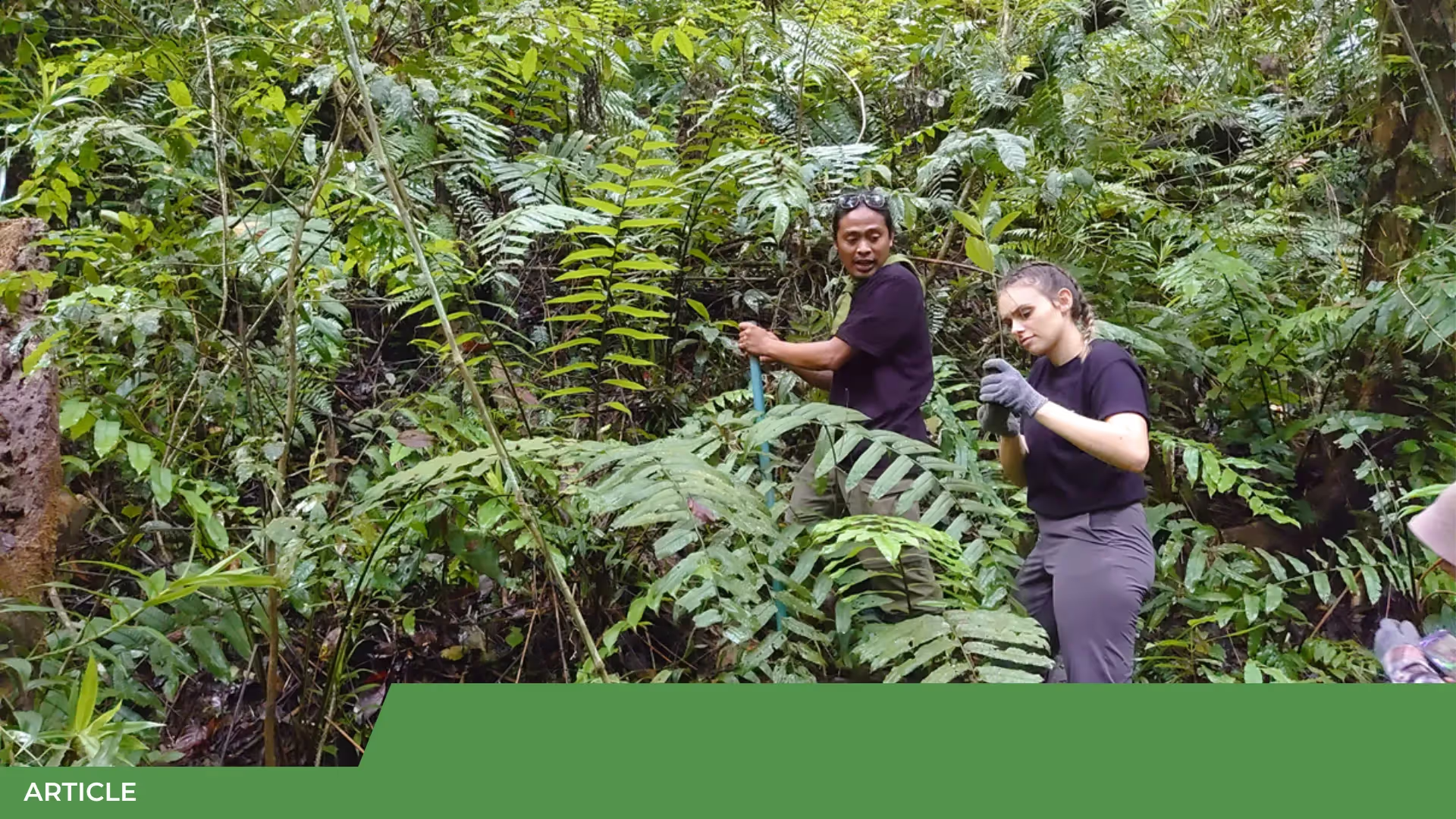
Our series of interviews on reforestation continues with Thierry Gauquelin. He tells us more about the crucial role tree-planting programmes play in the fight against global warming. He also talks about the good practices that help reforestation projects succeed, and about the benefits of agroforestry.
Thierry Gauquelin is Professor Emeritus at the IMBE (Mediterranean Institute of Marine and Terrestrial Biodiversity and Ecology) and at Aix-Marseille University. He is the author of a book published by Harmattan: « Des arbres et des forêts, a dictionary for understanding these fabulous living organisms. »
1) How do reforestation programmes respond to today’s environmental challenges?
“Trees as carbon sinks”
Through photosynthesis, trees act as carbon sinks, able to remove large amounts of the CO2 released by human activity from the atmosphere. With this in mind, planting trees on a massive scale emerged as one possible way of mitigating climate change. On top of that, for various reasons, the ability of existing forests to act as carbon sinks is declining, although this varies greatly from one region of the world to another. Plantations can therefore make up for this relative shortfall. But plantations are not always wise or effective, particularly when it comes to mitigation. They can even do harm! The capacity of tree plantations to store carbon has very probably been overestimated, all the more so because many of them fail. These failures are mainly due to unsuitable species choices and a lack of follow-up after planting.
“Protecting existing forests”
What’s more, the latest studies led by Thomas Crowther now encourage us to focus on the potential of existing forests to store this carbon. A study published in the journal Nature, co-signed by more than 200 researchers, shows that conserving, restoring and sustainably managing existing forests is essential to meeting global climate and biodiversity goals. It finds that measured storage falls well short of natural potential, with a deficit of around 226 Gt (bear in mind that the total carbon stock held in the biomass of land organisms is around 750 Gt). Existing forests could still capture a great deal of carbon… if we protect and restore them!
Finally, while carbon storage through plantations can be effective when fast-growing, commercially profitable species are favoured (eucalyptus, rubber, teak, acacia) – up to five tonnes of carbon per hectare per year – this storage is often short-lived. The trees are felled and turned into paper pulp, for example, and the paper is soon burnt, releasing the CO2 back into the atmosphere.
“A plantation is not a forest”
One last key point: a plantation is not a forest. It is a far simpler ecosystem that does not provide the same services. Biodiversity and ecosystem processes are much more complex in a forest, with billions of exchanges of matter and energy between wildlife, plants and soil. It is a highly complex dynamic, with food chains and organisms eating one another. A plantation, by contrast, is roughly the same as a field of maize. Plantations also raise a number of ecological problems, particularly regarding the species used and their impact on soils and biodiversity! Often made up of a single species – known as monoculture plantations – they are neither as effective nor as resilient as mixed stands or natural forests. And because they often rely on exotic species, they can even threaten the biodiversity… on which the healthy functioning of these ecosystems depends.
In most cases, these plantations are also preceded by clear-felling, which has devastating effects. This is understandable when an entire stand has been destroyed, such as the spruces in the Vosges wiped out by bark beetles. But it cannot be justified when only some of the trees in a stand are dying.
Finally, full-scale planting requires very substantial funding, and the supply of saplings is not always guaranteed.
2) What key principles must be followed for a reforestation project to succeed?
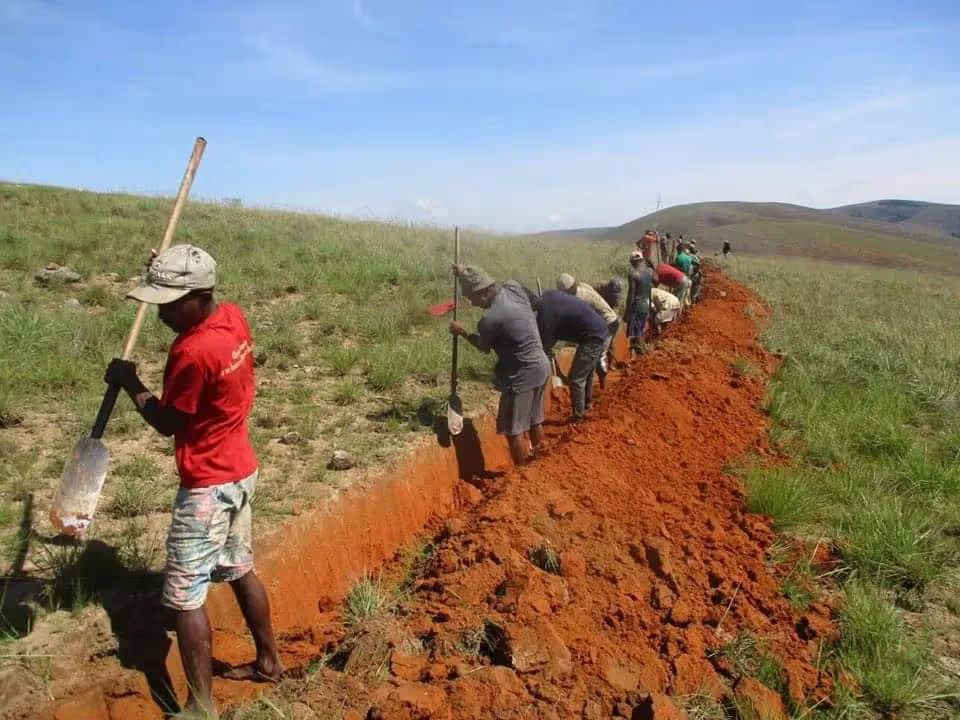
Of course, plantations should not be abandoned altogether. They offer a worthwhile option in difficult, constrained environments, and they have educational value too. In every case, however, they must be carried out under close supervision, and it is important that they are monitored and that their impacts and benefits are carefully assessed. Here are the good practices that help a reforestation project succeed:
“No single-species plantations”
Single-species plantations must be avoided at all costs. It is important not to repeat mistakes like the one made, and still being made, in the Landes forest, replanted with a single species, the maritime pine. Plantations should be multi-species, combining trees with different life traits.
In temperate regions, for example, deciduous and evergreen trees, conifers and broadleaves, or species whose roots reach different soil depths can all be planted together. Planting should also be spread over several years. This keeps the plantation as uneven as possible and encourages a more complex structure. Many studies show that when several species are mixed, forests function better and are far more resilient to climate change. For example, the leaf litter they leave on the ground can be broken down by very different, complementary organisms.
“Favouring native species”
Native species should be favoured over introduced exotic ones, which have been widely used, as with Douglas fir. The routine use of exotic species should be limited in favour of native ones, while not ruling out sourcing native species from further afield. Such sources may be better adapted to climate change without being invasive or upsetting the balance of local ecosystems. Native species have significant genetic diversity, which guarantees the adaptation to climate change we need. This makes it unnecessary, and even risky, to use exotic species whose medium- and long-term behaviour is unknown and some of which may prove invasive.
“Choosing the right place to reforest”
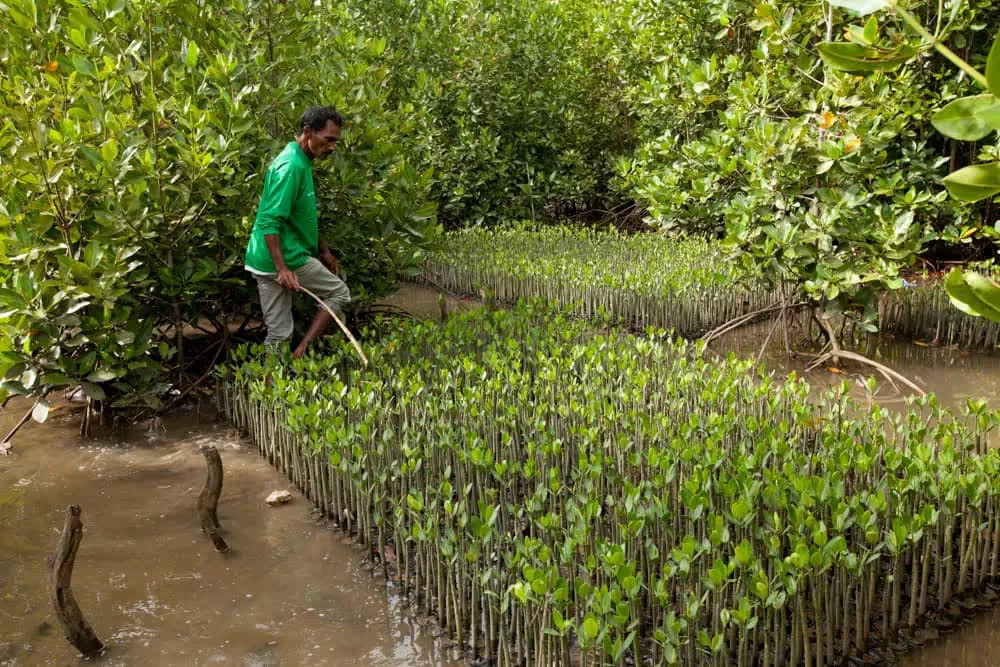
You cannot plant just anywhere. For example, not in certain open habitats such as, in France, dry grasslands with orchids, whose biodiversity is extremely valuable. Nor can you plant in areas under strong legal protection.
“Taking the soil into account”
The soil must also be considered. Heavy machinery, for instance, disturbs its structure and biodiversity. Inputs (fertilisers, weedkillers) should be banned, since the aim is to move towards an ecosystem whose biogeochemical functioning is more complex than that of a “basic” plantation.
“Looking after it”
Once the trees are planted, the work goes on: caring for the plantation, protecting it where needed and, above all, assessing its success. This means monitoring growth, mortality and so on – every year if possible. Ideally, schoolchildren should be involved throughout the process, as these plantations are of great educational value.
3) Why can mass tree planting be counterproductive in the fight against climate change?
If plantations do not follow the principles set out above – as is still often the case – the benefits will be small. Plantations may even threaten biodiversity and the healthy functioning of ecosystems, all without being particularly effective at storing carbon over the long term.
Finally, we must remember that plantations are not the only answer to climate change. They are by no means a miracle cure. Protecting existing forests, letting nature take its course, assisted natural regeneration, uneven-aged forestry, natural woodland regrowth on farmland and so on: all these solutions, which require few or no saplings, should also be promoted. They are nature-based options that support both mitigation of and adaptation to climate change.
4) How can technological and scientific advances be used to make reforestation programmes more effective?
One problem with mass planting is the availability of forest saplings from nurseries. There is an alternative, though it will inevitably remain a minority one: direct seeding. It is rarely used because yields are low and seeds are very expensive. Yet in some situations it can be effective and highly resilient – provided, of course, it involves wild, non-exotic species well suited to local conditions. Direct seeding now benefits from highly innovative, hi-tech techniques. Drones, for example, can drop seeds on the land to be reforested with great speed and precision. The spots are chosen beforehand through field studies and remote sensing. These techniques also draw on current knowledge of competition and facilitation between plant and animal species.
5) How does involving local communities affect the long-term success of reforestation projects, and which approaches work best to engage them?
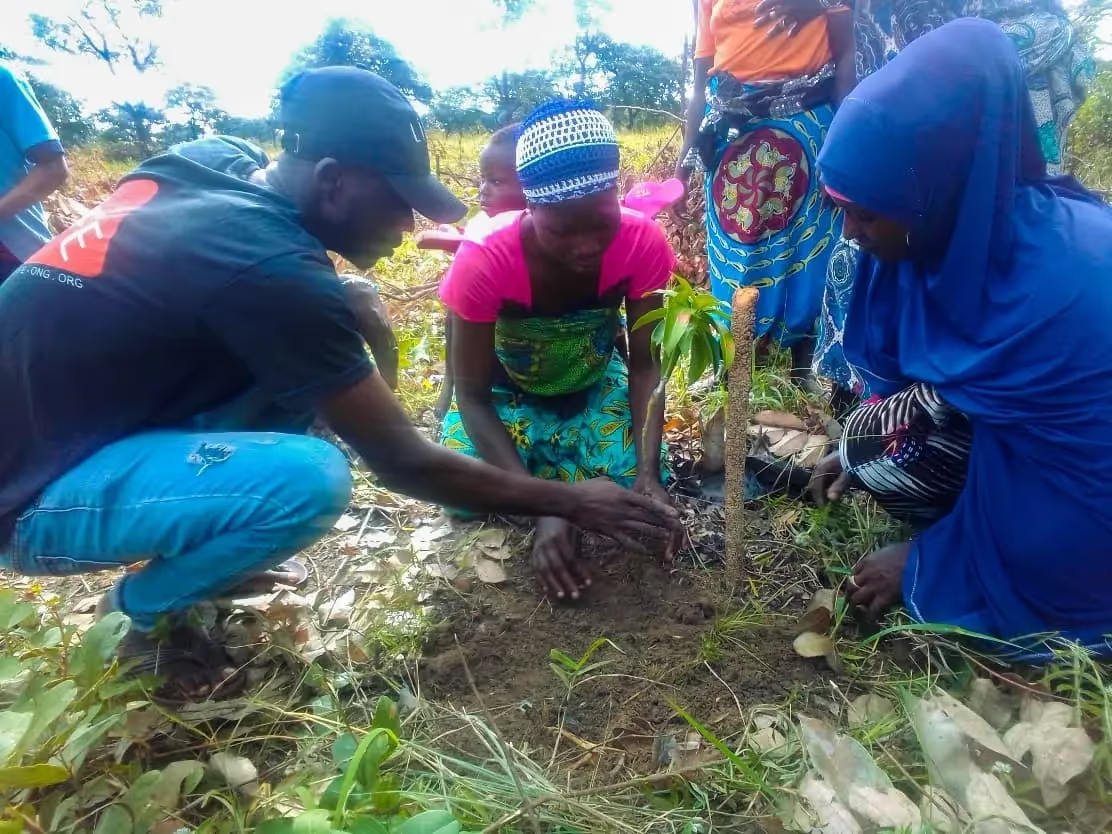
Reforestation must be part of sustainable land management and take the social and farming context into account. Local people, especially in developing countries, must always be involved in these projects. Consultation is needed if, for example, trees are to be planted where livestock already graze. It is also essential to be able to follow up these plantations, which have often required major financial commitments. In Africa, with the Great Green Wall, trees were planted, but afterwards there was no one to water them or look after them…
6) What are the key ingredients of successful collaboration between governments, NGOs and the private sector in reforestation?
People around the world are genuinely becoming aware of how important forests and natural habitats are, and this will push governments to act. But every action taken, by governments and businesses alike, must be better defined, better monitored and better assessed scientifically, so that it proves truly beneficial for the planet!
7) Can you share concrete examples of reforestation projects that have achieved positive results in restoring ecosystems?
Un des projets de reforestation parmi les plus anciens et les mieux réussis a été rapporté dans l’article de Pour la Science 529 « Pour une reforestation raisonnée ». Il s’agit de la restauration de la forêt atlantique de Rio de Janeiro, au Brésil. Du XVIe au XVIIe siècle, cette forêt a été graduellement détruite pour l’utilisation du bois et son remplacement par des fermes cultivant la canne à sucre, le café ou élevant du bétail sur des pâtures. Dans la première moitié du XIXe siècle, la ville a connu de graves pénuries d’eau. En 1861, l’empereur du Brésil Pedro II a embauché Manuel Gomes Archer pour mener à bien un projet de restauration de la forêt, afin qu’elle puisse faciliter la formation de sources par pénétration de l’eau de pluie dans les sols. Ainsi, entre 1862 et 1874, 72 000 plantules ont été installées sur une zone à présent intégrée au parc national de Tijuca. Ce projet, maintenant vieux de 160 ans, était pionnier, car il a utilisé un grand nombre d’espèces différentes, principalement natives, plantées de façon hétérogène.
8) Can you tell us about agroforestry and its positive impact on forest cover?
Agroforestry means combining trees, crops and animals on the same plot of land
It therefore includes agrosilvicultural practices (crops and trees), silvopastoral practices (trees and animals), or systems combining all three (agrosilvopastoral). It is an important tool for maintaining forest cover at a time when forests are under intense pressure. In the face of global challenges, agroforestry systems also help meet the challenge of food security, while providing environmental services such as carbon storage, protecting soils from erosion, improving soil quality, benefiting biodiversity, and more.
Around the Mediterranean, the Spanish dehesas, the Portuguese montados and Morocco's argan groves show us the agrosilvopastoral model that inspires modern agroforestry today.
It is a thoughtful, optimal use of space that benefits trees, animals and crops alike
A tree (holm oak or cork oak, argan, olive), an animal (pig, bull or goat), a crop (cereals, pulses) and, in the end, a functional and diverse ecosystem. In a way, we are recreating what nature has built in the complexity of these forest ecosystems. Permaculture, on another scale, rests on the same principle. But all of this is very carefully planned. The trees are spaced far enough apart not to compete for water and nutrients. The crops benefit from the tree's shade and from the particular soil that gradually forms beneath its canopy, thanks to the leaf litter that falls each year and, as it decomposes, releases organic matter and nutrients. Livestock and trees are therefore not opposites. Agroforestry brings them together in a single coherent, functional whole, whereas in other systems they are kept apart: fields and pastures on one side, hedgerows and farm woodland on the other. The agrosystem, by definition a simplified ecosystem, becomes an agroforestry space and regains the higher level of complexity found in more natural ecosystems. The animal component is of course not essential to this "ecological symbiosis" – a symbiosis because each partner gains something from it. Growing crops alongside trees already brings many advantages, especially for protecting the soil… And what if climate change very soon forced us, for crops such as vines or other food crops, to create a more or less dense tree canopy to limit sunlight and excessive heat… But we must be careful about water use and about these trees competing for water that is sometimes so scarce.
What we see here is biodiversity shaped, and even encouraged, by the interactions societies have had with it for 10,000 years. In other words, a kind of co-evolution of this biodiversity and of socio-ecological systems, with humans as an active part of the system.
Trees and crops are not really competitors either, even though over the last century farmers, who were never very fond of trees to begin with, have been taught to do without them!
A team of European researchers recently showed that agroforestry covers 15.4 million hectares in Europe, or 8.8% of agricultural land.
Mr Gauquelin's answer is partly taken from his book « Des arbres et des forêts, dictionnaire pour comprendre ces fabuleux organismes vivants » (Of trees and forests: a dictionary for understanding these fabulous living organisms).
Dreaming of real action for the environment? Be a driving force for change by joining the SAPOUSSE campaign. Our reforestation projects push back against deforestation, support biodiversity and create lasting opportunities for local communities. Together, let's build a greener, more resilient future.
Ready to help?
I start a fundraiser
Support the causes close to your heart by starting an online fundraiser with LIFE.
Raising funds for a charity has never been easier!