LIFE plants natural barriers against tsunamis
On 28 September, a violent tsunami struck the coast of Indonesia, killing more than 2,200 people. More than 200,000 people were also left in urgent need of humanitarian aid! Of course, LIFE was there to meet the victims' needs. But we also have to act to prevent harm, because natural disasters like this will certainly happen again...
That is why, through its Sapousse reforestation programme, LIFE is planting mangroves while also supporting local communities.
Planting mangroves: a complex but vital ecosystem
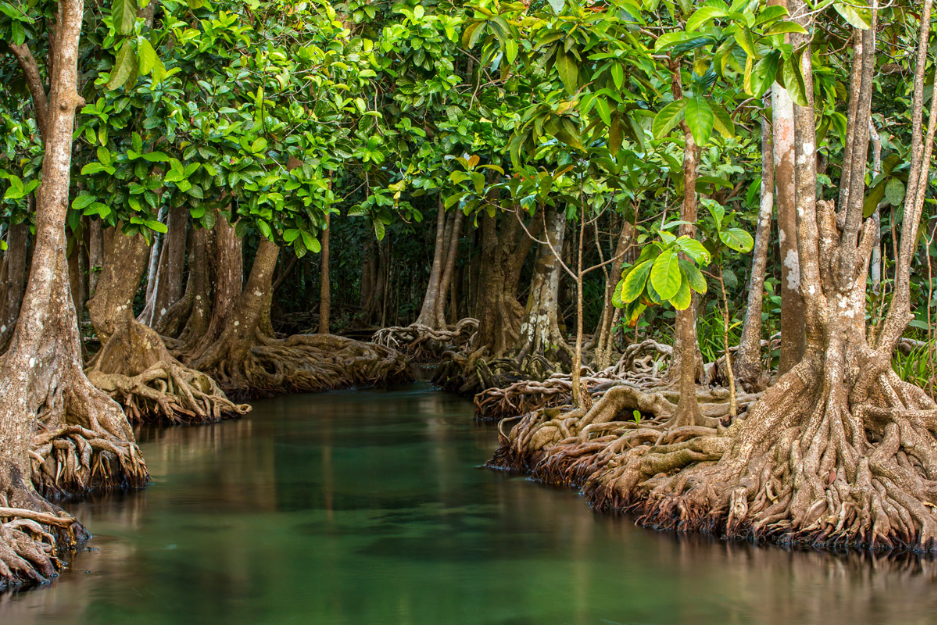
A mangrove is a forest of trees and shrubs that creates a maze of small creeks, natural channels and marshland. Together, these produce a rich biodiversity that is very useful to people.
The tangled roots of mangrove trees slow waves down and break them up, and can even stop them altogether. In Indonesia and other tropical countries at risk from tsunamis, planting mangroves therefore provides natural protection. Communities are spared because the waves are stopped when they reach this vegetation.
Mangroves cover more than 15 million hectares worldwide, and almost half of this lies in areas that have been hit by tsunamis. Some experts estimate that in India, more than 1,700 people were protected from the 2004 tsunami. That disaster killed 200,000 people across the 7 Asian countries it struck.
The International Union for Conservation of Nature (IUCN) compared the death tolls in two Sri Lankan villages hit by huge, devastating waves during the tsunami of 26 December 2004. The findings speak for themselves: only 2 deaths in the first village, which still had its mangrove, compared with 6,000 in a village in the same area that had lost its coastal forest. That forest had been turned into a tourist resort. Mangroves therefore play an effective role in stopping tsunamis from spreading. The IUCN's conclusions are clear: “research has shown that mangroves can absorb between *70 and 90% of the energy of a* normal wave”.
Fighting global warming
Mangroves are a precious ecosystem and a true carbon sink. Most of this "blue carbon" is stored not above ground but below it. Mangroves store 5 to 10 times more CO2 than tropical forests.
The mangrove tree, the species planted in mangrove forests, is very good at capturing and sequestering carbon. This makes it an effective weapon against global warming.
With its roots in the water, this tree speeds up the recovery of local biodiversity, which has often been devastated by people chasing short-term profit (palm oil). On the plots LIFE has planted in Sumatra, in northern Indonesia, fish, shrimp and bees have come back. Mangroves are a sanctuary for marine life and a breeding ground for many species. They are a godsend for local communities, who can earn extra income and so improve their living conditions.
Ready to help?
I start a fundraiser
Support the causes close to your heart by starting an online fundraiser with LIFE.
Raising funds for a charity has never been easier!