Plenty of funding, little change: the paradox of humanitarian aid in Gaza
At a glance
- Since 7 October 2023, pledges for Gaza have run into the billions, yet the UN still estimates that 2.1 million Gazans need emergency aid.
- The figures don't agree: according to OCHA, the number of aid lorries allowed in fell from 600 to 300 a day in the first quarter of 2026; COGAT claims food aid exceeded the needs set by the WFP 3 times over.
- A French example: of 400 tonnes of aid that left Le Havre in January 2026, 240 tonnes were left stuck at Gaza's gates.
- Inspections, turned-back loads, controls on NGOs, import permits sold for cash and looting all reduce the impact of every donation.
- A donation still makes a real difference when it is entrusted to an organisation with a long-standing presence on the ground and the backing of local partners.
Since 7 October 2023, the Gaza Strip has been the scene of one of the most severe and best-documented humanitarian crises of our time. Faced with the emergency, the international financial response was immediate and massive: pledges ran into the billions, driven by NGO fundraising appeals and countless grassroots initiatives involving millions of contributors around the world.
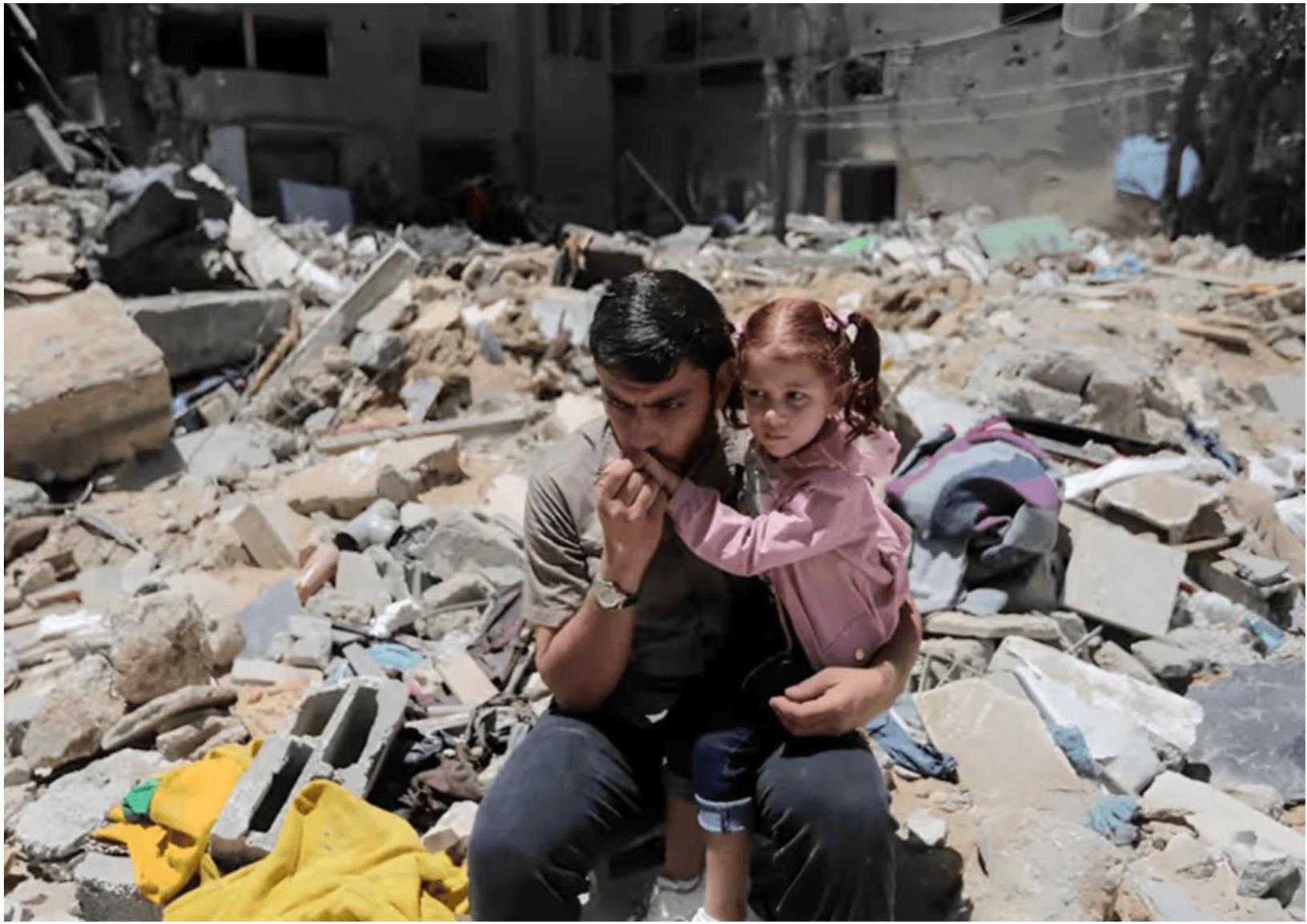
On the ground, however, the picture remains disputed. NGOs describe a population still in great hardship and a health situation that is worsening by the day, while Israel says it has far exceeded the needs set by international organisations. So why don't the large flows of humanitarian donations meant for Gaza seem to be producing a visible improvement on the same scale?
Disagreement down to the figures themselves
One thing is clear from the outset: the parties do not agree on how much aid is actually getting in.
According to the UN Office for the Coordination of Humanitarian Affairs (OCHA), the number of aid lorries allowed into Gaza each day was halved during the first quarter of 2026, falling from an already inadequate average of 600 a day to just 300. Shipments face critical rejection rates at the crossings: in the first half of May 2026, only one in two aid lorries coming from Egypt was allowed to unload its cargo at the Kerem Shalom crossing. By early June, that rate had climbed back to around 62%, compared with 94% for shipments arriving via the Israeli port of Ashdod – a sign that the bottleneck does not affect every corridor in the same way.
COGAT (Coordinator of Government Activities in the Territories), the official Israeli unit responsible for coordinating and facilitating humanitarian operations in Gaza alongside the international community, firmly disputes this. In a report published in early July 2026, covering October 2025 to June 2026, it states that around 1.78 million tonnes of food entered the Gaza Strip during that period – more than 3 times the needs assessed by the World Food Programme (WFP) – and that prices of basic goods fell by 72% over the period. For COGAT, the problem lies not at the point of entry but in how aid is handled once inside, in areas under Hamas control, which it accuses of taxing and controlling distribution channels. It also accuses the UN of skewing the statistics by counting on its dashboard only the deliveries it is directly involved in, leaving out airdrops, the private sector and schemes such as the Gaza Humanitarian Foundation.
Two readings of the same flows
| Source | What it says | Period |
|---|---|---|
| OCHA (UN) | Lorries allowed in per day: down from 600 to 300 | 1er trimestre 2026 |
| OCHA (UN) | 1 in 2 lorries from Egypt allowed to unload at Kerem Shalom | First half of May 2026 |
| OCHA (UN) | 62% of lorries from Egypt unloaded, compared with 94% via Ashdod | Early June 2026 |
| COGAT (Israel) | 1.78 million tonnes of food entered, more than 3 times the needs set by the WFP | October 2025 to June 2026 |
| COGAT (Israel) | Prices of basic goods down 72% | October 2025 to June 2026 |
Tight control of the crossings: security measure or bottleneck?
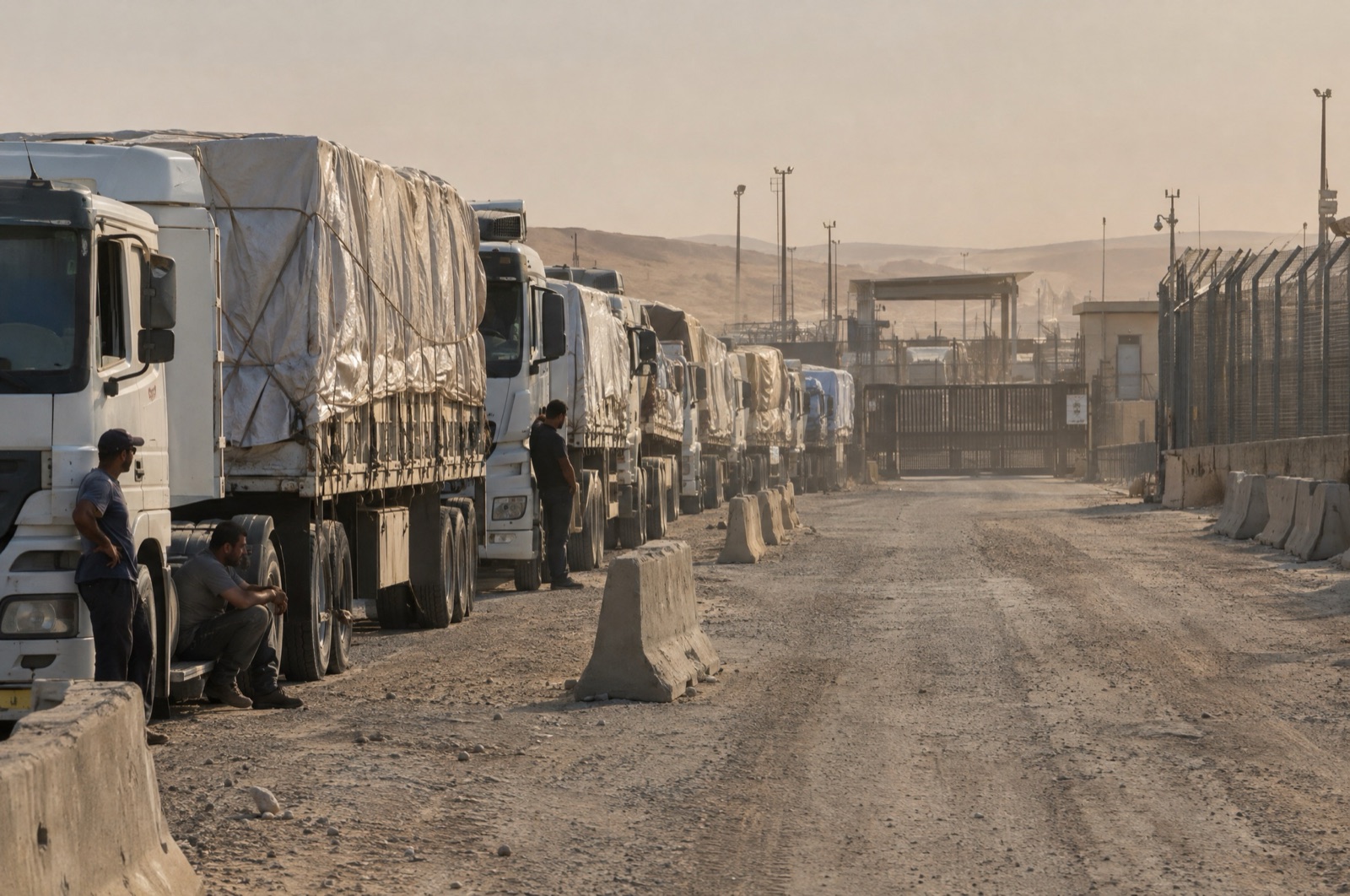
Beyond the battle over figures, one fact is hard to dispute: humanitarian aid lorries funded by international solidarity are subject to an extremely cumbersome military inspection protocol, which drastically reduces the number getting in. Although a ceasefire agreement that came into force in October 2025 has increased the overall volume of food aid, operational restrictions remain severe.
In France, one concrete case illustrates this bottleneck. An official answer from the Ministry for Europe and Foreign Affairs (MEAE), published in the Senate's Official Journal on 16 April 2026, first set out the scale of France's overall commitment: since 7 October 2023, France has allocated €100 million a year to humanitarian actors in Palestine – UN agencies, the International Committee of the Red Cross and around ten French, international and local NGOs. This figure shows that the problem here is not a lack of will or funding upstream. The rest of the answer sets out exactly where that funding runs into the logistical wall described above. It traces what happened to a 400-tonne shipment of humanitarian aid intended for 42,000 children in Gaza:
| Date | Stage of the French shipment |
|---|---|
| 18 January 2026 | Departs Le Havre: 400 tonnes of aid for 42,000 children |
| 4 February 2026 | Arrives in Port Said (Egypt) |
| 23 February to 20 March 2026 | 160 tonnes pass through the Rafah crossing after COGAT approval |
| Afterwards | 240 tonnes remain stuck at the gates of the enclave, despite relentless efforts by French diplomats with Israel |
On the Israeli side, the argument used to justify these checks has been the same since the start of the conflict: preventing Hamas from diverting aid. A spokesperson for the Israeli Ministry of Foreign Affairs dismissed criticism of the humanitarian blockade as "false accusations", stating that the security forces continue to protect the convoys.
The cost of waiting
This enforced slowdown creates costs for NGOs. A lorry held up for 2 to 3 weeks runs up driver costs and standing charges, and perishable goods deteriorate. On top of this comes the rejection rate: a failed health inspection or a single item classed as "dual use" by COGAT (oxygen cylinders used in hospitals, suspected of being usable for industrial cutting or explosive devices, are a recurring example) can see the entire shipment turned back, turning tens of thousands of euros' worth of supplies into a dead loss.
According to situation reports and logistics briefs from the Logistics Cluster – the UN structure led by the World Food Programme that coordinates the supply chain for all NGOs and agencies in Gaza – keeping a semi-trailer and its driver waiting would generate detention charges of between $150 and $300 a day (€130 to €260).
What a stranded lorry costs
- Up to 2 to 3 weeks held up at the crossings.
- $150 to $300 a day in detention charges for a semi-trailer and its driver (Logistics Cluster).
- The entire shipment can be turned back over a single item classed as "dual use".
The administrative blockade: when wartime bureaucracy paralyses NGOs
Beyond physical barriers and controls on goods, the blocking of humanitarian aid takes a less visible but equally formidable form: the administrative stranglehold on non-governmental organisations (NGOs). It is a measure that deprives the people of Gaza of essential humanitarian aid.
The NGOs' account
In early 2026, the Israeli government issued an unprecedented ultimatum to 37 major international humanitarian organisations working in the enclave, including Médecins du Monde, Médecins Sans Frontières (MSF), Oxfam, the Norwegian Refugee Council (NRC) and CARE. On pain of a total ban on access and expulsion on 1 March 2026, the authorities demanded that these organisations hand over the names and detailed information of all their Palestinian staff. Speaking on France Inter on 3 January, the president of MSF France said the organisation was being sanctioned because it bore witness to violence committed by the Israeli army.
The Israeli account
For the Israeli authorities, these named-staff checks were presented as an essential security filter. Through its minister Amichai Chikli, the Ministry of Diaspora Affairs said the aim was to prevent any "infiltration of terrorist operatives" into foreign NGOs. This stand-off followed a series of earlier restrictions: the 2024 ban on the United Nations Relief and Works Agency for Palestine Refugees in the Near East (UNRWA) operating on Israeli territory, over suspected complicity in 7 October, and then the removal at the end of November of 14 major humanitarian organisations, including Save the Children, which until then had been supporting 120,000 children in Gaza.
The court ruling
A consortium of NGOs took the case to the Israeli Supreme Court, which initially granted a stay without ruling on the merits. On 20 May 2026, the High Court finally rejected the petition and upheld the requirement to hand over the lists, giving NGOs 30 days to comply. MSF, for example, eventually agreed to provide a defined list of staff, subject to security guarantees and with the explicit consent of those concerned, to avoid a complete suspension of its activities.
The war economy: the hidden costs
In the midst of the conflict, a full-blown war economy has taken hold. Between soaring transport costs and the cost of securing convoys, budgets run out fast. Worse still, getting into Gaza's market has become a toll road, with prices shooting up before food even reaches families.
In August 2026, an investigation by the Associated Press (AP) revealed that Israel had granted import permits for commercial goods to just 12 traders in Gaza. Selected by Israeli security services, these importers must have every shipment approved in advance, at the risk of seeing their goods rejected as "dual use". Traders and humanitarian workers describe the permit process as opaque and arbitrary.
Above all, access to the territory comes at a steep price. In July 2026, a statement by Mr Al-Sawafiri, coordinator of the Economic Committee of the Gaza Chamber of Commerce, reported by the Sanad agency, revealed the emergence of a black market in permits: some traders were being asked for up to 300,000 shekels (around €85,000) to obtain an import licence. This was confirmed by an investigation by The National, which found that these informal "coordination fees" could reach as much as 400,000 shekels per lorry. This extortion is inevitably passed on in the final price paid by the population, diluting the impact of international aid.
On top of this comes the scourge of convoy looting inside the Gaza Strip. A Sky News investigation shed light on armed groups involved in cigarette smuggling and the systematic hijacking of lorries, forcing aid workers to negotiate their way through. More serious still, Le Monde and several UN officials report criminal gangs and militias operating in the immediate vicinity of Israeli forces, or under their passive gaze, seizing much of the goods and aid before it can be distributed.
So, is donating to Gaza worth it?
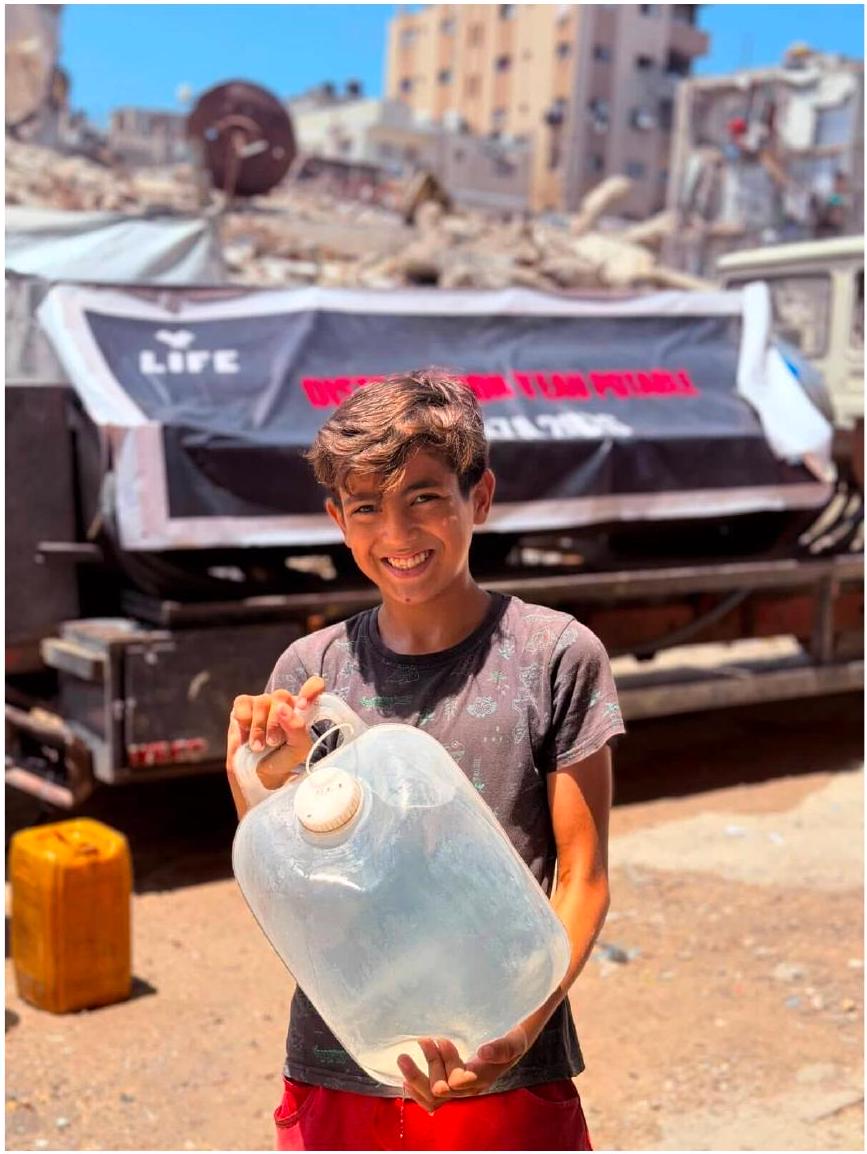
How effective a donation is depends directly on the ability of the organisation you entrust it to to absorb this friction: field experience, a continuous presence since the start of the conflict, the ability to find its way through the administrative maze…
The UN estimates that 2.1 million Gazans, almost the enclave's entire population, need emergency humanitarian aid. Against this backdrop, many NGOs are still delivering essential help to the people of Gaza.
LIFE is one of them. Its roots in Palestine go back more than ten years, and it works with trusted local partners, which lets it partly get around the blockages at the borders. Giving still makes a real difference, as long as you choose organisations that can operate at the very heart of the crisis.
Support the people of Gaza
LIFE has been working in Palestine for more than ten years and relies on trusted local partners to get aid to the heart of the crisis.
Donate for Gaza →Frequently asked questions
Why is humanitarian aid struggling to reach the people of Gaza?
NGOs point to very heavy inspections at crossing points, rejected shipments, administrative controls on humanitarian organisations and the looting of convoys. Israel's COGAT, for its part, says that enough aid is getting in and that the problem lies in distribution in areas under Hamas control.
How many aid lorries enter Gaza each day?
According to OCHA, the number of lorries allowed in fell from around 600 to 300 a day in the first quarter of 2026. COGAT disputes these figures and accuses the UN of counting only the deliveries it is directly involved in.
What is a ‘dual-use’ item?
It is an item that COGAT believes could be used for military purposes, such as hospital oxygen cylinders. Just one can lead to the whole shipment being turned back, and so to the loss of tens of thousands of euros' worth of supplies.
Is donating for Gaza still worthwhile?
Yes, as long as you choose an organisation that can absorb these obstacles: one with experience on the ground, a continuous presence since the start of the conflict and trusted local partners. With 2.1 million people in need of emergency aid according to the UN, aid remains vital.
Ready to help?
I start a fundraiser
Support the causes close to your heart by starting an online fundraiser with LIFE.
Raising funds for a charity has never been easier!