Earthquake on Flores, Indonesia: death toll, causes and LIFE's humanitarian aid
Emergency
Key points
- A magnitude 7.7 earthquake struck the island of Flores (Indonesia) on 15 August 2026 at 5:00 am local time.
- Official toll as of 18 August 2026 (source: BNPB via AFP): 70 dead, 1,100 injured and more than 40,000 people displaced.
- The epicentre was 68 km north-west of Ende, in the province of East Nusa Tenggara.
- A tsunami warning was issued, then lifted after three hours.
- The NGO LIFE is launching an emergency operation for 800 families (drinking water, hygiene kits, food kits), with distributions from 27–28 August 2026, coordinated on the ground by Mouhamadou Gaye.
Timeline of the crisis
- 1992
An earthquake of the same magnitude (7.7) strikes Flores and triggers a devastating tsunami that claims around 2,500 victims.
- 15 August 2026, ~5:00 am
A magnitude 7.7 earthquake strikes off the north coast of Flores, around 68 km north-west of Ende, at a depth of 15 km.
- About 3 hours later
The tsunami warning issued by the BMKG is lifted: the waves observed did not exceed one metre.
- 18 August 2026
Official BNPB toll: 70 dead, 1,100 injured and more than 40,000 people displaced.
- State of emergency
The Indonesian government places the province of East Nusa Tenggara under a state of emergency for 14 days.
- 27–28 August 2026
LIFE begins distributions for 800 affected families on the island of Flores.
What we know about the earthquake
The essentials in 30 seconds
On 15 August 2026, a magnitude 7.7 earthquake shook the Indonesian island of Flores (East Nusa Tenggara). The provisional toll as of 18 August stands at 70 dead, 1,100 injured and more than 40,000 people displaced. In response to this disaster, the French NGO LIFE is launching an emergency operation for 800 families, with distributions of drinking water, hygiene kits and food kits planned for late August 2026.
Timeline and key facts about the earthquake
The earthquake struck on Saturday 15 August 2026, shortly before 5:00 am local time (22:00 GMT on Friday 14 August), off the north coast of the island of Flores, Indonesia.
| Feature | Data |
|---|---|
| Date | 15 August 2026, ~5:00 am local time |
| Magnitude | 7.7 (Richter scale) |
| Depth | 15 km |
| Epicentre | Around 68 km north-west of Ende, off the north coast of Flores |
| Province affected | East Nusa Tenggara (eastern Indonesia) |
| Aftershocks recorded | 341 (after one day) |
| Tsunami warning | Issued, then lifted after ~3 hours (waves < 1 m) |
| Fault type | Flores back-arc thrust fault (reverse fault) |
Indonesia's Meteorology, Climatology and Geophysics Agency (BMKG) issued a tsunami warning immediately after the quake. The waves observed did not exceed one metre and the warning was lifted around three hours later (source: Alertes-Météo).
Latest figures as of 18 August 2026
The latest official toll released by the BNPB (Indonesia's National Disaster Management Agency) and reported by AFP on 18 August 2026 is as follows:
- 70 deaths confirmed
- 1,100 injured (ten times the previous day's figure)
- More than 40,000 people displaced (up from 12,800 the day before)
- 160 homes badly damaged or destroyed
- 93 educational facilities affected
- 36 health facilities affected
- 38 government buildings affected
(source: France 24 / AFP, 18 August 2026)
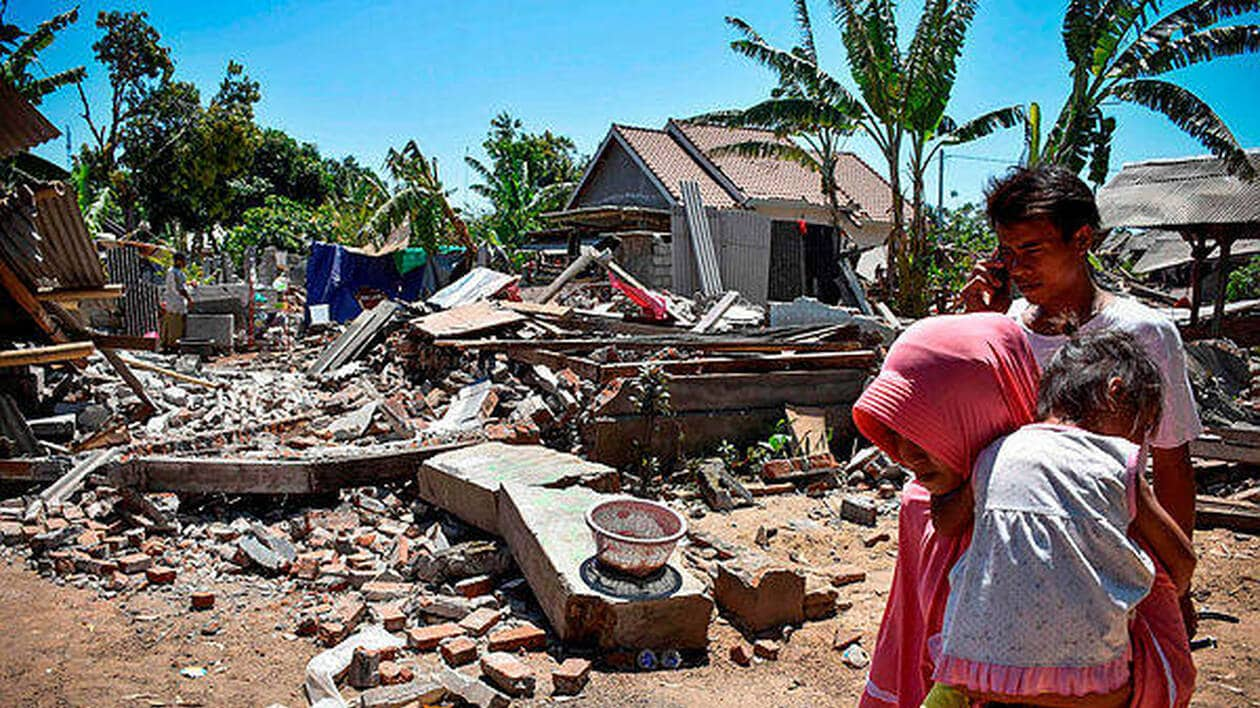
The toll is still provisional: several villages remain hard to reach because landslides have cut off the main roads, and rescue teams are still searching collapsed buildings.
Worst-hit areas
The earthquake affected several districts of East Nusa Tenggara province. The authorities have released the following breakdown of deaths:
| Area | Confirmed deaths |
|---|---|
| Manggarai | 24 |
| East Manggarai | 17 |
| Sikka | 3 |
| Ngada | At least 1 |
| Ende | At least 1 |
| West Manggarai | At least 1 |
The port town of Maumere (north coast) and the town of Ruteng suffered heavy damage, with collapsed buildings, banks, schools and places of worship (source: Le Devoir / AFP). Isolated villages such as Talibura and Nangahale have been without electricity or telecommunications since the quake.
Why Flores is prone to earthquakes
Indonesia lies on the Pacific Ring of Fire, one of the most seismically active zones in the world. Flores in particular sits along the Flores back-arc thrust fault, a reverse (thrust) fault where one block of the Earth's crust is violently pushed over another. This type of rupture causes both strong shaking at the surface and vertical shifts of the seabed that can generate tsunamis (source: Alertes-Météo).
A tragic precedent in 1992. Flores was struck in 1992 by an earthquake of the same magnitude (7.7). It triggered a devastating tsunami that claimed around 2,500 victims. This memory explains the intense fear among residents and the swift evacuations seen this time.
“I don't dare go home. I'm still traumatised by the 1992 earthquake.”
Nurhidayati, 55, a resident of Nangahale, quoted by AFP, 17 August 2026
The humanitarian response
An international humanitarian response
Given the scale of the damage, several organisations stepped in from the very first hours.
The Indonesian government placed East Nusa Tenggara province under a 14-day state of emergency and sent 50,000 kits, amounting to 275 tonnes of humanitarian aid.
The European Union, in a message from Ursula von der Leyen, expressed its solidarity and made the Copernicus observation satellites available to help survey the ground and locate potential victims.
The Indonesian Red Cross and Red Crescent mobilised their teams to help displaced people in temporary shelters.
Several international NGOs, including LIFE, have committed to targeted operations on the ground, complementing the public response.
LIFE's emergency operation: 800 families on Flores
As announced by the LIFE team on 24 August 2026, a dedicated emergency operation is being rolled out on Flores to help the people affected.
Aims of the operation
- Number of families targeted: 800
- Types of aid distributed:
Drinking water (jerrycans, purifiers)
Hygiene kits (soap, menstrual products, toothbrushes)
Emergency food kits (non-perishable, ready-to-eat food) - Timing: Distributions from 27–28 August 2026
- Field coordination: Mouhamadou Gaye, LIFE's spokesperson, currently on mission in Bangladesh, will travel to Indonesia to lead the operation on the ground.
Why this operation matters so much
The essential needs identified by the Indonesian authorities match exactly what LIFE has always delivered: water, hygiene, food. On the ground, residents voiced their most urgent needs from the very first hours: “We need food, something to drink, medicine and nappies for the children,” said Umri, 55, speaking to AFP in Nangahale.
LIFE usually works in 25 countries through a network of local partners, with proven experience in emergency distributions in disaster zones. Our dedicated article emergency food aid: how NGOs feed people in crisis zones explains this approach in detail.
How can you help the victims?
There are three ways to contribute.
Give online: Make a one-off or regular donation on our dedicated Indonesia emergency page. Every euro goes directly to aid on the ground, with 66% French tax relief for French taxpayers.
Share: Sharing the news and the emergency page on your social media helps widen support and raises awareness of this disaster among the people around you.
Donate goods through a local partner: If you live in South-East Asia or would like to organise a local collection, contact the LIFE teams to find out the latest priority needs.
To understand how a single donation turns into real impact in crisis zones, read our analysis solidarity food parcels: how they work.
Join LIFE's emergency operation for Flores
Your donation directly funds the distribution of water, hygiene kits and food kits to the 800 families targeted on Flores. Distributions begin in late August 2026.
Support the Indonesia emergency operation →French tax relief of 66% of the amount donated, up to 20% of taxable income.
Frequently asked questions
What was the exact magnitude of the Flores earthquake on 15 August 2026?
The earthquake measured 7.7 on the Richter scale, according to data from Indonesia's Meteorology, Climatology and Geophysics Agency (BMKG). It struck at a depth of 15 km, with its epicentre around 68 kilometres north-west of the town of Ende, off the north coast of Flores.
How many people have been affected by the earthquake?
According to the toll released on 18 August 2026 by the BNPB (Indonesia's National Disaster Management Agency) and reported by AFP: 70 dead, 1,100 injured and more than 40,000 people displaced. This toll is still provisional, as several villages remain hard to reach because of landslides.
Was a tsunami warning issued?
Yes. The BMKG issued a tsunami warning immediately after the quake. It was lifted after around three hours, as the waves observed did not exceed one metre in height. By comparison, the earthquake of the same magnitude that struck Flores in 1992 caused a tsunami that claimed around 2,500 victims.
What is LIFE doing to help the victims?
LIFE is running an emergency operation for 800 affected families on Flores, distributing drinking water, hygiene kits and food kits. Distributions begin on 27–28 August 2026, coordinated by Mouhamadou Gaye, LIFE's spokesperson, currently deployed in South-East Asia. You can support the operation via the dedicated page life-ong.org/urgence-indonesie.
Is my donation eligible for tax relief?
Yes. LIFE is an NGO recognised as being of public interest in France: every donation qualifies for French income tax relief of 66% of the amount donated, up to 20% of taxable income. A €100 donation to the Indonesia operation therefore really costs only €34 after tax relief. A tax receipt is sent automatically after your donation.
How can I follow developments on Flores?
Official updates are published by the BNPB (Badan Nasional Penanggulangan Bencana) and reported by international news agencies (AFP, Reuters). LIFE will regularly post progress updates on its website and social media, with the concrete results of the field distributions carried out by Mouhamadou Gaye's teams.
Press sources
- France 24 / AFP — Earthquake in Indonesia: 70 dead, sharp rise in the number of displaced and injured (18 August 2026)
- Le Devoir / AFP — Magnitude 7.7 earthquake in the Flores region kills at least 40 (17 August 2026)
- Alertes-Météo — Indonesia: magnitude 7.7 earthquake on the island of Flores (16 August 2026)
- France 24 — Earthquake in Indonesia: at least 51 dead, thousands of evacuees awaiting aid (16 August 2026)
- Informed Clearly — 7.7 earthquake in Indonesia: 38 dead and tsunami warning (15 August 2026)
- Nouvelles du Monde — Earthquake in Indonesia: at least 47 dead on the island of Flores (16 August 2026)
Ready to help?
I start a fundraiser
Support the causes close to your heart by starting an online fundraiser with LIFE.
Raising funds for a charity has never been easier!