How do you make reforestation work? An ecological restoration expert gives her view
For the next instalment in our series of interviews on reforestation, we spoke to Élise Buisson, an expert in ecological restoration. A researcher and senior lecturer (HDR) at Avignon Université, she is also a member of the Natural and Cultural Heritage Restoration Engineering team at the Mediterranean Institute of Marine and Terrestrial Biodiversity and Ecology (IMBE). Her research focuses on conservation management and the ecological restoration of ecosystems degraded by intensive farming.
1. What are the main strategies and methods used in ecological restoration through reforestation?
The main strategies
They are the same as for any restoration project, whether it involves forests or other ecosystems. They depend mainly on how degraded the site is to begin with, the resources available and the ecosystem's ability to regenerate. There are three strategies:
Reclamation/repurposing
This is the process of making severely degraded land fit for cultivation or suitable for another use (in other words, an ecosystem different from the one that existed before degradation – often the case with gravel pits).
Rehabilitation
This involves management measures that aim to restore a level of ecosystem function on degraded sites. The goal is a renewed, ongoing supply of ecosystem services, rather than the biodiversity and integrity of a designated native reference ecosystem.
Ecological restoration
This is a process that assists the recovery of an ecosystem that has been degraded, damaged or destroyed, and it is always concerned with preserving biodiversity and ecological integrity. Other approaches to ecosystem restoration may focus solely on providing ecosystem services (rehabilitation, for example).
Did you know? We need to be clear that planting trees for forestry or for landscaping is not restoration. Nor should these plantations be called forests, as they don't function like forests. They are "simply" plantations. For example, the term Landes forest isn't always appropriate. A small part of it is indeed a natural, mixed forest. Much of it, however, is really just a plantation.
The different ways to restore a forest
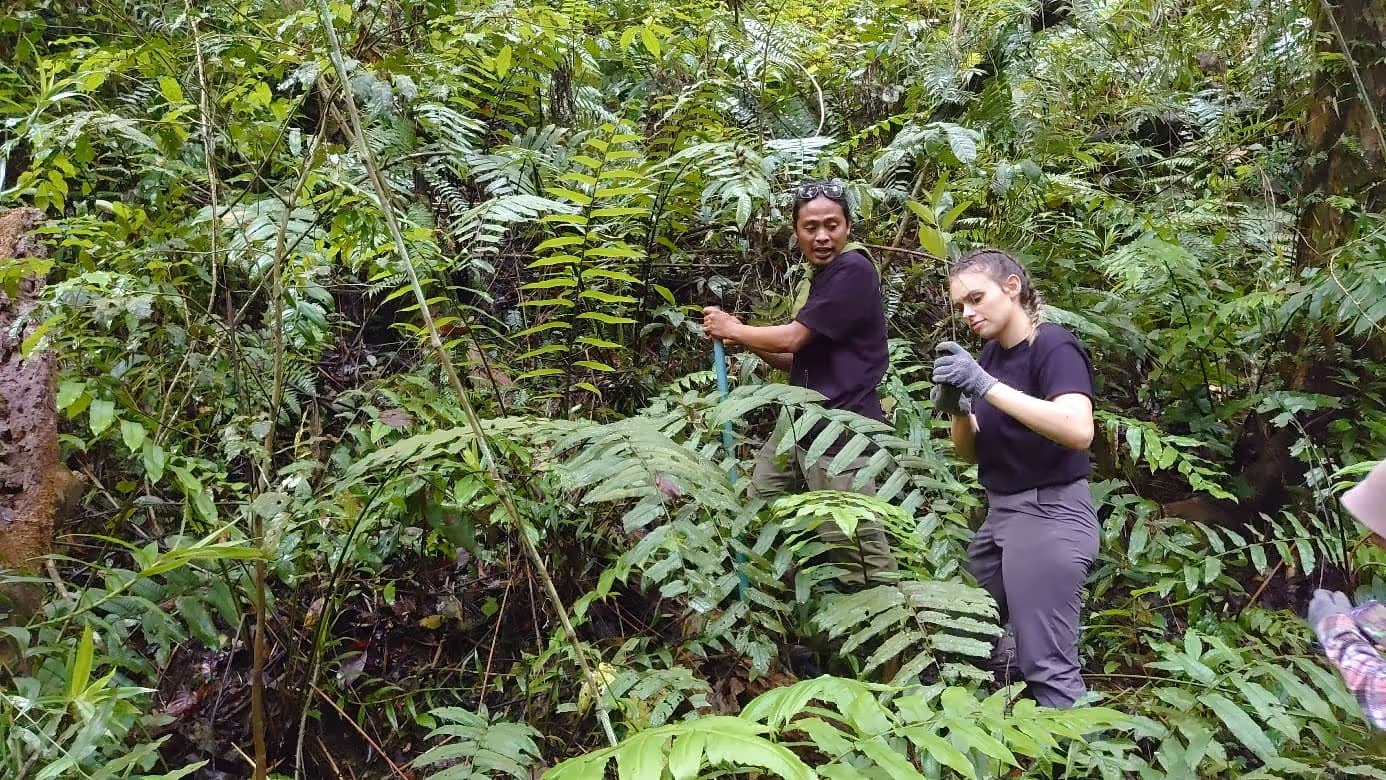
The method chosen to rebuild a forest (which applies to other ecosystems too) also depends on its ability to regenerate, particularly within its landscape (whether fragmented or not).
Natural regeneration
Here, the degradation is halted. Nature is then left to take its course, without human intervention: germination or any other recruitment of biotic elements (plants, animals and micro-organisms) comes from colonisation, dispersal or a natural in situ process.
Assisted regeneration
This approach relies on triggering the natural regenerative capacity of the living organisms remaining on or near the site to be restored. It differs both from actively reintroducing living organisms to a site and from natural regeneration. It is often used on sites with low or moderate degradation. Assisted regeneration measures include removing pests, invasive alien species, or species that are unwanted or compete with naturally growing woody seedlings; restoring disturbance regimes; and providing resources to speed up colonisation (for example, installing artificial perches for seed-dispersing birds).
Where natural regeneration is weak – in some heavily human-modified landscapes (with heavy overgrazing, continuous timber extraction, bushfires, or severe fragmentation), on badly degraded soils or in certain unfavourable climates – a more proactive approach to restoration is needed. This might mean improving the soil (adding compost, for example), planting trees and so on.
2. How do you assess whether an area is suitable for a reforestation project?
The key principle of a reforestation project
By definition, a reforestation project can only take place where a forest existed before degradation.
∙ Reforestation refers to re-establishing a forest on land that was previously forested.
∙ Afforestation refers to establishing a forest on land that was not previously forested.
In French, one might also ask what the difference is between "reboisement" and "reforestation".
Some treat them as synonyms: reboisement = reforestation.
Others say that reboisement includes both reforestation and afforestation. I find this second view more confusing.
As I wrote in the article « Pour une reforestation raisonnée » (For a reasoned approach to reforestation) in the magazine « Pour la Science », establishing a new ecosystem where none existed before poses many challenges. With no pre-existing forest, choosing trees suited to the environment becomes difficult, raising the risk that they will fail to establish. A striking example of these difficulties comes from the work of Shixiong Cao of Minzu University of China, in Beijing, in 2008. His research showed that attempts to plant trees on natural grasslands and steppes in the semi-arid and arid regions of northern China to combat desertification failed spectacularly. Only 15% of the trees planted survived. The main reason was a lack of water. What's more, the trees themselves reduced soil moisture, leading to a loss of plant cover. The bare soil was left exposed to severe wind erosion.
How do you assess whether a reforestation project is appropriate?
A good indicator, then, is knowing what ecosystem was there before degradation took place. If it was forest, the second indicator is the level of degradation. If the soil has been completely destroyed, planting trees makes no sense, and it may be better to opt for repurposing (aiming for an ecosystem other than forest). That said… it depends on the resources you put in.
For example, after mining, if the soil has been kept (stockpiled), but not for too long (so that it retains its properties), it can be spread back once mining ends and planted. If the planting is diverse and natural colonisation is possible from the surroundings (meaning there is still forest in the landscape), restoration can be fairly effective.
The case of fire
On the subject of degradation, it's worth noting that fire is a normal disturbance (also called an endogenous disturbance or environmental factor) for some ecosystems – and so not degradation. In Mediterranean pine forests, maquis and garrigue, species are adapted to fire. The cork oak has thick bark to survive it. Heathers, strawberry trees and kermes oaks can resprout from their stumps. The Aleppo pine has serotinous cones (which keep their seeds inside for several years, long after the seeds have matured, and release them after exposure to fire). Rockroses, rosemary and others germinate after a fire. So in these ecosystems, the best thing to do after a fire is nothing at all: let nature regenerate on its own, since it is adapted.
3. Is mass tree planting an adequate response to the challenge of climate change?
All natural and semi-natural ecosystems in good working order store carbon.
We focus on trees because their carbon is visible (you can see the trunks), whereas the carbon stored in peatland soils, for instance, is invisible to the general public (likewise for grasslands, Posidonia seagrass meadows and so on). So it's first and foremost a matter of perception and lack of awareness.
I also think it's because it seems easy. Anyone can plant a tree. Restoring a peat bog that has been drained and farmed… or replanting Posidonia… is far harder (and besides… how many people know what a peat bog or Posidonia is?).
All natural and semi-natural ecosystems are needed to maintain biodiversity and a wide range of ecosystem services.
Tree planting puts the spotlight on forests (and even then… not always, as many people confuse forests with plantations). It doesn't do the same for other ecosystems, which are just as important for carbon storage, have their own biodiversity and provide very specific ecosystem services. Mass planting would make landscapes uniform, causing a massive loss of biodiversity and of ecosystem services other than carbon storage (grasslands, for example, provide food for livestock).
While tree planting can be beneficial in deforested areas, it can be harmful in naturally grassy ecosystems such as savannahs or grasslands. It destroys the habitats of many plant and animal species, damaging biodiversity and ecosystem services that are vital to humanity. These ecosystems provide grazing land and help recharge groundwater, which shows how important it is to protect them.
Moreover, not all forests are equal when it comes to tackling climate change. Conifer forests in boreal and high-mountain regions absorb more sunlight and give off more heat than treeless areas. As a result, they worsen global warming rather than reduce it.
The problem with « industrial » tree plantations
Petrol-powered machinery, soil disturbance releasing the CO2 stored in it, wooden stakes (which required deforestation) to hold the trees up, and so on. Tree planting done on an industrial scale can make climate change worse by generating greenhouse gases. It can also cause other ecological problems. Mass planting often uses exotic species or a small number of native species, which are not enough to create a forest. The result is a plantation with little or no benefit for biodiversity or the environment.
Why long-term restoration of forest ecosystems matters
What's more, planting trees to fight climate change is only useful if it is part of long-term forest ecosystem restoration. Planting trees for harvesting destroys the stored carbon (since the trees are cut and used at some point).
Natural and restored forests absorb atmospheric CO2, storing part of that carbon in trees and soil. This storage is stable and can last for hundreds of years. Production plantations, by contrast, favour fast-growing, commercially profitable species, giving rapid but short-lived carbon storage. The wood is often turned into paper pulp and then burned, releasing the stored carbon back into the atmosphere. Only its use in construction ensures lasting carbon storage.
Finally, focusing on tree planting risks reducing people's ability to adapt to climate change, while diverting attention from efforts to conserve intact ecosystems, cut fossil fuel use and/or find more effective solutions.
Tree planting in urban areas is, in principle, unproblematic.
4. Can you share some notable examples of reforestation succeeding as a tool for ecological restoration?
The Atlantic Forest of Rio de Janeiro, Brazil
Au cours des XVI et XVII siècles, cet espace a été graduellement détruit par l’exploitation du bois et son remplacement par des fermes cultivant la canne à sucre et le café, ou par des pâturages pour le bétail. Dans la première moitié du XIXe siècle, comme la ville rencontrait de graves pénuries d’eau, l’empereur du Brésil Pedro II a demandé au major Manuel Gomes Archer de mener à bien un projet de regénération de la forêt, afin qu’elle puisse faciliter la formation de sources par pénétration de l’eau de pluie dans les sols. Ainsi, entre 1862 et 1874, 72 000 plantules ont été installées sur une zone à présent intégrée au parc national de Tijuca. Ce projet, maintenant vieux de 160 ans, était pionnier, car il a utilisé un grand nombre d’espèces différentes, principalement natives, et plantées de façon hétérogène.
In Fennoscandia
Here, intensive forest management has simplified the forest landscape, threatening biodiversity. To safeguard it, the structural complexity of previously managed boreal forests needs to be restored. Knowledge from ecological restoration case studies suggests that prescribed burning benefits many early-successional organisms. Creating gaps helps certain insects and fungi, but has limited effect on birds, bryophytes and vascular plants. Regenerating broadleaf forests appears to benefit species associated with light and deciduous trees, such as insects and some forest birds.
5. What specific challenges arise when restoring ecosystems through reforestation, and how can they be overcome effectively?
The foundations of effective reforestation
You need to:
- Plant the right species in the right place while maximising diversity. This objective is fairly easy to achieve if the right people are involved from the very start of the project.
- Make sure the project fits well into the socio-economic and cultural landscape and takes local people's needs into account. This objective is harder to achieve in some parts of the world where communities depend heavily on local natural resources. For example, if people cook over wood fires and trees are scarce, ecologically restoring a patch of forest is unlikely to be viable in the long term, because wood will be taken too often. In that case, alongside rebuilding the forest, you also need to plan a plantation that local people can use for their everyday needs.
The case of Europe
In Europe, it is fairly easy to reforest properly if you put in the effort (see the Fennoscandia example above). That said, forest cover is naturally expanding in many parts of Europe as farmland is abandoned. And as discussed above, restoration is not needed after fire (and can even be counterproductive) for fire-adapted forests. Reforestation in Europe will therefore mainly involve managed forests that need diversifying for the benefit of biodiversity, but also to limit dieback (caused by nutrient deficiencies, drought, pests, etc.)
It is crucial to favour mixed plantations over monocultures, combining species with different life traits. In temperate regions, for example, you should mix deciduous and evergreen trees, conifers and broadleaves, or species with different root systems. Planting should be spread over several years to encourage a complex structure. It is also essential to limit the use of exotic species in favour of local species or, where appropriate, species from geographically nearby regions. This ensures better adaptation to climate change without upsetting the balance of local ecosystems.
6. Why are native species important in reforestation initiatives?
As in any restoration project (whatever the ecosystem), using native species is paramount. These are the species that evolved in that particular environment, and they can quickly and effectively form links with the other species already present or that will recolonise the site. Food webs can regenerate more easily and the ecosystem can become functional and resilient: for example, species that break down leaf litter and so drive nutrient cycling in the restored ecosystem, or those that eat fruit and disperse seeds, enabling plant dynamics, and so on.
Conversely, using exotic species can cause environmental problems. For example, when the first forestry institute in the Philippines was founded in 1910, a reforestation plan was drawn up that included planting native and exotic species such as mahogany. However, unlike the native species, mahogany produces seeds every year, and it quickly colonised natural areas, causing environmental problems. Similarly, in the Pyrenees from the 1960s, a reforestation programme replaced beech forests with spruce, changing the composition of the soil humus and affecting biodiversity, as shown by the decline in springtail populations (studied by Thierry Gauquelin in 2004).
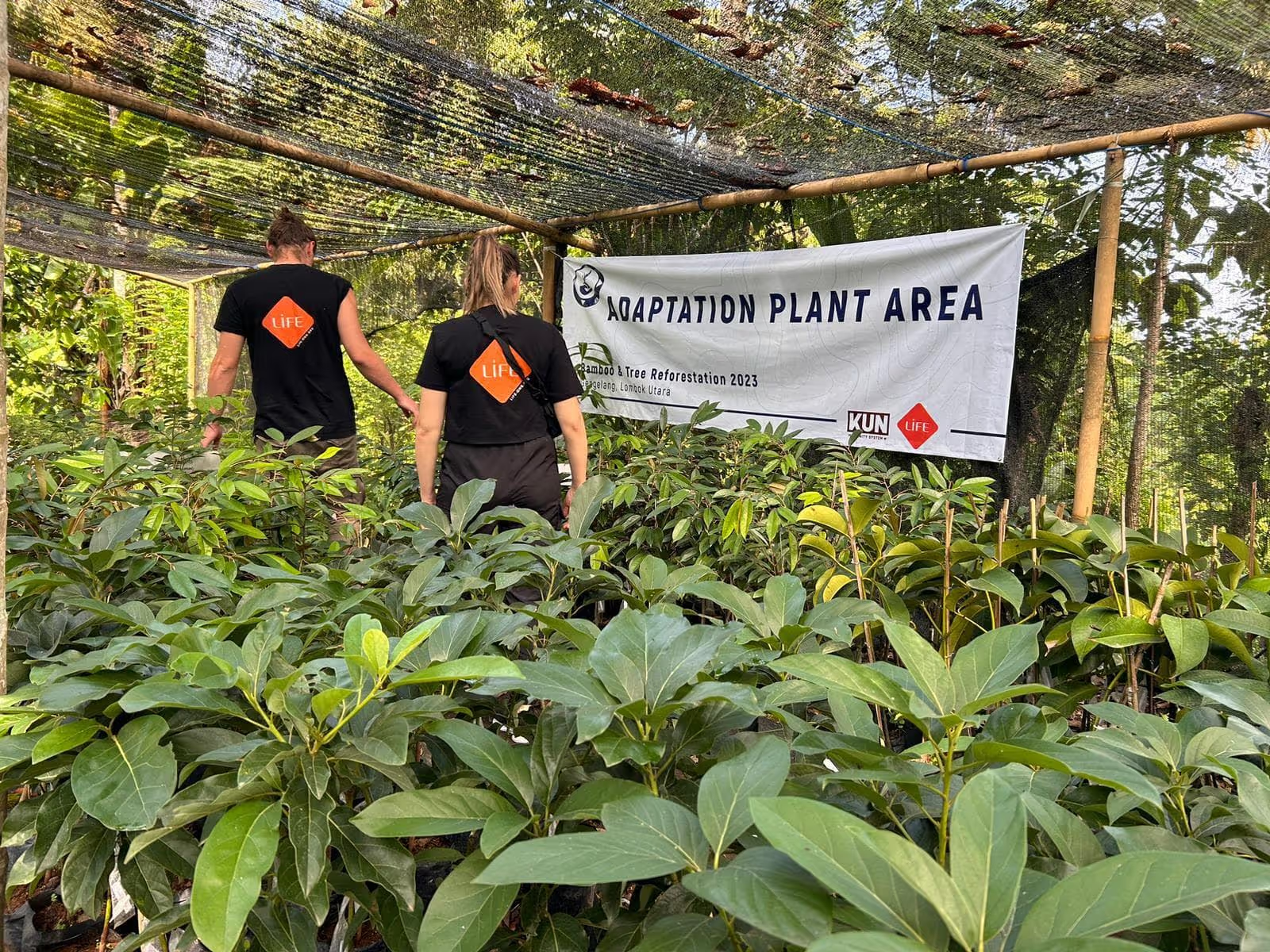
7. What are the key criteria for assessing the long-term success of a reforestation project in ecological restoration?
The most commonly used criteria are (study https://doi.org/10.1111/rec.12586 ):
∙ Vegetation composition: which species are present, how many, whether they are native or exotic, the evenness index (how frequent the different species are), and the survival of planted trees.
∙ Vegetation structure: the cover of different life forms (herbs, seedlings, shrubs, trees), tree height, diameter at breast height and canopy cover. You can also measure the number of standing and fallen dead trees and the quality of the leaf litter (though this is less common).
∙ Fauna composition: the number of animal species (often studied by group [birds, reptiles, etc.] and the abundance of certain animals.
∙ Ecosystem functioning, which involves studying the soil's physical and chemical properties or the presence of bio-indicators (for example bio-indicators of healthy soil and, less often, bio-indicators of pollination or seed dispersal).
8. What synergies can be built between reforestation initiatives and other conservation projects to maximise overall ecological benefits?
I do think there needs to be good communication between the organisations working on conservation and on restoration in the same area. If money is to be spent on restoration in a given area, it is important to ask the following questions:
- Are the conservation areas in good condition? Do they need restoration work? Is that the priority?
- If the conservation areas are in good condition, should restoration aim to increase connectivity between existing areas or not?
9. How can the long-term commitment and support of local communities in reforestation initiatives be secured?
The most important thing is to bring local stakeholders together as early as possible in the project, listen to their different views and involve them in decisions at every stage. They need to be involved in planning, implementation and long-term monitoring of the project's success. While taking part in planning and implementation matters for ownership, I think involvement in monitoring success is what keeps interest in the project, and its protection, alive over the long term.
There are entire manuals that go deeper into this subject:
∙ ROAM, the Restoration Opportunities Assessment Methodology for forest landscapes: https://portals.iucn.org/library/node/45771
∙ Collaborative monitoring: https://www.cifor.org/knowledge/publication/7159
∙ Mapping social landscapes: a guide to identifying the networks, priorities and values of restoration actors: https://www.wri.org/research/mapping-social-landscapes-guide-identifying-networks-priorities-and-values-restoration

Want to take action for the planet too? Join our Sapousse campaign! Our reforestation projects fight deforestation, protect biodiversity and support local communities.
Ready to help?
I start a fundraiser
Support the causes close to your heart by starting an online fundraiser with LIFE.
Raising funds for a charity has never been easier!