Climate emergency: what do 6 climate experts think?
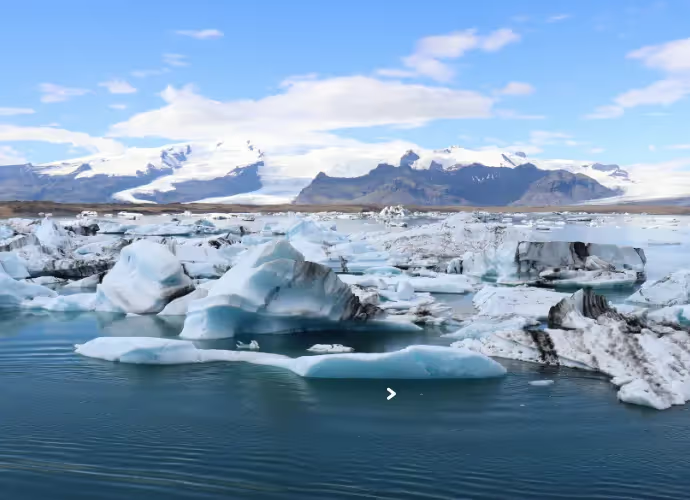
As the climate emergency deepens and the effects of global warming become ever more visible, one crucial question arises: "Climate emergency: is it already too late to turn things around and save our planet?" To answer this question, we turned to several climate specialists for their expertise. Their answers give us an informed view of where things stand today and of the action needed to tackle the climate emergency. Let's hear what these experts have to say.
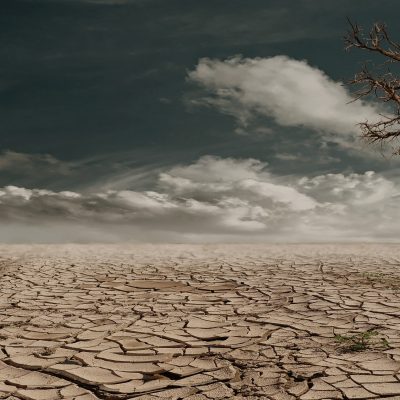
"We urgently need to cut greenhouse gas emissions in order, if possible, to limit global warming to well below +2°."
Hervé Douville is a climatologist and permanent researcher at France's National Centre for Meteorological Research (Centre national de recherches météorologiques). He is also one of the authors of the latest IPCC report. His view on the climate emergency:
"The IPCC's key message on climate change mitigation is both simple and ambiguous. Since every tonne of CO2 and every extra tenth of a degree of warming increases the potential impacts of climate disruption, we urgently need to cut greenhouse gas emissions in order, if possible, to limit global warming to well below +2°C compared with the pre-industrial era. The gradual nature of the impacts thus stands in contrast to a fateful temperature threshold that we must not exceed. That threshold determines how urgent mitigation measures are and how much time we have to reach net zero greenhouse gas emissions. The laws of physics mean that stabilising temperatures requires stabilising greenhouse gas concentrations, and therefore stopping the emissions that natural carbon sinks cannot absorb. The IPCC's first working group stresses that the apparently gradual nature of the impacts, viewed in general terms, must not hide possible tipping points (abrupt and more or less irreversible changes, such as the destabilisation of the polar ice sheets, the collapse of the thermohaline circulation in the North Atlantic, or the loss of the tropical forests of the Amazon) whose consequences could be disastrous. Their probability remains uncertain, but it rises as global warming increases. From a purely climate point of view, then, the prudent course is to act as quickly and as forcefully as possible to limit the many harmful impacts feared for human societies and ecosystems. From a social point of view, the equation is far more complicated, since it means supporting the necessary changes and upholding a form of climate justice whose definition is still widely debated. Finally, we must not confuse speed with haste if we are to make effective choices in both adaptation and mitigation. False 'good technological solutions' are bound to multiply as soon as governments come under pressure, and for as long as people remain reluctant to commit to a path of greater restraint."
"There is no going back. But our future will depend largely on what we do today."
François Gemenne is a research fellow with the Fund for Scientific Research (FNRS). He is a professor at Sciences Po, where he lectures on climate change and migration policy. He is also an author and was a co-author of the 6th IPCC report. He is co-director of the Climate and Defence Observatory for the Ministry of the Armed Forces at IRIS. This climate expert is also director of the research centre The Hugo Observatory: Environment, Migration, Politics, based in Liège. Twitter Instagram Linkedin
"We have to realise that climate change isn't a binary problem, it's a gradual one, which means it's never too late! Every tenth of a degree will make a huge difference, especially for systems that are highly vulnerable to any change in temperature. The trouble with seeing climate change as a binary problem is that we tend to lose heart and tell ourselves it's pointless, when in reality everything counts. We have to let go of the idea that we can turn back the clock: the climate change we have set in motion is irreversible on the scale of a century. But it is our actions today that will decide how far temperatures rise in future. That is where everything will be played out, where the difference will be made.
No action against climate change is wasted. Our future will depend largely on what we do today."
"We all have a part to play in change, and it is not too late to act."
Olivier Barrière, a biologist by training, is a recognised expert on climate issues. As a speaker and sustainable development consultant, he shares his knowledge in talks on topics such as water, marine energy and biodiversity. Linkedin
"Notre compréhension du changement climatique et de ses conséquences est loin d'être récente, elle date de la moitié du XIXe siècle. Pourtant, ce n'est que très récemment que nous avons pris la mesure des impacts de l'utilisation massive des énergies fossiles (pétrole, gaz et charbon). Si ces énergies ont révolutionné nos modes de vie, nous en payons aujourd'hui le prix.
In France, we feel less affected than other parts of the world. Yet a recent study suggests that 'France is warming more (by about +20%) than the global average' (study published in early October 2022 in the journal "Earth Systems Dynamics").
The loss of biodiversity directly linked to climate change is undeniable, and it will very probably speed up. The same goes for problems of access to water. However, we must be clear that biodiversity loss and the growing scarcity of natural resources are not the result of a single phenomenon, namely climate change. Runaway urbanisation, the overexploitation of resources, pollution, the shrinking of natural spaces and many other factors linked to our activities all combine with global warming to threaten our planet.
We must also be aware that halting all our emissions outright, or at least reducing them enough for natural carbon sinks (forests, oceans, soils, etc.) to lock them away for the long term, will not instantly stop the effects of global warming. The greenhouse gases our activities have already released will remain in our atmosphere for a long time to come, with all that this entails. This underlines how urgent it is to cut our emissions lastingly and as quickly as possible.
Despite this worrying picture, on which there is now a consensus, human nature is such that we only react when our backs are against the wall, or even when our noses are pressed up against it. Even so, we have the ability to turn things around, and circumstances will force us to do so.
Although the damage we are causing is serious, nature is resilient. But we must be fully aware that, for humanity, tomorrow's world will be very different from yesterday's. The real question, in my view, is this: can we still save our modern ways of life and our development and economic models? I'm not a campaigner for degrowth, but I remain convinced that this overconsumption, this waste of resources and this denial of our impact on living things and the climate do far more harm to humanity than to our planet. I remain convinced that we can keep our quality of life while developing our societies more sustainably, but it will come at a price. Our models, the way we consume and our relationship with nature must change profoundly. And we cannot put off acknowledging this until tomorrow, or wait for others to come up with the solution. This awareness must be collective and tackled head-on, in our own interest as much as in our planet's. We all have a part to play in change, and it is not too late to act and preserve the richness of our natural environments."
"Scientifically speaking, it is not too late: we have about ten years left to act."
Didier Swingedouw is a climatologist and researcher at the CNRS. He works at the Oceanic and Continental Environments and Palaeoenvironments Laboratory (EPOC) in Bordeaux. This climate expert is also one of the contributors to the IPCC reports. Linkedin Twitter Website
"It is not too late! There are dangerous thresholds ahead of us, such as +1.5 degrees and +2 degrees. So we have a very limited carbon budget left. That is probably what leads some people to say it's too late, but scientifically speaking, it isn't. We have about ten years left to act, twenty at most; after that, we will cross potentially dangerous thresholds, with increasingly serious climate change. We hear a lot of talk that encourages a kind of inaction, such as 'it's too late, we might as well carry on as we are and see what happens'. There is no miracle solution, but rather a range of solutions which, taken together, could meet the challenge. Individual solutions work and they matter, but they are not enough. They must go hand in hand with a change in mindset and behaviour."
"No, it is not too late to act. We must curb greenhouse gas emissions today, tomorrow and the day after."
Olivier Boucher is a research director at the French National Centre for Scientific Research (CNRS) and an expert in climate modelling. His expertise was called upon to coordinate the "Clouds and Aerosols" chapter of the Fifth Assessment Report of the Intergovernmental Panel on Climate Change (IPCC.
"No, it is not too late to act. The more greenhouse gases such as carbon dioxide (CO2) we emit, the more we warm our planet and the more severe the impacts of climate change will be. Conversely, the less greenhouse gas we emit, the less we will warm the planet. Stabilising global warming means bringing our CO2 emissions down to zero. This is the concept of 'net zero emissions', also known as 'carbon neutrality'. If we want to stabilise warming at an acceptable level, say 2°C, we must reach carbon neutrality worldwide in the second half of the 20th century. This means that the developed countries of the North, which have emitted more greenhouse gases in the past than the countries of the South, must reach carbon neutrality by 2050.
We can 'slow the trend' and stabilise the climate in a warmer state, but we will not be able to 'reverse the trend', in the sense that the climate change we are experiencing, and will continue to experience in the decades ahead, is irreversible on the scale of future generations. Unless we draw CO2 back out of the atmosphere, which is highly speculative. What's more, there is no clearly defined threshold: every tenth of a degree of warming avoided is worth having.
That is why we must curb greenhouse gas emissions today, tomorrow and the day after. In France, in Europe and in the rest of the world. Even though warming will continue because of the inertia of the climate system."
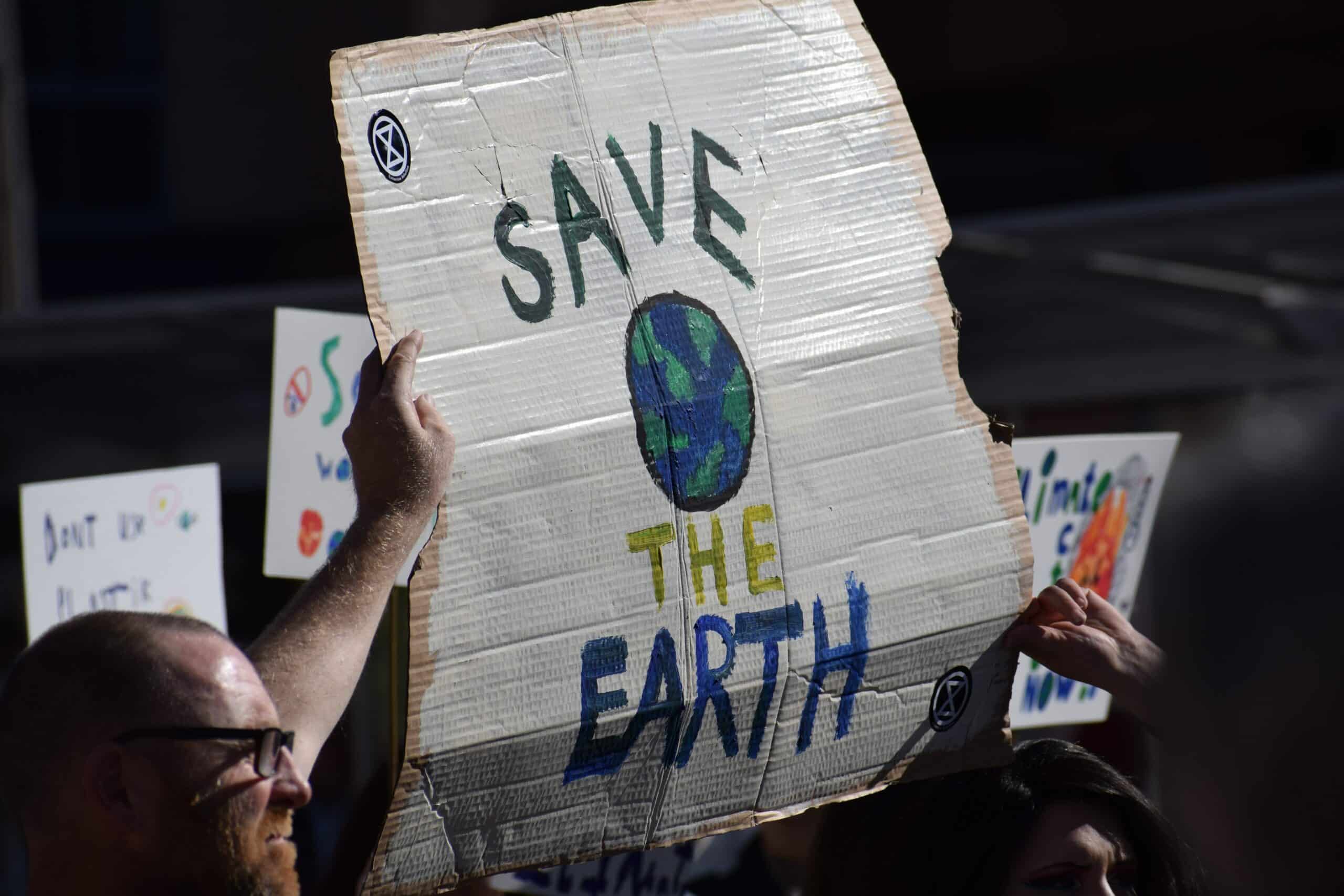
"How severe things become is not set in stone, because it depends on our future emissions."
Marina Levy graduated in oceanography, meteorology and environment from Pierre and Marie Curie University (UPMC), where she completed a PhD in oceanography. She is now Deputy Director of the "Oceans, Climate and Resources" department at the French National Research Institute for Sustainable Development (IRD). Linkedin
"The scientific findings on this question are unequivocal. The climate has already begun to change in response to greenhouse gas emissions from human activity. These effects can be felt in the oceans, which are warmer, have seen sea levels rise and are beginning to suffocate. But how severe things become is not set in stone, because it depends on our future emissions. The more we cut our emissions, the more climate change will be contained and the less dramatic its effects will be.
The urgent task is to cut our emissions as quickly and as deeply as we can. Every effort we make will have a positive effect on the future climate and will help us stay as close as possible to the climate we know today, the one in which our societies have grown and developed. Solutions exist, both for individuals and for society as a whole. We must work to put them into practice."
Would you like to take action against the climate emergency? Join Sapousse, our environmental protection campaign. It is a tree-planting project that fights deforestation while giving local communities a way to earn a living. To act for the climate alongside us, start here 👉https://life-ong.org/en-action-life-ong/sapousse/
Ready to help?
I start a fundraiser
Support the causes close to your heart by starting an online fundraiser with LIFE.
Raising funds for a charity has never been easier!