Humanitarian charities: who can you trust?
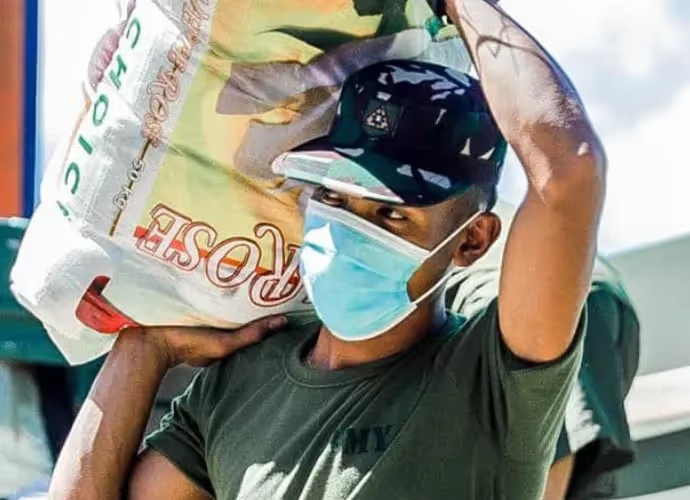
Do you want to help make other people's lives better? Does giving to a trustworthy humanitarian charity, a foundation or an NGO particularly appeal to you? Helping children, quality education for all, building wells so people can get clean drinking water, and so on. There's clearly no shortage of causes, but are you hesitating to take the plunge? Are you wondering who to trust among the many organisations working in France and around the world?
Rest assured, finding an organisation that will turn your aspirations into real action is neither very complicated nor very time-consuming. Here are a few essential criteria it should meet.
Why transparency is essential for humanitarian charities
Could you trust a humanitarian charity or foundation that has something to hide? Of course not. Transparency and openness are a must before you give. So how can they demonstrate it?
The basics: publishing annual accounts
When you make a donation, you expect to know how your money is used! The annual accounts of humanitarian charities give you the answers you're looking for. They offer donors a clear, detailed picture of how they manage their resources to achieve their goals. But that's not all. You'll also find their sources of funding and their various financial flows. All this information helps you judge how effectively they carry out their missions, and whether the impact of every euro you give is maximised.
Finding these annual accounts should be easy. Most of the time, you'll find a page about them on the website of the humanitarian charity, NGO or foundation. At LIFE, full transparency is a core value that guides everything we do. That's why we make our annual accounts available to you. They go through a two-stage approval process: first by a statutory auditor, then by a General Assembly made up of founding members, volunteers and donors. These accounts let you see for yourself that every euro you give is used in the best possible way for maximum impact.
Fully transparent finances
You have access to the organisation's detailed financial information, and also to how it allocates its funds. This lets you check that the charity directs most of its resources to humanitarian programmes and missions rather than to administrative and running costs. For your donations to achieve what you intend, they must not be swallowed up by unjustified internal spending.
Communicating on every front
What better way to get to know and understand a trustworthy humanitarian charity than to read about its ongoing, life-changing work and the impact of its humanitarian projects?
An active presence on social media and on its website allows it to build a strong, lasting bond with its community. Picture captivating photos, inspiring videos and real-time articles that reflect its ongoing commitment. It can also send regular newsletters, keeping you up to date on progress in the field.
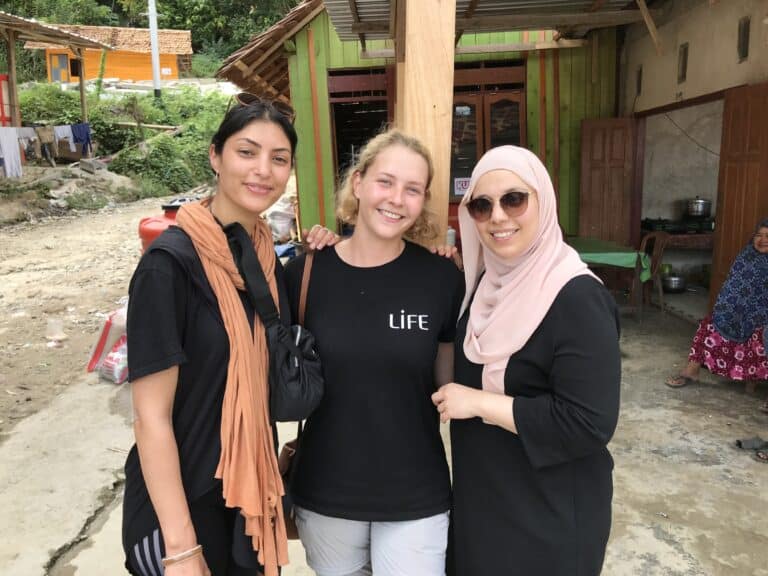
What really brings its mission to life, too, are the stories of dedicated volunteers, committed influencers and some donors who travel to the field. Their genuine experiences are not only motivating; they unite us in our quest for a better world.
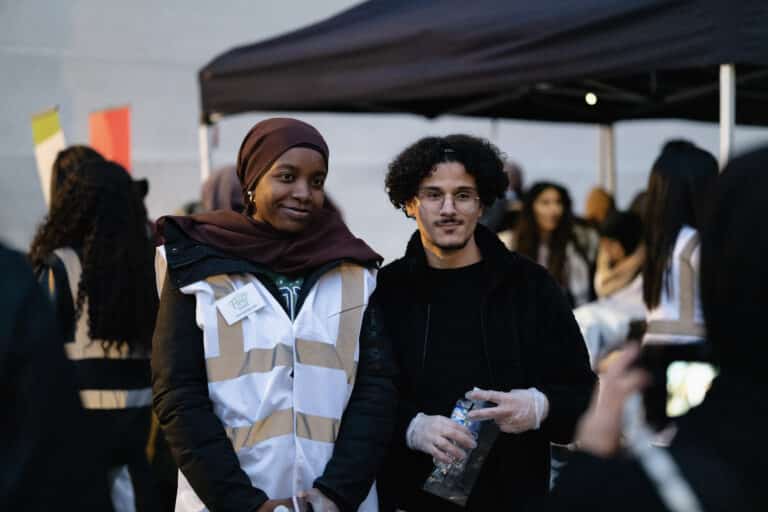
Legal status, networks, labels and accreditation
Your trust goes hand in hand with quickly understanding how the charity you've chosen works and is organised, as well as who supports it and which networks it belongs to. These are signs of effectiveness and integrity.
What is the legal status of humanitarian organisations?
Before turning to a particular humanitarian charity, take the time to check its legal status. It must be registered as a non-profit or public-interest body in its home country. This legal recognition shows that it complies with current regulations, so you can be sure it is legitimate. Visit the organisation's website or the national register of associations (RNA), published in the Journal Officiel, to find this information.
LIFE, for example, is registered in France as an association under the law of 1 July 1901, recognised as being of public utility.
Which networks does the charity belong to?
If you find that the organisation is affiliated with well-known networks, this confirms its legitimacy and reliability, as well as its reach. To join them, it must honour collective commitments set out in a charter. Our NGO LIFE recently joined the networks Coordination Humanitaire et Développement (CHD) and Coordination SUD.
Ethics and integrity above all
Some trustworthy humanitarian charities, foundations and NGOs also display a label and follow a code of ethics. In doing so, they prove their commitment to ethical standards and good practice. Note that a credible label is awarded by an independent body!
Examples include the Code of Conduct for the International Red Cross and Red Crescent Movement, the Alliance for Transparency and Accountability in Aid (ATRA), and, in France, the IDEAS and Don en Confiance labels. The latter was created in 1989 by major social and humanitarian charities and foundations.
The good reputation of the charity you choose
When you're thinking of supporting a humanitarian cause, online research is your ally. It helps you discover the real impact of a humanitarian charity, NGO or foundation. Genuine testimonials, ratings and comments from donors and volunteers on its website, on social media and on discussion forums all provide valuable insight.
Even so, caution is called for. The source of the information is crucial. For impartial opinions, explore independent evaluation websites. Among them, you can trust Charity Navigator or GuideStar, as well as fundraising platforms. There you'll find detailed rating sheets for each listed charity.
Above all, never hesitate to contact the organisations you're thinking of supporting directly. A trustworthy, transparent organisation is open to communication. It will be happy to answer your questions.
On the agenda: respecting and involving donors
You want to be recognised as a donor. Would you like the humanitarian organisation you've chosen to support you every step of the way? From your donation to the completion of the project you're backing, and even beyond, you'd like it to be by your side. It's true that together, united in a spirit of solidarity and pooling the strengths of everyone involved, projects move forward far better. So how can organisations go about it?
This can mean having teams that are easy to reach, sending your tax receipt on time so you can declare your donation on your tax return, and above all communicating regularly about ongoing work. At LIFE, for example, we offer real-time GPS Tracking. It lets every donor-Lifechanger see when and where in the world their donation is changing lives!
Beyond your financial support, you may also want a real experience, to be part of the action. What better way than to go out into the field as we invite you to do? It's an exceptional opportunity to see your impact first-hand. And to get involved day to day, we also suggest creating a personalised fundraising page. It lets you champion a project close to your heart among your friends and family.
In the complex world of humanitarian charities, there's no one-size-fits-all answer as to which to choose. Everyone has their own criteria and values. However, there are some essential points to consider when making your choice. By building them into your research, you can be confident that your donation will be used meaningfully, helping to improve the lives of many people around the world. Make the choice that reflects your convictions, because every gesture counts in our shared mission for a better world.
Want to join forces with a reliable, committed charity? Join us and become a Lifechanger!
Ready to help?
I start a fundraiser
Support the causes close to your heart by starting an online fundraiser with LIFE.
Raising funds for a charity has never been easier!