Boats for a better life: Boat for Livelihood
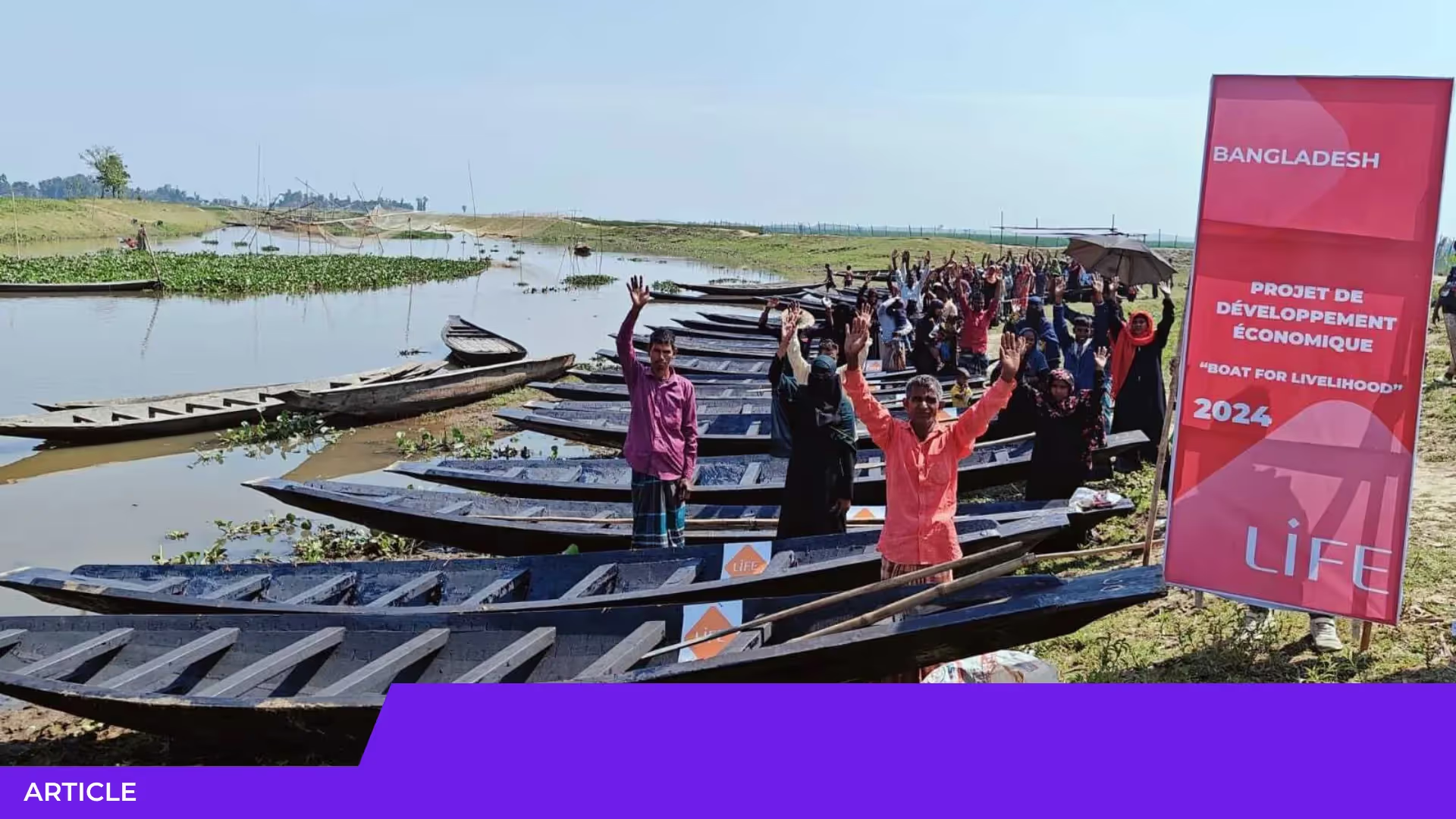
“Boat for Livelihood”: LIFE has been running this economic development project since October 2023 in Moulvibazar district, in north-east Bangladesh. Its aim is to support fishing communities by providing modern, durable fishing boats to help them tackle the many challenges they face, from poverty to fishing practices that harm the environment. Let’s take a closer look at this wonderful initiative, which sets out to improve their daily lives and protect the planet while helping whole communities become self-reliant.
Fishermen and their families in the villages of Hailhaor and Sreemangal
In the beautiful region of Moulvibazar, nestled in the heart of north-east Bangladesh, lie vast wetlands: natural treasures teeming with aquatic life. These life-giving lands, known locally as Haor, are a cradle of thriving life, where canals, lakes and rivers weave together an exceptionally rich ecosystem.
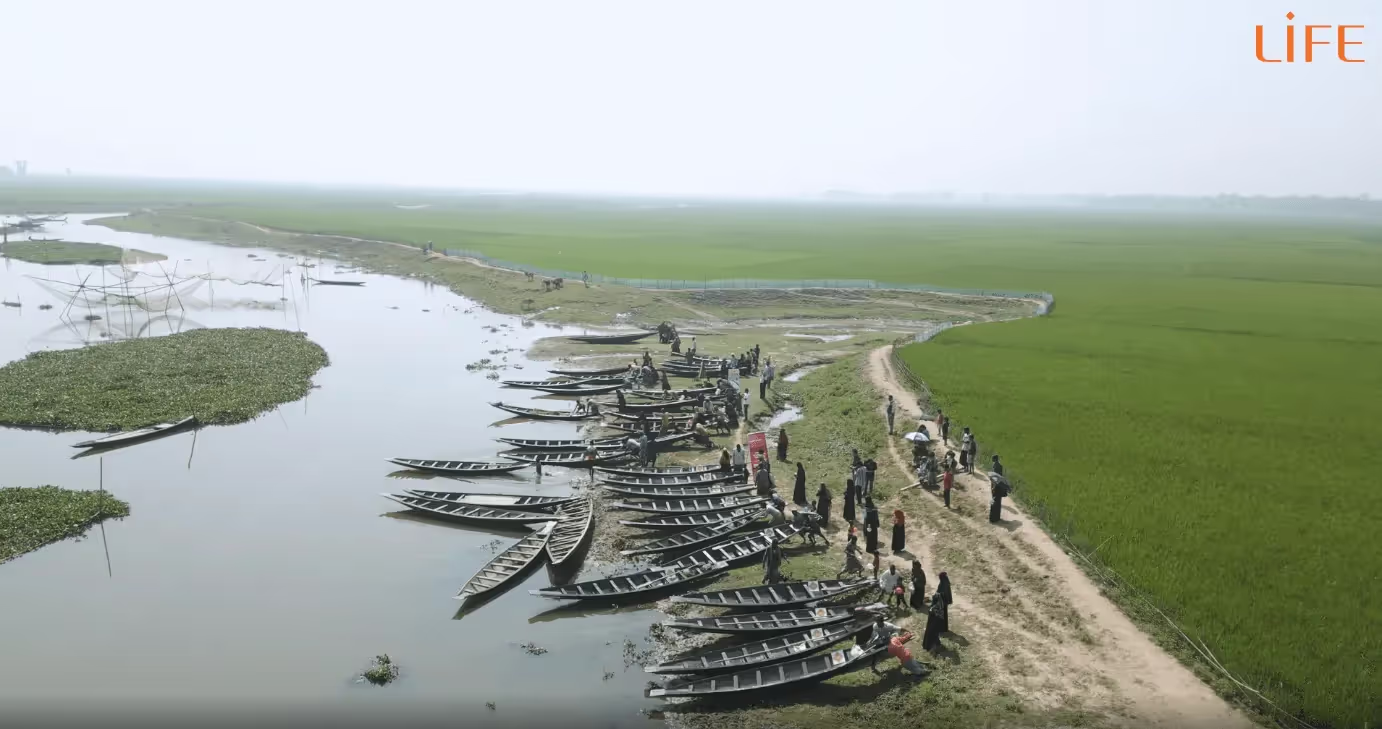
Here, fishing is far more than a job: it is a way of life and a vital source of livelihood for the people who depend on it. Yet behind this natural splendour lies the poverty of the villagers.
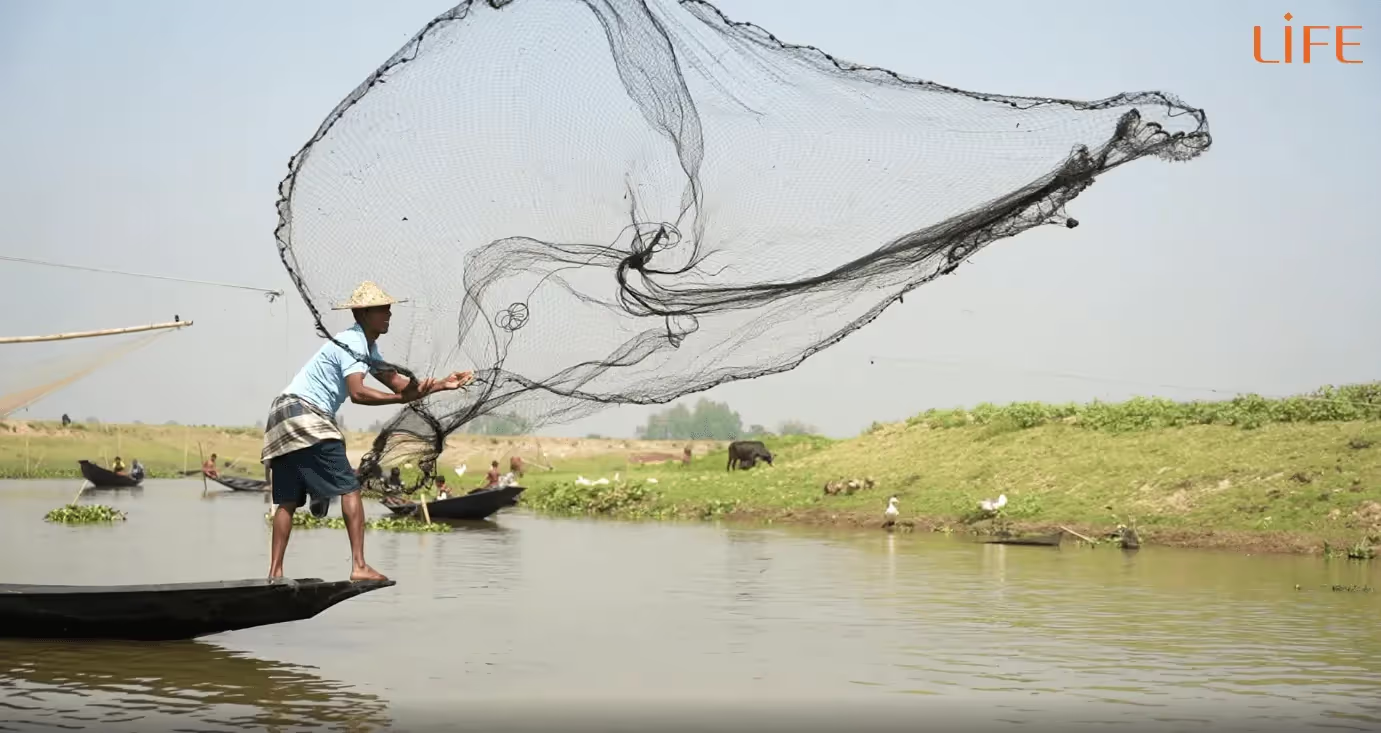
Many families in the region struggle every day to meet their most basic needs, such as food, education and healthcare.
Why? Fishermen very often cannot afford to buy their main working tool: their boat. So they have to rent one from owners or middlemen. But rental costs are high, up to €40 a month per boat, which amounts to 20 to 40% of their monthly income. These costs eat heavily into their profits and keep them trapped in poverty.
And when they cannot afford to rent a boat, for shorter or longer periods, there is simply no fishing… Unpredictable income and economic uncertainty are part of everyday life. This pattern keeps fishermen dependent on middlemen or boat owners who control their work, creating situations of exploitation.
But the challenges facing Bangladeshi fishermen go beyond getting hold of a boat. Fishing nets, essential tools of their trade, are another expense. Constantly worn down in demanding waters, they need regular repairs, which puts yet more strain on their meagre finances.
This constant economic pressure, as they struggle day after day to provide for their families, drives fishermen to break environmental protection rules. They catch juvenile fish and ignore size limits, quotas and so on. All of this threatens the biodiversity of the region’s aquatic habitats.
“Boat for Livelihood”: supporting the wellbeing of Bangladeshi fishermen and their environment
To meet these socio-economic and environmental challenges, LIFE set up the “Boat for Livelihood” project. We are providing fishing boats to 75 poor fishermen in the region and helping them become self-reliant through a range of measures. To achieve our goals, we have teamed up with a trusted local partner, Social Aid, and are involving local experts and holders of traditional knowledge who understand the specific context of the community and its environment.
Our partner, Social Aid
Social Aid is a voluntary, non-profit and non-political development organisation founded in 1995. It works to improve the lives and livelihoods of poor, vulnerable and disadvantaged communities in remote, hilly and underserved areas of Bangladesh. Over the years, it has built up the skills to carry out larger initiatives that help achieve the Sustainable Development Goals (SDGs).
The different strands of “Boat for Livelihood”
Our project, which we are running together, has several strands.
Choosing beneficiaries fairly
It is crucial to make sure aid reaches those who need it most. Our partner Social Aid therefore carries out a survey on the ground to identify the fishermen and families who will benefit. It takes into account factors such as income and vulnerability, as well as a willingness to adopt sustainable fishing practices. In total, the aid reaches 75 households, or more precisely 550 people (400 children, 75 men and 75 women), whose lives can now improve considerably.
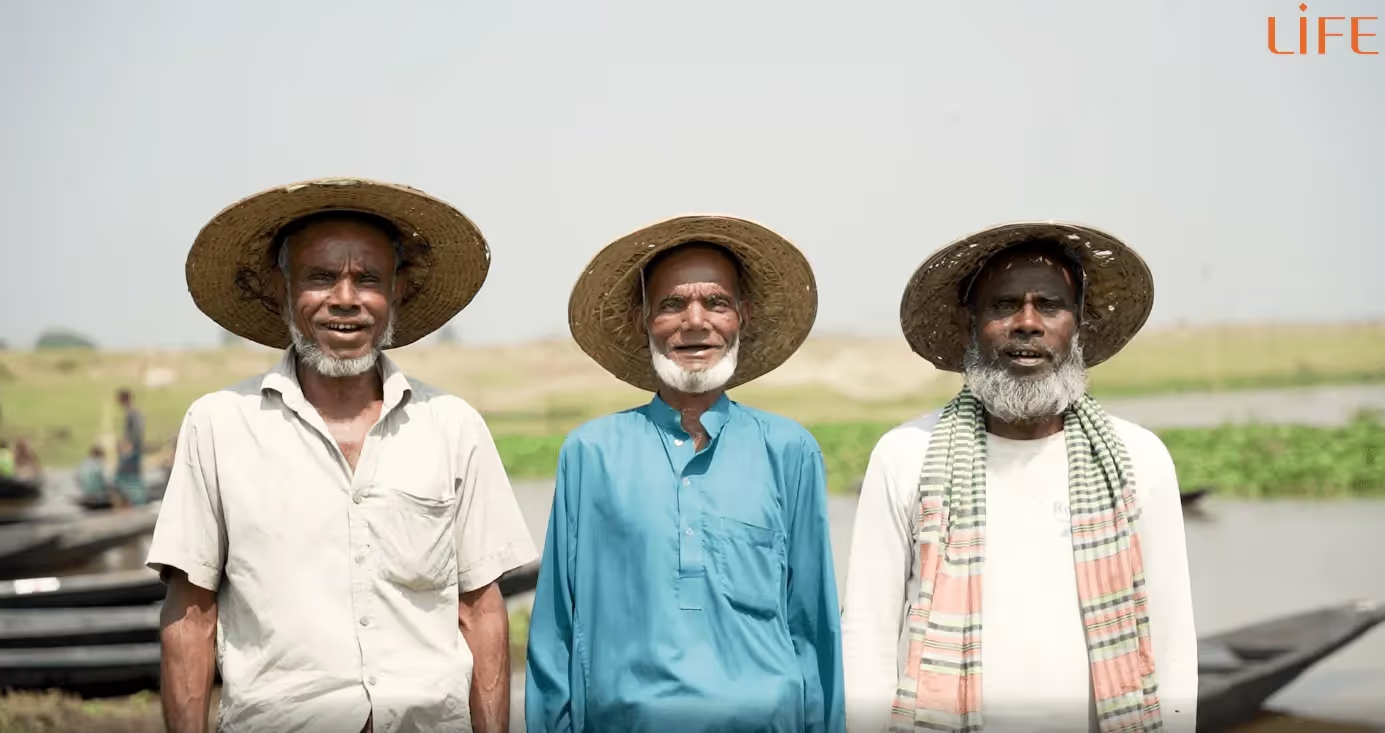
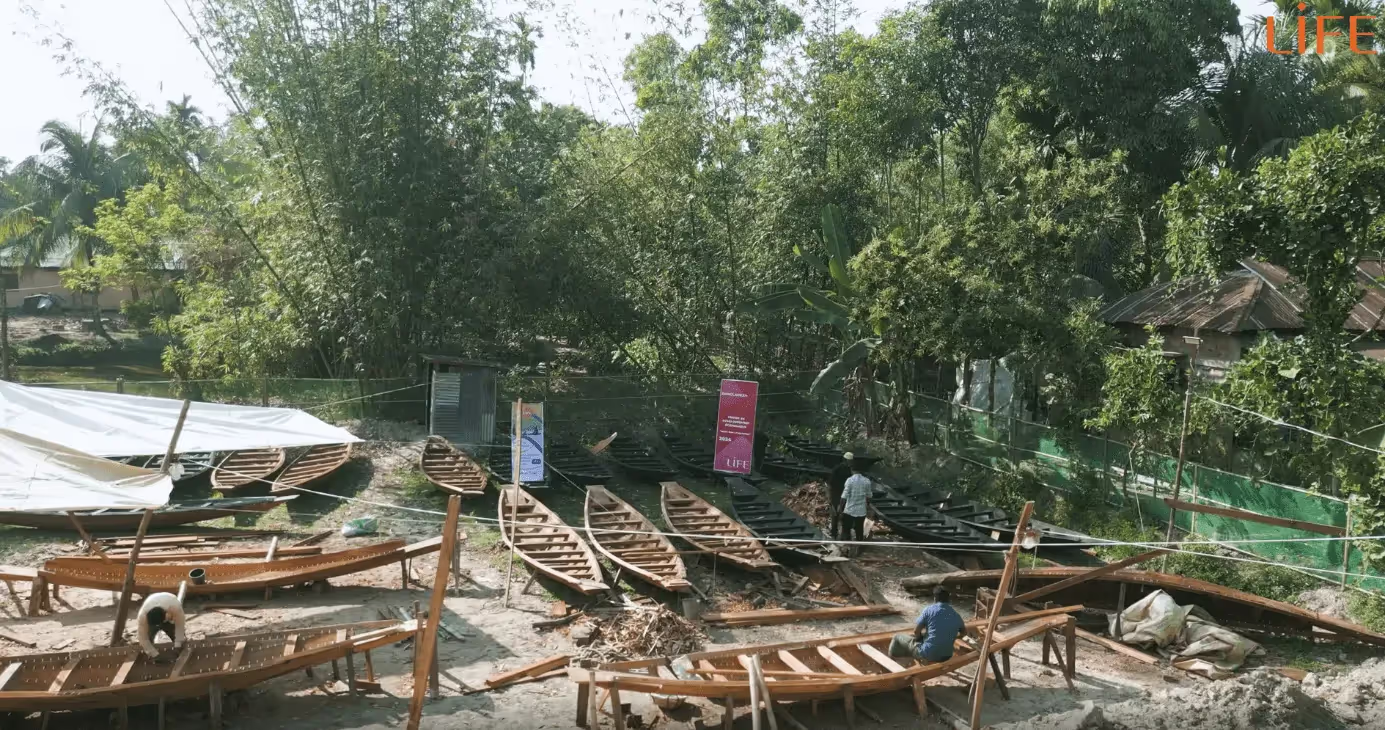
Buying and distributing boats
Our partner Social Aid then puts together a team to buy fishing boats suited to local fishing conditions and to the fishermen’s needs, making sure the boats are good quality and durable. The choice fell on traditional-style models with a shallow hull, ideal for fishing in marshland. Built from rongin wood, they are remarkably resilient in water and withstand prolonged exposure to it. They have another notable advantage too: if a storm or big waves strike while fishing in the wetlands and the boat is about to capsize, it will not sink. It stays afloat, allowing fishermen to navigate safely and find a way to save their lives in rough waters.
We chose wooden boats. Slightly less sturdy than fibreglass ones, they are far easier to repair! And the wood is available locally! This ensures the project’s long-term viability and avoids quickly ending up with graveyards of boats beyond repair.
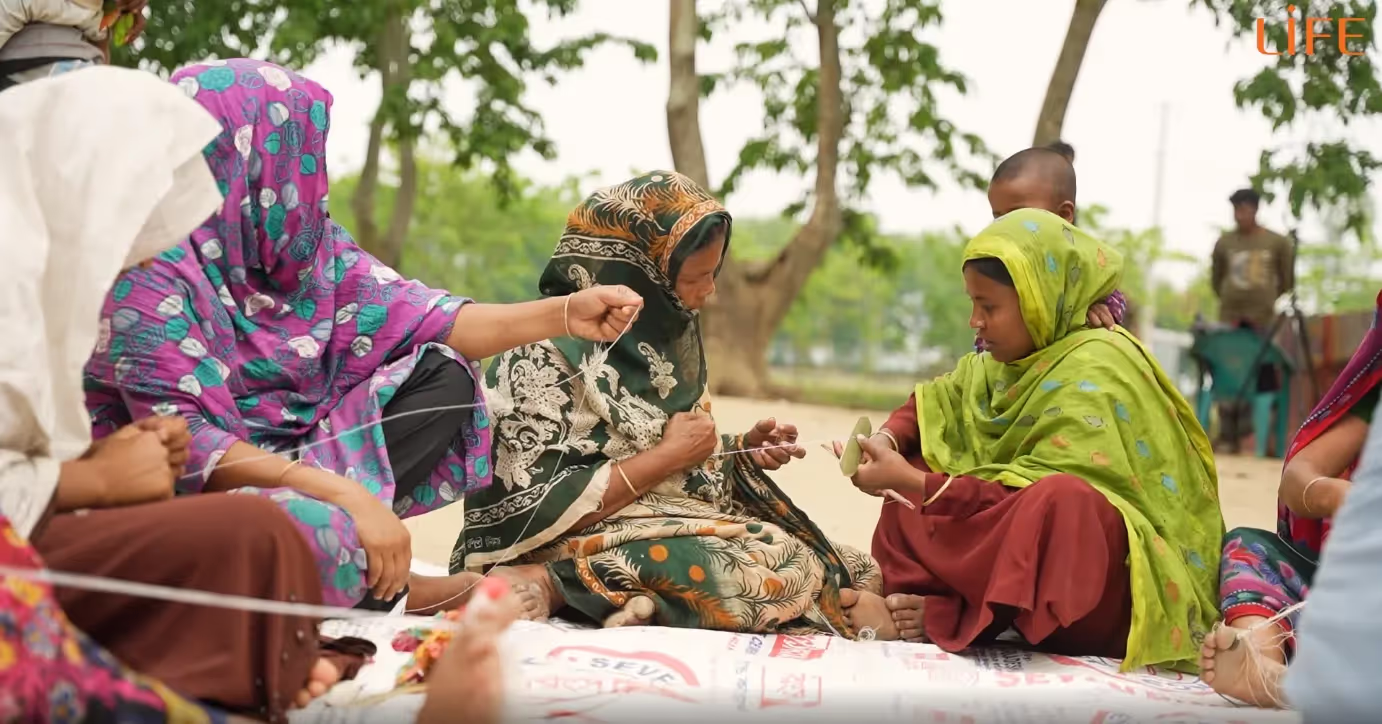
Net-repair training for women
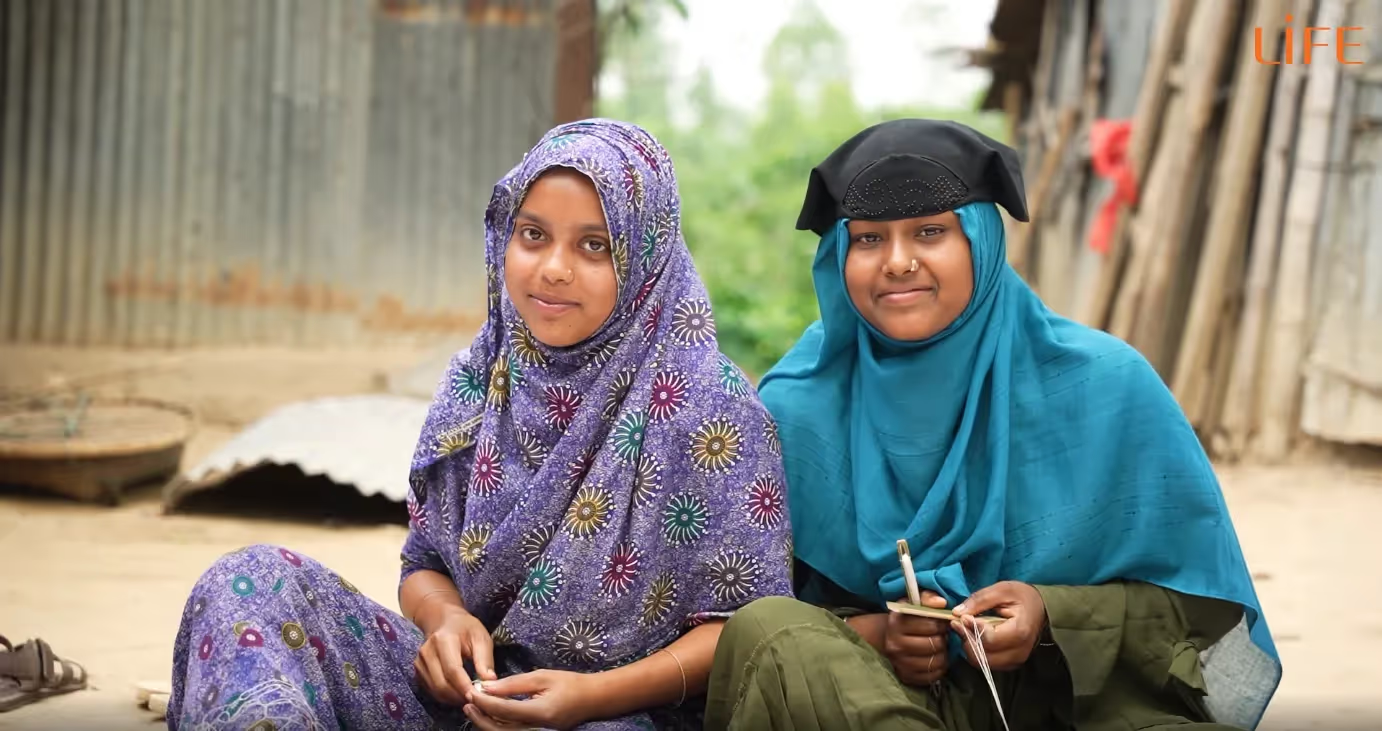
75 women from the beneficiary fishing families receive training covering both how to make nets and how to repair them. Each session brings together 9–10 women, with 20 hours of training over 5 days.
Awareness sessions
Awareness sessions are held with the beneficiary fishermen. They provide thorough training in sustainable fishing techniques, choosing the right net sizes and selective fishing methods, and explain how to avoid overfishing particular species. They also aim to make fishermen aware of existing fishing regulations, such as seasonal bans and size limits, so as to protect vulnerable species and preserve the ecosystem. Proper waste disposal, especially of plastic, is covered too.
These learning sessions help everyone take on board why healthy aquatic ecosystems matter, for people and of course for the planet. By understanding the links between the health of ecosystems and their own wellbeing, fishermen become driving forces for protecting the environment within their communities.
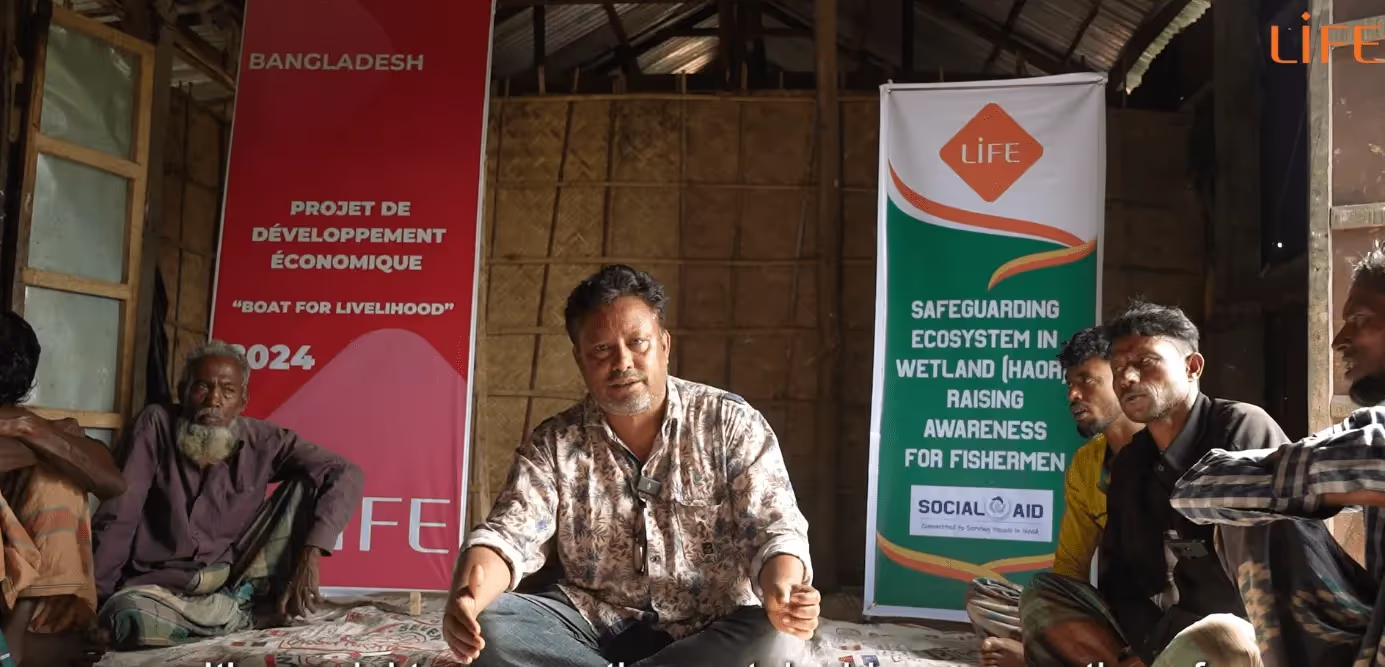
The local authorities and the fisheries department play a key role in this project, lending their expertise to train the selected fishermen.
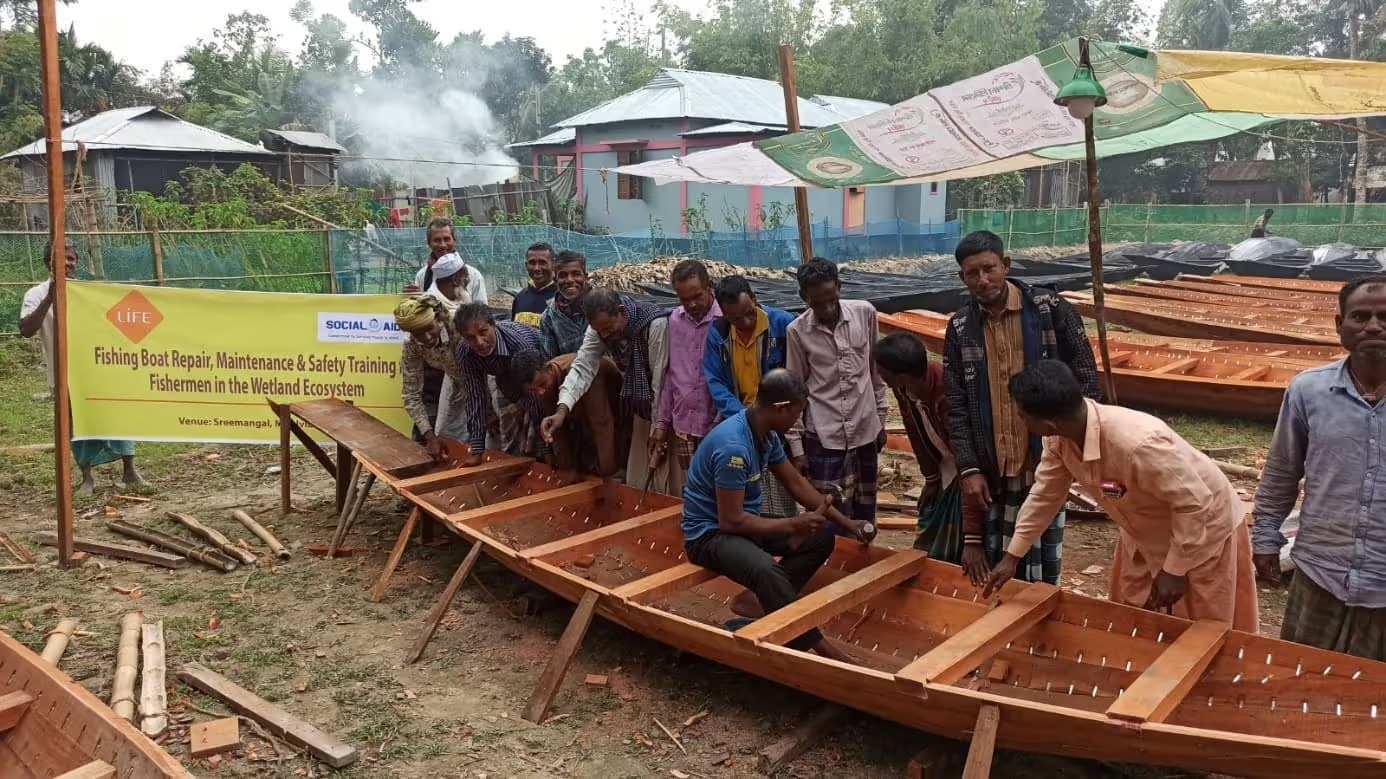
Boat repair and maintenance training
These sessions also cover topics such as boat repair, maintenance and safety precautions. The knowledge gained not only keeps fishermen safe on the water but also helps their boats last longer, bringing greater economic sustainability to the fishing community.
Monitoring and evaluation
Working with LIFE, Social Aid is setting up a system to monitor and evaluate the project’s progress, impact and effectiveness. Data is gathered on rising incomes, improved living conditions and the difficulties beneficiaries face.
The results of the “Boat for Livelihood” project
Here are the positive changes and impacts already seen, and those expected, from the project.
Higher incomes for beneficiaries
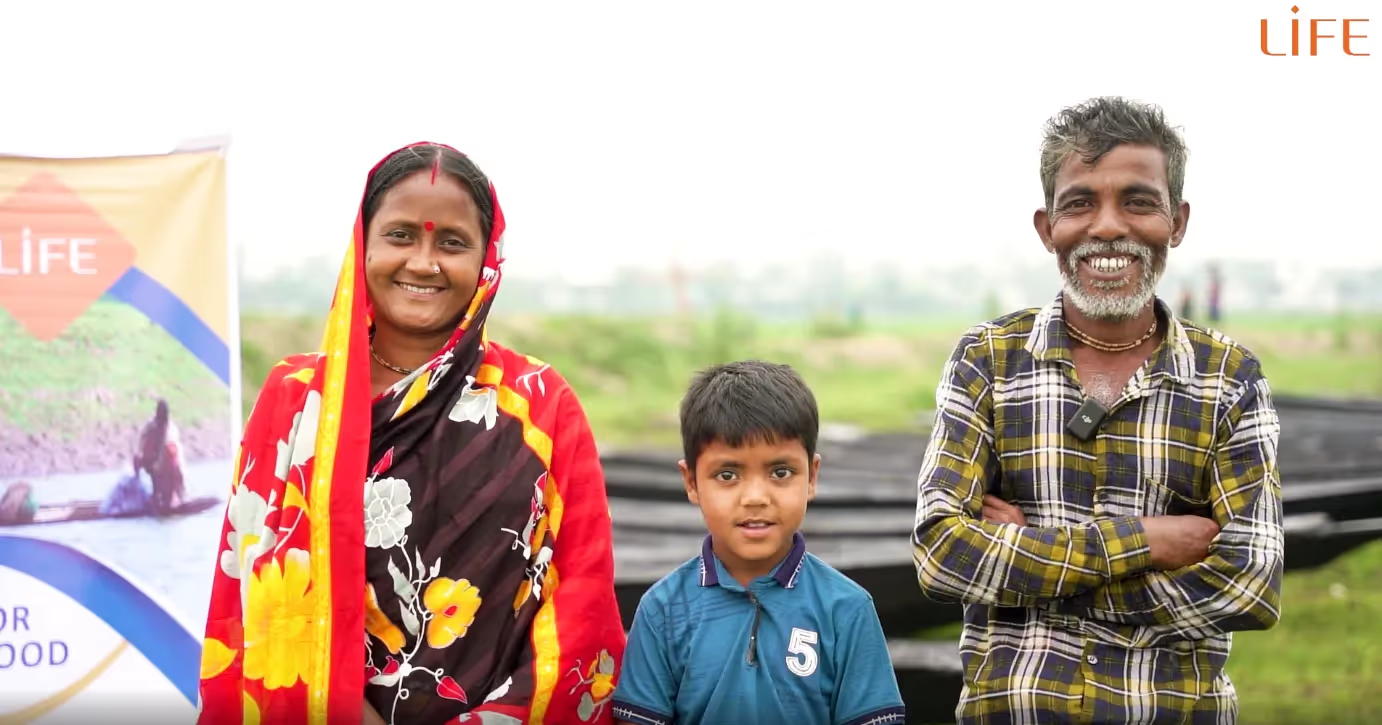
The 75 fishermen in need and their families are seeing a marked rise in their income, thanks to better fishing opportunities made possible by the boats provided and the net-making and net-repair skills they have gained. This new situation is allowing them to gradually achieve economic stability.
Better food security
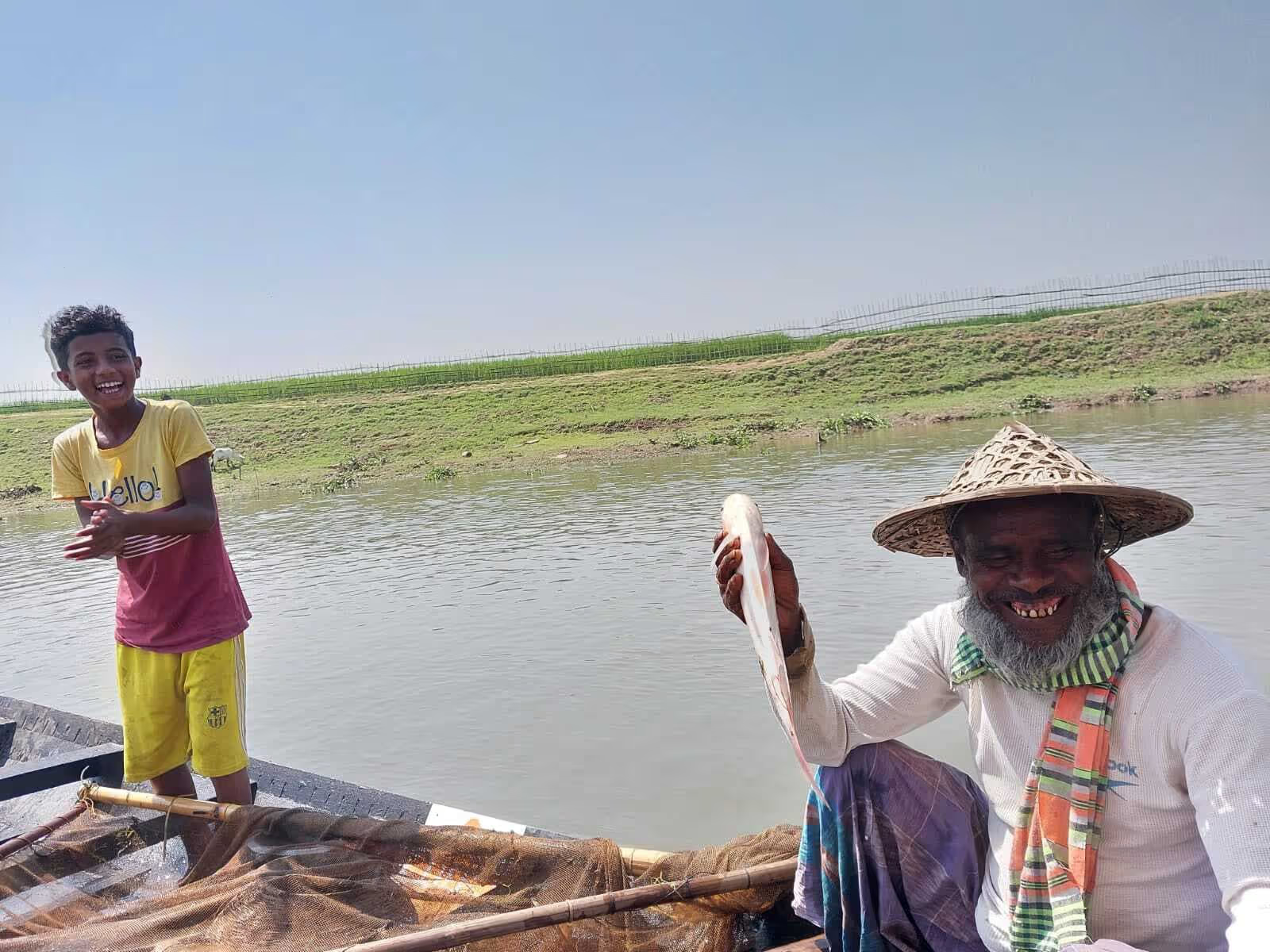
The families supported enjoy better food security thanks to having fish, a vital source of protein, in their diet. Everyone is better fed and less vulnerable to food shortages.
Towards gender equality and women’s empowerment
Gender gaps within beneficiary families and communities are narrowing, as women play an active part in fishing, especially by repairing nets, and take a greater role in decision-making. The awareness sessions also cover gender equality, tackling the social norms and stereotypes that exist in the fishing community. A feedback mechanism has been set up specifically so that women can voice their concerns and suggestions, making sure their voices are heard and taken into account.
Adopting sustainable fishing practices
The fishermen sign a contract with LIFE. It states that, in return for receiving their boat, they will adopt and put into practice sustainable fishing methods that safeguard fish stocks in the long term. They must keep their environmental impact on the region as low as possible.
Protecting the environment
The project therefore helps protect the natural environment by ensuring the sustainability of Moulvibazar’s aquatic ecosystem and minimising harm to biodiversity and water quality.
Thanks to LIFE’s “Boat for Livelihood” initiative, the challenges facing Bangladesh’s fishermen can be turned into opportunities for economic and environmental progress. With a shared commitment to sustainability, these families can play a vital role in protecting marine ecosystems while improving their own wellbeing and that of their communities. The project is aligned with the United Nations Sustainable Development Goals (SDGs 1, 2, 5 and 14), reducing poverty, ensuring food security, empowering women and supporting marine biodiversity!
Together, let’s keep changing lives and help people in need become self-reliant.
Ready to help?
I start a fundraiser
Support the causes close to your heart by starting an online fundraiser with LIFE.
Raising funds for a charity has never been easier!