Biodiversity at risk: why must we act now?
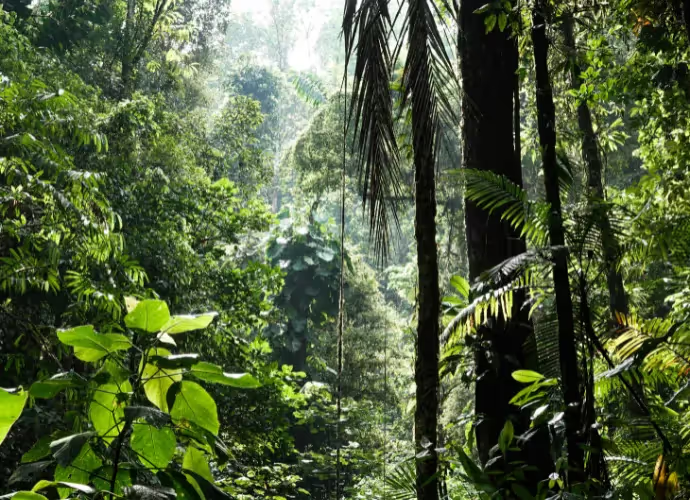
Imagine a world where biodiversity flourishes, where every species and every ecosystem is protected and full of life, a world in which people live in harmony with their environment and with nature. That world is still possible if we all act together, and quickly, to protect biodiversity. Because yes, the living fabric of our planet, which we are part of, faces challenges that we must urgently tackle by joining forces. Why is time running out, and how can acting now make a difference?
Biodiversity is life!
We are all part of biodiversity, and we wouldn't be here without it! Did you know that it covers every form of life, every species and every ecosystem, as well as the differences within a single species, its genetic traits? It's quite simple: it is the foundation of life on Earth, from the tiniest contents of a cell to whole communities of living things interacting with their surroundings. Its richness and its fragility come from this breathtaking web of interdependence, built up over millions of years. But while it took millions of years to become what it is, a few decades are enough to see it collapse. Everything is speeding up! Yet by all acting together in the same direction, we can slow its decline. And the stakes are high!
Why do we need to protect biodiversity?
Biodiversity is at the heart of our lives. It is essential for the planet to function properly. But it goes further than that! Everything you do day to day depends on it. So its decline inevitably affects every one of us.
The source of everything
It is from biodiversity, from nature, that we get the oxygen we breathe, the food we eat, the water we drink and the raw materials we use for shelter, housing and clothing (wood, wool, cotton, etc.). It is also where medical discoveries and remedies are found.
Restoring the perfect balance
Healthy biodiversity keeps everything that makes up our planet in balance, and provides us with many wonderful services we are not always aware of. These so-called ecosystem services beautifully illustrate the vital bond between people and nature. Here are a few telling examples:
● Thanks to pollination, particularly by insects, we can eat vegetables and fruit. Over 75% of the crops that feed the world's population depend on it.
● Wetlands reduce coastal erosion and lessen the severity of flooding.
● Forests and oceans store carbon and so help fight climate change. By destroying biodiversity and ecosystems, we make ourselves more vulnerable to climate change, and also to new viruses, as we saw with COVID 19. Indeed,
17% of infectious diseases are of animal origin, and the destruction of animals' natural habitats brings them into closer contact with humans.
Why can't we wait any longer to act?
Everything has been speeding up in recent years. You probably hear far more about the threat of climate change than about the loss of wild species and habitats, but the two crises are linked.
It's all happening so fast!
Animals and plants are disappearing at a frantic pace around the world. At this rate, 75% of species will be gone from the Earth within 500 years. To give one example, 69% of wild vertebrate animal populations disappeared between 1970 and 2018! And no country is spared. In France, 30% of farmland birds have disappeared in 15 years. In Canada, which has the greatest diversity of species, 281 of them are endangered! The story is the same for natural resources: water, oil, coal, gas, minerals and forests have been depleted by humans. 80% of deforestation is caused by agriculture, according to the FAO's five-yearly report on the state of the world's forests. 66% of marine environments are degraded. This is what is being called the 6th mass extinction of life. Let's come together and prove these grim forecasts wrong!
How can we protect biodiversity?
If we want to protect biodiversity together, effectively and quickly, we need a holistic approach and collaboration between countries, governments, businesses, NGOs, local communities and individuals. Everyone has a part to play, at their own level, to secure a future in which it keeps thriving. Private individuals, professionals, consumers, people taking action: all together, we can slow its decline and repair the living world. Because although there are many reasons for its degradation, it's important to remember that, underlying them all, our lifestyles and economic systems are to blame.
Uniting to protect ecosystems
Above all, we must come together to conserve natural habitats. That means reducing land take and restoring degraded ecosystems. What actions can help?
- Creating more protected areas, such as national parks and nature reserves. They allow ever more species to live free from the threat of human activity.
- Reforest! Forests are the second-largest carbon sink, as well as home to rich biodiversity. At LIFE, through the Sapousse programme, we are expanding positive-impact planting programmes around the world. Trees are planted that also give local people a livelihood, such as fruit and sustainable materials: these are known as economic trees. Thanks to them, local communities earn a regular income. They also receive support to ensure the project lasts and the trees are managed sustainably.

Please note: the European Union is set to adopt a law to restore 30% of degraded land and sea areas by 2030.
Promoting sustainable resource management together
Together, as consumers and as active players, we must promote sustainable resource management. Sustainable fishing and farming, and agroforestry, meet today's needs while making sure future generations can meet theirs.
Prevention through regulation
Our individual initiatives, and those of charities, are essential! So are strict laws. They give endangered species better protection, fight the illegal wildlife trade, and encourage sustainable resource management, less water, air and soil pollution, nature-friendly industrial practices, and more.
Fighting climate change
As mentioned earlier, climate change and biodiversity loss are linked. Everything that helps cut greenhouse gases, promote renewable energy and put adaptation strategies in place contributes to protecting biodiversity worldwide.
Stepping up awareness and education
We can only truly protect what we truly know! Safeguarding biodiversity is possible if people are aware of its importance. We need to raise awareness and encourage good practices and initiatives. Collective will is essential. All over the world, local communities must be involved in managing natural resources sustainably, with respect for ecosystems. Parents, businesses, governments, charities: the more of us there are, the further our efforts will go.
International collaboration
Biodiversity knows no countries and no borders. Protecting it requires nations to work together. Shared strategies, international agreements, exchanging knowledge and more are key to meeting the global challenges facing biodiversity. The decline of biodiversity is not inevitable. Together we can reverse the trend, and protect and celebrate this irreplaceable treasure of our planet. Every action on its behalf is a seed planted for a greener, healthier, more harmonious future. So let's not wait for others to act for us!
Together, let's protect life on Earth. Join us and make a lasting difference!
Ready to help?
I start a fundraiser
Support the causes close to your heart by starting an online fundraiser with LIFE.
Raising funds for a charity has never been easier!