What are the solutions to global deforestation?
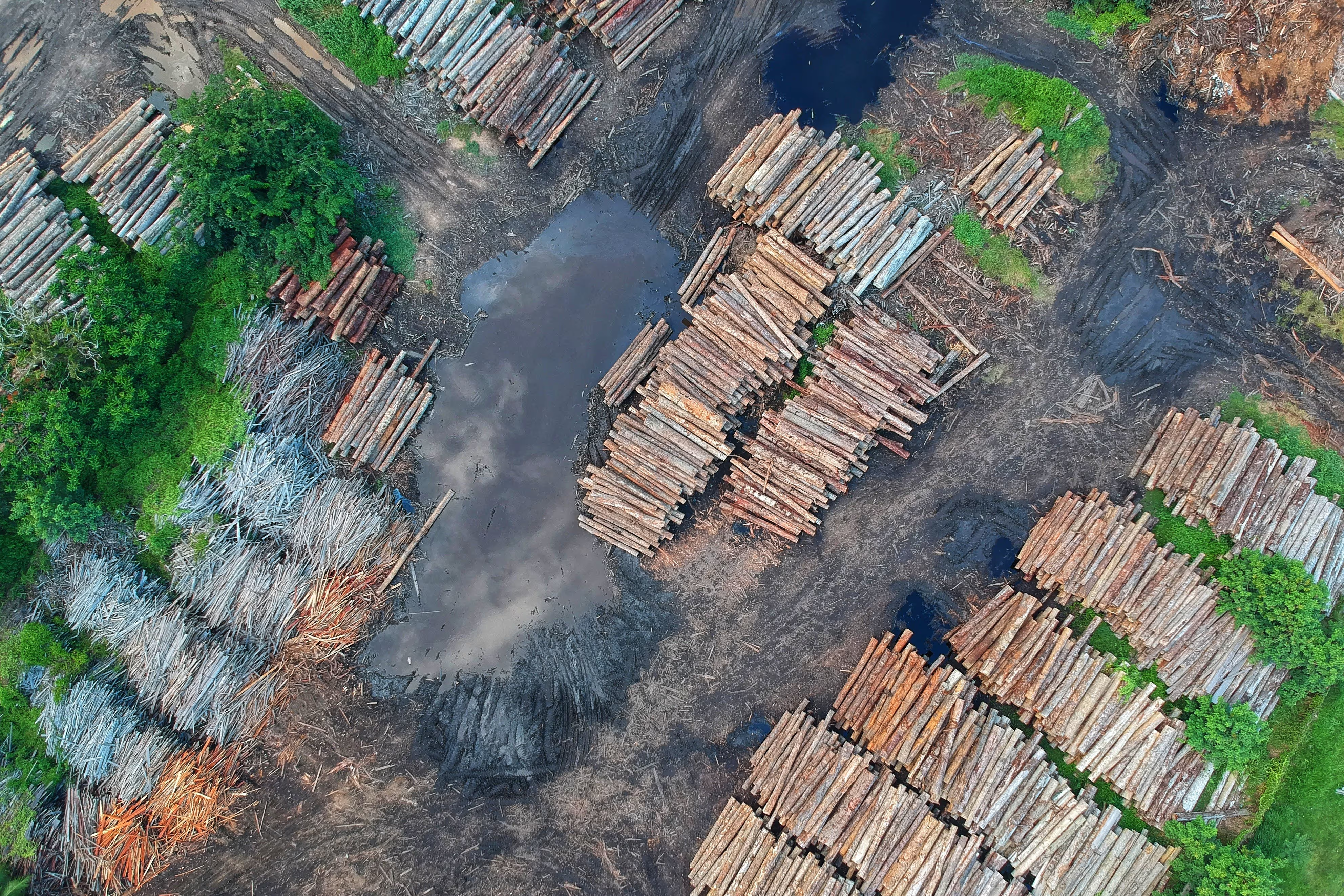
The Amazon, the most famous forest on our planet, has become the symbol of a deforestation crisis raging all over the world. 2022 isn't even over yet and it has already broken records: 9494 km2 of Amazon rainforest wiped off the map, almost 90 times the area of Paris, compared with 9178 km2 in 2021. According to an investigation carried out by experts, with 26% of its surface destroyed or severely degraded, the Amazon rainforest may have reached a point of no return. This is "a critical threshold beyond which a system reorganises, often abruptly and/or irreversibly", explains the Intergovernmental Panel on Climate Change (IPCC).
So the Amazon could turn into savannah sooner than expected: a drier ecosystem that captures less CO2. At COP27 last November, Brazilian President Lula declared his determination to reach "zero deforestation by 2030" by putting concrete solutions in place. "There is no climate security for the world without a protected Amazon," he said. If the future of this green lung and treasure trove of biodiversity is in danger, so are all the world's forests. More intense natural disasters, disrupted water resources, worsening global warming and threats to biodiversity: the consequences of deforestation are many. And some of them are irreversible. Essential to our survival and that of our planet, forests must be preserved and protected at all costs. Fighting deforestation is a global challenge. So how can we protect forests and reach the goal of zero deforestation?
Deforestation: concrete solutions
Citizens, governments, organisations: everyone has a part to play in ending deforestation. No action or gesture is too small.
Committed governments
Protecting forests effectively from deforestation takes strong legislation. In 2016, Norway led the way by becoming the first country in the world to ban imports of products linked to deforestation. Other states have shown their commitment too. Bhutan's Constitution states that 60% of its territory must be covered by forest. This strict protection of its forests helps it fight deforestation. As a result, this Asian country wedged between India and China absorbs 3 times more CO2 than it produces. Bhutan is one of three countries, along with Suriname and Panama, to be carbon negative!
France, for its part, has adopted a national strategy to combat imported deforestation (SNDI). The aim is to end, by 2030, imports of unsustainable forest or agricultural products whose production has contributed to deforestation abroad: soya, cocoa, palm oil and timber, for example.
Large-scale reforestation policies
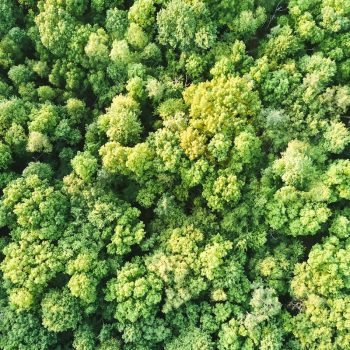
Some countries have turned to reforestation as a solution to deforestation. In recent years, several large-scale initiatives have emerged.
In 2019, Ethiopia smashed the world record by planting 353 million trees in 24 hours! Iceland, meanwhile, has planted nearly 4 million trees since 2015, around 1000 hectares.
Last September, Ivorian President Alassane Ouattara announced his aim to double Côte d'Ivoire's forest cover by 2030, from 10% to 20%. Gradually restoring protected forests, bringing tree felling under the forestry code, penalising illegal logging: every measure will be taken to reach this goal and speed up reforestation.
But does it work? These operations can indeed fail and even do harm. To make sure they succeed and have a positive impact, they must respect certain fundamental principles, such as the right tree in the right place. After a vast reforestation programme lasting almost 25 years, South Korea's forest ecosystem grew from 35% to 64%.
What each of us can do against deforestation
In the face of the massive destruction of forests, each of us can help. We need to change some of our habits and the way we consume. It starts on our plates, with what we eat.
A real scourge of tropical forests, palm oil is responsible for massive deforestation. In 2021, production reached 80 million tonnes, up from 75 million the previous year. Malaysia and Indonesia, the main producers of this controversial oil, account for nearly 85% of global production. Over the last two centuries, 90% of their forests have been destroyed.
Today it is found in many everyday products, such as chocolate spread, chocolates, cakes and crisps... It is also in cosmetics like creams and body oils. Palm oil often hides behind complex names such as "Elaeis Guineensis Oil". Its derivatives, such as glycerol, are also widely used. Yes, our daily beauty routines contribute to deforestation too. So it's best to choose food and cosmetic products free from palm oil.
Eating less meat is another solution to deforestation. Livestock farming and deforestation are closely linked: hectares of forest are cleared to make way for livestock farms and for soya crops grown to feed the animals.
Reforestation isn't just for governments. This solution to deforestation is open to everyone! With our Sapousse programme, you can plant trees online, and we plant them straight away on the ground. A lasting act that supports reforestation while giving local communities a livelihood
Using less paper, choosing certified products that guarantee less harmful production methods, and so on: there are many other solutions to fight deforestation. To go further and learn more about the consequences of deforestation, read on:
Ready to help?
I start a fundraiser
Support the causes close to your heart by starting an online fundraiser with LIFE.
Raising funds for a charity has never been easier!