Melting ice: understanding the causes and consequences
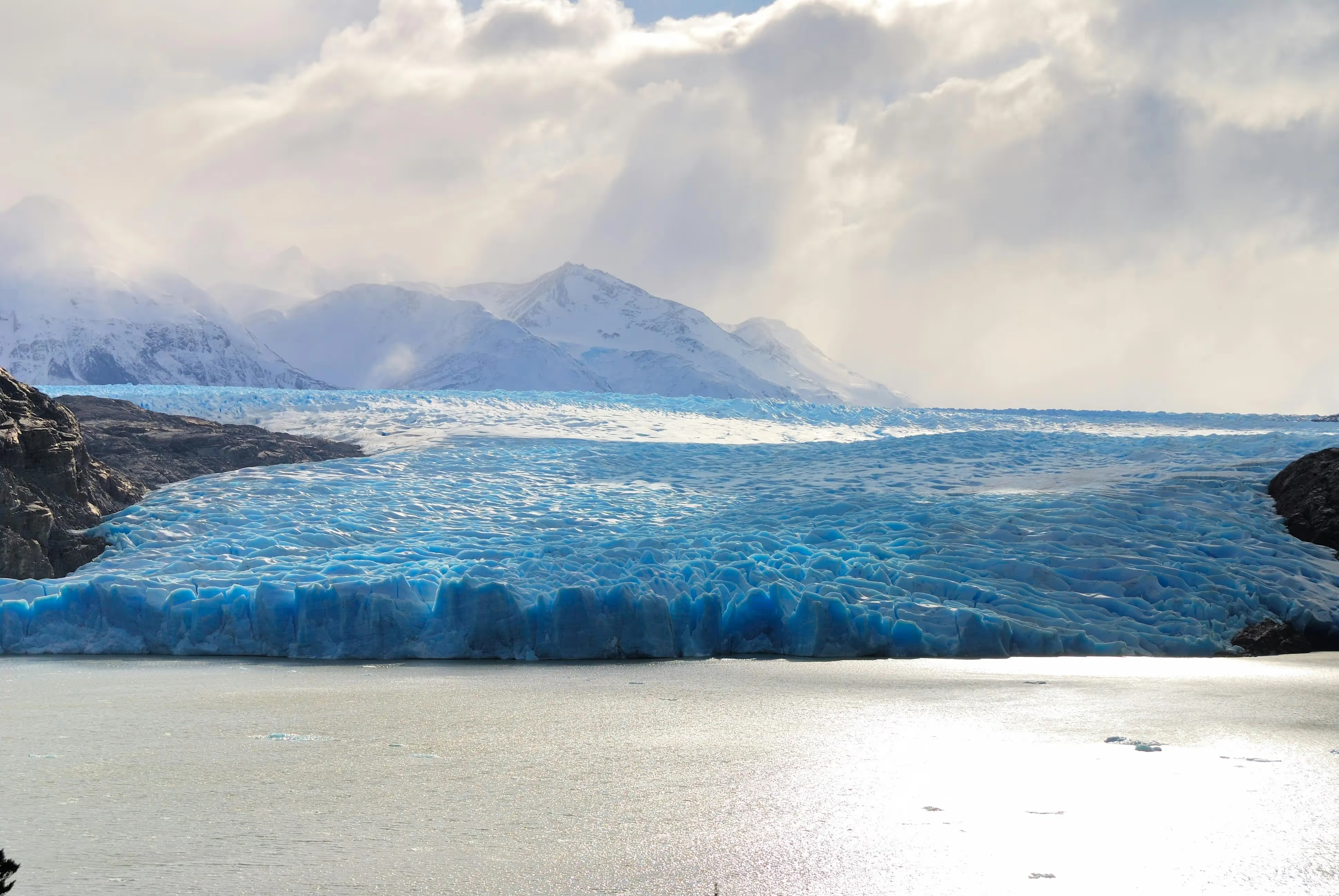
By 2100, half of our planet's glaciers are doomed to disappear. They are melting faster than expected. That is the sad and alarming finding of scientists at France's National Centre for Scientific Research (CNRS). Ice melt is speeding up, and it now affects every region of the world, even those that had been spared until now. All we can do is everything in our power to save the other half. It is not too late!
What is ice melt?
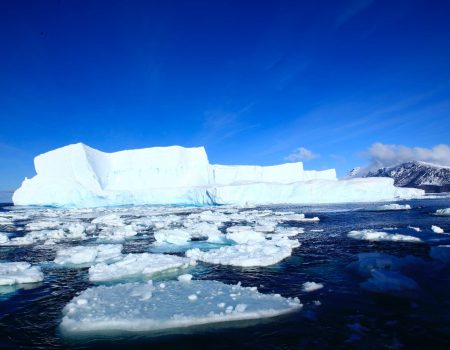
Ice melt refers to the shrinking amount of ice in ice sheets, glaciers and sea ice. The accelerating loss of our glaciers is not a natural phenomenon. Ice melt is caused mainly by global warming driven by greenhouse gas emissions. The main sources of these emissions are human activities such as burning fossil fuels, notably to generate electricity, as well as agriculture and livestock farming.
According to a study based on satellite observations, the rate of melting soared by 65% between 1994 and 2017. In all, in less than 25 years, more than 28,000 billion tonnes of ice have disappeared. That is the equivalent of a sheet of ice 100 metres thick covering the whole of the United Kingdom!
The consequences of melting ice
The effects on temperature and climate
Melting ice is all the more worrying because ice plays a crucial role in the Earth's climate. It acts as a regulator. Glaciers and ice sheets reflect around 80% of the sunlight that reaches them, which cools the surrounding atmosphere. So when the ice melts, it releases this heat, raising the temperature of the atmosphere. It is a vicious circle of warming: the hotter it gets, the more the ice melts, and the more temperatures rise.
Melting ice has a number of consequences that increase the risk of natural disasters. In turn, it causes a considerable rise in sea levels worldwide, heightening the risk of coastal flooding and ground collapse. If we fail to act globally, ocean levels could rise by more than a metre by 2100, or even 3 metres in the worst-case scenario. Entire cities such as Dhaka in Bangladesh could be swallowed by the water, threatening the homes of coastal communities. Millions of people would be forced to move.
Melting ice also affects the water cycle, changing river flows and lake levels. This threatens freshwater resources and crops. Antarctica, for example, holds 70% of the world's freshwater reserves. But as the ice melts, this fresh water mixes with the salt water of the oceans, depleting global reserves.
Finally, melting ice can also disrupt weather systems and increase the risk of natural disasters such as storms and floods...
The impact of melting ice on ecosystems and species
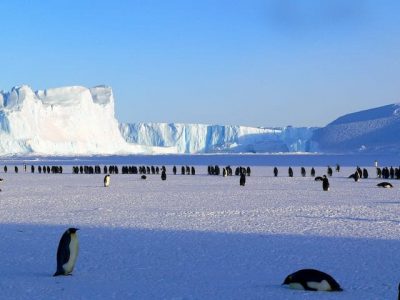
Icy environments are home to a wide diversity of species that depend on them to survive. Melting ice disrupts natural habitats, with consequences for biodiversity.
Melting ice can destroy the natural habitats of the species that live there. Polar bears depend on sea ice to hunt seals, while Weddell seals and Adélie penguins rely on sea ice to breed.
This phenomenon can also affect feeding cycles and interactions between species, disrupting food chains. For example, melting sea ice can disturb the communities of phytoplankton and zooplankton that grow beneath the ice. These are eaten by many marine species such as fish, molluscs and crustaceans. When these communities are disrupted, the effects can ripple through every species linked to them, right up to top predators such as seabirds, seals, polar bears and whales.
Melting ice can also affect species that depend on icy environments for their migration, such as migratory birds and whales. It can also affect the breeding behaviour of species such as seals and penguins.
That is why it is so important to protect icy environments and preserve the biodiversity that depends on them.
What can be done about it?
Pour lutter contre la fonte des glaces et ses effets négatifs, il existe des solutions à grande échelle, mais aussi des actions plus individuelles. Il est urgent de limiter la hausse des températures, et de baisser les émissions de C02, et toutes les autres émissions de gaz à effet de serre qui participent au réchauffement climatique.
As this is a global phenomenon, the real battle is fought at international level. Governments must face up to their responsibilities and adopt effective measures. To do so, they can draw on the recommendations of the Intergovernmental Panel on Climate Change (IPCC).
On a personal level, we can all help limit ice melt by reducing our carbon footprint. We can adopt more responsible energy use and choose environmentally friendly transport such as cycling. Fighting ice melt also means eating more sustainably. Buying local, sustainable produce reduces the emissions linked to transporting goods and their impact on the environment.
LIFE is playing its part too. During our food distributions for those most in need, every parcel contains products bought locally in the country, which also supports the local economy. To limit its carbon footprint, LIFE also hands out reusable bags, a good alternative to plastic. Plastic pollution in the oceans is one of the major factors in global warming.
Coordinated effort between governments and citizens is essential if these measures are to be implemented successfully and effectively.
Ready to help?
I start a fundraiser
Support the causes close to your heart by starting an online fundraiser with LIFE.
Raising funds for a charity has never been easier!