The impact of deforestation on mangroves and the urgent need to restore them
Mangroves are natural treasures, often overlooked, and vital ecosystems for our planet. They protect marine and land biodiversity, keep coastal areas in ecological balance, act as carbon sinks and much more, all at once. Yet these precious forests between land and sea are now threatened by deforestation. We urgently need to protect and restore them. Let's take on this challenge together!
What is a mangrove?
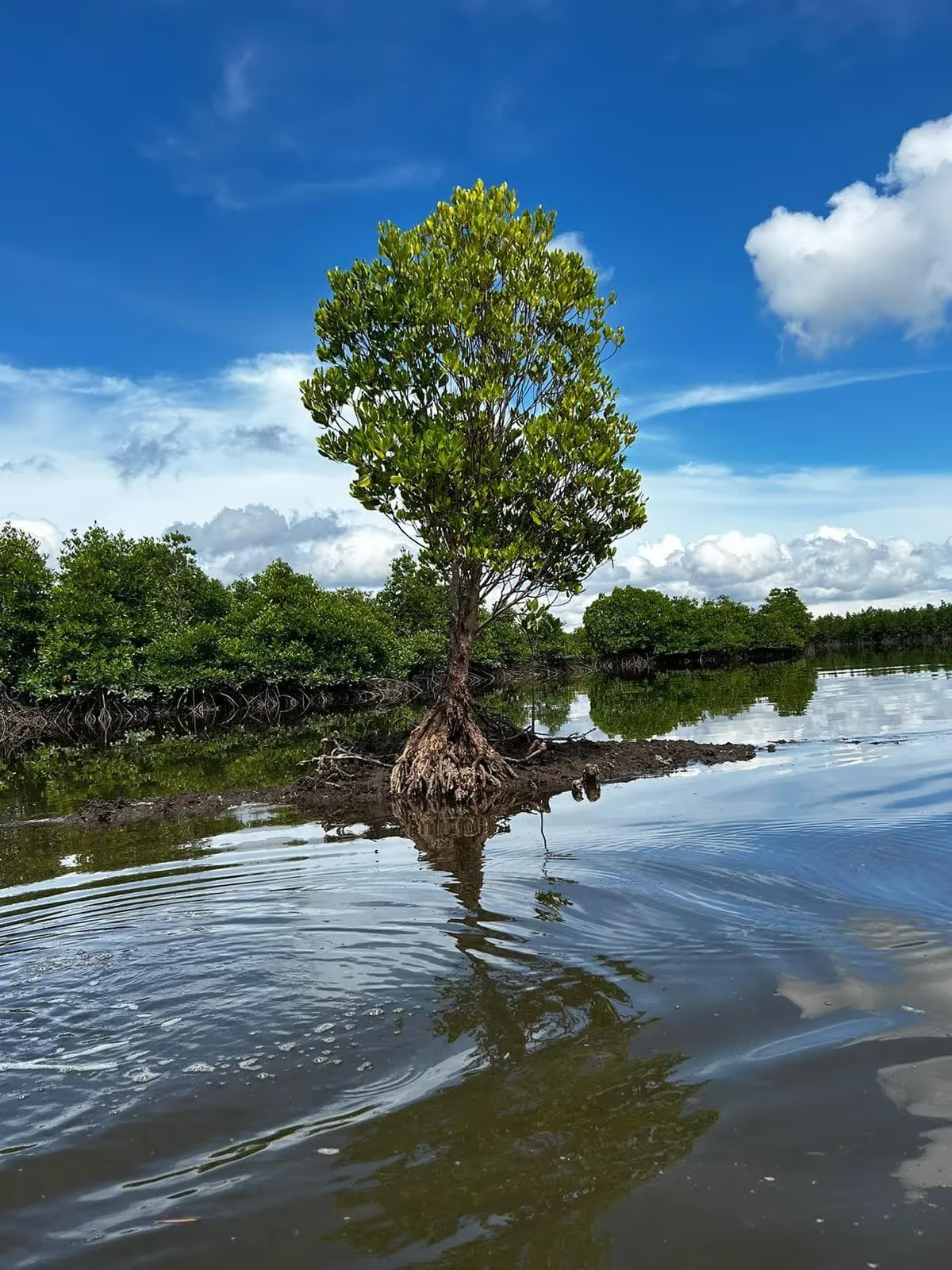
A mangrove is a unique forest ecosystem found along tropical and subtropical coasts. It grows in soil rich in sediment and organic matter, often marshy and soaked in salt water. These forests play a vital role: they shield the land from the tides, filter water and provide crucial habitat for marine life and coastal birds. And yet, every year, thousands of hectares of mangroves are cut down…
What is driving mangrove deforestation?
Mangroves are under growing pressure from deforestation. An estimated 35% of them have already been destroyed over the last 20 years. Why are they being cleared on such a scale?
Farming and urban expansion
In many countries, the growth of agriculture is behind the clearing of mangroves. So is the building of urban infrastructure such as housing, roads, ports and other facilities. According to a 2021 study by AGEOS, in Gabon, for example, around Libreville, the mangrove is being eaten away by urbanisation, logging, port development and tourist facilities. Between 2007 and 2020, the Igoumié mangrove, one of the area's best-known sites, lost 36.6 hectares. In Bangladesh, the Sundarbans mangrove forest, the largest in the world, has suffered the same fate through farming, industrial development and rising sea levels.
Extracting natural resources from mangroves
Mangrove forests are exploited for their valuable wood, which is used for building, furniture-making and fuel. When unregulated, this logging often leads to uncontrolled deforestation, with devastating consequences for local biodiversity and the stability of coastal ecosystems.
But these forests also hold other riches, such as salt, coal, oil and sometimes gas. Extracting these natural resources usually harms the quality of the water and soil in these areas. Mining and industrial waste can contaminate aquatic ecosystems, while excessive deforestation can lead to increased soil erosion and loss of fertility.
Aquaculture vs mangroves
In some countries, mangroves are turned into ponds for aquaculture, especially shrimp and fish farming. Vietnam is one example, where shrimp farming is a major industry in the Mekong Delta. In Indonesia too, large coastal areas have been affected as mangroves are converted into ponds to meet growing demand for seafood in domestic and international markets.
Pollution
Pollution from industrial waste, sewage and oil spills can damage mangrove forests and lead to their disappearance.
Climate change
The combined effects of climate change can undermine the health and resilience of mangrove ecosystems. They threaten the mangroves' ability to provide vital ecosystem services and to support the human communities that depend on them.
The risk of flooding and submersion
Rising sea levels put mangroves, as swamp forests, at greater risk of flooding and submersion, threatening the wildlife and plants that live there.
The impact of storms and cyclones
On top of this, more frequent and more intense tropical storms and cyclones cause direct physical damage and alter how waterways behave, affecting the ecosystem as a whole.
Shifting growing zones
These events also change the ideal growing conditions for mangroves, potentially shifting where they are found.
Rising water salinity
What's more, seawater pushing further into estuaries can raise water salinity, affecting the biodiversity and health of mangroves.
The alarming consequences of mangrove deforestation
Mangroves, guardians of biodiversity
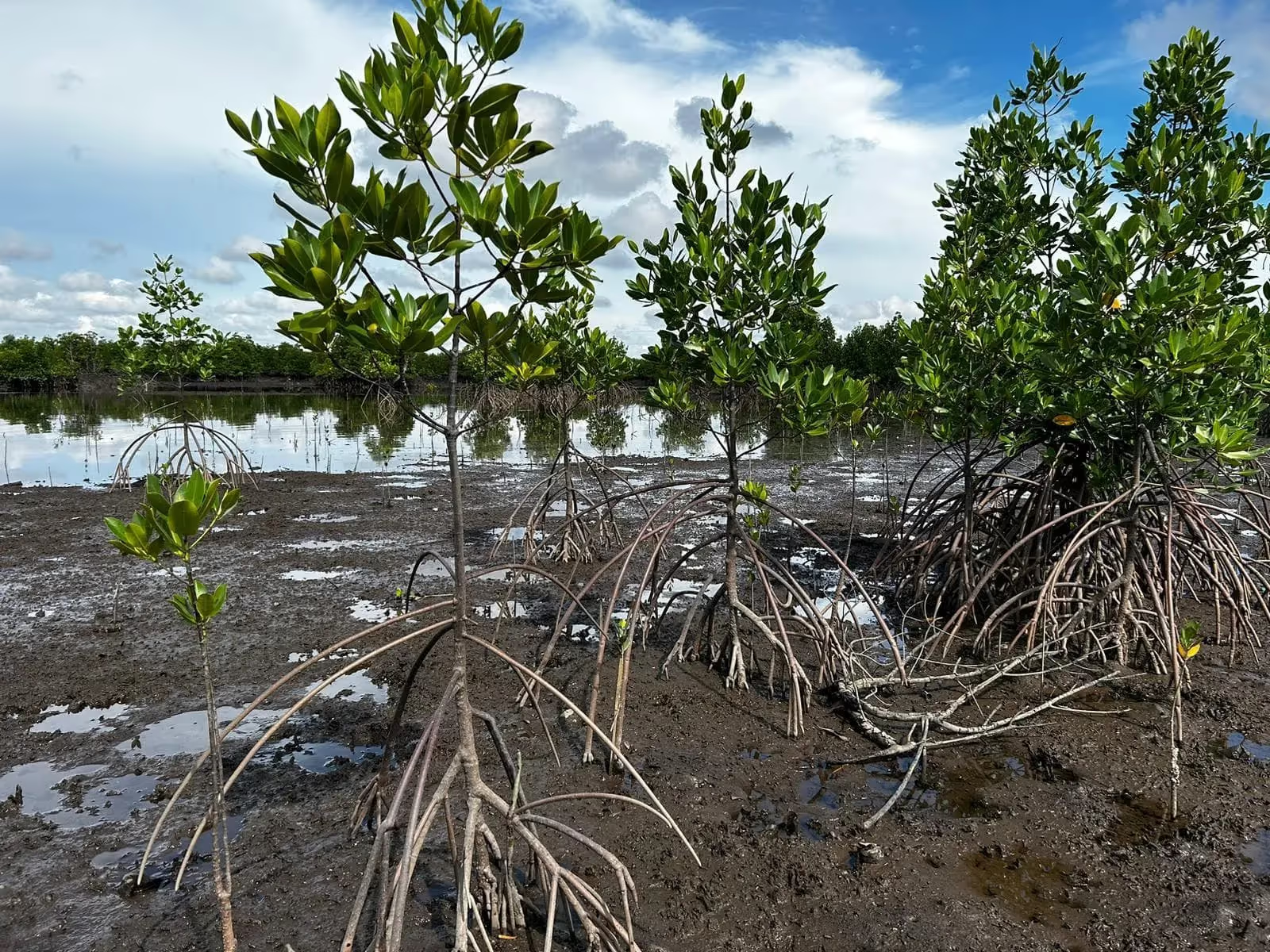
Mangrove forests are home to an incredible variety of plants, animals and micro-organisms, making them one of the most biodiverse ecosystems in the world. According to the International Union for Conservation of Nature (IUCN), around 18% of marine fish species, and nearly 85% of commercial fish and seafood species, spend part of their lives in these habitats. Their aerial roots and tidal zones provide vital shelter. They also host migratory birds and even mammals and reptiles such as manatees and crocodiles.
Destroying these habitats wipes out many species, some of them critically endangered. The Bengal tiger, the leopard seal and the whistling duck, for example, all depend on mangroves to survive.
Lost income and livelihoods for coastal communities
Beyond its environmental impact, mangrove deforestation also has major social and economic consequences. Mangroves are one of the sources of livelihood for coastal communities. Their food security and standard of living are threatened by the loss of the mangrove's natural resources: nuts, fruit, fish, shellfish and molluscs, medicinal plants, building materials, firewood, income from fishing and aquaculture, and more.
Mangroves: a natural protective barrier at risk
Clearing hectares of mangroves has devastating consequences for the environment and the communities that depend on them. These ecosystems act as a natural barrier against storms, tsunamis and coastal erosion, protecting local people from natural disasters.
Unsung allies in the fight against climate change
Mangrove forests rank high among the players helping to tackle climate change. Why? Their vegetation absorbs and stores carbon dioxide as well as any tree on land, and in fact far better. This is known as "blue carbon". According to a UNEP study, mangroves store up to four times more carbon per hectare than tropical forests on land.
Acting fast for a sustainable future
Faced with this imminent threat, we must act quickly to protect and restore our mangroves.
Mangrove restoration initiatives are already under way in many countries, involving governments, NGOs, local communities and private companies. They aim to replant mangroves, protect existing areas and promote sustainable management of natural resources.
Did you know? Since 2015, 26 July has been the International Day for the Conservation of the Mangrove Ecosystem. This UNESCO initiative aims to raise awareness of the consequences of mangrove deforestation and to explore ways of preventing this damage.
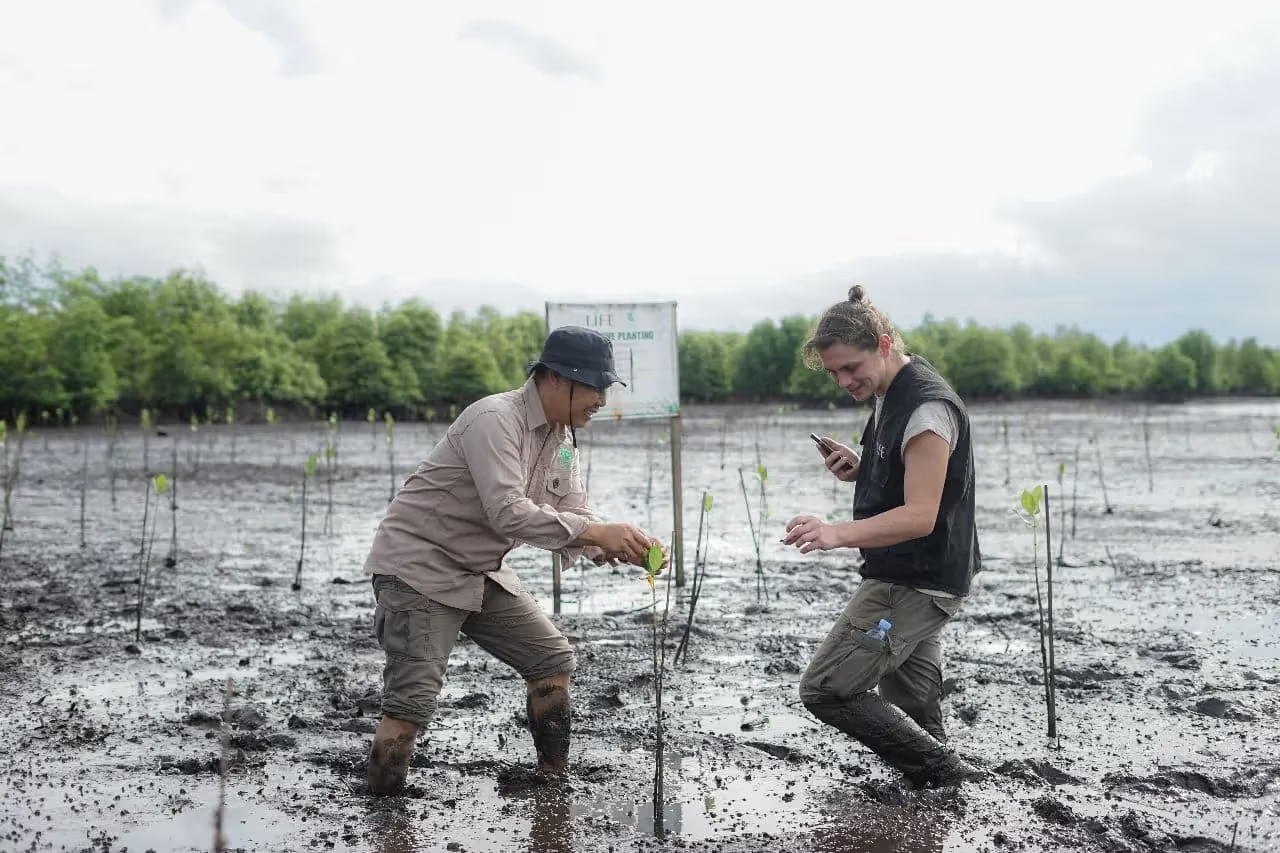
Restoring mangroves – but the right way!
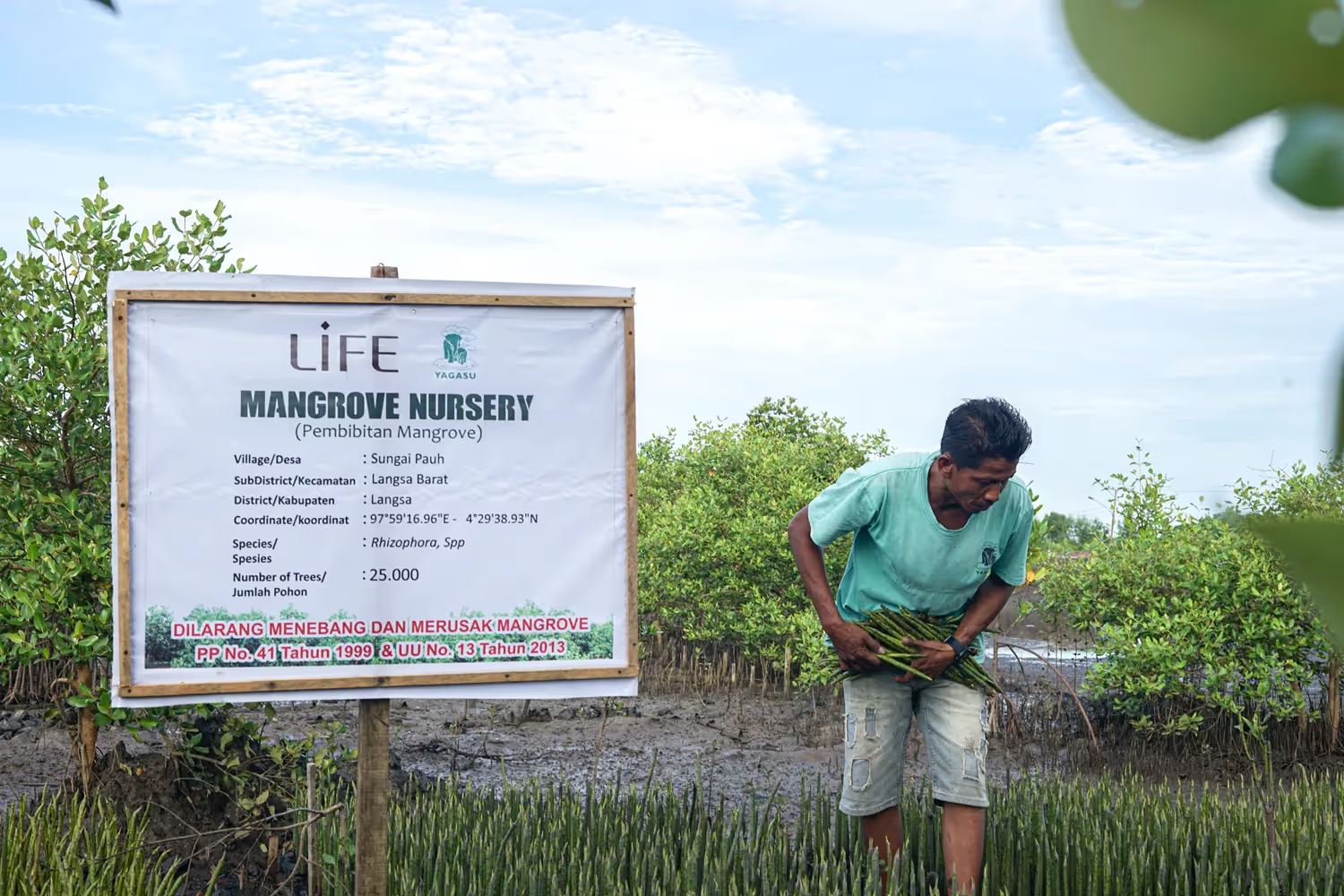
Restoring mangroves isn't just about replanting trees: it's about restoring the whole ecosystem, taking many factors into account.
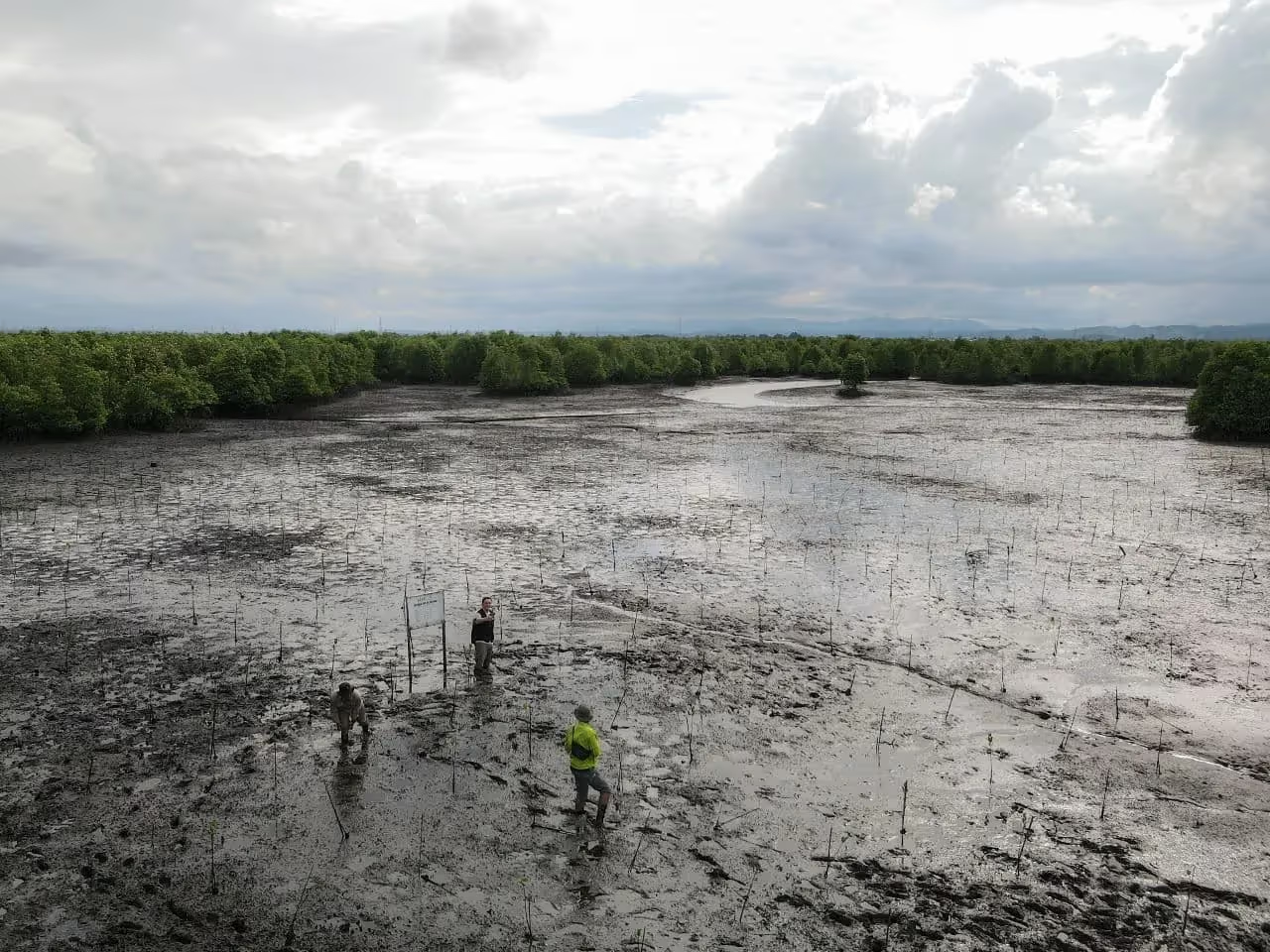
Every case is different. Before replanting, a field study is essential. We need to understand what caused the mangrove to be lost. Can it recover on its own after pollution or overexploitation, or is human intervention needed? If it is, it's crucial to grasp the needs of local people and involve them, to choose the right seedlings and to set up a working nursery.
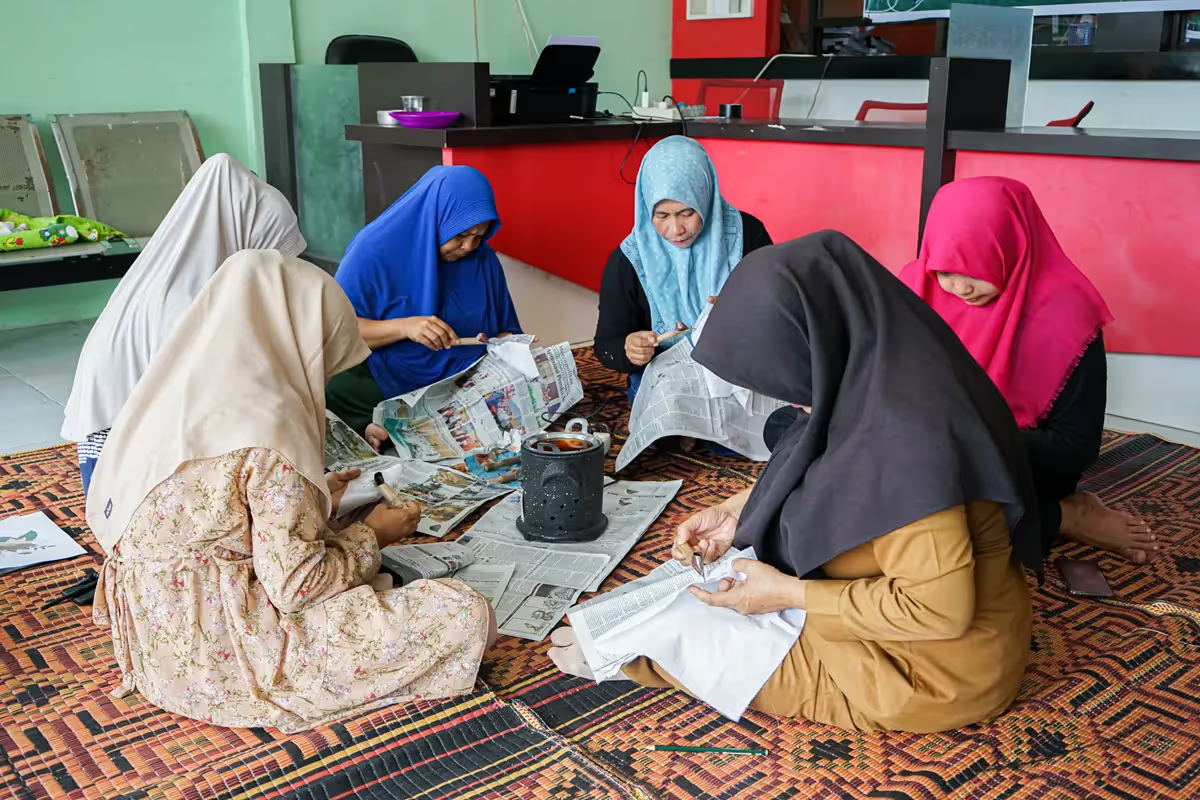
For many years, LIFE has been actively working to protect and replant mangroves, and to help local people understand why preserving them matters. In Sumatra, Indonesia, through our SAPOUSSE campaign, we are replanting 50,000 trees, many of them mangrove trees (Rhizophora apiculata and Rhizophora stilosa), the emblem of these forests. Both species grow naturally in the project area. The team works hand in hand with the government, local people and its partner on the ground, Yagasu. Training has also been provided to develop a silvo-fishery pond and to set up a micro-business that uses mangrove resources for food and for making batik.
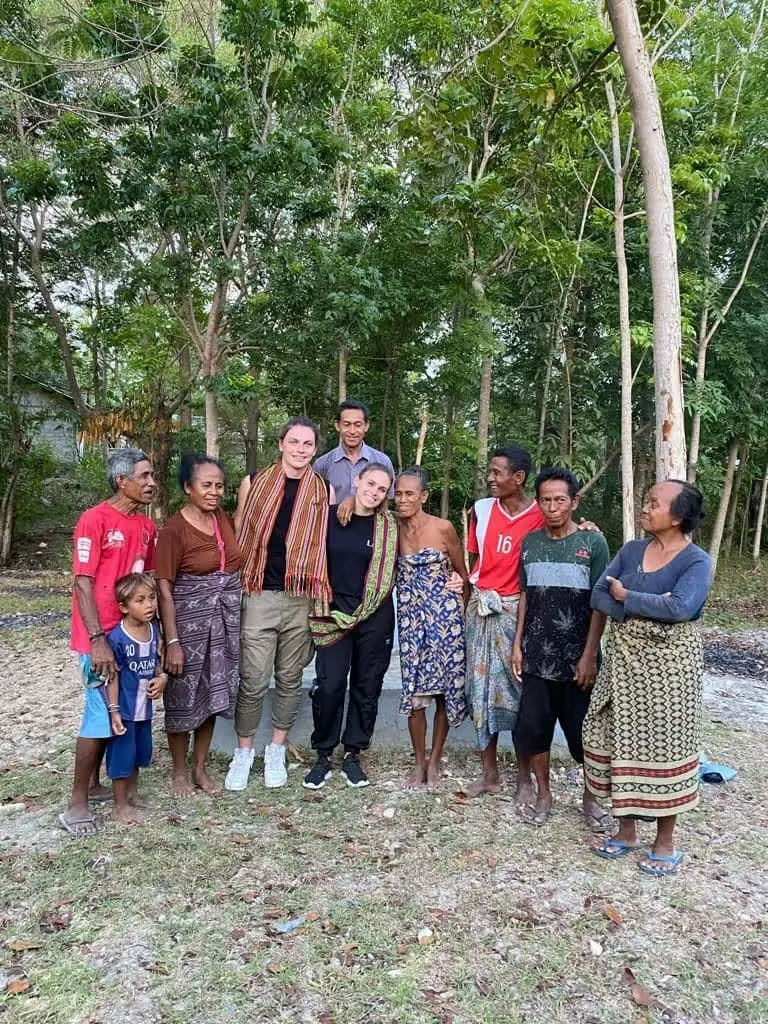
The clearing of hectares of mangrove forest is a serious threat to biodiversity, coastal communities and the global climate. But there are ways to preserve and rebuild these vital ecosystems: promoting sustainable management of natural resources, raising public awareness of how important these habitats are, and more. All these actions help us build a future where mangroves thrive and keep delivering essential ecological, social, economic and climate benefits for our planet.
Let's act together to protect our mangroves and help build a greener future for generations to come.
Ready to help?
I start a fundraiser
Support the causes close to your heart by starting an online fundraiser with LIFE.
Raising funds for a charity has never been easier!