Humanitarian volunteering: how to get involved in France
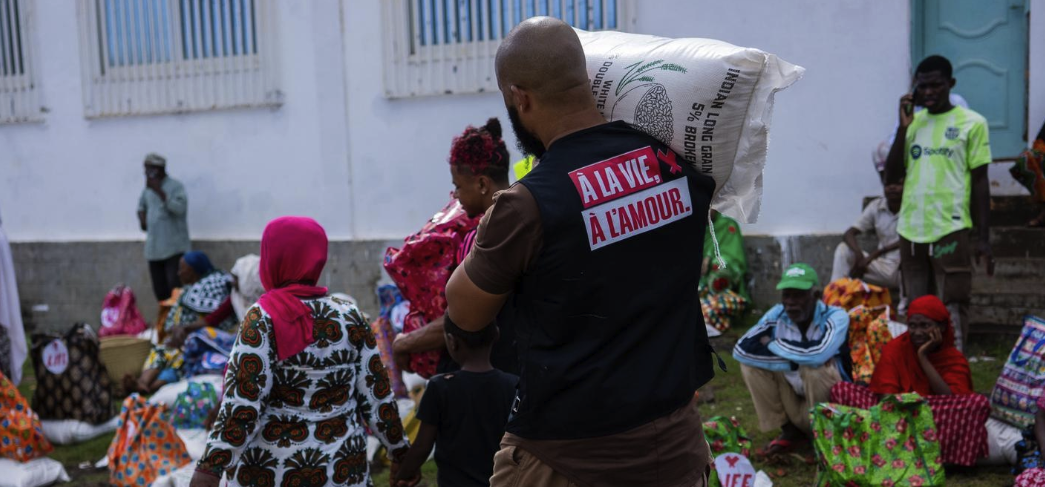
In brief
- Humanitarian volunteering isn't just about missions abroad: you can get involved from France, for a few hours a week, with no particular qualifications.
- There are several ways to get involved: occasional volunteering, regular volunteering, civic service (service civique) and international solidarity volunteering (VSI).
- LIFE offers volunteering roles in France and regularly invites volunteers to join its field missions abroad.
- There's no typical profile: students, working people and retirees can all get involved, depending on their availability.
- The first step is simple: contact LIFE's donor relations team, who will point you towards the roles available.
You want to support a humanitarian cause, but you don't know where to start. Do you need to go abroad? Have medical skills? Be available full-time?
The answer to all three questions is no. Humanitarian volunteering is far more accessible than people think, and it comes in many forms. This guide explains how to get involved in practice, using LIFE as an example at every step.
What exactly is humanitarian volunteering?
Humanitarian volunteering means giving your time, unpaid, to an organisation that works to help vulnerable people, in France or abroad. That's the key difference from a financial donation: here, you contribute your presence, your skills and your energy.
But contrary to the common image, a humanitarian volunteer isn't necessarily a doctor posted to a war zone. The reality is much closer to home and much more accessible.
Two main ways to get involved
There are generally two forms of involvement:
- Volunteering in France: you give your time locally, at the NGO's head office, at events, during fundraising campaigns, or by helping with administrative and communications work.
- Volunteering in the field abroad: you join a mission in one of the countries where the NGO works, for a short or longer period.
Both are valuable. For the vast majority of people, volunteering in France is the most natural place to start.
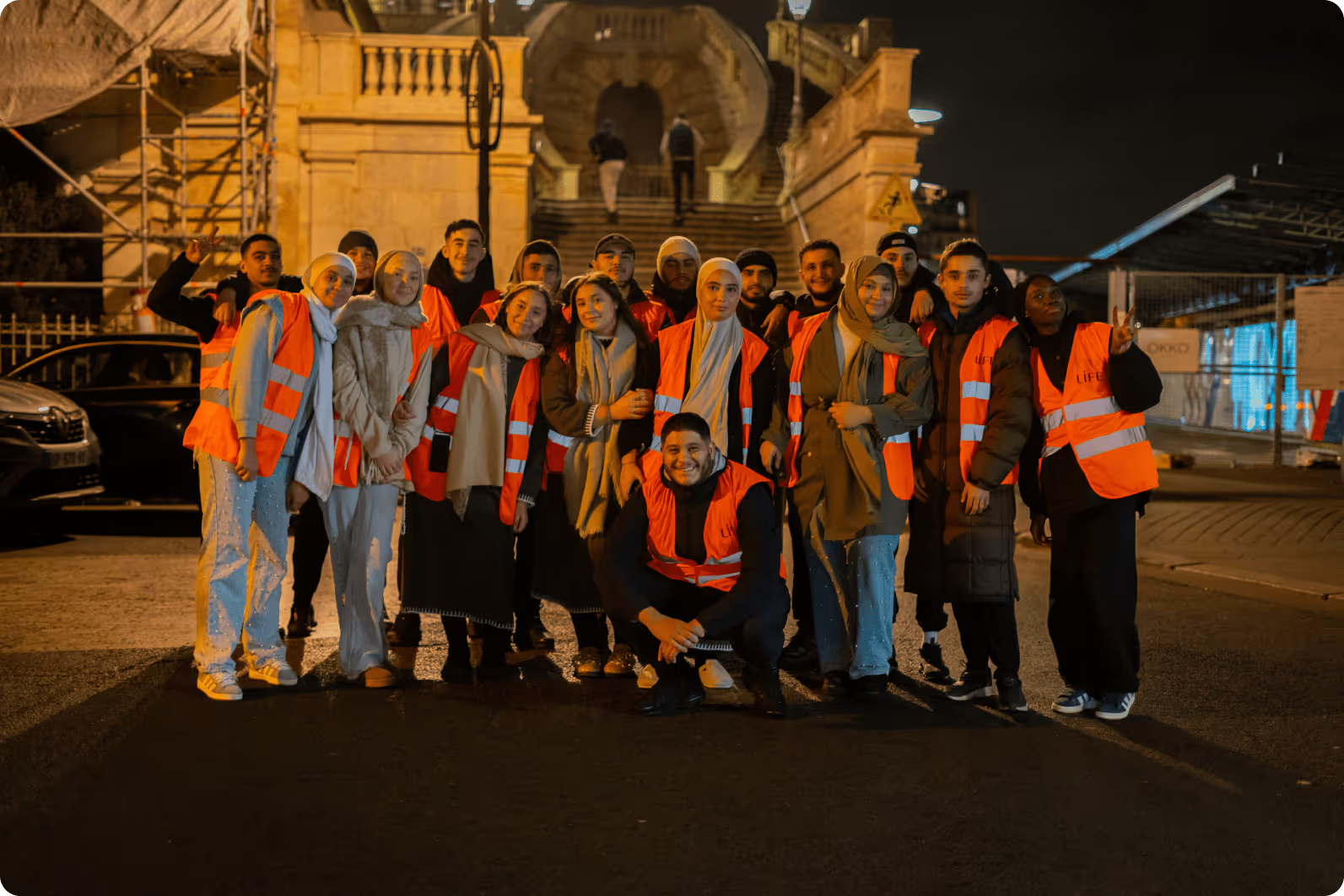
Volunteering, civic service, international volunteering: what's the difference?
Before contacting an NGO, it helps to understand the different frameworks available. They don't require the same availability or the same formalities.
Traditional volunteering: the most flexible option
This is the most flexible form. You give your time to an NGO with no contract, whenever you're available. A few hours a week, a few weekends a year: you organise your involvement however you like.
This kind of volunteering is open to everyone aged 16 and over, with no qualifications or experience required. It's also the easiest way to start with LIFE.
Civic service: a paid commitment for young people
France's civic service (service civique) is open to 16 to 25-year-olds (up to 30 for people with disabilities). It lasts 6 to 12 months full-time and comes with a monthly allowance of around €580. Some NGOs offer civic service roles in France in communications, fundraising or awareness-raising.
International Solidarity Volunteering (VSI): for a long-term commitment abroad
VSI is a state-regulated scheme that lets you go on a mission abroad with an accredited NGO for 6 to 24 months. You receive a monthly allowance and your expenses are covered. It's the ideal scheme for a long-term international commitment.
Key points
Traditional volunteering = complete freedom, no constraints. Civic service = regular paid commitment for young people. VSI = long-term mission abroad, supervised and paid an allowance. Choose according to your availability and your plans in life.
How can you get involved with LIFE?
LIFE welcomes volunteers in two main ways: volunteering in France and taking part in field missions abroad.
Volunteering with LIFE in France
Even from France, there's plenty to do. LIFE needs volunteers to:
- Help organise fundraising events
- Support awareness and communications campaigns
- Help with administrative tasks at head office
- Support local solidarity initiatives
There's no typical profile. Students, people changing careers, retirees: LIFE welcomes people from all walks of life, with all kinds of availability. A few hours a month is enough to get started.
To join the team, visit life-ong.org/agir/rejoindre-equipe or contact LIFE's donor relations team directly, who will point you towards roles available near you or remotely.
Joining a field mission abroad
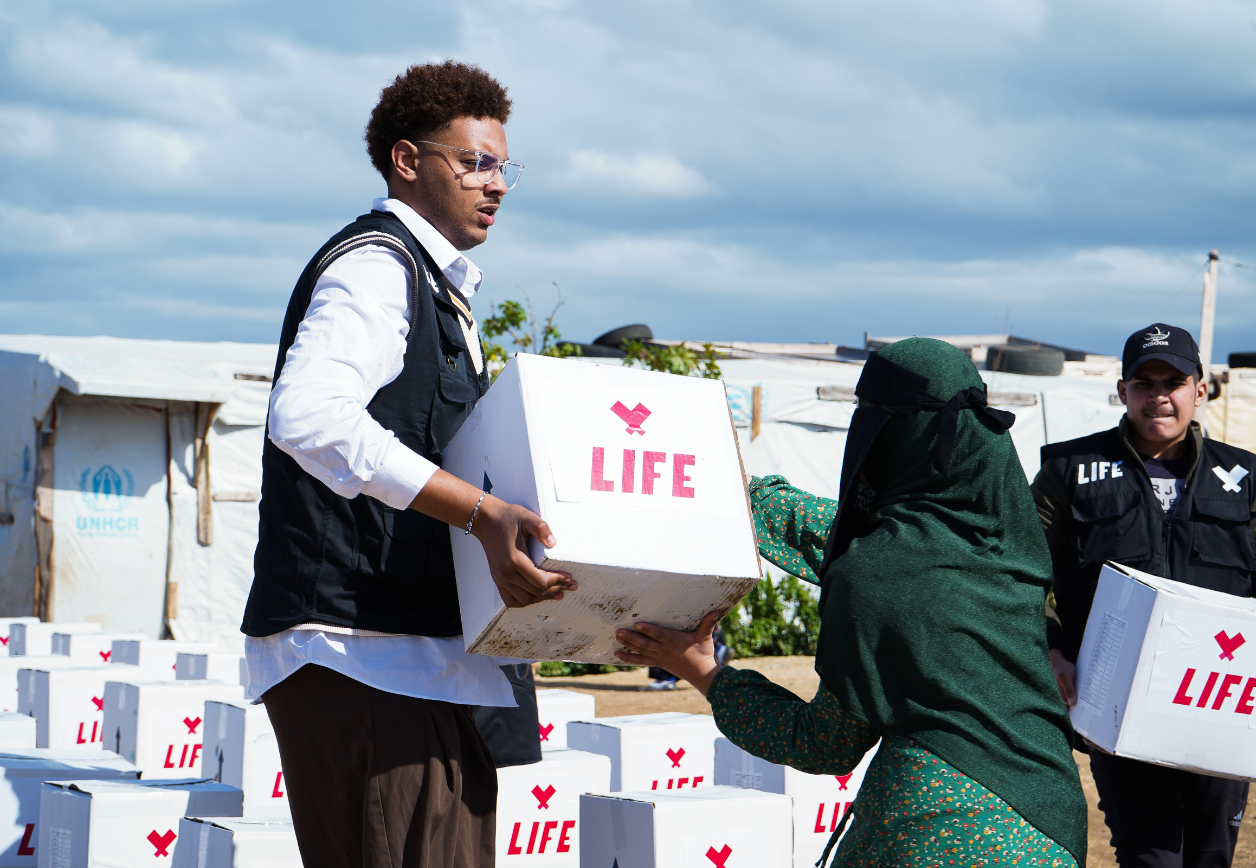
LIFE regularly invites volunteers to join its field missions abroad, particularly during major humanitarian operations such as Ramadan. These missions let you take part directly in food distributions, meet the people being helped and tell donors what's really happening on the ground.
These trips are fully supervised by LIFE's teams. They're also a guarantee of transparency: volunteers bear first-hand witness to what happens on site.
Do you need particular skills to be a humanitarian volunteer?
This is the most widespread misconception. The answer is no, at least for the vast majority of roles.
What NGOs are really looking for
Serious humanitarian NGOs need all kinds of people:
| Profile | What they can bring to LIFE |
|---|---|
| Student | Communications, social media, event organisation |
| Career changer | Professional skills (accounting, logistics, marketing) |
| Retiree | Availability, field or administrative experience |
| Busy parent | Occasional volunteering at events |
| Fieldwork enthusiast | Taking part in missions abroad |
What matters most: motivation, reliability and the desire to be part of a shared project.
What if you only have a little time?
Even a few hours a month are valuable. LIFE adapts to everyone's circumstances. Volunteering isn't all or nothing.
Avoid
Commitments you can't keep. LIFE would rather have a volunteer who's reliably available 2 hours a month than someone who signs up for 20 hours and disappears. Reliability is the most precious quality.
How do you find a humanitarian volunteering role in France?
Several platforms bring together volunteering opportunities nationwide. The best known is JeVeuxAider.gouv.fr, the government volunteering platform listing thousands of roles across France. For international volunteering, France Volontaires is the go-to platform for missions abroad.
If you'd like to get involved directly with LIFE, the simplest way is to contact the team directly. LIFE's donor relations team will point you towards available roles and support you as you take your first steps.
To find out why more and more people in France are choosing to get involved in humanitarian work, our article on Giving Tuesday and the major solidarity campaigns gives a full picture of this citizen movement.
Volunteering or giving money: do you have to choose?
No. They're two complementary forms of involvement, not competing ones.
A financial donation allows LIFE to fund its projects in a predictable, ongoing way. Volunteering brings what money can't buy: time, presence and human skills.
Most of LIFE's volunteers are also donors. And many donors who discover LIFE go on to become volunteers. It's a natural path, not an obligation.
To understand how giving to LIFE works in practice and what it achieves on the ground, our article on regular vs one-off donations explains everything in detail.
Would you like to join LIFE's volunteer team?
Discover the roles available. LIFE's donor relations team is on hand to answer all your questions and guide you.
Join the team →Frequently asked questions
Do you need to speak a foreign language to be a humanitarian volunteer?
Not necessarily, especially for roles in France. For field missions abroad, LIFE works with local teams and partners who handle communication on site. English is a plus for some specific missions, but it isn't a requirement.
How old do you need to be to volunteer in humanitarian work?
Traditional volunteering is open from age 16. So is civic service. Field missions abroad are generally reserved for adults. There's no upper age limit: retirees are especially welcome for their availability and experience.
Does humanitarian volunteering count on a CV?
Yes, and increasingly so. Volunteering experience with an NGO is valued by recruiters, particularly for the skills it develops: teamwork, project management, adaptability and a sense of service. For missions abroad, the intercultural dimension is especially appreciated.
What's the difference between humanitarian volunteering and volunteer schemes?
Volunteering (bénévolat) is completely unpaid and has no contract. Volunteer schemes (volontariat: civic service, VSI) involve a contract and come with an allowance. In both cases, the commitment serves the public good and is not-for-profit for the individual.
How do I contact LIFE to become a volunteer?
Visit life-ong.org/agir/rejoindre-equipe to see the roles available. You can also contact LIFE's donor relations team directly: they'll get back to you and guide you towards the type of involvement that best suits your profile and availability.
Ready to help?
I start a fundraiser
Support the causes close to your heart by starting an online fundraiser with LIFE.
Raising funds for a charity has never been easier!