Human rights: today's challenges
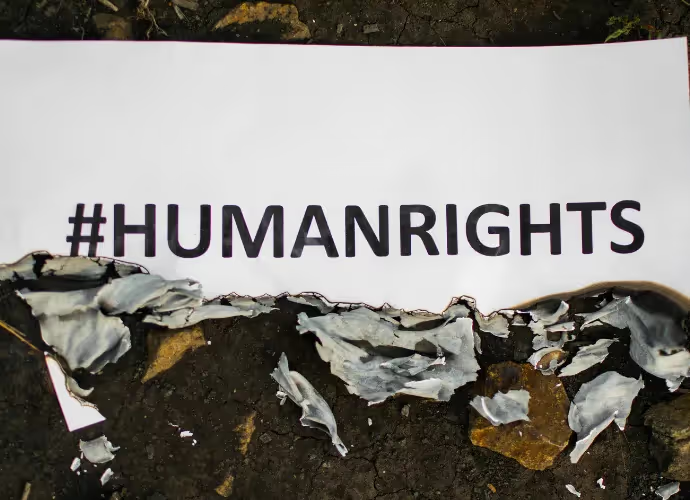
Human rights are more than principles: they are the unshakeable foundation our society stands on! They were formalised in the 18th century, defined in the 1789 Declaration of the Rights of Man and of the Citizen, and set out in the Universal Declaration of Human Rights adopted by the United Nations in 1948. They establish dignity, freedom and equality as rights written into the DNA of every one of us, whatever our nationality, sex, religion, language and so on.
But where do things stand today? What are the new challenges? And how can we work together to uphold everyone's fundamental rights and help build a better, fairer future for all?
Diversity and inclusion: pillars of human rights
Promoting inclusion and diversity is one of the major human rights challenges of our time. Recognising gender equality, as well as ethnic, religious and sexual minorities and people with disabilities ! Many movements are working towards this, and they are gaining ground all the time. Day after day, their efforts raise awareness. They are paving the way for more tolerant, more inclusive societies where everyone has the opportunity and the freedom to thrive.
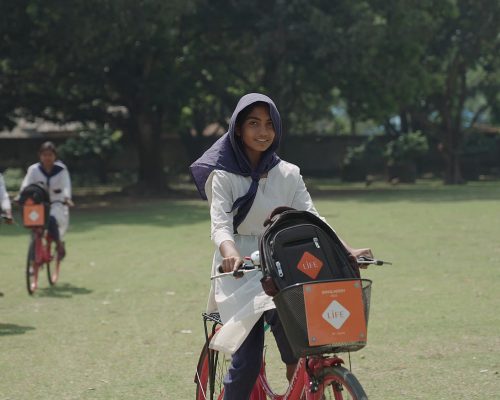
At LIFE, we support communities in several countries in the social, political and economic empowerment of a group within their population that is especially in need: women and young women. By installing wells in villages, for example, we free women who once walked for hours to fetch water to take on more productive activities or paid work. These wells help them become more independent and advance gender equality. And by giving bicycles to girls in rural areas, as in Bangladesh, we help them get to school safely and attend regularly, so they can build their future.
Social and economic justice: at the heart of fundamental human rights
At the heart of fundamental human rights lies the pursuit of social and economic justice. Countless movements and initiatives are rising up to make their voices heard. Calls and campaigns to reduce inequality and fight discrimination in all its forms are multiplying. They work for a fair distribution of resources, access to education and healthcare for all, decent working conditions and more. Growing ever stronger, they give us reasons to be optimistic. They carry a message of hope. States, businesses and citizens are increasingly getting involved and working together to find innovative solutions that curb economic inequality and guarantee a decent standard of living for everyone.
Technology and human rights
Harnessing the power of digital for human rights
The internet, social media: these technologies are now part of everyday life. When it comes to defending human rights, they can be powerful tools. You will all have seen an appeal for witnesses or donations on social media! Facebook, Twitter and Google can offer valuable support and possible solutions in many situations. All of them provide a space for communication that lets once-silenced voices be heard around the world. These platforms can quickly alert huge numbers of people to human rights abuses. Thanks to them, we can mobilise in record time and stand up for the causes we care about.
New legal questions raised by digital technology
The constant evolution of digital technology confronts us with unprecedented issues and the need to develop new legal frameworks that protect human rights. The line between innovation and privacy, for instance, can be very blurred. Our personal data can be recorded, analysed and used by companies and governments. Is digital surveillance compatible with human rights? It can call the right to privacy into question!
And while the internet enables freedom of expression, it also raises challenges around disinformation and censorship. To tackle all these new challenges, the United Nations has put in place a roadmap. It aims to coordinate the efforts of governments, businesses and all stakeholders to ensure digital technologies are used fairly and inclusively.
The right to a healthy environment, the right to life
We all want to live in a healthy environment. But did you know that this is in fact a fundamental right that has become an essential part of human rights? The quality of our environment has a direct impact on our wellbeing and on our ability to fully enjoy our human rights. Air, water and soil pollution can have serious consequences for human health, violating the right to life and to health.

A little history
The human right to a healthy environment is nothing new, even if climate change, biodiversity loss and other challenges of recent decades make it ever more pressing. It dates back to the 1970s, notably to the Stockholm Conference. Since then, many states have written it into their national laws, and it appears in several international declarations and conventions.
Today's challenges for the right to a healthy environment
Yet violations of fundamental human rights directly linked to environmental problems have risen significantly since the 1970s. Demands for a healthy environment, and even the freedom of expression that goes with them, are frequently under threat. So despite the progress, challenges remain. And it is often the most vulnerable people and communities who bear the full brunt of environmental harm.
Many questions remain unanswered, such as implementation, accountability and international coordination. Striking a balance between economic development and environmental protection is also central to the debate.
States, governments, businesses, charities, citizens: we must all ensure people have effective remedies when violations occur. They must have the opportunity and the freedom to defend their fundamental human rights against actions or policies that harm the environment.
International cooperation is essential
Our world is ever more interconnected. International cooperation plays a vital role in promoting and protecting human rights. Collaboration between states, NGOs and all of civil society supports this global cause. By continuing to champion human rights diplomacy, we help shape shared standards and tackle challenges on an international scale. Together, we are building a future where respect for human rights is at the heart of everything we do.
Today's human rights challenges are complex, but there are plenty of reasons for optimism. Every step forward is a victory for a fairer, freer society that respects every person. Together, we can all act to create a future where justice, inclusion and the defence of fundamental human rights are at the heart of our lives. By joining forces, we can truly change the world.
Join us, and together let's stand up for human rights around the world.
Ready to help?
I start a fundraiser
Support the causes close to your heart by starting an online fundraiser with LIFE.
Raising funds for a charity has never been easier!