
Wildfires in Algeria: 2026 toll, causes and LIFE ONG humanitarian aid
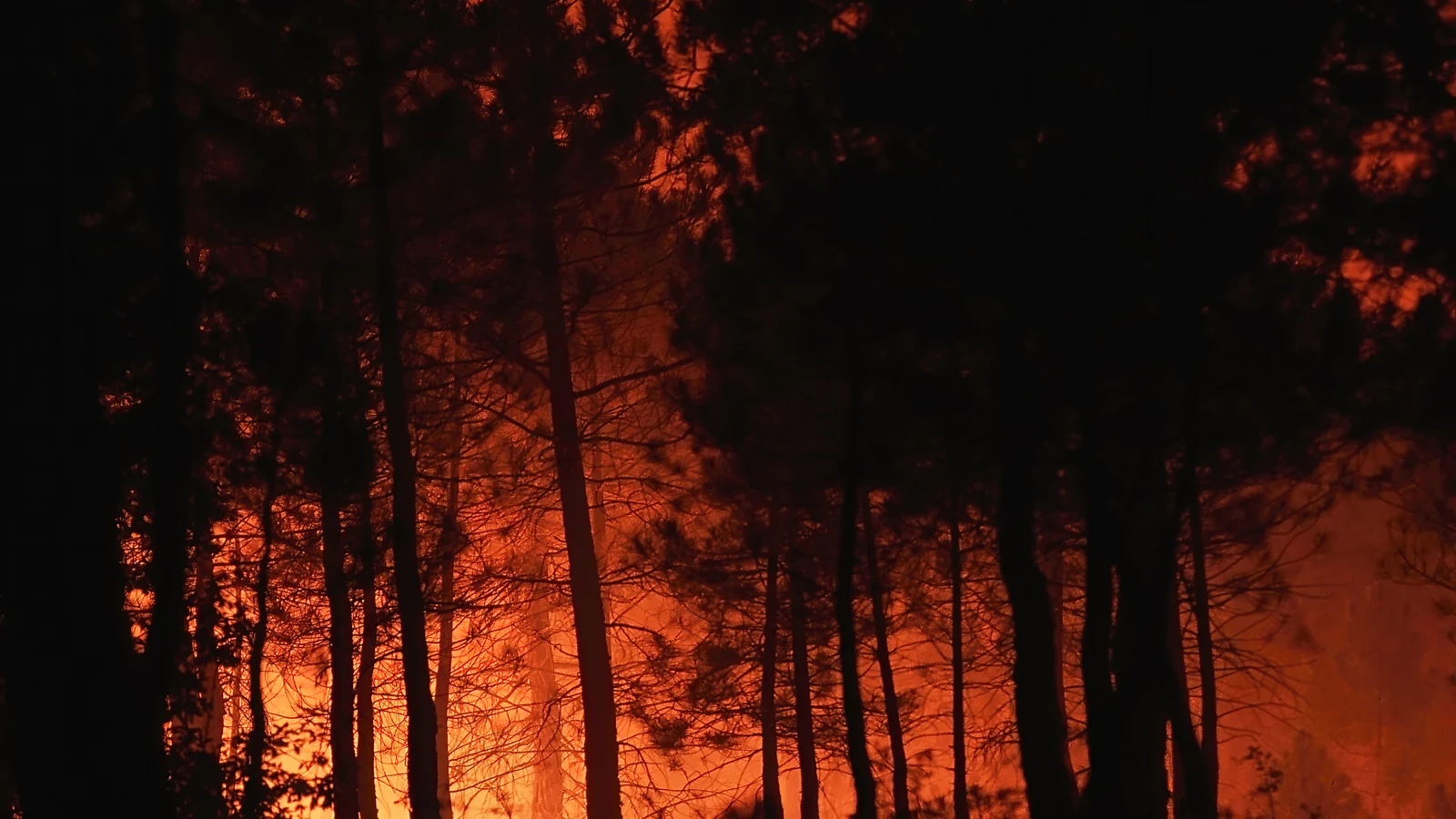
📅 Published on 1 September 2026 · Updated on 1 September 2026 · Reading time: 8 min
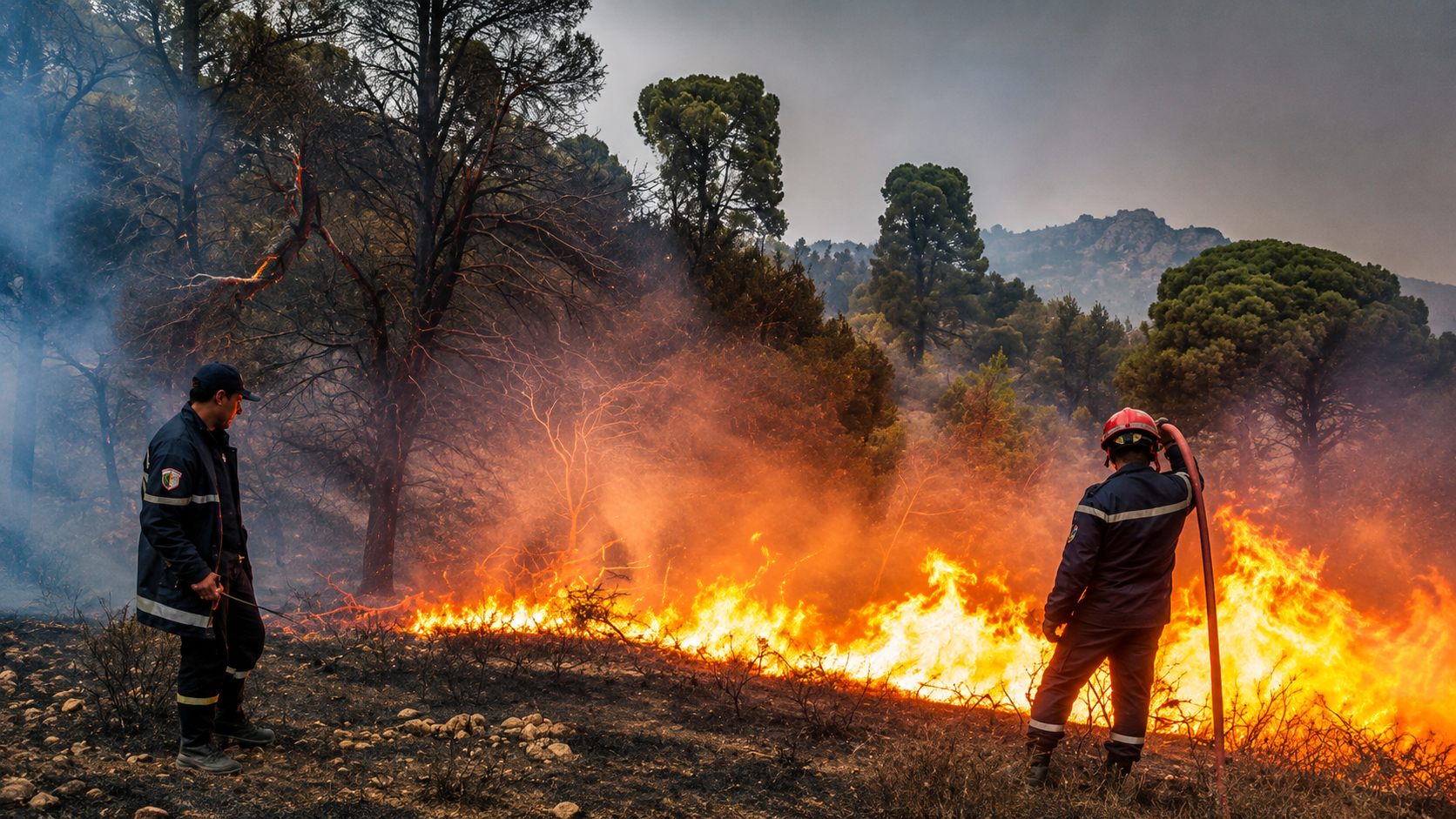
- A wave of wildfires hit northern and north-eastern Algeria from 26 to 30 August 2026, during a heatwave above 45 °C. Sixteen wilayas recorded outbreaks, with Jijel at the epicentre.
- Official toll from the Ministry of the Interior as of 26 August: 12 dead and 54 injured, 6 of them in intensive care. That toll has not been updated since, even though the fires continued for four more days.
- Three days of national mourning declared from 27 August. Fires fully under control on 30 August.
- Food, water, mattresses and hygiene products are already covered by the citizen mobilisation and the Algerian Red Crescent, to the point of saturating local logistics.
- LIFE funds what remains uncovered, with its partner Dir El Kheir: burn care, temporary rehousing, re-equipping homes.
- 8 to 28 July 2026
First wave of the summer: 1,968 outbreaks extinguished, including 667 forest, scrubland and brush fires. 6 dead and more than 100 hospitalised.
- Night of 26 to 27 August 2026
Simultaneous outbreaks at around 1 a.m., during a heatwave above 45 °C and in strong winds.
- 26 August 2026
Official Ministry of the Interior toll: 12 dead, 54 injured, 6 of them in intensive care. This toll will not be updated.
- 27 August 2026
Three days of national mourning declared, flags at half-mast, sporting fixtures suspended.
- 28 August 2026
Peak of the crisis: 174 to 193 outbreaks in twenty-four hours.
- 29 August 2026
Presidential visit to the severe burns centre. Arson is raised publicly as a line of inquiry.
- 30 August 2026
The civil protection service announces that all forest fires are fully under control.
- 31 August 2026
43 residual fires recorded, 30 of them extinguished, mainly in Jijel.
What happened and the toll
The story in 30 seconds
From 26 to 30 August 2026, simultaneous outbreaks devastated north-eastern Algeria, in temperatures above 45 °C and strong winds. Twelve people died and fifty-four were hospitalised, six of them in intensive care. The country declared three days of national mourning.
The flames have been out since 30 August. The needs, by contrast, are only beginning — and they are not the ones people assume. Food, water and mattresses are already arriving in quantity. What is missing is burn care, a roof for families who lost everything, and the means to re-equip a home. That is precisely where LIFE steps in.
What happened in Algeria in August 2026?
On the night of 26 to 27 August, at around 1 a.m., dozens of fires broke out almost simultaneously across the north and north-east of the country. The heatwave was above 45 °C and the wind was strong — two conditions that turn an outbreak into an uncontrollable front within minutes.
Sixteen wilayas, Algeria's provinces, were affected. On 28 August, the civil protection service recorded between 174 and 193 outbreaks in twenty-four hours. President Abdelmadjid Tebboune declared three days of national mourning on 27 August, with flags at half-mast, festivities cancelled and the football championship postponed.
This wave was not the first of the summer. Between 8 and 28 July, civil protection teams had already extinguished 1,968 outbreaks, including 667 forest, scrubland and brush fires. That first sequence killed 6 people and sent more than 100 to hospital, mainly in Béjaïa, Skikda, El Tarf, Bouira, Guelma and Annaba.
What is the toll from the fires in Algeria?
The latest official toll released by the Algerian Ministry of the Interior dates from 26 August 2026.
| Indicator | Official figure as of 26 August 2026 |
|---|---|
| Dead | 12 |
| Injured and burn victims hospitalised | 54 |
| Of whom in intensive care | 6 |
| Wilayas affected | 16, epicentre in Jijel |
| National mourning | 3 days, from 27 August |
| Status of the fires | Fully under control, announced 30 August 2026 |
The figure of 12 dead dates from 26 August, while the fires continued for four more days. Several independent media outlets report a heavier human toll, without official confirmation at this stage. We prefer to publish the official figure with its date rather than an unverifiable estimate, and this article will be updated as soon as a consolidated toll is released.
Another figure to handle with care: the 12,000 hectares burned, widely shared in late August, relate to Tunisia, not Algeria. The only area figure published on the Algerian side, as of 27 August, reported 1,666 hectares burned since 20 July, including 356 hectares of forest.
Which regions were worst affected?
The epicentre is Jijel. A coastal, mountainous strip around a hundred kilometres long, between Ziama Mansouriah and El Milia, was particularly devastated. Béjaïa and Tizi Ouzou follow immediately behind.
These are densely wooded mountain areas where housing is scattered across villages clinging to the slopes, often in direct contact with the forest. That geography explains both how fast the fires spread and how hard it was to evacuate in the middle of the night.
Around this core, around a dozen other wilayas were affected to varying degrees: Skikda, El Tarf, Guelma, Annaba, Bouira, Mila, Sétif, Constantine, Tébessa, Souk Ahras and M'Sila.
Why these fires were so deadly
Four factors combined, and it is their combination that explains the toll.
Heat and wind. A heatwave above 45 °C had dried out the vegetation for weeks. Gusts then drove the fire fronts at a speed that made any organised evacuation impossible.
The hour. The outbreaks occurred at around 1 a.m. Aerial resources do not fly at night: low-altitude flight over rugged terrain, without visibility, is too dangerous. During the most critical hours, only ground teams could intervene.
The available resources. Algeria has two BE-200 amphibious water bombers, four AT-802 aircraft and Mi-26 helicopters, but no Canadair. Around 140 early-detection drones were deployed, operated by a national committee bringing together 27 members from 14 ministries. A solid surveillance system, limited extinguishing capacity in the face of multiple simultaneous fires.
The climate. Prolonged drought and increasingly dry summers in north-eastern Algeria. This is not an isolated accident, and the trend affects populations across the Global South.
President Abdelmadjid Tebboune, visiting the severe burns centre on 29 August, publicly referred to “something criminal”. The simultaneous nature of the outbreaks, at around 1 a.m. and across several wilayas at once, led the Ministry of the Interior to open investigations. Several people have been arrested, and a revision of the penal code has been announced for 15 September 2026.
The real needs and LIFE's work
What do the victims actually need today?
This is where most appeals for donations are fighting the wrong battle.
The Algerian citizen mobilisation and the Algerian Red Crescent delivered food, water, mattresses and hygiene products in quantity within 48 hours: convoys of lorries from across the country, victims housed by local residents, collections coordinated from relay towns. Actors on the ground now report logistical saturation in the face of unsorted donations. One more convoy would help no one, and would tie up hands that are needed elsewhere.
The real need has shifted to three areas that spontaneous solidarity cannot cover.
Burn care. Six people are in intensive care and several dozen more are hospitalised with extensive burns. Casualties were airlifted to the specialist centres of Zéralda, near Algiers, and Oran, for lack of capacity in the hospitals of Jijel and Béjaïa. A severe burn patient stays in hospital around fifty days on average and undergoes roughly twice as many surgical procedures as a patient with an ordinary burn.
Rehousing. Entire houses burned down and thousands of families lost their homes. Temporary rehousing is among the needs identified on the ground as of 1 September 2026: it keeps victims from being left without shelter during the months that rebuilding will take.
Re-equipping homes. When everything has burned, people need clothes and a way to get the power back on. Clothing, generators and electrical cabling are among the most concrete items that let a household return to a normal life.
After a disaster, the first impulse is to send whatever is at hand. But useful aid answers a need identified on the ground, not a need assumed from France. That is the whole point of going through an organisation with a local relay: it knows what is genuinely missing, and when. Our guide on how to give effectively after a natural disaster sets out this logic in detail.
How LIFE is working in Algeria with Dir El Kheir
LIFE, a French international solidarity NGO founded in 2009 and present in more than 25 countries, is not setting up a mission from scratch in Algeria. The organisation relies on Dir El Kheir, a French humanitarian association based in Nanterre and firmly established on the ground in Algeria.
It was Dir El Kheir that identified the real need after the fires: neither food nor hygiene kits, already covered by local solidarity, but medical supplies for severe burn victims, temporary rehousing and the means to re-equip a home. Purchasing is coordinated locally, and medical purchases go through local health facilities. Our article on how NGOs actually intervene in a humanitarian emergency looks at how this works.
The three strands of the Algeria Emergency operation
- Treating burn victims. Dressings and compresses for burns, infusion solutions, painkillers, treatments for respiratory damage caused by smoke inhalation. This is the first strand, in wards that are already saturated.
- Rehousing families. Temporary accommodation for households whose homes burned down, for as long as rebuilding takes.
- Re-equipping homes. Clothing, generators and electrical cabling, to restore power to homes that have been cut off.
To this is added, over time, psychological support for the victims. It is the most enduring and the most neglected item: in the response to the 2022 Algerian fires, it accounted for only 3% of the operation's health budget.
LIFE communicates categories of need confirmed by the field, not a detailed shopping list it would not be able to honour.
Your donation funds care for severe burn victims, temporary rehousing for affected families and the re-equipping of homes, purchased locally in coordination with Dir El Kheir.
Donate for Algeria →Any amount, secure payment, 66% tax reduction. A €60 donation costs €20.40 after the reduction.
How can you help the victims of the fires in Algeria?
Four actions are genuinely useful today.
Make a financial donation. It is the only format that makes it possible to buy exactly what is missing, in Algeria, at the moment it is missing. A parcel sent from France arrives several days late and adds to an already saturated logistics chain. The 66% tax reduction brings the real cost of a €60 donation down to €20.40.
Choose a monthly donation. Care and rehousing last weeks; media attention lasts about ten days. A monthly donation feeds LIFE's emergency fund: it finances operations the moment they are triggered, without waiting for an appeal to raise money.
Start a fundraising page. A collection page takes a few minutes to set up and can be shared with friends, family or colleagues. The donations received are allocated to the Algeria Emergency operation, and every donor receives a tax receipt.
Pass on accurate information. Many appeals launched in late August are still asking for food and mattresses, even though those needs are covered. Correcting that around you redirects resources towards what is genuinely lacking.
The World Health Organization strongly advises against sending unsolicited medicines: they often arrive expired, unauthorised in the country, labelled in a language no one reads, and they clog warehouses that are already full. After the 2004 tsunami in Sri Lanka, of 56 tonnes of medicines received, more than 80% had not been requested and 150 tonnes had to be destroyed. This is why LIFE collects no medicines from private individuals and favours local purchasing through authorised medical channels.
LIFE's accounts are public and its activity reports available online. Before donating, to LIFE as to any other organisation, consult the organisation's financial reports.
What happened in Algeria in August 2026?
A wave of wildfires hit northern and north-eastern Algeria from 26 to 30 August 2026, during a heatwave above 45 °C and in strong winds. Sixteen wilayas recorded outbreaks, with Jijel at the epicentre, alongside Béjaïa and Tizi Ouzou. President Abdelmadjid Tebboune declared three days of national mourning on 27 August, and the civil protection service announced that the fires were fully under control on 30 August.
How many people died in the fires in Algeria?
The latest official toll released by the Algerian Ministry of the Interior, on 26 August 2026, reports 12 dead and 54 injured, 6 of them in intensive care. That toll has not been updated since, even though the fires continued for four more days, and several independent media outlets report a heavier human toll, without official confirmation to date. We publish the official figure with its date rather than an unverifiable estimate, and this page will be updated as soon as a consolidated toll is released.
How can you help the victims of the fires in Algeria?
The most effective way is a financial donation to an organisation that buys supplies locally, as close as possible to the real needs. In practice: donate to an NGO already working with actors present in Algeria, choose a monthly donation because care and rehousing last for weeks, do not send medicines or personal parcels without official coordination on the ground, and pass on verified information and the appeals of local associations.
Are the fires still burning in Algeria?
No. The civil protection service announced on 30 August 2026 that all forest fires were contained and fully under control. As of 31 August, of 43 fires recorded, 30 had been extinguished, with residual outbreaks concentrated in the wilaya of Jijel. Teams remain deployed for cooling and monitoring operations, as embers can reignite under the ash or in tree roots.
Which wilayas were affected by the fires?
Jijel, Béjaïa and Tizi Ouzou form the core of the crisis. Around ten other wilayas were affected to varying degrees: Skikda, El Tarf, Guelma, Annaba, Bouira, Mila, Sétif, Constantine, Tébessa, Souk Ahras and M'Sila. During the July wave, Béjaïa, Skikda, El Tarf, Bouira, Guelma and Annaba had already been the most exposed.
Why is LIFE not sending food, blankets or hygiene kits?
Because those needs are already covered. The Algerian citizen mobilisation and the Algerian Red Crescent delivered food, water, mattresses and hygiene products in quantity, to the point where actors on the ground report logistical saturation in the face of unsorted donations. Adding one more convoy would help no one. LIFE funds what remains uncovered: burn care, temporary rehousing for families who lost their homes, and the means to re-equip a household.
What exactly does my donation for Algeria pay for?
Your donation funds three things, identified on the ground as of 1 September 2026. Care, primarily for severe burn victims: dressings and compresses, infusion solutions, painkillers, treatments for respiratory damage caused by smoke inhalation. A roof: temporary rehousing for families who lost their homes. The means to re-equip: clothing, generators and electrical cabling, to restore power to homes that have been cut off. To this is added, over time, psychological support for the victims.
Why donate now that the fires are out?
Because burns do not go out with the flames, and a burned house is not rebuilt in a week. A severe burn patient stays in hospital around fifty days on average and undergoes twice as many surgical procedures as a patient with an ordinary burn. Casualties were airlifted to the specialist centres of Zéralda and Oran, for lack of capacity in local hospitals. At the same time, thousands of families lost their homes. The needs for care, shelter and support are starting now and will last months.
Can medicines be sent to Algeria?
No, not as individual donations. The World Health Organization strongly advises against sending unsolicited medicines: they often arrive expired, unauthorised in the country, labelled in a language no one reads, and they clog warehouses that are already full. After the 2004 tsunami in Sri Lanka, of 56 tonnes of medicines received, more than 80% had not been requested and 150 tonnes had to be destroyed. LIFE therefore collects no medicines from private individuals and favours local purchasing through authorised medical channels.
Which organisation can I trust to donate to the victims of the fires in Algeria?
LIFE is a French international solidarity NGO founded in 2009 and present in more than 25 countries. Its accounts are public, its activity reports available online, and its donations qualify for a 66% tax reduction. On this operation, LIFE works with Dir El Kheir, a French humanitarian association based in Nanterre and established in Algeria, which reports needs from the field and updates them as the situation evolves.
Were the fires in Algeria started deliberately?
Investigations are under way. President Abdelmadjid Tebboune publicly referred to a “criminal act” on 29 August 2026, with the Ministry of the Interior noting the simultaneous nature of the outbreaks, at around 1 a.m. and across several wilayas at once. Several people have been arrested, seven having already been remanded in custody in late July. A revision of the penal code has also been announced for 15 September 2026.
Is my donation for Algeria tax-deductible?
Yes. LIFE is an NGO recognised as being of public interest: every donation entitles you to an income tax reduction of 66% of the amount given, up to 20% of taxable income. A €60 donation therefore costs €20.40 after the reduction. The tax receipt is sent automatically by email, once a year.
Can I start a fundraising page or set up a monthly donation for Algeria?
Yes to both. A fundraising page takes a few minutes to create and can be shared with those around you: the donations received are allocated to the Algeria Emergency operation and every donor receives a tax receipt. The monthly donation feeds LIFE's emergency fund: it finances operations the moment they are triggered, without waiting for an appeal to raise money. It can be changed or cancelled at any time from the donor area.
- France 24 — Algeria declares national mourning after forest fires kill at least 12 (26 August 2026)
- RTBF — Algeria: three days of national mourning after the heavy toll of the fires (27 August 2026)
- El Watan — Deadly fires in Jijel, Skikda, Béjaïa, Tizi Ouzou and Guelma: sad days for the nation (29 August 2026)
- Algérie Éco — Civil protection: all forest fires contained and fully under control (30 August 2026)
- La Nouvelle République — 30 of 43 fires extinguished in the past 24 hours (31 August 2026)
- Algérie 360 — Forest fires: despite 45 fires contained, 14 wilayas still battling the flames (27 August 2026)
- Algérie 360 — Fires: Tebboune announces arrests and compensation for victims (31 August 2026)
- Afrik.com — Wildfires 2026: the toll in Algeria, Tunisia, Morocco, France and Spain (August 2026)
- Algérie 360 — After the inferno, a huge wave of solidarity sweeps across the affected regions (28 August 2026)