
Humanitarian donation: how to ensure your money reaches its destination?
.jpeg)
- Vérifier la fiabilité d'une ONG prend moins de 10 minutes. Les outils sont gratuits et accessibles à tous.
- Le ratio missions sociales / budget total est le chiffre le plus concret à regarder en premier.
- Les labels Don en Confiance et IDEAS certifient des contrôles indépendants et rigoureux.
- L'affiliation à Coordination SUD ou CHD est un signal fort de légitimité terrain.
- Life publie l'intégralité de ses comptes annuels et ouvre ses missions aux bénévoles indépendants.
Every year, millions of French people donate to humanitarian organizations. However, according to the 2025 Trust Barometer published by Don en Confiance, only 58% of donors consider the traceability of their donations important. Even fewer take the time to verify it.
It's not a matter of distrust. It's simply that the right practices aren't always known.
What is a reliable humanitarian donation?
A donation is considered reliable when three conditions are met: the organization is legally recognized, its finances are verifiable, and the majority of collected funds genuinely finance field projects, not administrative costs.
This standard is not impossible to achieve. Many French NGOs rigorously adhere to it. If you're wondering first what exactly an NGO is and how it differs from an association, our definition guide explains everything. But some scams, rare but real, exploit public generosity during highly publicized crises.
NGO, association, foundation: how to make sense of it all?
In France, most humanitarian organizations are 'associations loi 1901' (non-profit organizations under the 1901 law), declared at the prefecture. Some are recognized as being of public utility, a status granted by decree that indicates a long-standing presence and rigor acknowledged by the State.
An association without an RNA number (National Register of Associations) or unable to provide a tax receipt should raise a red flag.
L'organisation est-elle bien déclarée sur le répertoire national des associations ? C'est gratuit, ça prend 30 secondes.
How to verify that an NGO is properly using your donations?
This is the most objective and simplest criterion to verify. A reputable NGO publishes its annual accounts and has them audited by an independent professional.
Who audits an NGO's accounts in France?
In France, any association receiving more than €153,000 in tax-deductible donations must have its accounts certified by a statutory auditor. This professional assumes civil and criminal liability. They do not certify approximate figures.
At Life, accounts undergo a double validation process: first by a statutory auditor, then by a General Assembly composed of founding members, volunteers, and donors. This approach goes beyond legal obligations.
The two figures to look at in 2 minutes flat
Two ratios are enough for a quick initial review:
- Program expenses / total budget ratio : below 70%, ask questions.
- Operating costs / total budget ratio : the lower it is, the better.
Life's accounts can be viewed directly on life-ong.org/nos-rapports, as well as on the JOAFE to cross-reference sources.

Which certifications guarantee an NGO is reputable?
Two certifications are recognized in France: Don en Confiance and IDEAS. They do not guarantee on-the-ground effectiveness, but they certify that internal practices are subject to independent controls.
Don en Confiance: what is it exactly?
Established in 1989, Don en Confiance is expected to certify around a hundred French organizations by 2025. To obtain this certification, an association undergoes an evaluation process conducted by independent volunteers, which can last up to a year. The certification is renewable every three years and can be revoked at any time if a serious breach is identified.
What the charter specifically requires:
- Leaders acting selflessly
- Communication that respects beneficiaries
- Resources genuinely allocated to missions
- Full transparency regarding actions and their funding
The IDEAS certification: going even further
IDEAS goes further in evaluating governance and concrete results. Its audit covers strategy and the measurement of actual on-the-ground impact. These two certifications are complementary: an NGO that obtains one agrees to close scrutiny. That in itself is already valuable information.
<aside>
Image : Don en Confiance and IDEAS logos side by side on a light background - alt : "Trust labels for French NGOs"
</aside>
Is the NGO recognized by other players in the sector?
Coordination SUD brings together the main French international solidarity NGOs and imposes a code of ethics on its members. Coordination Humanitaire et Développement (CHD) plays a similar role for faith-based or community-based organizations.
Life joined these two networks in 2023. This is an external validation by sector peers, comparable to professional accreditation.
To choose a humanitarian organization wisely, checking these affiliations takes two minutes on the NGO's website or on Coordination SUD's register.
How can you tell what the NGO truly does on the ground?
Beyond the numbers, some NGOs have developed practices that allow for almost direct tracking of fund usage.
What does a good impact report look like?
A good activity report isn't limited to mentioning "X people helped." It details the projects undertaken, the countries involved, the local partners engaged, and the measurable results achieved.
Donors now demand tangible proof, not declarations of intent. This is the direction the entire sector is heading.
Can one directly see how donations are used?
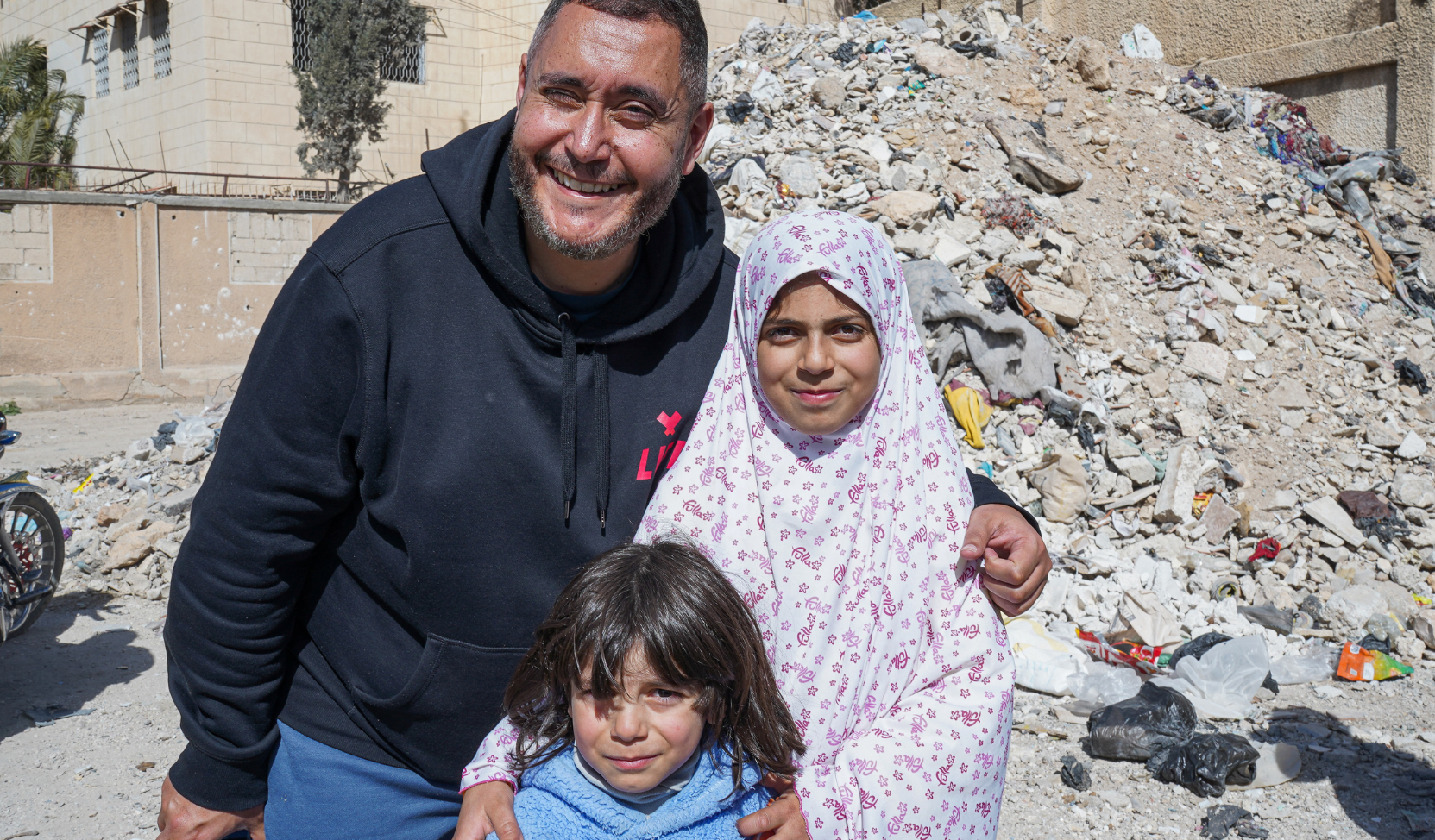
Some NGOs invite volunteers to witness distributions on the ground. Life has been doing this for several years, particularly during Ramadan: independent volunteers open packages, meet beneficiaries, film, and report back to donors.
This level of transparency is rare in the French humanitarian sector.
<aside>
Image : photo of a Life distribution in the field with volunteers - alt: "Life NGO volunteers during a Ramadan distribution"
</aside>
To go further, Life's founding treasurer directly answers the 6 most frequently asked questions by donors. And if you have a specific question about your donation or its use, Life's donor relations department is available to answer you directly. To go even further, our guide NGO Transparency: How to Verify the Use of Your Donations provides you with all the practical tools. And if you're looking for a simple method to evaluate any NGO in 5 steps, our guide Donating to an NGO: 5 Criteria for Choosing a Reputable Organization gives you a comprehensive framework.
Red Flags to Watch Out For When Choosing an NGO
A few situations warrant attention before confirming a donation:
- Refusal to provide a tax receipt
- Website without clear legal notices (head office, association number, contacts)
- Artificial urgency ("donate within 24 hours or funds will be lost")
- Failure to publish annual accounts
- Evasive answers to donor questions
Une organisation sérieuse répond à vos questions. Si elle esquive ou complique l'accès à ses comptes, c'est un signal clair.
Ready to give? Here's how to do it risk-free
Checking an NGO's reliability takes no more than ten minutes. Consulting financial statements on JOAFE, looking for the 'Don en Confiance' label, verifying membership with Coordination SUD: these are simple steps, accessible to everyone.
An informed donation has more value: for the donor who knows where their money is going, and for the NGO that receives the trust of a clear-sighted and committed supporter.
Life dedicates over 85% of its funds to field missions in the 25 countries where it operates. Its activity reports and annual accounts are fully published. And if you're wondering how much your donation actually costs you after tax deduction, our complete guide to tax deductions for donations 2026 gives you all the concrete figures. A €100 donation might only cost you €25. And if you wish to go further by transferring part of your assets, our guide on legacies and donations to an NGO explains how to do it simply. And if you prefer to give your time rather than your money, discover how to get involved in humanitarian volunteering in France.
Choisissez la cause qui vous tient à cœur et contribuez directement. Chaque euro est tracé. Chaque mission est documentée.
Découvrir Life ONG →Comment vérifier qu'une ONG est reconnue d'intérêt général ?
Rendez-vous sur le répertoire national des associations (RNA) sur data.gouv.fr ou consultez le Journal Officiel des Associations. La reconnaissance d'utilité publique est accordée par décret et apparaît dans les statuts officiels de l'organisation.
Quel pourcentage d'un don doit aller aux missions terrain ?
Il n'existe pas de seuil légal, mais la majorité des acteurs du secteur considèrent qu'une ONG sérieuse consacre au moins 70 % de ses ressources à ses missions sociales. En dessous, les frais de fonctionnement ou de collecte de fonds sont disproportionnés.
Le label Don en Confiance est-il obligatoire ?
Non, ce label est volontaire. Mais le fait qu'une organisation le demande et l'obtienne signifie qu'elle accepte un contrôle indépendant et continu de ses pratiques. C'est un signal fort de transparence.
Comment savoir si mon don est déductible des impôts ?
L'organisation doit être reconnue d'intérêt général et habilitée à recevoir des dons ouvrant droit à réduction fiscale. Elle doit vous envoyer un reçu fiscal (formulaire Cerfa) après votre don. Sans ce reçu, la déduction n'est pas possible.
Peut-on faire confiance à une petite ONG peu connue ?
La taille n'est pas un critère de fiabilité. Une petite structure peut être tout aussi rigoureuse qu'une grande, à condition de publier ses comptes, d'être déclarée et de répondre clairement à vos questions.

.webp)