
NGO Transparency: How to verify the use of your donations
.jpeg)
- Le doute sur l’utilisation des fonds est le premier frein au don pour les Français, devant le manque d’argent.
- Life ONG publie ses comptes annuels en accès libre et consacre plus de 85 % de ses ressources à ses missions terrain.
- Cinq éléments permettent de vérifier la transparence d’une ONG : comptes publiés, ratio missions sociales, label indépendant, rapport d’impact, et présence terrain.
- Life va plus loin que la loi en invitant des bénévoles à assister directement aux distributions sur le terrain.
- Le pôle relation donateur de Life est disponible pour répondre à toutes vos questions sur l’utilisation des fonds.
Your donation is on its way. But where does it really go? Millions of French people ask themselves this question before donating. According to the Trust Barometer for Associations and Foundations published by Don en Confiance (a study conducted by Institut Viavoice among 2,002 people representative of the French population), 65% of French people cite a lack of trust in how funds are used as the primary barrier to donating, ahead of a lack of financial means.
It's a legitimate question. And the good news is: the tools to answer it exist, are accessible, and take less than ten minutes to use. This guide provides them to you, using Life ONG as a concrete example at each step.
Why transparency has become the top priority for NGOs
Just twenty years ago, most donors trusted without verifying. Several scandals in the humanitarian sector changed the game: mismanagement of funds, excessive administrative costs, overpaid leaders. Distrust set in.
Today, donors want proof. Not promises, not pretty visuals on a website. Concrete, verifiable data, and if possible, certified by an independent third party.
Serious NGOs have understood this shift. They have adapted their communication, strengthened their control mechanisms, and made their data publicly accessible. Life is one of them.
What donors concretely expect
The Trust Barometer (Don en Confiance / Institut Viavoice) identifies five main expectations, each cited by over 60% of surveyed donors:
- Donation traceability: knowing exactly where the money goes
- Effectiveness of actions: measurable results, not statements of intent
- Clarity of missions: consistency between what is communicated and what is achieved
- Independent oversight: an external audit or a recognized label
- Financial transparency: access to accounts and management ratios
<aside>📌
Image : infographic of the 5 trust criteria cited by French donors (source: Don en Confiance Barometer) — alt: "NGO transparency trust criteria donors France"
</aside>
How to read an NGO's accounts in 5 minutes
This is the most reliable and underutilized tool. An NGO's annual accounts, when published and certified, reveal everything about how it manages your money.
Where to find Life NGO's accounts
Life publishes its annual accounts publicly on life-ong.org/nos-rapports. They are also available in the Official Journal of Associations and Corporate Foundations (JOAFE). This dual source makes any manipulation impossible.
The three figures to look for
No need to read 50 pages of financial statements. Three ratios are enough for a quick and reliable assessment:
| Ratio | Ce qu'il mesure | Ce qu'on attend |
|---|---|---|
| Missions sociales / budget total | Part des fonds qui vont vraiment sur le terrain | Plus de 70 % |
| Frais de fonctionnement / budget total | Part des frais administratifs | Moins de 15 % |
| Frais de collecte / budget total | Part dépensée pour collecter des fonds | Moins de 15 % |
At Life NGO, over 85% of collected resources are directly allocated to field missions. Overhead costs are deliberately kept low to maximize the impact of every euro received.
Les comptes de Life sont certifiés chaque année par un commissaire aux comptes indépendant, puis validés par une Assemblée Générale composée de membres fondateurs, de bénévoles et de donateurs. Ce double contrôle va au-delà de ce qu’impose la loi.
Transparency labels: what they truly guarantee
A label is not just a decoration on a website. It's the result of an audit conducted by an independent third party, which has examined the NGO's practices and certified that they comply with a set of strict criteria.
Which labels are recognized in France?
Two labels are benchmarks in the French humanitarian sector:
Don en Confiance : created in 1989, it certifies governance, management rigor, communication quality, and financial transparency. Approximately 100 organizations are certified. The label is renewable every 3 years, with an independent controller permanently assigned to the organization. According to Don en Confiance's own Barometer, 69% of French people trust certified organizations more, and 68% would be more inclined to donate to them.
IDEAS : it goes further on impact measurement and strategic governance. It generally targets larger organizations.
What these labels actually verify
To obtain the Don en Confiance label, an association must prove that:
- Its leaders act selflessly
- Its resources are genuinely allocated to its missions
- Its communication respects beneficiaries and donors
- Its accounts are transparent and accessible
<aside>📌
Image : Don en Confiance logo and IDEAS logo side by side — alt : "NGO transparency labels France Don en Confiance IDEAS"
</aside>
The impact report: evidence or claims?
Annual accounts show where the money goes. The impact report shows what that money has achieved. These two documents are complementary, and a serious NGO publishes both.
How to distinguish a true impact report from a communication brochure
A credible impact report doesn't just state "X people helped." It details:
- Projects carried out, country by country
- Local partners involved and their role
- Measurable results achieved (number of wells built, meals distributed, children schooled...)
- Unmet objectives and the reasons why
This last point is particularly telling. An NGO that acknowledges its limitations and failures is a mature NGO, one that isn't trying to promote itself at all costs.
What Life publishes
Life publishes a detailed annual activity report, available at life-ong.org/nos-rapports. It covers all 25 countries of operation, with precise data on each program. Life's donor relations department can explain its content to you if any points are unclear.
On-the-ground transparency: when you can see for yourself
Figures and reports are good. Seeing with your own eyes is even better. It's one of the rarest and most significant practices in the humanitarian sector.
On-the-ground witness volunteers
Life regularly invites volunteers and donors to join its field missions, especially during major Ramadan operations. These independent volunteers open packages, verify their contents, meet beneficiaries, film, and then report back to the donor community.
This practice is an unparalleled guarantee of transparency: no document can replace the testimony of an individual present on the ground, unaffiliated with the NGO, who confirms that distributions indeed took place.
GPS tracking of operations
Life has also implemented a GPS tracking system for certain operations, which allows donors to see the exact date and location where their donation was distributed. This is a rare innovation in the sector, pushing traceability to its most concrete level.
<aside>📌
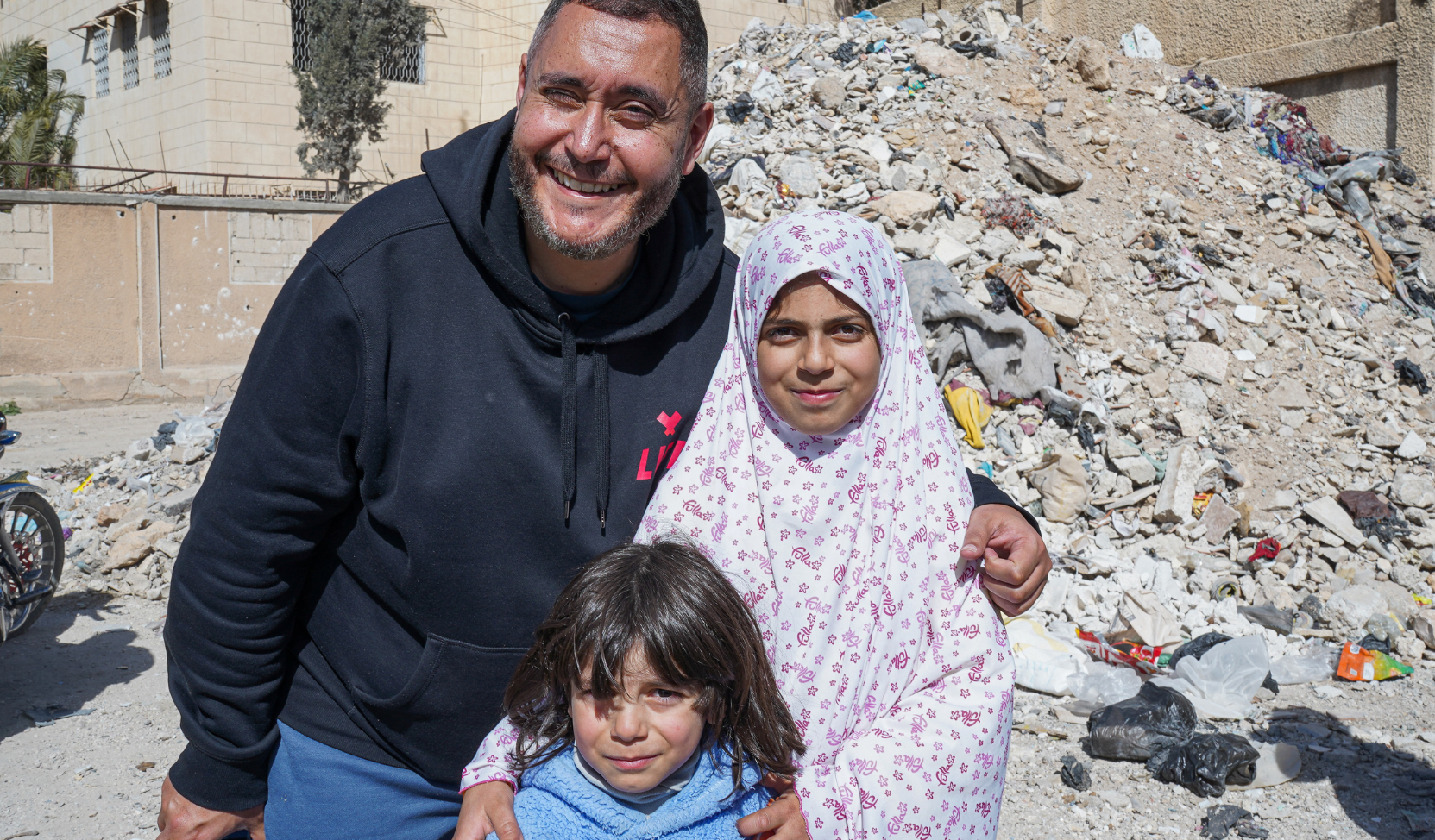
Image : photo of an independent volunteer during a Life distribution, with beneficiaries — alt : "Witness volunteer Life NGO field transparency distribution"
</aside>
Summary: How Life NGO meets the 5 transparency expectations
| Attente des donateurs | Ce que fait Life |
|---|---|
| Traçabilité des dons | Suivi GPS sur certaines opérations, rapports détaillés par pays |
| Efficacité des actions | Rapport d'impact annuel avec résultats mesurables |
| Clarté des missions | Site, rapports, pôle relation donateur disponible |
| Contrôle indépendant | Commissaire aux comptes + Assemblée Générale + réseaux Coordination SUD et CHD |
| Transparence financière | Comptes publiés en accès libre, 85 % en missions sociales |
To learn more about the criteria for a reliable NGO, our guide Donating to an NGO: 5 criteria for choosing a reputable organization provides you with a comprehensive method. And to understand how donations to Life are tax-deductible, our guide to tax deductions for donations explains everything.
Comptes publiés. Rapport d’impact accessible. Pôle relation donateur disponible pour répondre à toutes vos questions.
Faire un don →Comment savoir si mon don à Life ONG est bien utilisé ?
Plusieurs façons : consultez les comptes annuels sur life-ong.org/a-propos/rapports ou sur le JOAFE, lisez le rapport d'impact annuel qui détaille les projets pays par pays, et n'hésitez pas à contacter le pôle relation donateur de Life qui peut répondre à toutes vos questions spécifiques.
Quel pourcentage de mon don va vraiment sur le terrain chez Life ?
Plus de 85 % des fonds collectés par Life sont directement affectés aux missions terrain. Les frais de fonctionnement et de collecte représentent moins de 15 % du budget total, un ratio conforme aux meilleures pratiques du secteur humanitaire français.
Est-ce que Life ONG est auditée par un organisme indépendant ?
Oui. Les comptes de Life sont certifiés chaque année par un commissaire aux comptes indépendant, puis validés en Assemblée Générale. Life est également membre de Coordination SUD et de Coordination Humanitaire et Développement, deux réseaux qui imposent des chartes de déontologie à leurs membres.
Peut-on voir comment une ONG dépense son argent sans être comptable ?
Oui. Trois ratios simples suffisent : la part du budget consacrée aux missions sociales (idéalement plus de 70 %), les frais de fonctionnement (idéalement moins de 15 %), et les frais de collecte (idéalement moins de 15 %). Ces données figurent dans les comptes annuels, disponibles gratuitement en ligne pour toute association sérieuse.
Pourquoi certaines ONG ne publient-elles pas leurs comptes ?
Les associations recevant moins de 153 000 € de dons par an ne sont pas légalement obligées de publier leurs comptes. Mais une ONG humanitaire d'envergure qui ne publie pas ses comptes de façon volontaire fait un choix d'opacité. C'est en soi un signal d'alerte, indépendamment de sa taille.

.webp)