
Sustainable farming in Africa: feeding people without destroying the land

- 309 million people are living in food insecurity in Africa in 2026, now the worst-affected continent according to the FAO.
- In the Sahel, 65% of the working population lives from agriculture, and more than half of them are women.
- Sustainable farming combines agroecology, agroforestry, water management and resilient seeds to produce without destroying the soil.
- The FAIR Sahel project (2020-2025) validated 14 agroecological systems adapted to local conditions in Burkina Faso, Mali and Senegal.
- The Great Green Wall, launched in 2007 by 11 African countries, aims to restore 100 million hectares of degraded land.
According to the FAO’s SOFI 2026 report, Africa now counts 309 million people in food insecurity, overtaking Asia for the first time. By 2030, 56% of the world’s hungry will live on this continent. Faced with this pressure, a deep transformation of agriculture is under way: more resilient, more sparing with inputs, better adapted to local soils and climates.
This guide reviews what sustainable farming means in Africa, the practices that work, the major programmes under way and the concrete ways to support this transition from France. It is part of our section devoted to food security.
What is sustainable farming?
The FAO defines sustainable agriculture as a system capable of meeting current food and nutritional needs without compromising the ability of future generations to do the same. It rests on three inseparable pillars.
Ecological sustainability. Protecting and regenerating soils, preserving biodiversity, limiting pollution, managing water sparingly.
Economic sustainability. Securing a decent income for producers, reducing dependence on costly inputs (chemical fertilisers, pesticides, hybrid seeds), securing local outlets.
Social sustainability. Guaranteeing fair access to land, credit and training, particularly for women and young people, who make up the majority of Africa’s agricultural workforce.
Unlike conventional agriculture built on immediate yields and imported inputs, sustainable farming thinks in terms of regularity, resilience and sovereignty. On fragile soils and in semi-arid climates such as the Sahel, this shift in perspective becomes a question of survival.
Why does Africa need to turn to sustainable farming?
Three factors make the transition urgent.
Unprecedented food pressure
Food insecurity already affects 309 million Africans, and two thirds of them cannot economically afford a healthy diet. SOFI 2026 projects a worsening by 2030 if no structural change takes place. To understand the scale of the need, see our detailed analysis food insecurity: causes and lasting solutions.
Accelerating soil degradation
According to the FAO, around 65% of Africa’s farmland suffers moderate to severe degradation. The combined causes are erosion, deforestation, overgrazing, salinisation and declining organic matter. Every tonne of soil lost takes several generations to rebuild.
The dead end of the intensive model
The industrial farming model that fed Europe and North America in the 20th century relies on costly inputs (nitrogen fertilisers, hybrid seeds, heavy mechanisation) and abundant capital. In sub-Saharan Africa, this model is structurally unsuited: prohibitive input costs, external dependence, collapsing yields as soon as a climate or financial shock hits. Our analysis of the impact of climate change on food security examines the mechanisms that make this model untenable.
Which sustainable farming practices work in Africa?
Proven techniques combine traditional farming knowledge with recent scientific innovation. Six practices shape the current landscape.
Agroecology
A system based on applying ecological principles to farming, agroecology is at once a science, a movement and a set of practices. It relies on biodiversity, the biological fertility of soils and the autonomy of producers. The FAO today makes it one of its priority axes for sub-Saharan Africa.
Agroforestry
Combining trees and crops on the same plot delivers more stable yields, improves soil fertility thanks to deep roots, shields crops from wind and provides extra income (fruit, wood, fodder). Our dedicated article agroforestry in 4 key questions details this approach.
Zaï and half-moons
Traditional Sahelian techniques for harvesting water and restoring soils. Zaï involves digging small pits where compost and rainwater are concentrated, making it possible to farm in apparently sterile soils. Half-moons are small earthen barriers that trap run-off. These practices were popularised by Yacouba Sawadogo, the Burkinabé farmer nicknamed “the man who stopped the desert”.
Intercropping
Planting millet and cowpea (a local bean) on the same plot multiplies the benefits: the legume fixes atmospheric nitrogen that feeds the millet, the two plants have staggered growth cycles that spread out the workload and the harvest, and household dietary diversity is strengthened. A basic principle widely documented by CIRAD.
Drip micro-irrigation
Suited to small market-gardening holdings, this technique cuts water use by half or two thirds compared with conventional irrigation. It is used in particular by Senegalese and Malian women producers growing onions, tomatoes and leafy vegetables.
Local resilient seeds
Farmer varieties bred through local selection are adapted to specific soils, pests and climates. Unlike commercial hybrids, they can be re-sown from one year to the next. Preserving and spreading them through community seed banks is a major issue.
This Burkinabé farmer spent forty years replanting forests and crops using the zaï method, on land considered permanently sterile. He created a 40-hectare forest where nothing was left, and today trains dozens of young farmers in his techniques. He received the Right Livelihood Award in 2018.
Focus: the Great Green Wall of the Sahel
Launched in 2007 by eleven African countries (Senegal, Mauritania, Mali, Burkina Faso, Niger, Nigeria, Chad, Sudan, Ethiopia, Eritrea, Djibouti), the Great Green Wall is one of the largest ecological restoration programmes in the world.
The initial goal: to create a belt of trees 8,000 km long and 15 km wide to slow the advance of the Sahara. The objective has since widened to restoring 100 million hectares of degraded land, storing 250 million tonnes of carbon and creating 10 million rural jobs by 2030.
The mid-term assessment remains mixed: around 20% of the target reached, with very uneven progress between countries. Senegal and Ethiopia are the best performers, while the central Sahel remains blocked by insecurity. But the ambition and the international coordination the programme established make it a reference framework for every sustainable farming project in the region.
Agroecology in the Sahel: results of the FAIR Sahel project (2020-2025)
From 2020 to 2025, the FAIR Sahel project, led by CIRAD with a consortium of European and African research institutes, tested agroecological intensification in around ten localities in Burkina Faso, Mali and Senegal. More than 350 producers, women and men, took part in the trials.
The result: 14 agroecological systems were validated as suited to local conditions, after being tested and approved by farmers themselves. The project’s main lesson is that agroecological practices already exist on Sahelian farms, but lack the support needed to be optimised and spread. The bet pays off provided it comes with technical, organisational and cultural support.
What are the obstacles to developing sustainable farming?
Five obstacles slow large-scale adoption.
Insufficient funding. Agriculture receives a disproportionately small share of official development assistance to Africa, even though it employs 65% of the Sahelian population. This chronic underinvestment holds back research, training and farmer support.
Spreading innovations. A technique validated in a research centre does not automatically reach the farmer who needs it. Without an effective extension system, best practices remain confidential.
Access to land. Many farmers, women in particular, have no title to the land they cultivate. They then hesitate to invest in practices whose benefits are spread over several years.
Training. Agroecological techniques demand more know-how than standardised intensive agriculture. Initial and continuing training for farmers is a crucial investment.
The central role of women. More than half of Sahelian farmers are women. Without fair access to land, credit, training and tools, no agricultural transition will hold at scale. The FAO estimates that closing this gap could cut world hunger by 12 to 17%.
According to African Development Bank data, Africa imports around 50 billion dollars of food products every year, even though it holds more than 60% of the planet’s uncultivated arable land. Investing in sustainable African agriculture means reducing that dependence and strengthening a food sovereignty on which our dedicated article on food sovereignty sheds full light.
The role of NGOs in sustainable farming in Africa
Humanitarian NGOs play an essential complementary role alongside public programmes, through four types of action.
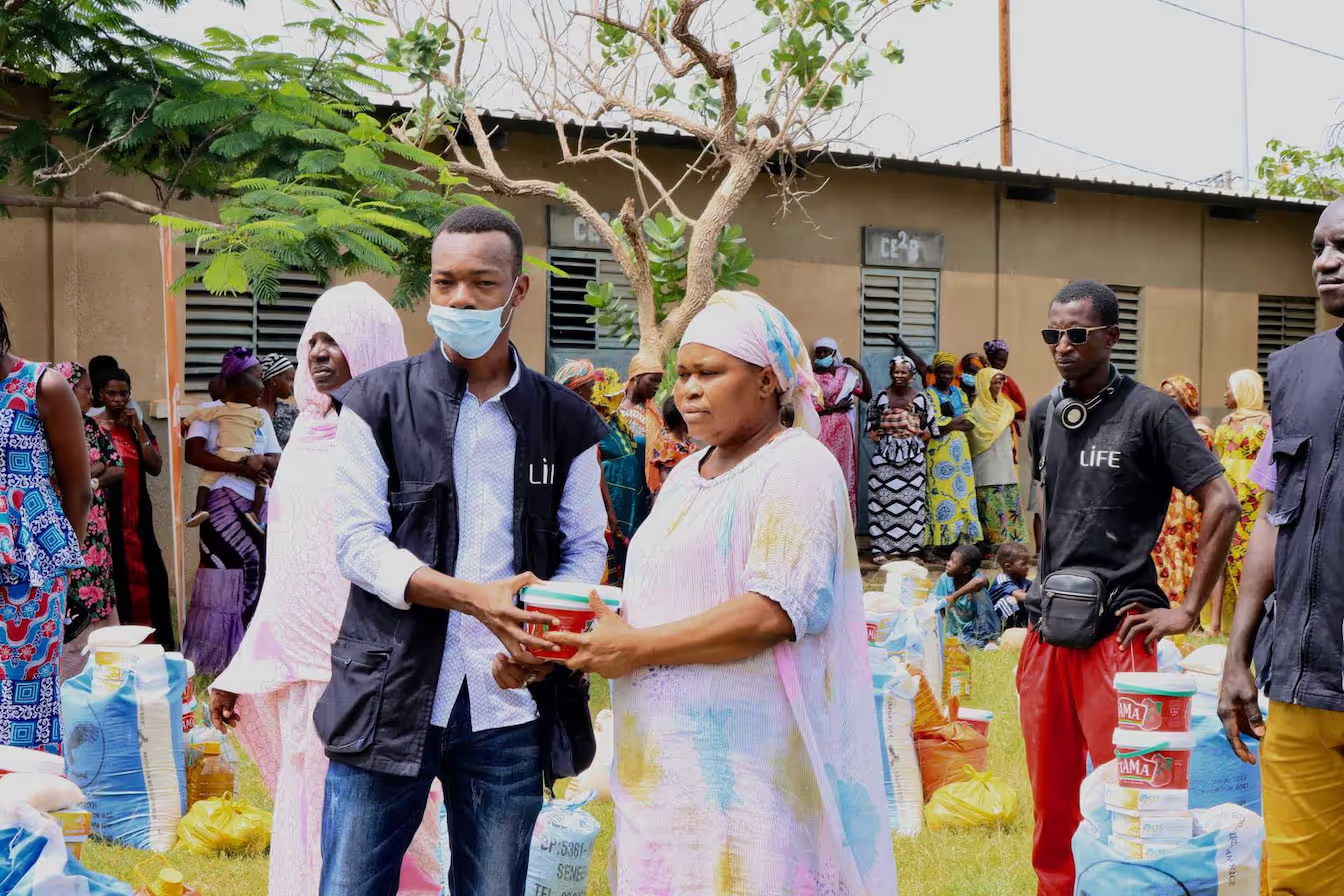
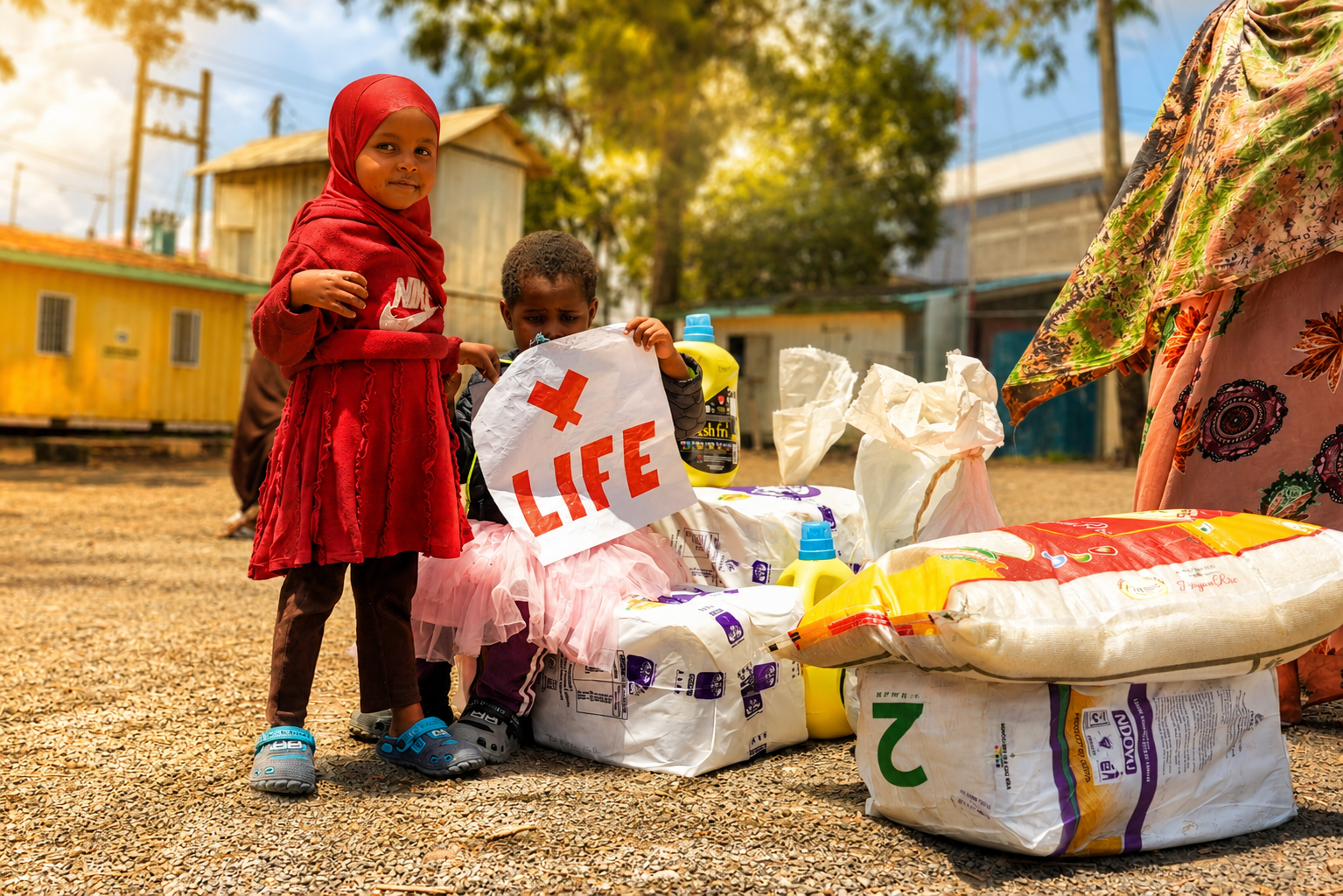
Distributing resilient seeds. After a dry season or a conflict, farmers often have no seed stock left. NGOs such as the FAO, Action Against Hunger or LIFE distribute seeds adapted to local climates to restart the agricultural cycle.
Building wells and boreholes. Access to water is the first lever of resilient farming. LIFE, for example, helped equip the village of Wibga in Burkina Faso with a water supply system benefiting 2,000 people, while supporting the associated market gardening. All of these achievements can be found on our key figures page.
Technical training. Practical workshops on zaï, intercropping, micro-irrigation and post-harvest storage. Peer-to-peer training (farmer to farmer) is particularly effective.
Funding micro-projects. Zero-interest loans or grants to buy equipment, fence a plot or build a community granary. These micro-financings have considerable leverage on rural economies.
How can you support sustainable farming in Africa from France?
Three forms of commitment are open to any individual.
A one-off or recurring donation to an NGO active in African agriculture. LIFE funds wells, seed distributions and training in several Sahel countries. A monthly donation of 20€ comes to 81.60€ net over the year after the 66% tax reduction.
Project sponsorship, a format offered by some NGOs to support a village or a community over several years, with regular progress updates.
Responsible consumption. Choosing fair-trade labelled products imported from Africa (coffee, cocoa, shea butter, dried mangoes) directly supports producers who farm sustainably and are paid a fair price.
LIFE funds wells, boreholes, distributions of resilient seeds and agricultural training in several Sahel countries. Your donation is part of a long-term effort, designed for the autonomy of communities.
Donate for sustainable farming →What exactly is agroecology?
Agroecology is at once a science, a social movement and a set of farming practices. It applies ecological principles (biodiversity, natural cycles, autonomy) to agriculture, in order to ensure production that is sustainable, ecologically sound, economically viable and socially fair. It values local farming knowledge and combines it with recent scientific findings. The FAO has made it one of its priority axes for sub-Saharan Africa.
What is zaï?
Zaï is a traditional Sahelian technique for harvesting water and restoring soils. It involves digging small pits 20 to 30 centimetres across, filled with compost, in which millet, sorghum or shrubs are planted. These pits concentrate rainwater and organic matter, making it possible to grow crops in apparently sterile soils. Popularised by Yacouba Sawadogo in Burkina Faso, the technique has restored tens of thousands of hectares across the Sahel.
Does the Great Green Wall really exist?
Yes, but not as a continuous wall of trees. Launched in 2007 by eleven African countries, the Great Green Wall is a vast ecological restoration programme targeting 100 million hectares of degraded land by 2030. At the halfway point, around 20% of the target has been reached, with very uneven progress: Senegal and Ethiopia are the most advanced, while the central Sahel remains blocked by insecurity. The programme remains an international reference framework.
Can sustainable farming feed the whole of Africa?
Studies by organisations such as the FAO, IPES-Food and CIRAD converge: yes, provided there is massive support. Sustainable farming is not agriculture chasing yield at any cost, but agriculture built on resilience and stability. It produces slightly less per hectare than intensive irrigated agriculture, but with far lower input costs and better resistance to climate shocks. On degraded Sahelian soils, it is often the only technically viable option.
Why are women central to sustainable farming in Africa?
Because they make up the majority of Sahelian farmers and take the household’s food decisions. Without fair access to land, credit, training and tools, no agricultural transition can succeed. The FAO estimates that if the gap in access to agricultural resources between men and women disappeared, world hunger would fall by 12 to 17%.
How can an individual in France concretely support sustainable farming in Africa?
Three main levers: a regular donation to an NGO active in African agriculture (LIFE, Action Against Hunger, Care France, GRDR), sponsorship of a village or cooperative project, and buying fair-trade labelled imported products. A monthly donation of 20€ to LIFE costs only 81.60€ net over the year after the 66% tax reduction, and concretely funds wells, seeds or training.