
Qurbani 2026: Sacrifice Rules, Cost, and How to Perform it by Proxy
- Le Qurbani (ou Udhiya) est le sacrifice rituel accompli lors de l'Aïd al-Adha 2026, prévue le 27 mai. Il commémore la soumission du prophète Ibrahim et est une Sunna confirmée du Prophète Muhammad (paix sur lui).
- Le sacrifice doit être réalisé entre la prière de l'Aïd (27 mai) et le coucher du soleil du dernier jour de Tachriq (30 mai). Tout sacrifice accompli avant la prière est invalide.
- Les animaux autorisés sont le mouton et la chèvre (1 part chacun), le boeuf et le chameau (7 parts chacun). L'animal doit être sain, sans défaut grave, et avoir atteint l'âge requis.
- Le sacrifice par procuration (Al-Wakala) est permis par la Charia : vous confiez votre Qurbani à une ONG de confiance comme Life ONG, qui le réalise en votre nom et distribue la viande aux populations dans le besoin.
- Life ONG envoie un suivi GPS du don pour que vous sachiez exactement où votre sacrifice a été offert. Le pôle relation donateur est disponible pour toutes vos questions.
Qurbani is one of the most significant acts of worship during Eid al-Adha. However, its rules often raise questions: which animal to choose? When should the sacrifice be made? How can it be delegated to an NGO in full compliance with Sharia?
This guide answers all these questions, providing Islamic rulings and practical information for Eid al-Adha 2026.
What exactly is Qurbani?
The word Qurbani comes from the Arabic "Qurban," meaning "act of offering" or "drawing closer to Allah." In Urdu and Persian, it refers to the ritual sacrifice performed during the days of Eid al-Adha. In classical Arabic and Fiqh, the exact term is Udhiya (أُضْحِية). Both words refer to the same practice.
Qurbani commemorates the complete submission of Prophet Ibrahim, who was ready to sacrifice his son Ismail at Allah's command, before Allah substituted a ram at the last moment. It is also a confirmed Sunnah of Prophet Muhammad (peace and blessings be upon him), who performed this sacrifice every year in Medina.
Allah says in the Noble Quran: "Neither their meat nor their blood reaches Allah, but what reaches Him from you is piety." (Surah Al-Hajj, 22:37)
Qui est concerné par le Qurbani ? Il est fortement recommandé (Sunna mou'akkada) pour tout musulman adulte, sain d'esprit, et possédant un patrimoine au-delà du Nisab. Un seul Qurbani par foyer est suffisant selon la plupart des savants, mais chaque adulte peut en offrir un supplémentaire. Il est également permis de faire un Qurbani au nom de proches décédés.
Which animals are permitted for Qurbani?
Sharia precisely defines which animals can be offered as sacrifice and under what conditions.
Permitted species and number of shares
| Animal | Nombre de parts | Âge minimum requis |
|---|---|---|
| Mouton / Brebis | 1 part | 1 an (ou 6 mois s'il est très robuste, selon certains savants) |
| Chèvre | 1 part | 1 an |
| Bovin (vache, boeuf) | 7 parts | 2 ans |
| Chameau | 7 parts | 5 ans |
A sheep or a goat counts as a single share of Qurbani. A bovine or a camel can be shared among 7 people, with each share corresponding to a complete Qurbani.
Conditions for the animal's validity
The animal must be healthy and free from serious defects. Prophet Muhammad (peace be upon him) said: "A lame animal whose lameness is obvious, a one-eyed animal whose blindness is obvious, a sick animal whose sickness is obvious, and an emaciated animal that has no marrow in its bones, cannot be offered as sacrifice." (Jami at-Tirmidhi, 1497)
Also excluded are animals that have lost more than a third of an ear or a horn, or whose front teeth have fallen out.
Point de vigilance pour le sacrifice par procuration : si vous déléguez votre Qurbani à une ONG, vérifiez qu'elle sélectionne les animaux selon les critères islamiques. Life ONG s'engage à respecter les normes religieuses et sanitaires dans la sélection des animaux sacrifiés en votre nom, et vous en fournit la confirmation avec le suivi GPS.
<aside>📌
Image : photo of an animal selected for Qurbani, healthy and compliant with Islamic criteria — alt: "Qurbani animal sheep sacrifice Eid al-Adha 2026 Islamic criteria"
</aside>
When should Qurbani be performed?
Timing is an essential condition for the validity of Qurbani. Any sacrifice performed outside the prescribed window is not considered a valid Qurbani according to fiqh.
The validity window for Eid al-Adha 2026
| Moment | Date estimée 2026 |
|---|---|
| Début : après la prière de l'Aïd | Mercredi 27 mai 2026 (matin) |
| Fin : coucher du soleil du 12e Dhul Hijjah | Samedi 30 mai 2026 (soir) |
A sacrifice performed before the Eid prayer is invalid: it is considered a simple charity (Sadaqa), not a Qurbani. The best time remains Eid day itself, right after the prayer.
A clarification for proxy sacrifice
For those who delegate their sacrifice to an NGO, it is recommended to refrain from cutting hair and nails from the 1st of Dhul Hijjah (May 18, 2026) until the day of sacrifice. The Prophet (peace be upon him) said: "When you see the crescent of Dhul Hijjah and one of you wishes to offer a sacrifice, he should refrain from cutting his hair and nails." (Reported by Muslim, 1977)
How is Qurbani meat distributed?
The distribution of meat is guided by prophetic tradition. It is ideally divided into three thirds:
- One third for one's own family
- One third to be given as gifts to relatives, neighbors, and friends
- One third as charity to those in need
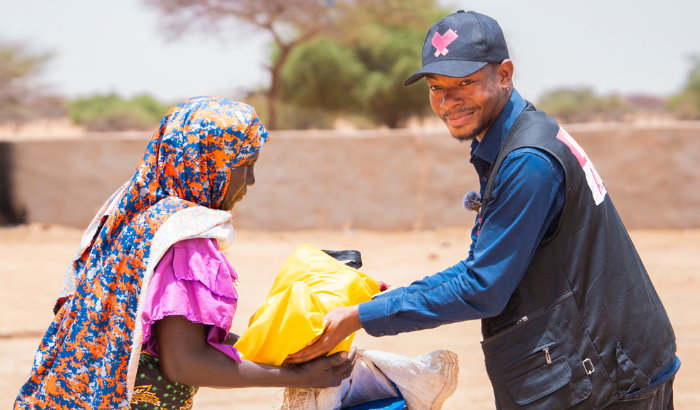
In the case of a proxy sacrifice performed in a country experiencing a humanitarian crisis, the majority or all of the meat is distributed to vulnerable populations. For many beneficiary families, this is the only time of the year they eat meat.
<aside>📌
Image : photo of Qurbani Life NGO distributing meat to families during Eid al-Adha in a beneficiary country — alt : "Qurbani meat distribution Life ONG Eid al-Adha needy families"
</aside>
Sacrifice by Proxy (Al-Wakala): How Does It Work?
Sharia permits entrusting one's Qurbani to a trusted third party to perform it on one's behalf. This is known as the sacrifice by proxy or Al-Wakala. This practice is permissible under Sharia, subject to three essential conditions:
- Trust (Amana) : the mandated organization must be reliable, transparent, and effectively perform the sacrifice according to Islamic standards.
- Adherence to Deadlines : the sacrifice must take place between the 10th and 12th of Dhul Hijjah (May 27-30, 2026).
- Intention (Niyya) : the donor remains the owner of the sacrifice (Sahib al-Udhiya). Their sincere intention at the time of donation is central to the validity of the act.
How to Delegate Your Qurbani to Life ONG in 2026
Life ONG offers a sacrifice by proxy service in several countries where it operates. The process is simple:
- You make your donation online at life-ong.org/aid-al-adha before May 27, 2026
- Life selects an animal that meets Islamic criteria in the chosen beneficiary country
- The sacrifice is performed during the days of Eid, in accordance with local religious and health regulations.
- The meat is distributed directly to families in need.
- You receive a GPS tracking of your donation by email to know exactly where your sacrifice was offered.
Une précision fiscale : en France, le don fait à Life ONG dans le cadre du Qurbani par procuration est éligible à une réduction d'impôt de 66 % du montant versé (dans la limite de 20 % du revenu imposable), Life étant reconnue d'intérêt général. Un reçu fiscal est envoyé automatiquement après votre don. Notre guide complet sur la défiscalisation des dons vous explique comment en bénéficier.
In which countries does Life ONG perform the sacrifices?
Life ONG performs proxy sacrifices in countries where populations are most in need of food aid, particularly in Palestine, Sudan, Mali, and other active humanitarian crisis zones.
To understand the humanitarian situation in these countries and the concrete impact of your Qurbani on the populations, consult our articles on the crisis in Palestine and the crisis in Sudan.
To understand everything about the celebration of Eid al-Adha 2026, consult our article Eid al-Adha 2026: Date, Meaning, and How to Celebrate. And to make the most of the most blessed day before Eid, our article Day of Arafat 2026: Meaning, Fasting, and Virtues explains how to multiply your rewards on May 26th.
<aside>📌
Image : photo of a Life ONG team on the ground during Qurbani distribution, families receiving their share of meat — alt : "Life ONG team distributing Qurbani Eid al-Adha on the ground to beneficiary families"
</aside>
Faites votre don avant le 27 mai sur life-ong.org/aid-al-adha. Animal sélectionné selon les critères islamiques. Suivi GPS de votre sacrifice. Viande distribuée aux familles dans le besoin. Reçu fiscal 66 %. Pôle relation donateur disponible.
Faire mon sacrifice par procuration →Le Qurbani est-il obligatoire ou facultatif ?
Le Qurbani est une Sunna mou'akkada, une pratique fortement recommandée. Pour les musulmans adultes, sains d'esprit, et possédant un patrimoine au-delà du Nisab, beaucoup de savants le considèrent comme proche de l'obligation. Le Prophète (paix sur lui) a dit : "Celui qui en a les moyens mais ne fait pas de sacrifice, qu'il ne s'approche pas de notre lieu de prière." (Sunan Ibn Majah, 3123)
Un seul Qurbani suffit-il pour toute la famille ?
Oui, selon la plupart des savants, un seul Qurbani (un mouton, une chèvre, ou une part de bovin) est suffisant pour l'ensemble du foyer. Il est possible d'en offrir un supplémentaire pour des proches décédés ou en guise d'acte de générosité supplémentaire.
Peut-on faire son Qurbani pour un proche décédé ?
Oui. Il est permis d'offrir un Qurbani au nom de proches décédés, en plus de son propre Qurbani. C'est une forme de Sadaqa jariya, une aumône dont le bénéfice continue après la mort.
Le sacrifice par procuration via une ONG est-il valide islamiquement ?
Oui, à condition que l'organisation mandatée soit fiable, réalise effectivement le sacrifice selon les normes islamiques (animal conforme, délais respectés, prononciation de la Basmala au moment de l'égorgement), et distribue la viande aux personnes dans le besoin. Life ONG remplit ces conditions et fournit un suivi GPS pour confirmer la réalisation du sacrifice.
Jusqu'à quand peut-on donner son Qurbani à Life ONG pour l'Aïd 2026 ?
Life ONG accepte les dons pour le Qurbani jusqu'au soir du 30 mai 2026 (12e jour de Dhul Hijjah). Il est toutefois recommandé de donner le plus tôt possible, idéalement avant le 27 mai, pour permettre à Life de planifier et sécuriser les animaux dans les meilleurs délais. Le pôle relation donateur est disponible pour toute question.
.avif)
Feed a person who is fasting, give Zakah Al Maâl or do a sadaqa.
I give
.png)
.jpg)