
Eid al-Adha 2026: how to share your sacrifice with those in need
.png)
- L'Aïd el-Kébir 2026 est prévue le mercredi 27 mai. C'est la fête du partage par excellence : la tradition islamique recommande d'offrir un tiers de la viande du sacrifice aux personnes dans le besoin.
- Pour des millions de familles dans les pays en crise, l'Aïd est la seule occasion dans l'année de manger de la viande. Votre sacrifice, offert par procuration, peut transformer cette journée.
- Life ONG distribue votre sacrifice en Palestine, au Soudan, au Mali et dans d'autres zones de crise humanitaire, dans le respect des règles islamiques et des principes humanitaires.
- Life fournit un suivi GPS de chaque sacrifice : vous savez exactement où votre Qurbani a été offert et qui en a bénéficié.
- Le pôle relation donateur de Life est disponible pour toutes vos questions avant et après votre don.
Eid al-Adha is more than just a family celebration. From its very origins, it has embodied a dimension of solidarity towards the most vulnerable: it is inherent in the ritual itself. The one-third portion of sacrificial meat designated for those in need is not a minor detail — it is a moral obligation, a natural extension of faith into concrete action.
In 2026, with humanitarian crises reaching record levels, this dimension takes on particular significance. This guide explains how your sacrifice can tangibly change the lives of families across the globe.
Why Eid al-Adha is inherently a celebration of solidarity
The Quran states it clearly: "Neither their meat nor their blood reaches Allah, but what reaches Him from you is piety." (Surah Al-Hajj, 22:37). This verse conveys something essential: what truly matters in the sacrifice is not the act itself, but the intention behind it and what it produces for others.
The distribution of meat into three portions codifies this principle: one-third for one's family, one-third for neighbors and relatives, and one-third for those in need. This structure is part of the prophetic tradition, not an optional choice.
An Islamic saying summarizes this spirit: "Of all this lamb meat, only what you give benefits: what you have eaten is consumed, what you have given is beneficial."
Ce que ça signifie concrètement : pour des millions de familles qui vivent dans des zones de conflit ou de grande pauvreté, l'Aïd el-Kébir est la seule occasion de l'année où elles mangent de la viande. Pas parce qu'elles refusent d'en manger, mais parce qu'elles n'en ont pas les moyens. Votre sacrifice, distribué localement, leur offre non seulement un repas mais aussi la dignité de célébrer l'Aïd comme tout le monde.
The humanitarian reality in 2026: why your sacrifice matters
Humanitarian crises in 2026 are reaching unprecedented levels. The areas where Life ONG operates to distribute Eid al-Adha sacrifices are among the most affected in the world.
In Palestine: in Gaza, families are surviving on less than one meal a day. According to OCHA (March 2026), 46% of essential medicines are out of stock. Meat is a luxury no one can afford. For these families, your sacrifice is a tangible sign that the world has not forgotten them.
In Sudan: according to OCHA (January 2026), over 21 million people are suffering from acute food insecurity. Famine struck several areas in 2025. The meat distributed during Eid is often the only protein source of the year for displaced families.
In Mali: according to OCHA's 2026 Humanitarian Response Plan (February 5, 2026), 5.1 million people are in need of humanitarian assistance. Internally displaced persons account for 415,000 people, 58% of whom are children.
Un chiffre qui dit tout : pour beaucoup de familles bénéficiaires des distributions de sacrifice de Life ONG, l'Aïd el-Kébir est la seule fois dans l'année où elles consomment de la viande. Chaque sacrifice distribué est bien plus qu'un repas : c'est un moment de dignité, de fête partagée, d'appartenance à une communauté qui ne les a pas abandonnées.
<aside>📌
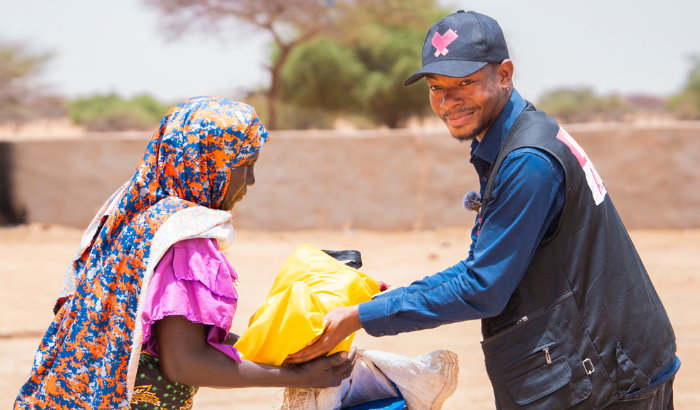
Image : photo of a family receiving their share of sacrificial meat during Eid al-Adha, distributed by Life ONG teams — alt: "Family Eid al-Adha 2026 meat distribution sacrifice Life ONG solidarity"
</aside>
How Life ONG Distributes Your Sacrifice
Life NGO has developed a rigorous process to ensure your sacrifice reaches the right people, under the best conditions, in full compliance with Islamic rules and humanitarian standards.
Animal Selection
Life selects animals directly from local breeders in beneficiary countries. Each animal is chosen according to Islamic criteria: compliant species, required age, good health, and absence of disqualifying defects. Buying locally offers a dual advantage: the freshness of the meat is guaranteed, and the purchase supports the local economy.
The Sacrifice According to Islamic Rules
The sacrifice is performed in accordance with Islamic rules: the recitation of the Basmala, and hygiene conditions compliant with local standards. Life ensures that each sacrifice is carried out during the legal days, between the 10th and 12th of Dhul Hijjah (May 27 to 30, 2026).
Immediate Distribution
The meat is distributed to families within hours of the sacrifice, fresh and in sufficient quantity for a complete family meal. Life's teams identify the most vulnerable families beforehand: internally displaced persons, single-parent families, widows with children, and isolated elderly individuals.
GPS Tracking for Donors
Life NGO provides each donor with a GPS tracking of their sacrifice via email. You receive confirmation that your Qurbani has been performed, along with the precise location of the distribution. This is a rare practice in the sector, illustrating the level of transparency Life commits to. To understand why this transparency is crucial, our article NGO Transparency: How to Verify the Use of Your Donations provides you with all the tools.
<aside>📌
Image : screenshot of a Life NGO sacrifice GPS tracking received by email by a donor — alt : "Suivi GPS sacrifice Qurbani Life ONG Aïd el-Kébir donateur email confirmation"
</aside>
In which countries will Life NGO distribute sacrifices in 2026?
| Pays | Situation humanitaire | Pourquoi votre sacrifice y a de l'impact |
|---|---|---|
| Palestine (Gaza) | Crise alimentaire sévère, accès limité | Viande inaccessible pour la quasi-totalité des familles |
| Soudan | 21 millions en insécurité alimentaire | Famine dans plusieurs zones, déplacements massifs |
| Mali | 5,1 millions dans le besoin | 415 000 déplacés, dont 58 % d'enfants |
| Autres pays | Selon les besoins au moment de l'Aïd | Life s'adapte aux urgences du moment |
To choose your beneficiary country or let Life decide based on the most urgent needs, visit life-ong.org/aid-al-adha. Our donor relations team is available to help you make this choice.
Can I contribute even if I cannot fund an entire sacrifice?
Yes. Life ONG offers flexible contributions for those who wish to participate in the spirit of solidarity of Eid al-Adha without being able to fund a complete sacrifice. These contributions are pooled to fund meat distributions or other food aid programs.
Every contribution counts. For cattle, Life offers shares, allowing several donors to share the cost of the same animal, in accordance with the rule of 7 shares. To understand everything about the rules of sacrifice and the available options, our article Qurbani 2026: Rules of Sacrifice, Prices, and How to Perform it by Proxy answers all your questions.
And to put your gesture in the broader context of the celebration, our article Eid al-Adha 2026: Date, Meaning, and How to Celebrate explains its full spiritual dimension. Also, don't forget that May 26, the Day of Arafat, is the most blessed time to make your donation: our article Day of Arafat 2026: Meaning, Fasting, and Virtues explains all its virtues.
<aside>📌
Image : photo of happy children receiving meat during a Life ONG distribution during Eid al-Adha — alt: "Children Eid al-Adha meat distribution sacrifice Life ONG joy celebration 2026"
</aside>
Faites votre don avant le 27 mai sur life-ong.org/aid-al-adha. Sacrifice réalisé selon les règles islamiques. Suivi GPS envoyé par email. Viande distribuée aux familles les plus vulnérables. Reçu fiscal 66 %. Pôle relation donateur disponible.
Faire mon don pour le sacrifice →Pourquoi faire son sacrifice à l'étranger plutôt qu'en France ?
Faire son sacrifice dans un pays en crise humanitaire maximise son impact. En France, la viande du sacrifice reste dans un contexte où personne ne manque de nourriture. Distribuée en Palestine, au Soudan ou au Mali, cette même viande représente parfois le seul repas protéiné de l'année pour une famille entière. C'est l'esprit même du tiers destiné aux personnes dans le besoin, amplifié à l'échelle mondiale.
Est-ce que le sacrifice réalisé par Life ONG est vraiment conforme aux règles islamiques ?
Oui. Life sélectionne des animaux conformes aux critères islamiques (espèce, âge, santé), fait prononcer la Basmala au moment du sacrifice, respecte les délais légaux (du 10 au 12 Dhul Hijjah), et distribue la viande immédiatement après le sacrifice. Le suivi GPS envoyé au donateur confirme la réalisation de l'acte.
Comment Life ONG choisit-elle les familles bénéficiaires ?
Les équipes de Life et leurs partenaires locaux identifient en amont les familles les plus vulnérables dans les zones d'intervention : déplacés internes, familles monoparentales, veuves avec enfants, personnes âgées isolées. La distribution est organisée pour atteindre ceux qui en ont le plus besoin, dans les heures suivant le sacrifice.
Puis-je choisir le pays bénéficiaire de mon sacrifice ?
Oui. Life ONG propose plusieurs pays bénéficiaires parmi ses zones d'intervention. Vous pouvez choisir un pays spécifique ou laisser Life décider selon les besoins les plus urgents au moment de l'Aïd. Le pôle relation donateur de Life peut vous aider à faire ce choix.
Je ne peux pas financer un sacrifice entier. Puis-je quand même participer ?
Oui. Life ONG accepte les dons libres qui sont mutualisés pour financer des distributions de viande. Pour un bovin, Life propose des parts permettant à 7 personnes de partager le coût d'un même animal, conformément à la règle islamique. Toute contribution, quel que soit son montant, est utile et bienvenue.
.avif)
Feed a person who is fasting, give Zakah Al Maâl or do a sadaqa.
I give
.jpg)