

Child Sponsorship in Gaza: Why it's More Effective Than a One-Time Donation
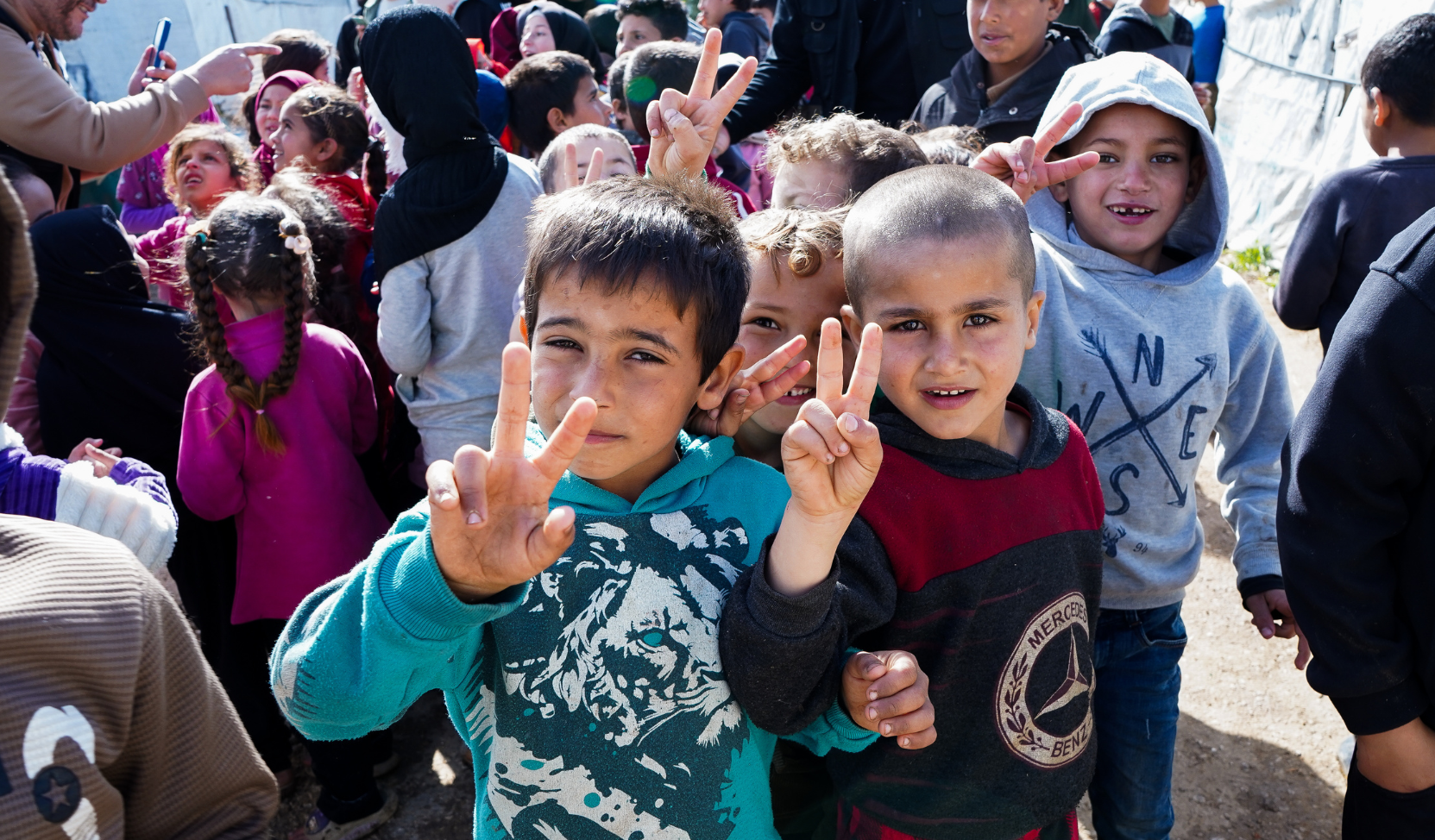
In the face of the Gaza orphan crisis, a question often arises: is it better to make a one-time donation, reacting to what we see in the news, or to commit to regular sponsorship? Both stem from good intentions. But they don't produce the same effect, neither for the child nor for the organization supporting them. Understanding this difference allows for an informed choice.
One-time donation and sponsorship: two different approaches
A one-time donation is a momentary response. You see an unbearable image, you donate, and that gesture funds immediate action: a food parcel, a hygiene kit, an emergency intervention. It's valuable, and even vital in the initial hours of a crisis.
Sponsorship answers a different question. Not "how to help now," but "how to support this child in the months and years to come." Because an orphaned child in Gaza doesn't just need a meal today: they need to eat every month, return to school, receive medical follow-up, and rebuild psychologically. These are all needs that aren't resolved all at once.
It's the difference between putting out a fire and rebuilding the house. Both are necessary. But for a child who has lost everything, it's long-term reconstruction that changes a life trajectory.
Regularity offers tangible operational value
One might think that for an NGO, ten one-time donations are equivalent to one sponsorship of the same amount. In reality, that's not the case, and the reason is very practical.
A serious humanitarian organization doesn't spend money as it comes in. It plans: recruiting and training local teams, signing contracts with merchants, committing to a school year, implementing medical follow-up. All these commitments require knowing, in advance, what resources can be relied upon.
This is exactly what sponsorship enables. By committing to donate €78 each month, a sponsor provides the NGO with a predictability that ten unpredictable donations never offer. The organization can then enroll a child in a school program for the year, without fear of having to interrupt it due to lack of funds three months later.
Conversely, funding composed solely of one-time donations forces organizations to operate without a clear view. You cannot promise a child twelve months of support if you don't know what you'll receive the following month. Regularity is therefore not an administrative convenience: it's what makes long-term aid possible, which is precisely what orphans need.
Image : diagram comparing an irregular flow of one-time donations and a regular flow of sponsorships, and their effect on planning capacity — alt: "Regular sponsorship vs one-time donation Gaza aid NGO planning"
Sponsorship creates a bond that anonymous donations lack
Beyond the financial mechanics, there's a human dimension that one-time donations don't allow for.
When you sponsor, you're not sending a sum to a general fund: you're supporting an identified child. In Life NGO's program, this connection is tangible. A child is assigned to you by name. The support reaches them in the form of vouchers linked to their name. And you receive updates about them, via a member area, throughout the year.
This named traceability answers the question many donors legitimately ask: "Does my aid truly reach someone?". With traceable sponsorship, the answer is verifiable. To understand in detail how this voucher and follow-up system works, our article Sponsoring an Orphan in Gaza: How it Works with Life NGO describes the entire system.
This bond also holds value for the child and their community: knowing that someone, somewhere, has specifically committed to them, changes the nature of the aid received. It's no longer anonymous assistance; it's a relationship.
Why this model is particularly well-suited for Gaza
The context in Gaza strengthens the case for sponsorship over one-time donations, for three specific reasons.
First, the crisis is long-lasting. The needs of Gaza's orphans won't disappear with the next news cycle. They will extend over years, requiring sustained funding rather than a series of one-off responses.
Second, access is unstable. As demonstrated by the closure of several crossing points in early 2026, aid delivery can be abruptly interrupted. A regularly funded local partner can sustain its operations and adapt, whereas one-off aid depends on a logistical window opening at the right time.
Finally, there is no longer a centralized reception structure for these children. Aid must therefore be individualized, child by child, which aligns perfectly with the logic of named sponsorship. To better understand the scale and specificities of this crisis, our article Gaza: 58,000 Orphaned Children, the Largest Crisis in Modern History provides the full context.
Should we, however, abandon one-time donations?
No. One-time donations still serve a real purpose, and it would be absurd to directly oppose them to sponsorship. Both forms address different needs and complement each other.
A one-time donation is the right option if you are responding to a specific crisis peak, if you are discovering an organization and wish to support it for the first time before committing, or if you have a lump sum you want to allocate immediately. In the initial hours of an escalation, one-time donations enable NGOs to act quickly.
Sponsorship is the right option if you want to support a child long-term, with a named connection and ongoing monitoring. To delve deeper into the general comparison between these two forms of generosity, beyond just the case of Gaza, our article Regular vs. One-Time Donations: What's the Impact for an Organization? details the advantages of each. And before committing, make sure to choose a reliable organization with the help of our guide How to Choose a Reputable Humanitarian Sponsorship Organization.
The ideal approach, for those who have the means, is often to combine both: sponsorship for the long term, and a one-time donation during crisis peaks. Life ONG's donor relations department can help you determine the most suitable option for your situation.
.png)