
Food waste vs world hunger: the paradox in figures
- 1.05 billion tonnes of food were wasted worldwide in 2022 according to the latest UNEP report, or 132 kg per inhabitant per year.
- Every day, more than a billion meals are thrown away by households, while 645 million people suffer from hunger.
- 60% of this waste comes from households, 28% from food service and 12% from retail.
- Food waste accounts for 8 to 10% of global greenhouse gas emissions.
- SDG target 12.3 aims to halve global food waste by 2030.
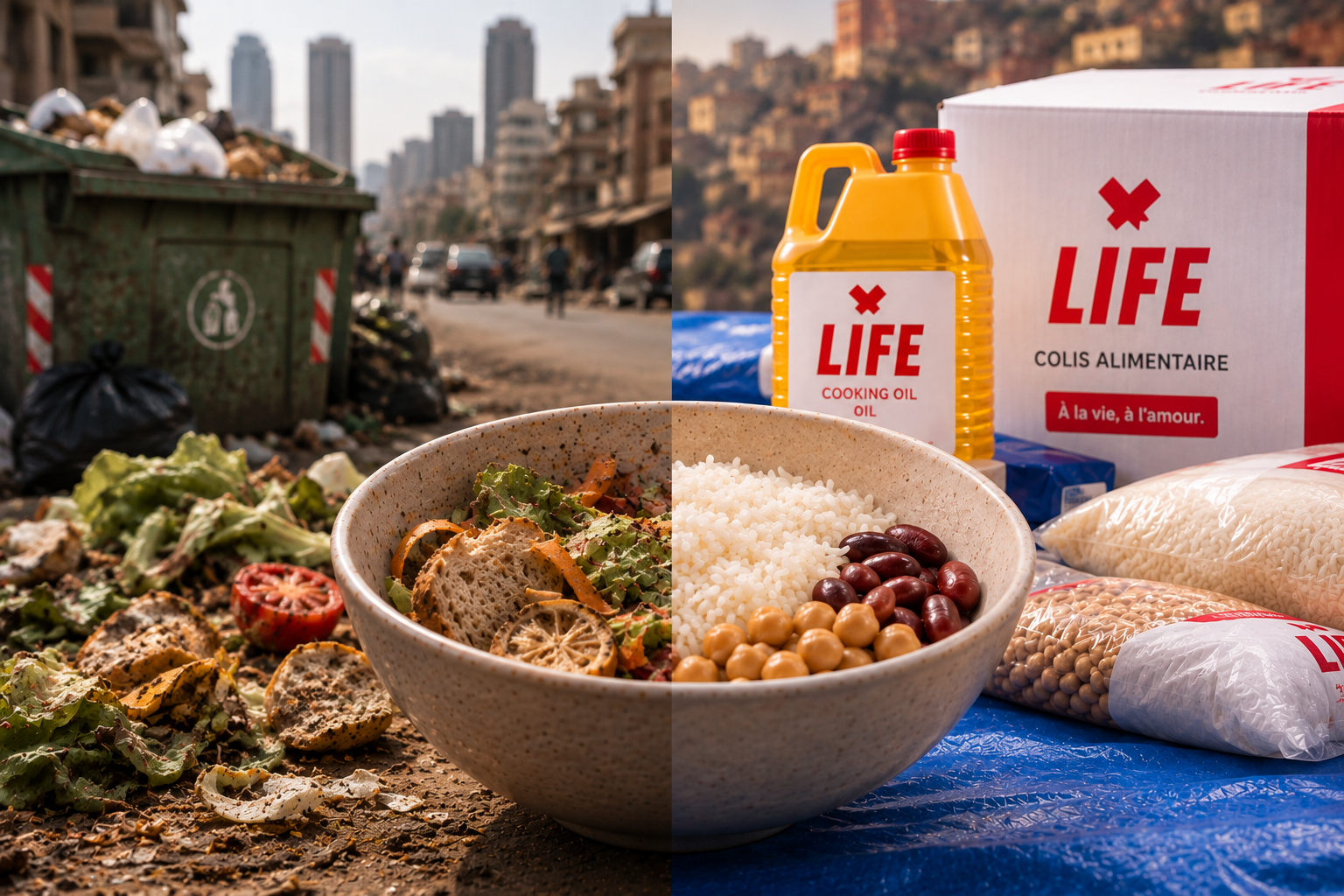
In 2022, humanity threw away more than a billion meals a day in its households. Over the same period, 645 million people did not have enough to eat and two famines had just been officially declared in Gaza and Sudan. The coexistence of these two figures is the most thoroughly documented paradox of our global food system.
This guide reviews the 2026 food waste figures, explains why waste coexists with hunger despite all logic, measures its climate impact and details the levers for action, from everyday habits to supporting a charity.
How much food is wasted worldwide every year?
The benchmark figure comes from the Food Waste Index Report 2024 published by the United Nations Environment Programme (UNEP) in March 2024, using 2022 data: 1.05 billion tonnes of food were wasted, including inedible parts.
Translated to a human scale, that represents:
- 132 kg per inhabitant of the planet, every year.
- 19% of the food available to consumers.
- More than a billion meals thrown away every day, at household level alone.
- 41,200 kg of food thrown away every second around the world.
If you add upstream losses (before the retail stage: farming, processing, transport, storage), the FAO puts the total at around 1.3 billion tonnes, or one third of all global food production intended for human consumption.
Food loss refers to the quantities lost before the retail stage: it dominates in countries of the Global South, because of limited logistics infrastructure and cold chains. Food waste covers the retail, food service and household stages: it dominates in countries of the Global North.
Where and by whom is food wasted?
The geography of waste follows a clear pattern: the more developed a country is, the more it wastes downstream. The poorer it is, the more it loses upstream.
The breakdown of global waste (UNEP 2024 report)
| Source | Share of total waste | Context |
|---|---|---|
| Households | 60% | Over-buying, poor storage, leftovers thrown away |
| Food service | 28% | Oversized portions, unsold food |
| Retail | 12% | Stock rotation, cosmetic standards |
The 2024 report corrects an important misconception: waste is massive in almost every country, whatever its income level. It is not the preserve of wealthy nations. Emerging and low-income countries show per-capita waste volumes very close to those of developed countries as soon as urbanisation progresses.
Focus on France: 10 million tonnes a year
In France, the environment agency ADEME puts food waste at around 10 million tonnes a year across all stages, including some 30 kg per inhabitant at household level. The 2016 Garot law banned food retailers larger than 400 m² from throwing away edible unsold food, requiring them to sign donation partnerships with charities. The result: more than 250 million meals recovered every year by French food banks thanks to this scheme.
The paradox: why throw away so much when 645 million people are hungry?
The comparison is brutal. 1.05 billion tonnes wasted against 645 million undernourished people. Converted into calories, global annual waste would in theory be enough to feed everyone who goes hungry several times over.
So why does it not happen? Three structural reasons.
The food thrown away is not in the right place. Waste is mostly concentrated in households in wealthy countries or in urban supply chains. Hunger is concentrated in rural areas of conflict-affected countries, with no logistics infrastructure to receive that food, even if it were redirected.
The cost of recovery often exceeds the value recovered. Sorting, transporting, refrigerating and redistributing unsold food is expensive. To be economically viable, redistribution has to be local and fast, which mechanically rules out part of the flows.
The market is built for production, not for fair distribution. The planet produces 4,600 kilocalories per person per day, easily enough to feed 12 billion people. The question is not producing more, it is distributing better. Our detailed analysis of food insecurity: causes and lasting solutions explores this point in depth.
What is the environmental impact of food waste?
Beyond the human paradox, food waste is a quantified ecological disaster.
UNEP estimates that food loss and waste generate 8 to 10% of global greenhouse gas emissions, more than the entire global aviation sector. The FAO goes further: if food waste were a country, it would be the third largest emitter in the world behind China and the United States.
The main mechanism at play is the methane produced by the anaerobic decomposition of food waste in landfill. According to the IPCC, this gas is around 80 times more powerful than CO₂ over a 20-year horizon.
On top of that come the resources wasted upstream to produce food that is never eaten:
- The fresh water needed for agricultural production, much of which is already under stress in arid areas.
- The farmland mobilised for nothing, often at the cost of deforestation.
- The energy consumed to process, transport, refrigerate and package.
To understand how your diet weighs in your personal carbon footprint, read our guide on calculating your carbon footprint.
Of the 8 to 10% of global emissions linked to food waste, half could have been avoided through simple behavioural changes at household level. It is the most effective individual climate lever after cutting private car use.
What is being done globally to fight food waste?
Target 12.3 of the Sustainable Development Goals sets the course: halving global per-capita food waste by 2030 at retail and consumer level, and reducing losses along supply chains. This target commits every signatory state.
On the ground, three families of action work together.
National public policy. The 2016 French Garot law is a pioneering example: a ban on throwing away unsold food, a duty to partner with charities, and fines for non-compliance. Since then, Italy, Spain and several US states have adopted comparable schemes.
Innovations from the private and non-profit sectors. Apps selling unsold food at cut prices (Too Good To Go, Phenix), peer-to-peer sharing platforms (Olio), AI stock forecasting for supermarkets: tech has invested heavily in the issue since 2015.
International programmes. The WFP (World Food Programme), the FAO with its Save Food initiative and UNEP run programmes specifically targeting post-harvest losses in the Global South: airtight silos, solar cold chains, training for smallholder farmers.
The bridge between waste and hunger: what humanitarian NGOs do
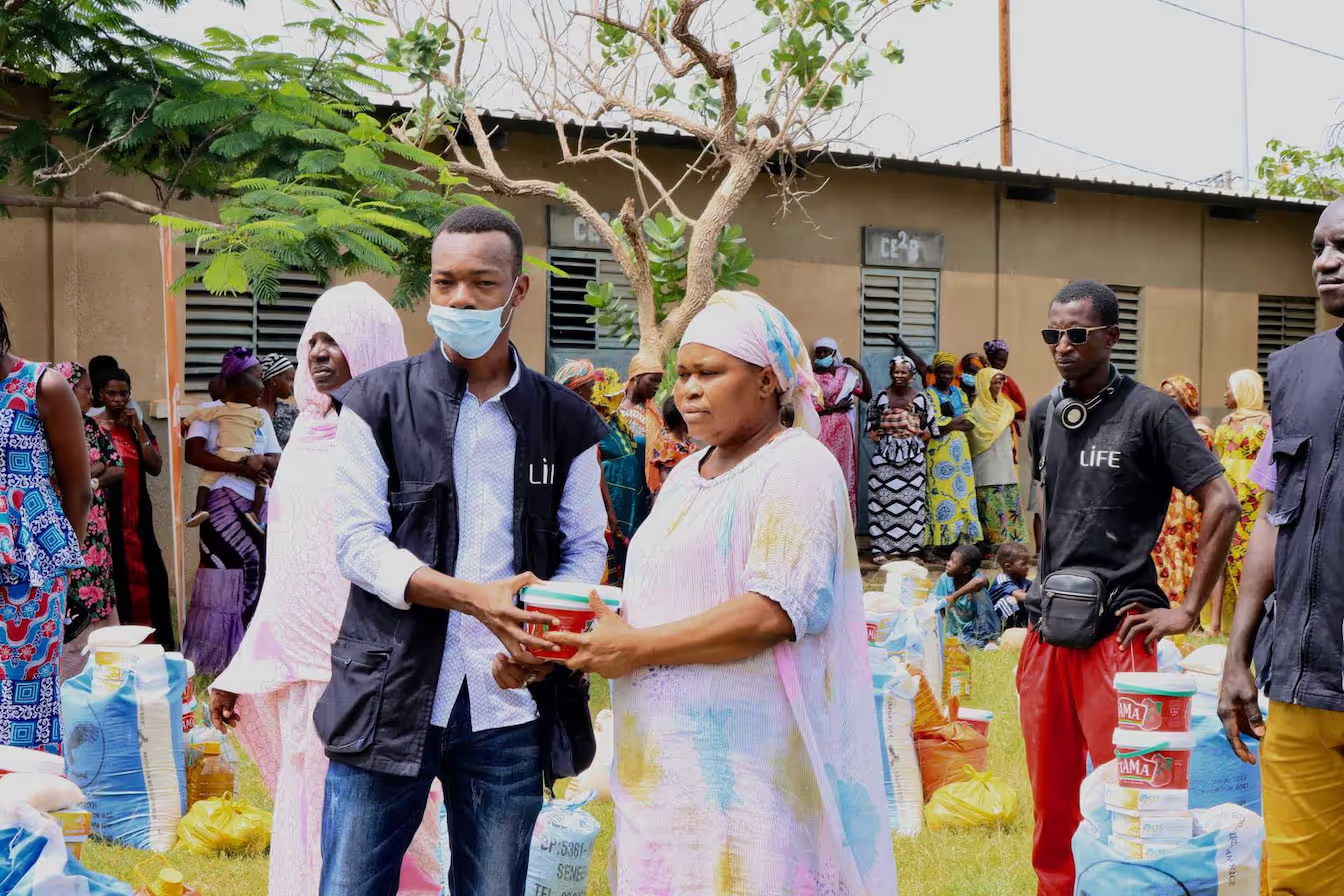
A humanitarian organisation such as LIFE ONG plays a precise role in this equation. It does not physically collect unsold food from French households, but it applies the principles of logistics optimisation and local purchasing that bring the cost of a meal down to one euro.
Local purchasing avoids transport losses. When LIFE ONG buys rice in Cambodia or chickpeas in Lebanon for its distributions, it shortens the supply chain, which cuts both emissions and losses in transit.
Targeted distribution maximises use. Distributions are based on precise needs assessments, which avoids ending up with unsold surplus. Every kilo distributed is eaten.
Supporting food sovereignty tackles the root cause. Training farmers, distributing resilient seeds, building irrigation wells: these actions give local communities the means to produce for themselves while limiting post-harvest losses. This is the full subject of our dedicated article on food sovereignty.
Every euro given to LIFE ONG funds a full meal in one of our 25 countries of intervention. Local purchasing, short logistics chains, targeted distribution: waste is kept to a minimum.
Offer a meal today →How can you act against food waste at your own level?
At household level, a few simple habits are enough to cut domestic food waste by 30 to 50%.
Plan your meals and your shopping. Writing a shopping list based on a weekly menu avoids over-buying and ending up with surplus rotting in the fridge.
Understand expiry dates. The best-before date is not a use-by date: it indicates optimum quality. The use-by date on fresh products is stricter, but usually still comes with a safety margin.
Store food properly. Cold-sensitive fruit and vegetables (tomatoes, bananas) outside the fridge, fresh products in the right compartments, systematic freezing of leftovers.
Cook your leftovers. A soup to use up tired vegetables, a savoury cake to use up proteins, a mixed salad to finish everything off: the most effective everyday anti-waste habit.
Use anti-waste apps. Too Good To Go and Phenix let you buy unsold food from local shops at reduced prices and save several million meals a year in France.
Support NGOs that optimise food aid. A donation to a charity such as LIFE ONG or Restos du Cœur directly funds distributions with low loss rates, structurally more efficient than anything an individual could redistribute.
How much food is wasted worldwide every year?
The latest UNEP report (Food Waste Index 2024) puts waste at 1.05 billion tonnes in 2022, at retail, food service and household level only. Adding upstream losses (farming, processing, transport), the FAO estimates the total at 1.3 billion tonnes, or one third of global food production intended for human consumption.
How many meals could be offered with all this wasted food?
According to UNEP estimates, wasted food is equivalent to more than a billion meals a day worldwide. In caloric terms, it would cover several times over the needs of the 645 million undernourished people identified in the 2026 SOFI report. The problem is therefore not the quantity produced, but distribution and access.
Which country wastes the most food in the world?
In absolute volume, China and India come first, largely because of their population size. Per capita, the gaps are smaller than people think: the 2024 UNEP report showed that household waste per inhabitant is comparable between high, middle and low income countries, at around 79 kg per person per year for the edible share.
Why does the Garot law matter?
The 2016 Garot law is the first law in the world to ban food retailers larger than 400 m² from destroying edible unsold food. It requires them to sign a donation agreement with at least one accredited charity. Since then, more than 250 million additional meals have been recovered each year in France by food banks thanks to this scheme, with a demonstration effect for several neighbouring countries.
What is the difference between food loss and food waste?
Food loss refers to the quantities lost between harvest and the retail stage: poor storage conditions, no cold chain, faulty transport. It dominates in countries of the Global South. Food waste covers losses at the retail, food service and household stages. It dominates in countries of the Global North and in emerging urban areas.
Does reducing my own waste really help fight hunger?
Directly, not much: the food you do not buy for your home does not end up in Gaza or Sudan. Indirectly, yes: by reducing final demand, you help moderate global prices, limit pressure on farmland and cut the greenhouse gas emissions that worsen the climate crises behind much of the world's food insecurity. The most effective complement remains a direct donation to an NGO distributing food in famine-hit areas.
.png)