
Funding a borehole: the differences between a well and a borehole

- A traditional well is a wide, shallow hole that collects surface water and rainwater seepage. A borehole is a narrow, deep structure that reaches underground aquifers.
- The decisive difference: a well depends on rainfall and the seasons, while a borehole delivers a steady flow even in the dry season.
- In health terms, a borehole draws water that is naturally better protected from surface contamination, whereas a shallow well remains exposed to run-off and livestock.
- A borehole costs more to build and requires machinery and expertise, but it serves more people and lasts longer.
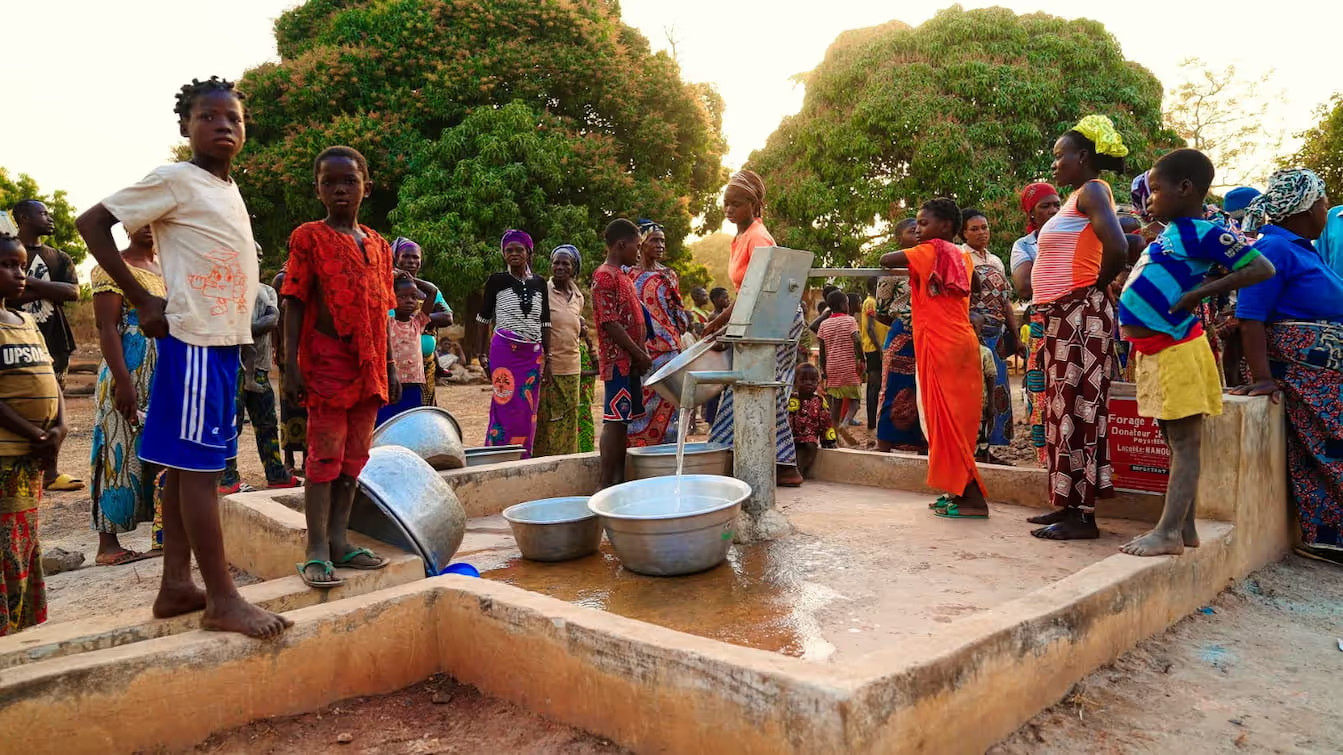
- At Life ONG, a village well is drilled to around 20 metres and fitted with a pump: it serves about 500 people for €2,650 in Africa.
In everyday language, we call everything a “well”. On the ground, however, the distinction between a traditional well and a borehole changes everything: the amount of water available, its sanitary quality, and the village's ability to get through the dry season. Here is what sets them apart, explained simply.
What is a traditional well?
A traditional well is the picture-book image: a wide hole, often around one metre across, dug by hand or with small machines. Its depth stays modest, generally between 5 and 25 metres.
How it works is the key point to grasp: it does not go looking for water, it waits for it. The well fills by seepage, when rainwater passes through the surface layers of the soil and gathers in the excavation, and from the surrounding surface water.
This creates two major limitations. First, it only works on permeable soils: on ground that does not let water seep through, it will never fill properly. Second, and above all, it depends entirely on the seasons. In the rainy season, water is plentiful. In the dry season, it becomes scarce, or disappears altogether. Exactly when the village needs it most.
Because it collects surface water and shallow seepage, a traditional well remains exposed to run-off, livestock and open defecation nearby. That is precisely the route by which waterborne diseases spread. Our article Water and health: how access to water reduces childhood illness explains this mechanism in detail.
What is a borehole?
A borehole is the opposite of a well on almost every count. Where a well is wide and shallow, a borehole is narrow and deep. Where a well waits for water, a borehole goes and finds it.
Technically, a specialised rig drills into the ground until it reaches an underground aquifer, often between 25 and 80 metres down, sometimes far deeper depending on the geology. Casing is then inserted to protect the shaft and filter the water, and a pump is installed to bring it up.
The advantages are immediate. The flow rate is far higher and, above all, steady, including during the dry season, because a deep aquifer does not empty in step with the rains. And the water drawn is naturally better protected from surface contamination.
There is one rarer special case: the artesian well, where the aquifer is under natural pressure. The water then rises to the surface on its own, without pumping. This depends entirely on local geology and cannot be planned for.
Well or borehole: the comparison table
To make things clear, here are the differences summed up.
| Criterion | Traditional well | Borehole |
|---|---|---|
| Depth | Around 5 to 25 m | 25 to 80 m, sometimes far more |
| Diameter | Wide (around 1 m) | Narrow |
| Water collected | Surface water and seepage | Deep underground aquifer |
| Flow rate | Low and variable | High and steady |
| Dry season | Empties or runs dry | Keeps working |
| Health protection | Exposed to run-off | Better protected |
| Construction | By hand or with simple machines | Specialised machinery and expertise |
| Initial cost | Lower | Higher |
| Beneficiaries | A few families | An entire village |
This table explains why serious humanitarian projects overwhelmingly favour boreholes, despite their higher cost. The point is not to spend more, but to build something that will last and carry the village through the dry seasons.
Why do humanitarian projects choose boreholes?
Three reasons explain this choice, and they make complete sense from inside a village.
1. Drought is unforgiving. A water point that runs dry in the dry season solves nothing: it forces families back into walking for hours, at exactly the worst time of year. A borehole holds out. That is decisive in a context where climate change is intensifying droughts. Our article Drought in Africa: causes, consequences and lasting solutions goes further into this point.
2. The number of beneficiaries. A low flow rate serves a few families. A high, steady flow rate serves an entire village. Measured as a cost per person, a borehole becomes considerably more effective, even though each unit costs more.
3. Health. Drawing from a deep aquifer rather than surface water removes at source much of the risk of faecal contamination, the main driver of waterborne illness in children.
How Life ONG works in practice
Life ONG's water programme is built on this logic. The village well is drilled to around 20 metres and fitted with a mechanical or electric pump. It serves about 500 people.
The specification covers the whole technical chain: a soil study by a geologist to locate the aquifer, drilling, casing to protect and filter, pump installation, a concrete apron to prevent contamination, laboratory testing for drinking-water quality, and training of a village management committee for maintenance.
Funding stands at €2,650 in Africa and €2,300 in Asia, on a single, solidarity-based pricing principle. After the 66% tax reduction, a well in Africa actually costs around €901. For the budget breakdown, our article How much does a well in Africa cost? details each line item, and for the course of the works, our article Building a well in Africa: steps, costs and real impact follows the 7 stages.
The technique used must fit the terrain, not the other way round. That is the purpose of the preliminary geological study: depending on the depth of the aquifer, the nature of the soil and the number of inhabitants, the team determines the most durable solution. A serious organisation will never sell you a standard technique without having studied the ground first.
Discover Life ONG's water programme: €2,650 for a structure that serves around 500 people, or €901 after the tax reduction. GPS tracking, photos and a commemorative booklet. A donor relations team is available.
Discover the water programme →What is the difference between a well and a borehole?
A traditional well is a wide, shallow hole (around 5 to 25 m) that collects surface water and rainwater seepage. A borehole is a narrow, deep structure (25 to 80 m, sometimes more) that reaches an underground aquifer. A borehole delivers a steady flow even in the dry season, whereas a well depends on the rains.
Why is a borehole more expensive than a well?
Because it requires specialised machinery, technical expertise and more time to drill deeper. But measured against the number of beneficiaries and its lifespan, it often works out cheaper per person served, while providing safer water available all year round.
Does a borehole provide healthier water?
Yes, generally. A borehole draws from a deep underground aquifer that is naturally better protected from surface contamination. A shallow well remains exposed to run-off, livestock and open defecation, the main vectors of waterborne disease. In both cases, laboratory testing for drinking-water quality remains essential.
What is an artesian well?
It is a special type of borehole that reaches an aquifer under natural pressure. The water then rises to the surface on its own, with no need for pumping. This configuration is rare and depends entirely on local geology: it cannot be planned for, it is discovered during the site study.
What solution does Life ONG put in place?
A village well drilled to around 20 metres and fitted with a mechanical or electric pump, serving about 500 people. The specification includes the geological study, drilling, casing, the pump, the apron, drinking-water testing and training of a village management committee. Cost: €2,650 in Africa, or around €901 after the tax reduction.