
Food donation: how to give effectively to feed those most in need
- A food donation can take five forms: food items, money, equipment, time and corporate giving.
- In France, the Banques Alimentaires food bank network distributes 223 million meals a year to 2.4 million people through 6,044 partner charities.
- Internationally, LIFE has distributed more than 72 million meals across 25 countries in 15 years through its “1 euro = 1 meal” campaign.
- Financial giving is generally more effective than giving food items, because it allows bulk purchases tailored to real needs.
- Any donation to a recognised charity qualifies for a 66% income tax reduction, capped at 20% of taxable income.
In France, 2.4 million people now rely on food aid, a figure that has risen steadily since the inflation crisis of 2022. Worldwide, 645 million people suffer from chronic undernourishment according to the 2026 SOFI report. Faced with these needs, giving helps — but not every way of giving is equally useful.
This guide reviews the main charities you can direct a food donation to, the five possible formats (food, money, equipment, time, corporate giving) and the simple rules that make every euro or every kilo genuinely count.
What exactly is a food donation?
A food donation is any contribution — material or immaterial — intended to fund, supply or facilitate food aid for people living in poverty. It covers four broad categories, often combined.
Giving food items is the most intuitive: rice, pasta, tinned goods, milk, nappies. In France this happens mainly during the annual National Food Drive run by the Banques Alimentaires, on the last weekend of November in supermarkets.
Financial giving is the most flexible: it lets the charity buy exactly what it needs, at the fairest price, when it needs it.
Non-food in-kind giving covers equipment: refrigerated vehicles, crates, pallets, hygiene products, donated premises or warehouses.
Giving time — in other words volunteering — is the fuel of the sector: more than 130,000 volunteers keep the Banques Alimentaires and the Restos du Cœur running in France.
Which charities should you give to in France?
The French food aid landscape is built on two levels: collection networks (which centralise food supplies) and frontline charities (which distribute them to beneficiaries).
The major French networks
| Charity | 2024-2025 figures | Model |
|---|---|---|
| Banques Alimentaires | 128,239 tonnes collected, 223 million meals, 2.4M people helped | Collection + redistribution to 6,044 partner charities |
| Restos du Cœur | 161 million meals distributed | Direct distribution, integrated supply chain since 1985 |
| Secours Populaire | Broad food aid + social support | Direct distribution |
| French Red Cross | Food distribution at reception centres | Direct distribution |
| ANDES | Network of 400 solidarity grocery stores | Low-cost sales to beneficiaries |
| La Chorba | Hot meals in and around Paris | Mobile kitchen and distribution |
The Banques Alimentaires network works on a pyramid principle: 79 regional food banks plus 29 branches collect food from manufacturers, from large retailers (under the Garot law) and from individuals, then redistribute it free of charge to local charities that handle direct contact with beneficiaries.
How does the National Food Drive work?
On the last weekend of November each year, the Banques Alimentaires organise a food drive in partner supermarkets. Shoppers buy products and hand them straight to volunteers stationed past the checkouts. A single day can account for up to 20% of the food collected over the whole year. The most needed products are: tinned vegetables and fish, pasta and rice, oil, coffee, hygiene products and baby food.
And internationally? Humanitarian NGOs feeding people in crisis zones
In France, food insecurity affects 2.4 million people. Globally, hunger affects 645 million people according to the 2026 SOFI report, with extreme situations in Gaza, Sudan, Haiti and Yemen. Humanitarian NGOs are mobilised on these fronts.
The main international food aid NGOs
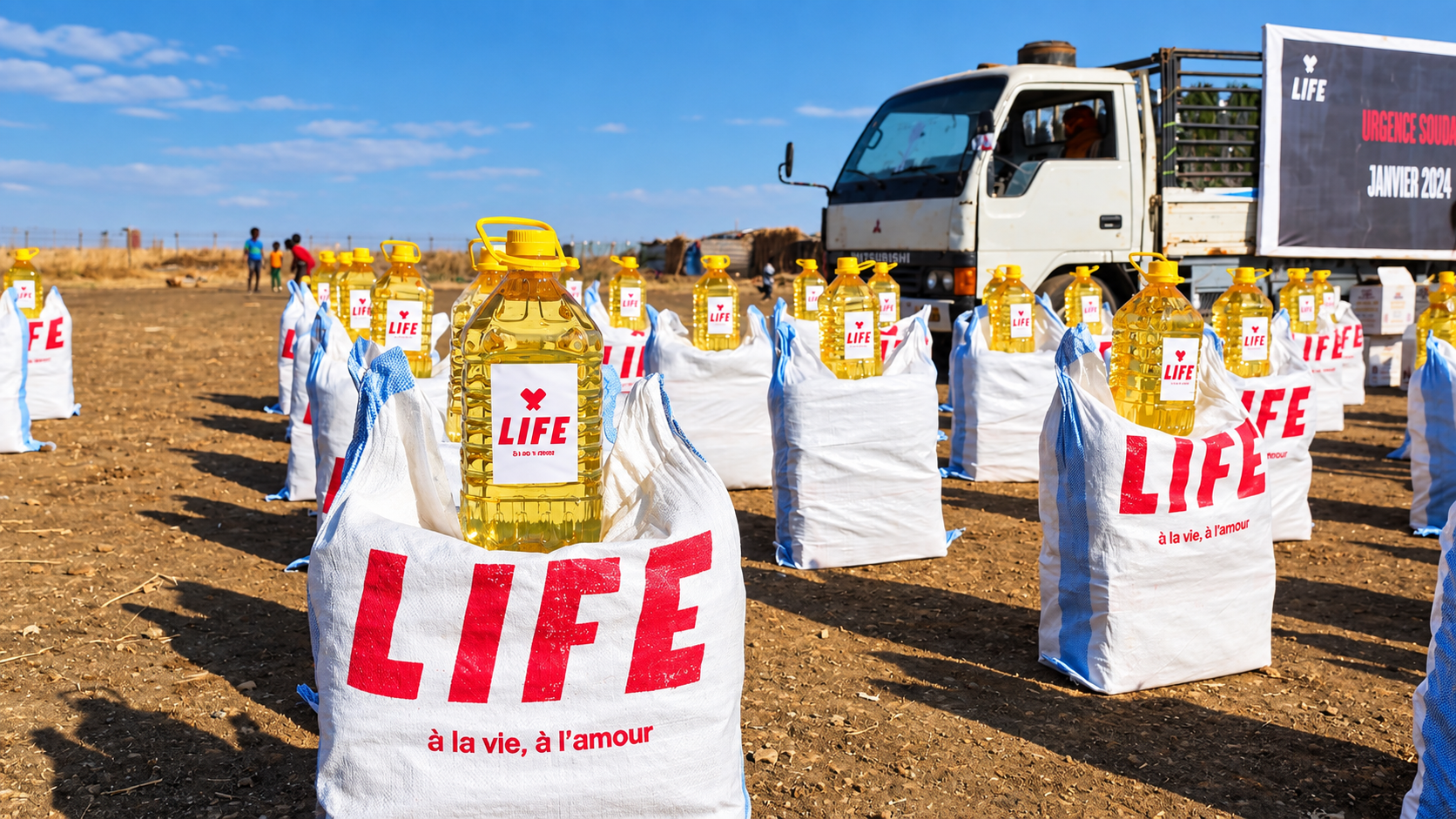
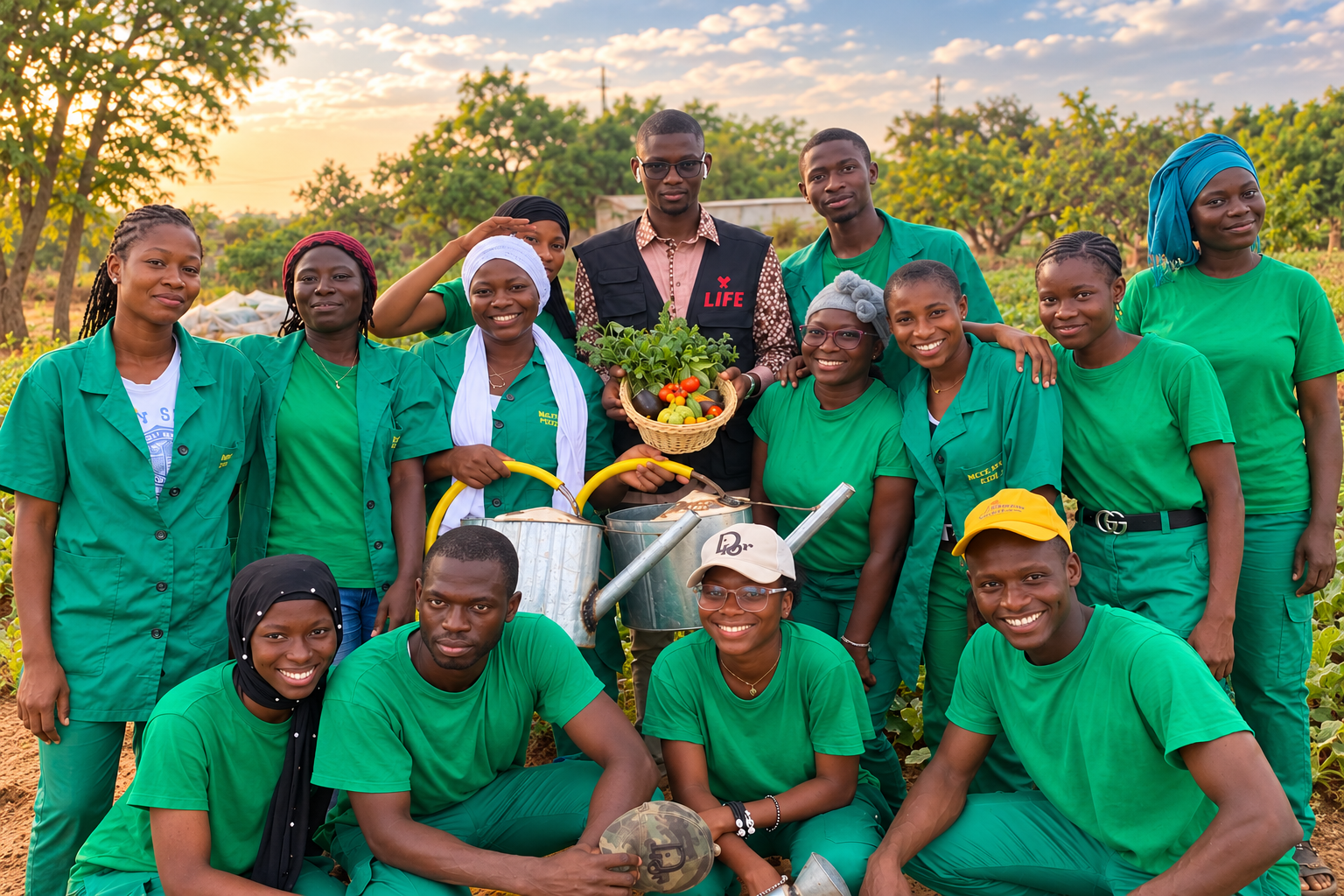
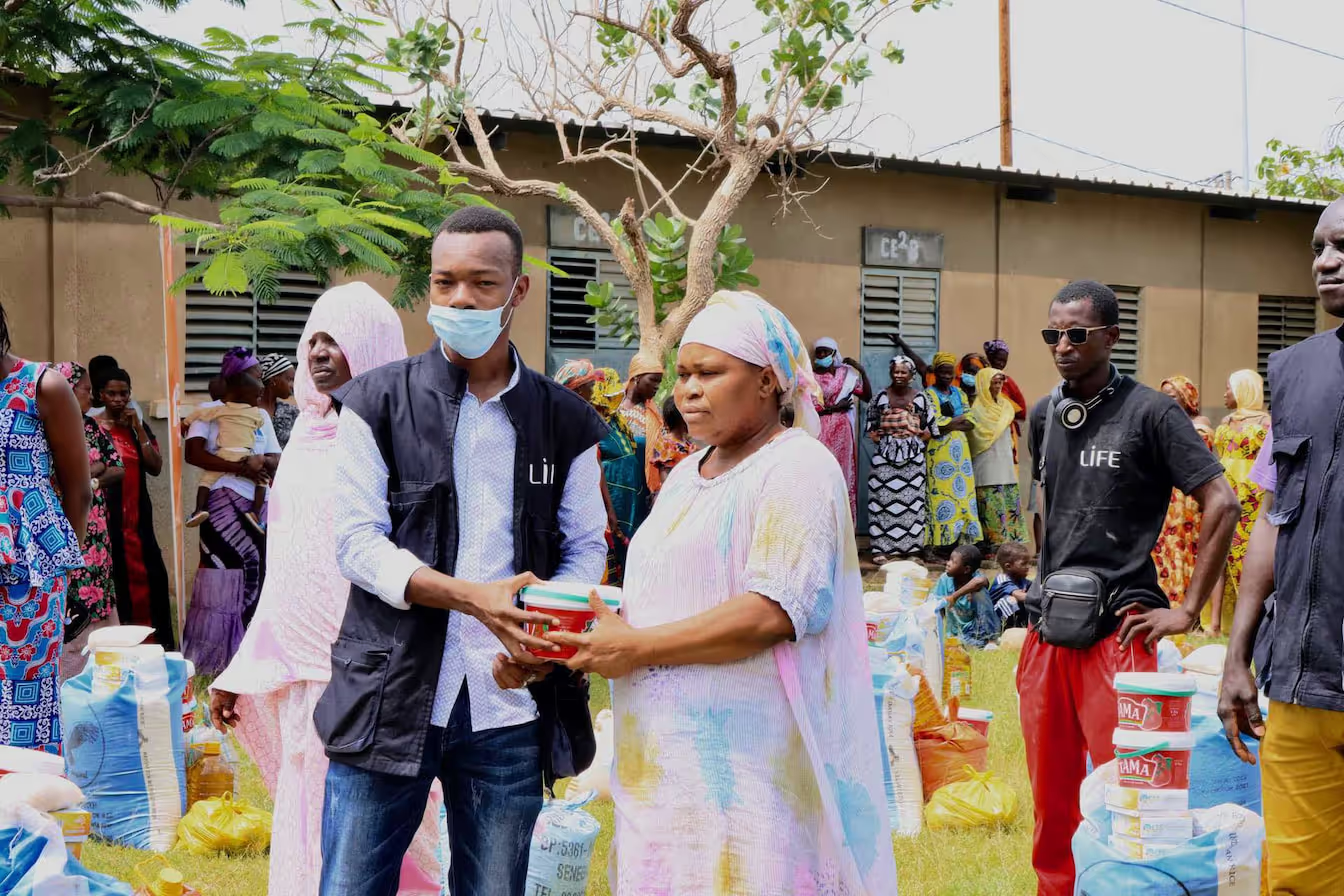
LIFE ONG is a French charity founded in 2009 that works in 25 countries, mainly in humanitarian crisis zones (Gaza, Sudan, Lebanon, Palestine, Cambodia, Burkina Faso). Its flagship “1 euro = 1 meal” campaign has delivered more than 72 million meals in 15 years. Our in-depth analysis 1 euro = 1 meal: how one euro can feed a person explains exactly how this works.
Action Contre la Faim specialises in emergency nutrition, particularly for children suffering from severe acute malnutrition.
The World Food Programme (WFP) is the UN agency fighting hunger, active in more than 120 countries.
Care France, Handicap International and Solidarités International also run food-related components within their programmes.
Which type of donation should you choose?
The best donation is not necessarily the most visible one. Here is how to direct your contribution depending on what you want to prioritise.
Giving food items
When it helps. During organised food drives, when a charity states that it is short of a specific product (announcements on their website), or to clear out long-life food from a cupboard before moving house.
What to give. Non-perishable, unopened products with a use-by or best-before date at least 2 months away: tinned goods, pasta, rice, coffee, oil, baby products, hygiene products.
What to avoid. Fresh products (the cold chain has been broken), opened products and expired products — charities cannot redistribute them, even a few days past the date.
Financial giving
Why it is often the most effective. The charity buys at wholesale prices, selects what is genuinely missing and sends it where it is needed. Statistically, one euro donated becomes more food than one euro spent at retail prices by an individual.
One-off or recurring. Monthly giving is especially valuable: it gives the charity the visibility it needs to plan purchases and negotiate framework contracts with suppliers. A direct debit of €20 a month represents around 240 meals over the year through the LIFE campaign.
Giving time (volunteering)
The fuel of the sector. Without volunteers, the food aid model collapses. The Banques Alimentaires mobilise more than 6,800 of them, the Restos du Cœur more than 75,000. You can give a few hours a week, one weekend a month, or just for the November National Food Drive.
How to start. The official French government platform jeveuxaider.gouv.fr lists current needs by city and by cause. You can also contact your local charity directly through its website.
Corporate giving and philanthropy
Three main forms. Financial sponsorship (a cash donation from the company), in-kind sponsorship (donating unsold products, mandatory for large retailers since the Garot law) and skills-based sponsorship (making employees available).
The tax side. Corporate philanthropy qualifies for a 60% corporation tax reduction, capped at 0.5% of pre-tax turnover, with a ceiling of 2 million euros.
How to give effectively: 5 rules for a useful donation
- Regular rather than one-off: a monthly direct debit has more impact than one large annual gift.
- Money rather than food outside food drives: unless a specific need is stated, money is more flexible.
- Check reliability: social mission ratio, published accounts, tax receipt.
- Don't forget the tax reduction: 66% off, and often overlooked.
- Match the context: emergency (Gaza, Sudan) or long term (agriculture, schools).
The first thing to do when vetting a charity is to read its annual activity report, which is publicly available, and look at the share of spending allocated to social missions: above 80% is a good indicator. Our dedicated article How to recognise a humanitarian charity you can trust sets out all the criteria.
How much to give, and what impact will your euros have?
The figures below give orders of magnitude observed in 2026 across the main food donation campaigns.
| Amount | Estimated impact (LIFE “1 euro = 1 meal” campaign) | Real cost after tax reduction |
|---|---|---|
| €20/month | 240 meals/year | €81.60/year net |
| €50 one-off | 50 full meals | €17 net |
| €100 one-off | 100 full meals, or 1 family food parcel | €34 net |
| €300 one-off | Feeds a family for a month | €102 net |
The Banques Alimentaires use a different conversion suited to their logistics: a €5 donation funds around 25 meals thanks to pooling with food collected free of charge from manufacturers.
Is a food donation tax deductible?
Yes, if the receiving charity is recognised as being of general interest or public utility. That is the case for LIFE, the Banques Alimentaires, the Restos du Cœur and most French humanitarian NGOs.
The applicable rate. Article 200 of the French General Tax Code provides for an income tax reduction of 66% of the amount donated, capped at 20% of taxable income. For organisations helping people in hardship (the “Coluche” scheme), the rate rises to 75% within a limit of €1,000 per year.
In practice. A €100 donation entitles you to a €66 tax reduction, so the gift actually costs you €34. A monthly €20 donation comes to €81.60 net over the year. For a complete overview of the tax mechanisms, our tax reduction on humanitarian donations page details every threshold, ceiling and special case.
The LIFE simulator instantly calculates how much your donation will really cost you after the tax deduction, based on your own situation.
How to act with LIFE: every euro becomes a meal
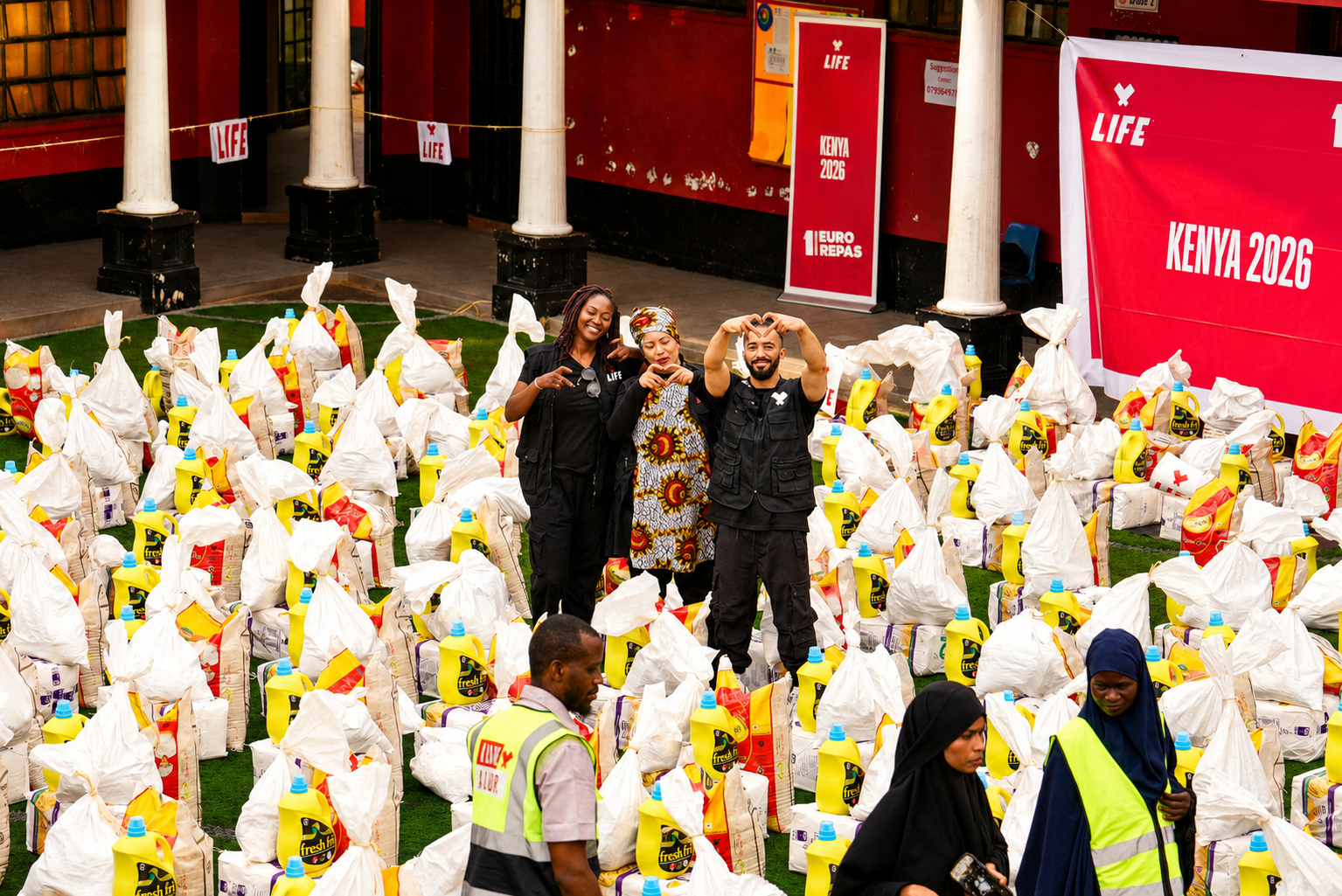
LIFE specialises in emergency food aid in humanitarian crisis zones. The “1 euro = 1 meal” campaign turns your donation directly into a meal distributed in the field, thanks to local purchasing and partnerships with trusted local organisations.
A donation of €20/month funds 240 meals a year in one of the 25 countries where LIFE works. After the 66% tax deduction, your monthly commitment costs you only €6.80 net per month.
Donate to LIFE today →Which is the best charity for a food donation in France?
There is no “best” charity in absolute terms — it depends on your goal. To act directly on poverty in France, the Banques Alimentaires (223 million meals a year) and the Restos du Cœur (161 million) are the two largest networks. To act internationally in crisis zones, LIFE (72M meals in 25 countries), Action Contre la Faim and the WFP are the reference points. What matters is choosing a charity recognised as being of general interest, with a public annual report and a strong social mission ratio.
Is it better to give food or money?
Outside organised food drives (the Banques Alimentaires in November), money is almost always more effective. The charity buys at wholesale prices, selects the products that are genuinely missing and avoids the handling costs that come with mixed donations from individuals. One exception: giving unopened surplus food to the National Food Drive remains very useful, because those items then enter an organised supply chain.
Can I give my surplus food to a charity?
Yes, under certain conditions. Most charities only accept unopened products with a consumption date at least 2 months away. Donations from individuals outside food drives are often hard to process because of traceability issues: the Banque Alimentaire, for example, prefers to direct individuals towards the November National Food Drive. For businesses, the Garot law organises the systematic donation of unsold goods by large stores.
Is there a minimum amount to qualify for the tax reduction?
There is no minimum: any donation, even €10, qualifies for the 66% tax reduction, provided the charity issues you a valid tax receipt. That receipt must accompany your income tax return. Note that the reduction is capped at 20% of your taxable income for the year.
Is it better to give to a small or a large charity?
Both have their place. Large charities such as the Banques Alimentaires or LIFE offer significant economies of scale: each euro goes further. Small local charities can work more precisely with specific groups (students, homeless people, single-parent families in a given neighbourhood). The safe rule: in every case, check that the charity is recognised as being of general interest and publishes its accounts.
Can I set up a fundraising page for a collective donation?
Yes. Most large charities, including LIFE, offer an online solidarity fundraising tool. You can create one for a wedding, a birthday, a school project or a sporting challenge. The funds go straight to the charity, with a tax receipt for every contributor. It is an effective way to multiply the impact of your commitment.
.png)