
Crisis in Sudan: Understanding the Situation and Knowing Where to Donate
.png)
- Le Soudan traverse la pire crise humanitaire et la plus grande crise de déplacements de population au monde, selon l'OCHA. Le conflit oppose les Forces armées soudanaises (FAS) aux Forces de soutien rapide (FSR) depuis avril 2023.
- Selon les données de l'ONU publiées en janvier 2026 à l'occasion des 1 000 jours de guerre : 9,3 millions de personnes déplacées à l'intérieur du pays, 4,3 millions réfugiés à l'étranger, plus de 21 millions en insécurité alimentaire aiguë.
- L'accès humanitaire reste gravement entravé : convois bloqués, travailleurs humanitaires pris pour cible, visas refusés aux ONG.
- Life ONG intervient au Soudan avec des programmes d'aide alimentaire et d'accès aux soins de base, via des partenaires locaux.
- Le pôle relation donateur de Life est disponible pour répondre à toutes vos questions sur les opérations en cours.
The crisis in Sudan is one of the least covered by the media, yet it is one of the most severe globally. Since the outbreak of fighting in April 2023, the country has descended into a spiral of violence, displacement, and deprivation, which the UN officially describes as the world's worst humanitarian and displacement crisis.
This guide explains what is happening, why it's so serious, and how you can make a tangible contribution from France.
What is the situation in Sudan in 2026?
The conflict has pitted the Sudanese Armed Forces (SAF) against the paramilitary Rapid Support Forces (RSF) since April 15, 2023. In January 2026, the country crossed the 1,000-day mark of war with no lasting ceasefire in sight.
The fall of El Fasher in late October 2025 marked a particularly dark turning point. After more than 500 days of siege, the RSF seized the last government stronghold in North Darfur. Hundreds of thousands of civilians fled. Testimonies collected by the UN report executions targeting non-Arab communities, mass rapes, and disappearances.
The Crisis in Numbers
According to data published by OCHA to mark 1,000 days of war (January 2026):
| Indicateur | Chiffre |
|---|---|
| Déplacés internes | 9,3 millions de personnes |
| Réfugiés dans les pays voisins | Plus de 4,3 millions |
| Personnes en insécurité alimentaire aiguë | Plus de 21 millions |
| Personnes nécessitant une aide humanitaire | Près de 34 millions |
| Travailleurs humanitaires tués depuis le début | Plus d'une centaine |
For 2026, OCHA aims to assist 20 million people, with an estimated budget of $2.9 billion. In 2025, only 36% of the $4.2 billion requested had been funded by international donors.
La famine comme arme de guerre : la Mission d'établissement des faits de l'ONU a conclu que les FSR et leurs alliés emploient délibérément la famine comme méthode de guerre, ce qui constitue un crime de guerre selon le droit international humanitaire. Des cuisines alimentaires d'urgence, source vitale de nourriture pour des millions de civils, ont dû fermer sous l'effet conjugué des attaques et des coupes dans le financement international.
<aside>📌
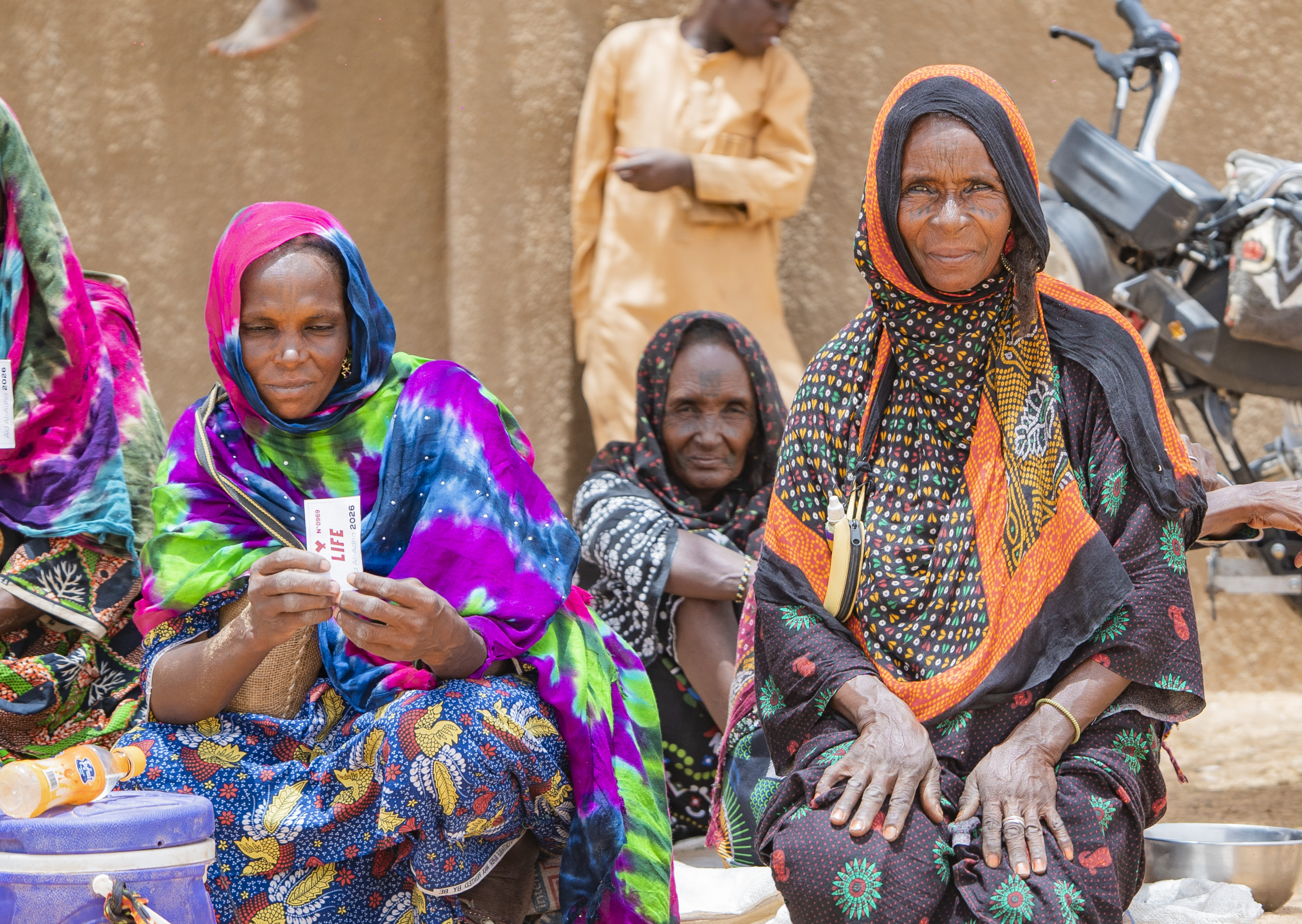
Image : photo of displaced families in a camp in Darfur, Sudan — alt : "Familles déplacées Darfour Soudan camp humanitaire 2026"
</aside>
Why does this crisis remain so overlooked?
Sudan suffers from a glaring lack of media attention. Yet, the scale of the crisis surpasses many others that regularly make headlines.
Several factors explain this invisibility: journalists' access is severely restricted by both parties to the conflict, humanitarian aid delivery is also blocked, and visas are granted sparingly. According to Human Rights Watch's 2026 World Report, as of May 2025, only 110 visas for the UN and international NGOs had been granted out of 355 pending applications.
This lack of visibility has a direct consequence: underfunding. Less media coverage means fewer donations and less aid on the ground.
La dimension oubliée : selon l'OCHA (février 2026), 12 millions de personnes, principalement des femmes et des filles, sont exposées à la violence sexiste au Soudan. Les ménages dirigés par des femmes sont trois fois plus touchés par l'insécurité alimentaire, et les trois quarts d'entre eux déclarent ne pas avoir assez à manger.
How Life ONG Operates in Sudan
Life ONG operates in Sudan amidst extremely constrained access. Its programs focus on the most urgent needs, identified with its local partners:
- Emergency food distribution : food parcels for displaced families in accessible areas
- Access to drinking water : support for water points in displacement camps
- Emergency kits : hygiene, shelter, blankets for homeless families
- Support for basic healthcare : contribution to the operation of medical facilities still operational
The security situation and access restrictions require significant operational flexibility. Life works with networks of local partners present in areas where international access is impossible.
To follow Life's operations in Sudan, visit life-ong.org/urgence-soudan. The donor relations team is available to provide you with detailed information on ongoing programs.
<aside>📌
Image : photo of a Life NGO food distribution in a conflict zone — alt : "Life NGO food distribution conflict zone emergency aid Sudan"
</aside>
Why donate to Sudan now?
The Sudanese crisis is structurally underfunded. In 2025, less than a third of the requested funds have been mobilized. This deficit has direct consequences: closure of food kitchens, suspension of health programs, disruption of distributions.
Donating now allows Life to maintain its operations during a period when institutional funding is decreasing. It also means acting without waiting for the crisis to make TV headlines again.
To understand the impact of regular donations for an NGO, our article Recurring vs. One-Time Donations: What's the Impact for an Organization? explains everything. And to ensure Life ONG is a reputable organization before donating, our guide Donating to an NGO: 5 Criteria for Choosing a Reputable Organization provides you with a comprehensive method.
Do you also want to understand what populations displaced by this conflict are experiencing? Our article Internally Displaced Persons vs. Refugees: Understanding the Difference and Taking Action provides useful insight.
<aside>📌
Image : infographic showing the gap between requested and received funding for Sudan in 2025 — alt : "Sudan humanitarian funding deficit 36 percent OCHA 2025"
</aside>
Reçu fiscal 75 %. Chaque euro tracé. Partenaires locaux présents sur le terrain.
Faire un don maintenant →Pourquoi parle-t-on si peu de la crise au Soudan ?
L'accès des journalistes et des humanitaires est sévèrement restreint par les deux parties au conflit. Selon le Rapport mondial 2026 de Human Rights Watch, en mai 2025, seuls 110 visas avaient été accordés sur 355 demandes en attente pour l'ONU et les ONG internationales. Ce manque de visibilité entraîne directement un sous-financement de la réponse humanitaire.
La famine est-elle déclarée au Soudan ?
Des situations de famine ont été documentées dans plusieurs zones du Soudan depuis 2024, notamment au Darfour. La Mission d'établissement des faits de l'ONU a conclu que les FSR et leurs alliés emploient délibérément la famine comme méthode de guerre, ce qui constitue un crime de guerre. La situation alimentaire reste critique dans de nombreuses régions du pays.
Est-ce que les dons arrivent vraiment au Soudan ?
L'accès humanitaire est gravement entravé, mais des organisations présentes depuis longtemps sur le terrain, avec des réseaux de partenaires locaux établis, parviennent à maintenir des opérations dans les zones accessibles. Life ONG travaille avec de tels partenaires. Le pôle relation donateur peut vous donner des informations précises sur les programmes en cours et les zones d'intervention.
Qu'est-ce que les Forces de soutien rapide (FSR) ?
Les FSR sont des paramilitaires soudanais qui s'affrontent avec l'armée régulière (FAS) depuis avril 2023. Nées des milices janjaweed du Darfour, elles ont été progressivement institutionnalisées avant de se retourner contre le gouvernement central. Les deux parties au conflit sont accusées de violations graves du droit international humanitaire par les experts de l'ONU.
Comment mon don à Life ONG pour le Soudan est-il utilisé ?
Life affecte les dons reçus pour le Soudan à ses programmes terrain : aide alimentaire, eau potable, kits de première nécessité, soutien médical. Les comptes annuels de Life sont publiés et certifiés par un commissaire aux comptes indépendant. Le pôle relation donateur peut vous donner des informations précises sur l'affectation de votre don et les opérations en cours au Soudan.
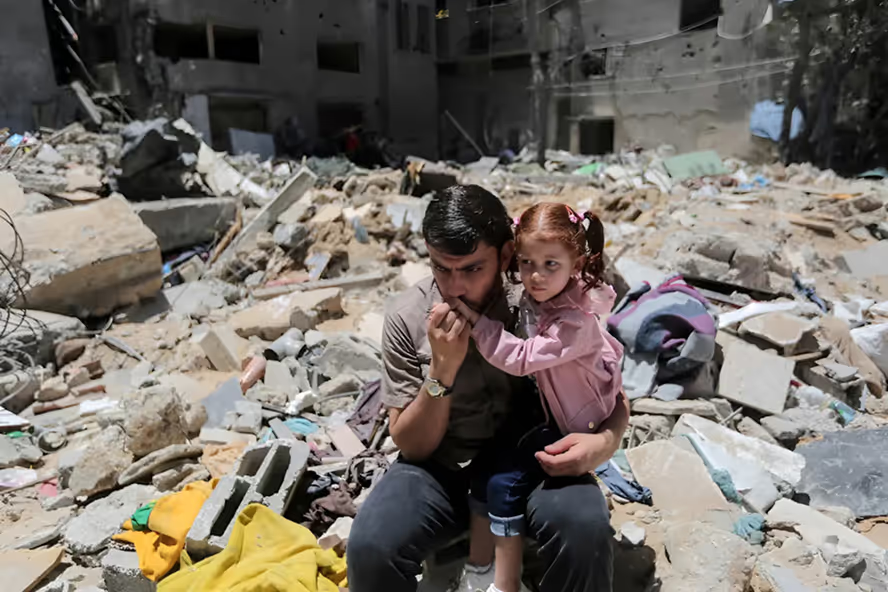
Bring vital aid to families in Gaza. Every donation saves lives.
I give