
The global water crisis: key figures and concrete solutions
- In 2026, 2.1 billion people, or 1 human in 4, still have no access to safely managed drinking water at home (WHO/UNICEF).
- Among them, 106 million drink untreated water directly from rivers, lakes or ponds.
- Unsafe water and poor sanitation kill around 1,000 children under 5 every day worldwide (UNICEF, 2026).
- Sub-Saharan Africa is the hardest-hit region: only 24% of its inhabitants have access to safe water.
- The solutions exist and are well known: drilling wells, providing sanitation, training local management committees. A Life ONG well serves hundreds of people for €2,650.
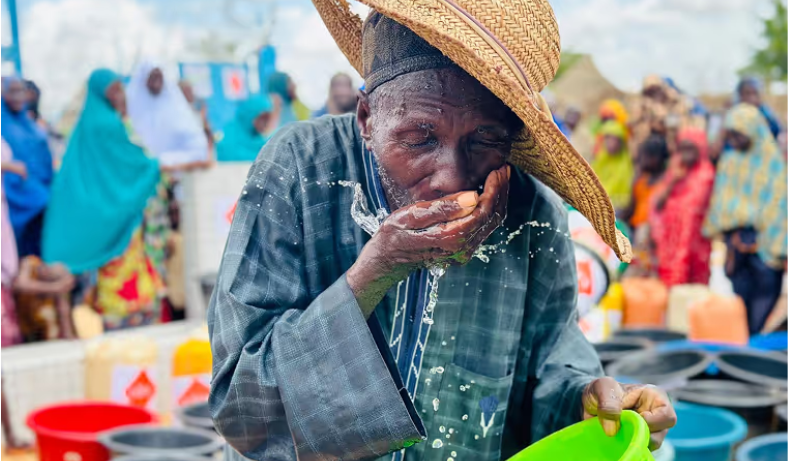
Water is the most silent necessity: we only notice it when it runs out. Yet for a quarter of humanity, that shortage is a daily reality. Behind that figure are sick children, girls who miss school to fetch water, and families who cannot plan anything beyond the next day. Here is the real state of the water crisis in 2026, its causes, and above all the solutions that work.
What are the figures of the water crisis in 2026?
The most recent data come from the WHO and UNICEF Joint Monitoring Programme (JMP), the global reference on the subject. They paint a two-sided picture: real progress over twenty years, but a pace that is slowing at the worst possible time.
Today, 2.1 billion people, or about one in four, do not have access to safely managed drinking water at home, meaning water available on site, uncontaminated and accessible when the family needs it. Among them, 106 million drink surface water directly: rivers, lakes, ponds, without any treatment.
| Indicator (WHO/UNICEF JMP, 2025) | Figure |
|---|---|
| People without safe drinking water at home | 2.1 billion (1 in 4) |
| People drinking untreated surface water | 106 million |
| Drinking water coverage in urban areas | 83% |
| Drinking water coverage in rural areas | 60% |
| Sub-Saharan Africa without basic access | nearly 400 million |
According to UNICEF (March 2026), around 1,000 children under five die every day worldwide from causes linked to unsafe water, poor sanitation and lack of hygiene. Diarrhoeal diseases alone kill more children under five than malaria, AIDS and measles combined.
Why do we talk of a "crisis" when the situation is improving?
It is a paradox that needs to be understood. Over twenty years, the share of the world's population without access to water has been halved. Hundreds of millions of people have gained access to drinking water. So why talk of a crisis?
For three reasons. First, the pace is slowing just as needs are rising. To meet the goal of universal access by 2030, the WHO and UNICEF estimate that the current pace of progress on drinking water would need to be multiplied by 8, and by 12 in Africa. At the current rate, 2 billion people will still be without safe water in 2030.
Second, inequalities are widening. The crisis does not strike at random: it affects poor countries, rural areas, conflict settings and marginalised populations. A resident of the least developed countries is twice as likely to lack water as elsewhere.
Finally, new pressures are making the situation worse: population growth, climate change, conflict and displacement, depletion of groundwater, and chronic underinvestment in infrastructure.
According to the UN (March 2026), women and girls spend 250 million hours every day fetching water worldwide. That time means less school for girls, less work for women, less health for all. That is why World Water Day 2026 has the theme "Water, a source of equality".
Where is the water crisis most severe?
The crisis is very clearly concentrated in certain regions. Sub-Saharan Africa is by far the hardest hit: according to the United Nations, only 24% of its inhabitants have access to safe drinking water, and nearly 400 million people do not even have a basic water service.
The consequences there are dramatic and concrete. In Africa, according to the UN, 115 people die every hour from diseases linked to contaminated water, failing sanitation or lack of hygiene. In conflict zones such as Sudan, where millions of families have been displaced since 2023, daily water shortages worsen an already critical humanitarian situation.
Faced with the scale of the challenge, the African Union has proclaimed 2026 the "African Year of Water and Sanitation", and a United Nations Water Conference will be held in the United Arab Emirates in December 2026. The signal is clear: water is becoming a global political priority.
To understand in detail the situation of the hardest-hit continent, our article Access to drinking water in Africa: where do we stand in 2026? takes stock region by region. And to understand the link between water shortage and drought, our article Drought in Africa: causes, consequences and lasting solutions explores this aggravating factor.
What are the real causes of the water crisis?
People often think the water crisis is simply a problem of natural scarcity. The reality is more complex. Five main causes combine.
- Underinvestment in water and sanitation infrastructure, especially in rural areas.
- Climate change, which multiplies droughts and floods and disrupts the water cycle.
- Population growth, which increases demand faster than infrastructure can keep up.
- Conflict and displacement, which destroy water networks and concentrate populations where there are no resources.
- Depletion of groundwater, over-exploited for agriculture and consumption.
The good news is that these causes are largely human in origin, which means human solutions exist.
What concrete solutions are there for the water crisis?
Faced with such a vast problem, it is easy to feel powerless. Yet the solutions are known, proven, and often inexpensive relative to their impact.
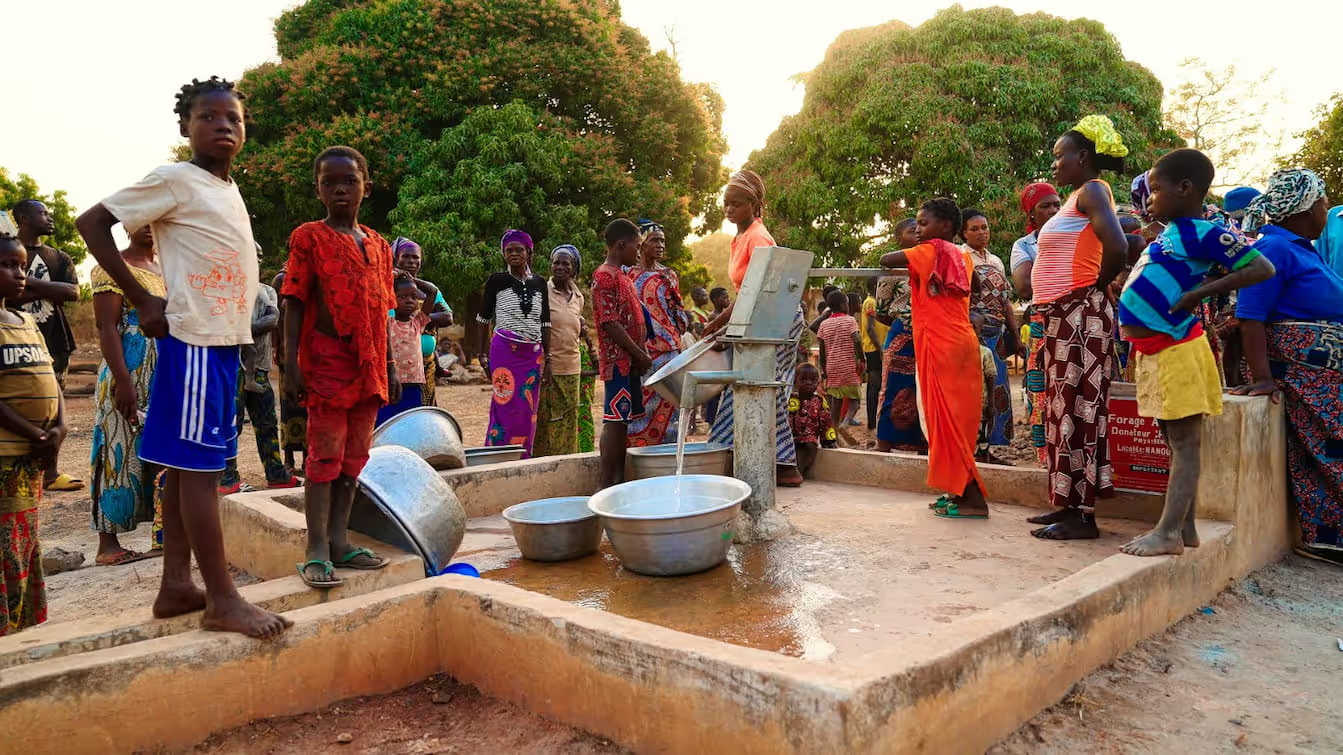
Drilling wells and boreholes. This is the most direct solution for rural communities with no access. A single well serves hundreds of people. Boreholes reach deep groundwater, better protected from contamination than surface water.
Providing sanitation and promoting hygiene. Access to water is not enough: without latrines or handwashing, diseases continue. It is the inseparable water-sanitation-hygiene trio. Our article Sanitation and hygiene: the water-health-education trio details this approach.
Training local management committees. Infrastructure without maintenance breaks down. Training villagers to manage and repair their water point is what guarantees long-term durability.
Combining water with development. The most effective projects do not stop at water: they move on to subsistence farming, livestock, education. Water then becomes the starting point for complete autonomy.
This is exactly Life ONG's approach. A well in Africa is funded for €2,650, or about €901 after tax relief, and covers the entire chain: survey, drilling, pump, water testing and training a village committee. To understand the details of this cost, our article How much does a well cost in Africa? breaks down every item.
Fund lasting access to drinking water with Life ONG. A well serves hundreds of people. €2,650 in Africa, or €901 after tax relief. Donor relations team available.
Act for water →How many people lack access to drinking water worldwide in 2026?
According to the WHO and UNICEF Joint Monitoring Programme (JMP), 2.1 billion people, or about one in four, do not have access to safely managed drinking water at home. Among them, 106 million drink untreated surface water directly, such as from rivers or ponds.
Which region of the world is most affected by the water crisis?
Sub-Saharan Africa is by far the hardest hit. According to the United Nations, only 24% of its inhabitants have access to safe drinking water, and nearly 400 million people have no basic water service. Rural areas and regions in conflict are the most exposed.
Why does the water crisis kill so many children?
Unsafe water causes diarrhoeal diseases which, in young children, lead to fatal dehydration. According to UNICEF, around 1,000 children under five die every day from causes linked to unsafe water, poor sanitation and lack of hygiene. Diarrhoeal diseases kill more children under five than malaria, AIDS and measles combined.
What are the causes of the water crisis?
Five main causes combine: underinvestment in infrastructure, climate change (droughts and floods), population growth, conflict and displacement, and the depletion of groundwater. Most are human in origin, which means solutions exist.
How can I help solve the water crisis?
Concrete solutions include drilling wells (a single one serves hundreds of people), sanitation, hygiene promotion and training local management committees. Funding a well with an NGO like Life is one of the actions with the best cost-to-impact ratio: €2,650 for a well in Africa, or about €901 after tax relief.