
Donating to an NGO: 5 criteria for choosing a reputable organization
- Toutes les ONG ne se valent pas : quelques critères simples permettent de faire la différence en moins de 10 minutes.
- Life ONG coche les 5 critères présentés dans ce guide : statut légal, transparence financière, label, réseaux reconnus et présence terrain.
- Le ratio missions sociales / budget total est le chiffre le plus parlant pour évaluer une ONG rapidement.
- Un reçu fiscal Cerfa après chaque don est le premier signe qu’une organisation est sérieuse et déclarée.
- Choisir Life, c’est opter pour une ONG contrôlée, auditée et présente dans +25 pays avec une traçabilité complète.
You want to make a donation, but you're unsure how to choose among all the NGOs out there? That's a legitimate question. If you don't yet know exactly what an NGO is and how it operates, our article What is an NGO? lays the groundwork before we go further. In France, there are over 1.5 million registered associations. It can be hard to navigate.
The good news: a few concrete criteria are enough to distinguish a reputable NGO from an opaque organization. This guide provides them, using Life ONG as a common thread to illustrate each point.
Criterion 1: Is the NGO properly registered and recognized?
This is the starting point. Before making any commitment, verify that the organization legally exists.
In France, a reputable humanitarian association is registered under the 1901 law and has an RNA number (National Register of Associations). Some also obtain "reconnaissance d'utilité publique" (public utility status), a status granted by decree that signifies a higher level of longevity and rigor.
Life ONG is a 1901 law association recognized as being of general interest, authorized to receive donations eligible for tax deductions. It can be verified in seconds on the official register data.gouv.fr.
How to verify in 30 seconds
Two quick ways:
- Search for the NGO's name on data.gouv.fr : its RNA number should appear.
- Make a small test donation and verify that a Cerfa tax receipt is indeed sent to you. If this document doesn't arrive, it's a red flag.
Une association qui ne délivre pas de reçu fiscal n’est pas habilitée à le faire, ou refuse de le faire. Dans les deux cas, votre don ne sera pas déductible de vos impôts et l’organisation manque de transparence.
Criterion 2: Does the NGO publish its accounts?
A reputable NGO doesn't hide how it spends its donors' money. It publishes its annual accounts, has them audited by an independent auditor, and makes them accessible to everyone.
This is also a legal obligation for any association receiving more than €153,000 in donations per year. The accounts are published in the Official Journal of Associations and Corporate Foundations (JOAFE).
The key ratio to check
One number is enough for a quick overview: the share of the budget dedicated to social missions. A reputable NGO allocates at least 70% of its resources to this.
| Part des missions sociales | Ce que ça signifie |
|---|---|
| Plus de 80 % | Excellent, l'essentiel va sur le terrain |
| Entre 70 % et 80 % | Correct, dans les normes du secteur |
| Moins de 70 % | À creuser, les frais de structure sont élevés |
At Life, over 85% of collected funds are directly allocated to field operations. Annual accounts are publicly available on life-ong.org/nos-rapports.
<aside>📌
Image : screenshot of Life ONG's reports page showing the social mission ratio — alt: "Life ONG Annual Report Financial Transparency"
</aside>
Criterion 3: Does the NGO have a seal of approval?
Labels do not guarantee field effectiveness, but they certify that internal practices have been audited by independent experts. It's a useful filter, especially when you don't have time to delve into financial statements.
Two leading labels in France are:
| Label | Ce qu'il vérifie | Nombre d'organisations labellisées |
|---|---|---|
| Don en Confiance | Gouvernance, transparence, respect des donateurs | ~100 en 2025 |
| IDEAS | Gouvernance, stratégie, mesure d'impact | Structures plus grandes |
To obtain the Don en Confiance label, an association undergoes a one-year review process conducted by independent volunteers. The label is renewable every 3 years and can be withdrawn at any time. To learn more about what these labels concretely entail, consult our guide on how to ensure a humanitarian donation reaches its intended destination.
<aside>📌
Image : Don en Confiance logo on white background — alt: "Don en Confiance Label NGO France"
</aside>
Criterion 4: Is the NGO recognized by its peers?
An NGO that works in networks, coordinates its actions with other stakeholders, and adheres to common guidelines is an NGO that is open to external scrutiny.
Two key networks in France are:
- Coordination SUD : the main platform for international solidarity NGOs, which imposes a code of ethics on its members.
- Coordination Humanitaire et Développement (CHD) : a network dedicated to faith-based or community-based NGOs.
Life joined these two networks in 2023. This membership represents peer validation within the sector, as significant as an external label.
Why this matters to you
An NGO that is a member of Coordination SUD agrees to common rules regarding governance, communication, and fund utilization. This is an additional guarantee that the organization does not operate as a closed system.
Allez sur le site de Coordination SUD et tapez le nom de l’ONG dans leur annuaire. Si elle y figure, c’est déjà bon signe.
Criterion 5: Can we see what the NGO actually does?
The last criterion is perhaps the most human: does the organization show its work? Not just with numbers, but with concrete evidence of what's happening on the ground?
Impact reports: evidence or claims?
A good activity report doesn't just list "X people helped." It details projects carried out country by country, the local partners involved, measurable results, and any failures. An NGO that acknowledges what didn't work demonstrates maturity.
Field presence and availability
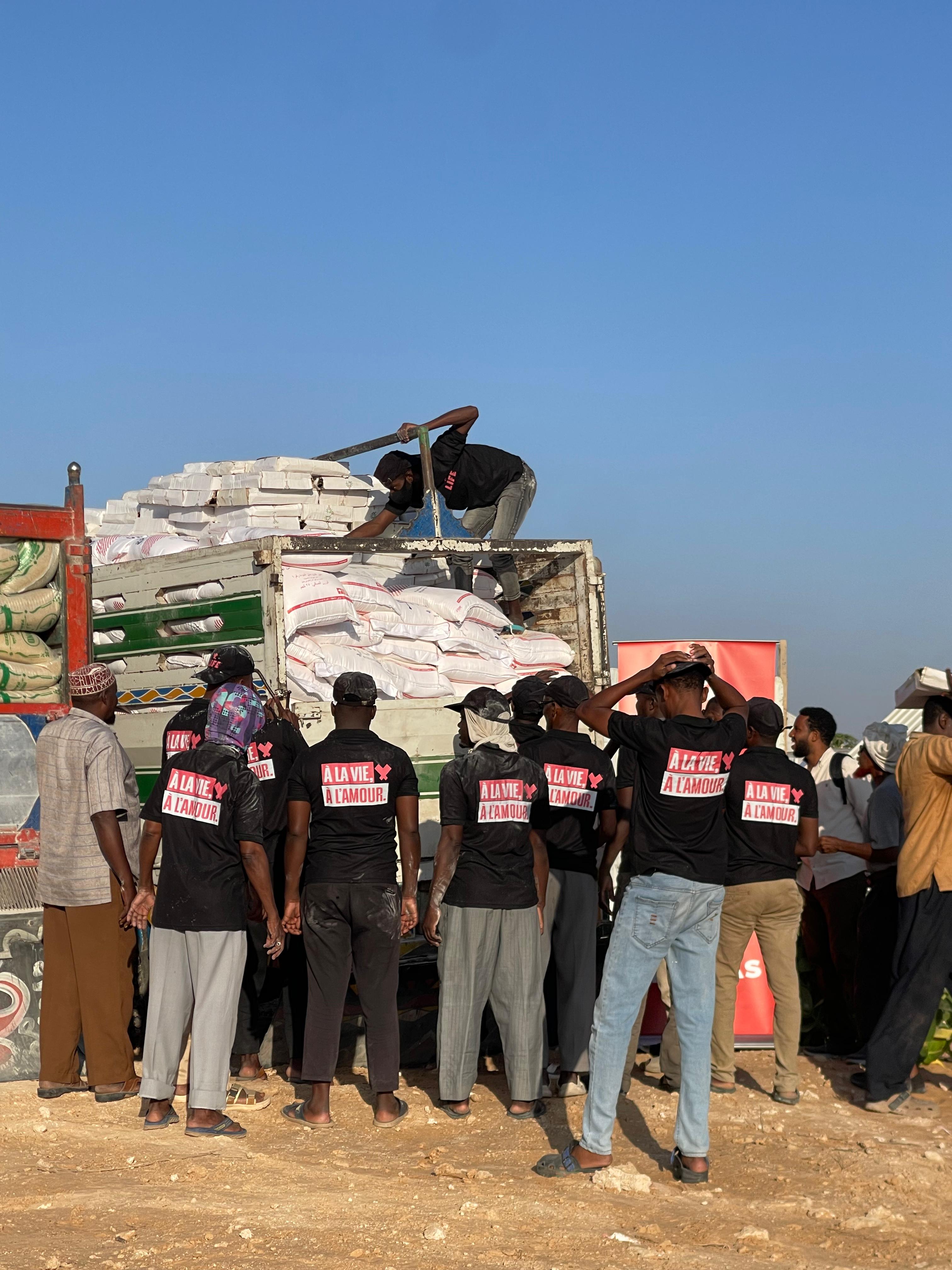
A reputable NGO answers your questions. It can be reached by phone, email, and responds to inquiries within a reasonable timeframe. Life regularly invites volunteers and donors to join its field missions, especially during Ramadan, so they can directly witness the reality of the distributions.
This level of openness is rare. It's the strongest signal that an organization has nothing to hide. Life also has a dedicated donor relations department to answer all your questions before or after your donation. To learn more about how Life ensures the transparency of your donations, consult our guide NGO Transparency: how to verify the use of your donations.
<aside>📌
Image : photo of a Life field mission with volunteers and beneficiaries — alt : "Life NGO humanitarian field mission distribution"
</aside>
Summary: Life NGO and the 5 Criteria
| Critère | Life ONG |
|---|---|
| Statut légal et reçu fiscal | Association loi 1901, reçu Cerfa automatique |
| Transparence financière | +85 % en missions sociales, comptes publiés |
| Label de confiance | Membre Coordination SUD et CHD depuis 2023 |
| Reconnaissance par les pairs | Réseaux Coordination SUD et CHD |
| Présence terrain et disponibilité | Missions dans +25 pays, bénévoles invités sur le terrain |
Donating to an NGO without checking these criteria is like donating blindly. With these guidelines, you donate with full awareness. And if you want to delve deeper into tax matters, our complete guide to tax deductions for donations 2026 explains how much your donation to Life actually costs you after tax reduction.
Reçu fiscal automatique. Comptes publics. Missions documentées dans +25 pays.
Faire un don →Comment savoir si une ONG est sérieuse avant de faire un don ?
Vérifiez qu'elle est déclarée sur le répertoire national des associations (data.gouv.fr), qu'elle publie ses comptes annuels, qu'elle délivre un reçu fiscal Cerfa, et qu'elle est membre d'un réseau reconnu comme Coordination SUD. Ces quatre vérifications prennent moins de dix minutes et suffisent dans la grande majorité des cas.
C'est quoi le ratio missions sociales d'une ONG ?
C'est la part du budget total réellement consacrée aux actions de terrain (aide alimentaire, construction de puits, soins, logement...) par opposition aux frais administratifs et aux coûts de collecte de fonds. Une ONG sérieuse consacre généralement plus de 70 % de ses ressources à ses missions sociales. Chez Life, ce ratio dépasse 85 %.
Y a-t-il une différence entre une ONG et une association ?
En France, la grande majorité des ONG sont juridiquement des associations loi 1901. Le terme "ONG" désigne une organisation à but non lucratif agissant à l'international dans au moins deux pays. Toutes les ONG ne sont pas des associations, et toutes les associations ne sont pas des ONG, mais dans le secteur humanitaire français, les deux termes se recoupent souvent.
Est-ce que les petites ONG sont moins fiables que les grandes ?
Non. La taille n'est pas un critère de fiabilité. Une petite structure peut être très rigoureuse, et une grande organisation peut manquer de transparence. Les critères à vérifier sont les mêmes quelle que soit la taille : statut légal, comptes publiés, label, présence terrain. Life a démarré comme une petite structure et applique aujourd'hui les mêmes standards qu'une grande ONG internationale.
Peut-on faire confiance à une ONG qui agit à l'étranger sans bureau en France ?
C'est un cas qui demande plus de vigilance. Une ONG sans siège déclaré en France ne peut pas délivrer de reçu fiscal français. Si vous souhaitez bénéficier d'une réduction d'impôt, l'organisation doit être reconnue d'intérêt général en France ou dans un pays de l'UE ayant signé une convention fiscale avec la France. Life est basée en France et intervient à l'international : vous bénéficiez du meilleur des deux situations.

.webp)