
How much does a well cost in Africa? Real prices and impact on the ground

- The cost of a well in Africa depends mainly on 4 factors: the depth of the water table, the type of soil, the type of pump and access to the village. There is no single price.
- With Life ONG, funding a well costs €2,650 in Africa (compared with €2,300 in Asia), based on a single solidarity price so that the cheapest areas are never prioritised.
- This budget covers 7 stages: survey, drilling, casing, pump, wellhead, water testing and a village management committee.
- One well serves hundreds of people and qualifies for a 66% tax reduction, bringing the real cost of a €2,650 donation down to around €901.
- Life's donor relations team follows every project and provides photos, GPS coordinates and a commemorative booklet for the well you fund.
"How much does a well cost?" This is often the first question asked by anyone who wants to fund access to water. The honest answer: it depends. A well is not a standardised product, and its price reflects very concrete realities on the ground. Here is what makes the budget vary, what a well really covers, and what it amounts to with Life ONG.
The 4 factors that make the price of a well vary
A well dug in a sandy plain near an accessible village does not cost the same as a deep borehole in rocky ground, several hours down a dirt track. Four factors explain most of the price differences.
1. The depth of the water table. This is the first factor. Depending on the region, groundwater sits a few dozen metres down, or more than 100 metres below the surface. The deeper you have to drill, the more equipment, time and fuel the project requires.
2. The type of soil. Loose soil drills quickly. Rocky ground calls for heavier machinery and more working days. At equal depth, hard ground pushes the bill up.
3. The type of pump. A hand pump is the simplest and cheapest solution to maintain. An electric or solar pump costs more, but serves more people and removes the physical effort.
4. Access to the village. Bringing a drilling rig to an isolated village has a cost. The more remote the area, the more expensive the transport and mobilisation of equipment.
When an organisation displays a price, that figure corresponds to precise specifications. Two "wells" at the same price can be very different in depth, quality and lifespan. The real question is not only how much it costs, but what that amount actually funds.
The 7 stages covered by the price of a well
The "price of a well" is not just the cost of digging a hole. A structure that lasts requires a complete chain of stages, each with its own cost.
- The site survey: a geologist locates the water table and measures soil resistance to choose the best place to drill.
- Drilling: the ground is bored down to the water table, with equipment suited to the type of soil.
- Casing: pipes are installed to protect the shaft and filter the water.
- The pump: the pumping system is fitted (manual, electric or solar).
- The wellhead: a concrete base is built around the well to prevent contamination.
- Water testing: a laboratory verifies that the water is safe to drink.
- Local management: a committee of villagers is trained to maintain the well over time.
This last stage is often forgotten, and yet it is the most decisive. A well without a management committee eventually breaks down for lack of maintenance. That is the difference between providing water for a few months and providing it for years.
How much does a well cost with Life ONG?
Life ONG made a clear choice: a single solidarity price, whatever the country. Funding a well costs €2,650 in Africa and €2,300 in Asia.
This choice deserves an explanation, because it may seem surprising. Real costs change from one country to another depending on depth, materials and logistics. By applying a single average price, Life sets itself a simple rule: never choose an area because it is cheaper, but intervene where the need is most urgent. A hard-to-reach African village never comes second to an Asian village that is cheaper to equip.
This amount covers the 7 stages described above, from the survey through to the management committee. At the end of the project, the donor receives the GPS coordinates of the well, photos and a commemorative booklet. The well can be named, including after a loved one.
What does a well really cost after tax relief?
This is something many donors overlook: the real cost of funding a well is far lower than the displayed amount, thanks to tax relief.
As Life ONG is recognised as a public interest organisation, a donation qualifies for a 66% tax reduction on the amount given, within the limit of 20% of taxable income. In concrete terms:
| Donation amount | Tax reduction (66%) | Real cost |
|---|---|---|
| Well in Africa: €2,650 | €1,749 | €901 |
| Well in Asia: €2,300 | €1,518 | €782 |
In other words, funding an entire well in Africa really costs around €901 after deduction. And there is no need to fund a well on your own: Life allows contributions from €15 per month, or several people can join forces on the same project. To understand the mechanics of this reduction in detail, our complete guide to tax relief on donations explains everything.
A well in Africa at €2,650 really costs you only €901 after tax relief. Calculate your tax reduction and the impact of your donation →
Why a well is the donation with the best lasting impact
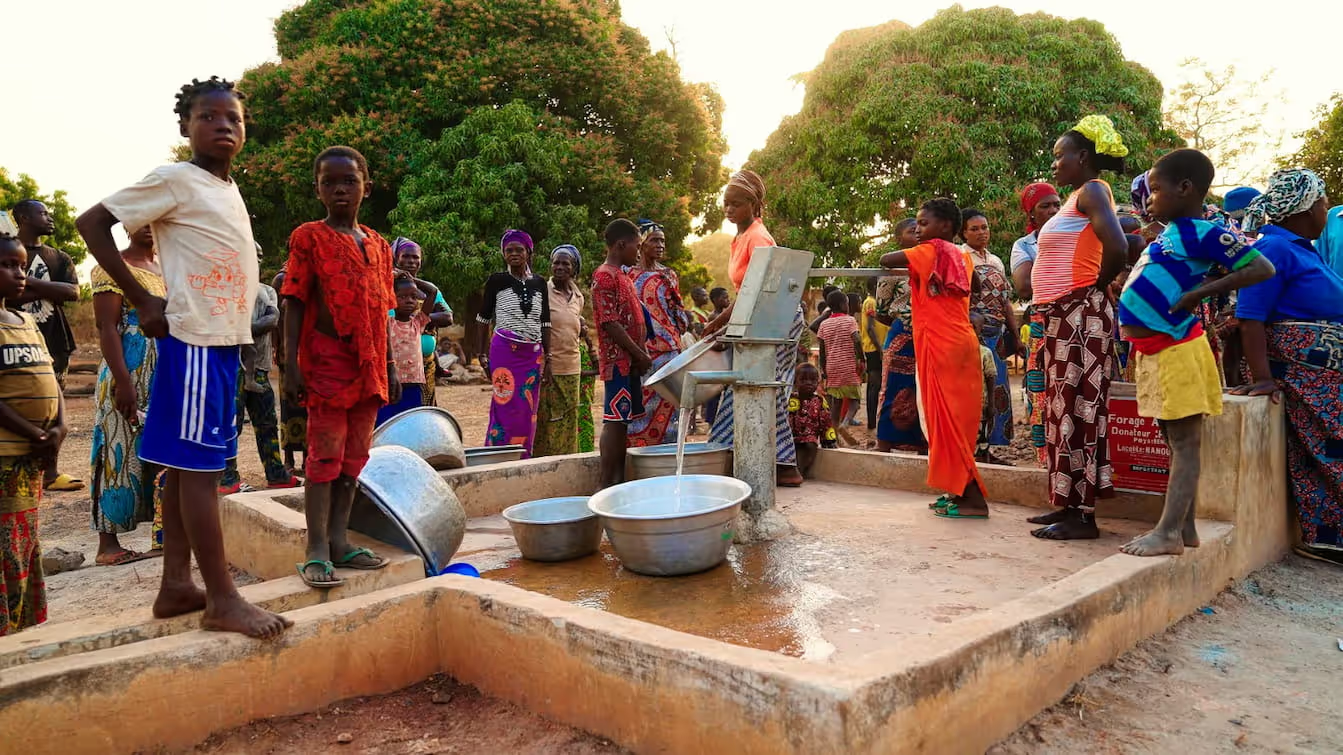
Beyond its price, a well is one of the most cost-effective donations in terms of impact per euro. A single structure serves hundreds of people, sometimes an entire village, and does so for years.
Access to water nearby changes a community's life on several fronts at once. It reduces diseases linked to dirty water, the leading cause of infant mortality in many areas. It frees women and children from hours of daily walking to fetch water, which allows children to return to school. And it makes farming and livestock possible, and with them the village's economic autonomy.
It is this multiplied impact that makes donating a well one of the most effective forms of solidarity. To understand why water donations show such a favourable cost-to-impact ratio, our article Donating drinking water: the humanitarian action with the best cost-to-impact ratio explores the question further.
And if you are wondering how a construction project actually unfolds, from survey to inauguration, our article Building a well in Africa: steps, costs and testimonials details every phase. To understand why a deep borehole withstands drought better than a traditional well, our article Funding a borehole: how does it differ from a well? compares the two techniques.
Discover Life ONG's water programme. €2,650 for a well in Africa, or €901 after tax relief. GPS tracking, photos and a commemorative booklet. Donor relations team available.
Fund a well →How much does a well cost in Africa in 2026?
The cost varies with the depth of the water table, the type of soil, the type of pump and access to the village. With Life ONG, funding a well in Africa costs €2,650, under a single solidarity price applied whatever the country. This amount covers the survey, drilling, the pump, the wellhead and training a village management committee.
Why does the price of a well vary so much?
Four main factors: the depth of the water table (from a few dozen metres to more than 100 m), the type of soil (loose or rocky), the type of pump (manual, electric or solar) and access to the village. A deep borehole in rocky ground, in a remote area, costs considerably more than a shallow well in an accessible plain.
What does a well really cost after tax relief?
As Life ONG is recognised as a public interest organisation, a donation qualifies for a 66% tax reduction. A well in Africa at €2,650 therefore really costs around €901 after deduction. You can also contribute from €15 per month or fund a well with several people.
What does the price of a Life ONG well include?
The amount covers 7 stages: the site survey, drilling, casing, the pump, the concrete wellhead, testing the water for safety, and training a village management committee responsible for maintenance. The donor then receives the GPS coordinates, photos and a commemorative booklet.
How many people benefit from a single well?
A well generally benefits several hundred people, sometimes an entire village. Beyond drinking water, it reduces waterborne diseases, frees up time for children's schooling and makes farming and livestock possible. That is what makes it one of the donations with the best cost-to-impact ratio over time.